Tatewari, Grandfather Fire and first shaman
By Ralf Ittermann · last reviewed on
Tatewari is a god of the Huichol tradition.
Grandfather Fire, eldest god and first shaman.
Tatewari, Grandfather Fire, is the eldest god and central fire deity of the Huichol, the Wixárika, in Mexico. According to tradition, he is the first shaman and the mediator between humans and gods.
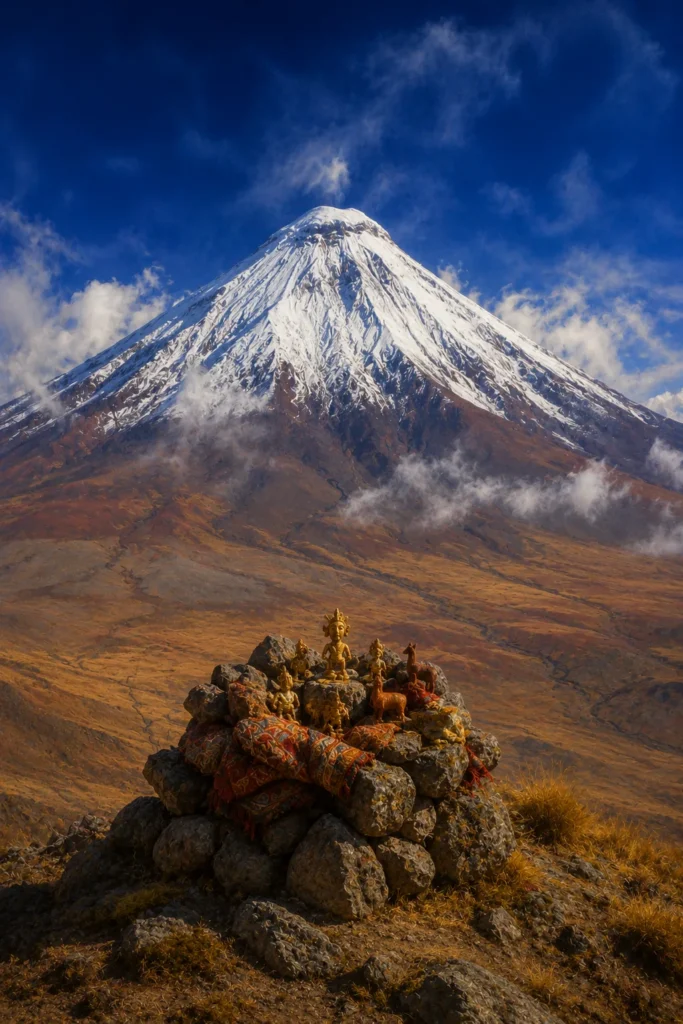
Unlike many deities, Tatewari has no image cult: he is the living hearth and ceremonial fire itself. His fire lies at the centre of every ceremony and of the pilgrimage to Wirikuta, the sacred land of the Huichol. The religion of the Wixárika remains a living practice to this day.
Type: fire deity, eldest god and first shaman of the Huichol
Origin: Sierra Madre Occidental, Huichol (Wixárika) in Mexico
Texts: oral tradition, ethnographically documented since Lumholtz
Period: predominantly ethnographic, 19th to 21st century, living practice
Appearance: the hearth and ceremonial fire as a grandfather

Historical Classification
Period of the Texts
The tradition is predominantly ethnographically documented, from the 19th to the 21st century; it describes a religious practice that remains alive to this day.
Area of Diffusion
The Sierra Madre Occidental in Mexico, the land of the Huichol or Wixárika; along with it the pilgrimage route to Wirikuta.
Sources
Well attested ethnographically: the most important older source is Carl Lumholtz, supplemented by more recent fieldwork such as that of Barbara Myerhoff.
Name and variants
Wixárika: Tatewarí means Our Grandfather, the Fire. The kinship name is a statement of intent: the fire is addressed not as a distant power but as the eldest member of the community.
Description
Appearance
Tatewari is the living hearth and ceremonial fire itself. In Huichol cosmology he is often linked with the deer and the peyote in the sacred triad of the Wixárika religion.
Effect
Tatewari warms, heals and shows the way. As the first shaman, tradition holds that he brought the art of healing and mediates between humans and gods. His fire is present at every ceremony and must be tended; he is considered dangerous only if disregarded.
Profile: Tatewari
The key aspects of Grandfather Fire at a glance.
The eldest deity in the pantheon of the Huichol (Wixárika); part of the sacred triad of fire, deer and peyote within a living religion.
The community, the shamans and the pilgrims: at nocturnal rites and on the pilgrimage to Wirikuta, his fire is the centre point.
No pictorial form: Tatewari is the ceremonial fire itself, addressed as a grandfather, fed and invoked in songs.
Warming, healing and showing the way; as the first shaman, the origin of the art of healing and mediator between humans and gods.
The ceremonial fire is fed and addressed, and the mara’akame sings to it; during the rites, the fire must not go out.
Our Grandfather, the Fire: origin and tradition
Wixárika Tatewarí means Our Grandfather, the Fire. Tatewari is the eldest deity in the pantheon of the Huichol and is closely linked with the pilgrimage to Wirikuta, the sacred land to which the pilgrims travel under the guidance of the shaman. The tradition is oral; the most important older source is Carl Lumholtz, who documented the religion of the Wixárika around 1900.
The ethnographic literature describes Tatewari as the first shaman, who brought the art of healing, and as mediator between humans and gods. Since this is a living religious practice, this account is limited to what fieldwork has documented; interpretive authority over their rituals rests with the Wixárika themselves.
Documentation and classification
Tatewari is widely documented through ethnographic research into Huichol religion and through international interest in the peyote pilgrimage. The religion of the Wixárika is alive.
In the study of religion, Tatewari is a model example of fire as first shaman and culture bringer: the fire is not merely a hearth but the origin of healing and mediation. The sacred triad of fire, deer and peyote is a core element of Wixárika cosmology; it should be understood as the ritual complex of an existing community, not as a freely available motif.
The ceremonial fire and its care
Well documented is the ceremonial fire: during the nightly rites and during the pilgrimage to Wirikuta, the fire is nurtured and addressed as Tatewari; the shaman, the mara’akame, sings to it. Before the pilgrimage and during the ceremonies, offerings are brought to the fire, and participants purify themselves in its light. The fire must not go out during the rites. All of this is lived practice of the Wixárika and is reproduced here according to ethnographic documentation.
Sacred fires of other traditions
As Grandfather Fire, Tatewari corresponds to related fire-god concepts of other northern Mexican peoples; as a sacred hearth and ceremonial fire, he is close to the Greek Hestia and the Vedic Agni as mediators of sacrifice. Within the Mexican context, a comparison with Curicaueri suggests itself, the fire god of the Purépecha, whose temple fires likewise had to never go out.
Frequently asked questions about Tatewari
What does Tatewari mean?
Our Grandfather, the Fire; he is the oldest deity of the Huichol.
Why is Tatewari considered the first shaman?
According to tradition, he brought the art of healing and mediates between humans and gods.
What does he have to do with peyote?
His fire is at the centre of the peyote pilgrimage to Wirikuta, the sacred land of the Huichol; it is part of the living Wixárika religion.
Further links
Further reading:
- Hestia – the sacred hearth fire of the Greek tradition
- Agni – the Vedic mediator of sacrifice in fire
- Curicaueri – the fire god of the Purépecha in Michoacán
- Protective candle, smoke cleansing, amulet – traditional protective means
Literature (selection)
Further standard works in the bibliography.
As Grandfather Fire of Huichol Mexico and as the fire god of the Wixárika, Tatewari is both at once: the oldest member of the family and the flame at which their ceremonies still gather today.