Dali, golden-haired mistress of the ibex
By Ralf Ittermann · last reviewed on
Dali is a goddess of Georgian tradition.
Mistress of the mountain animals, gracious to hunters, deadly upon breach of taboo.
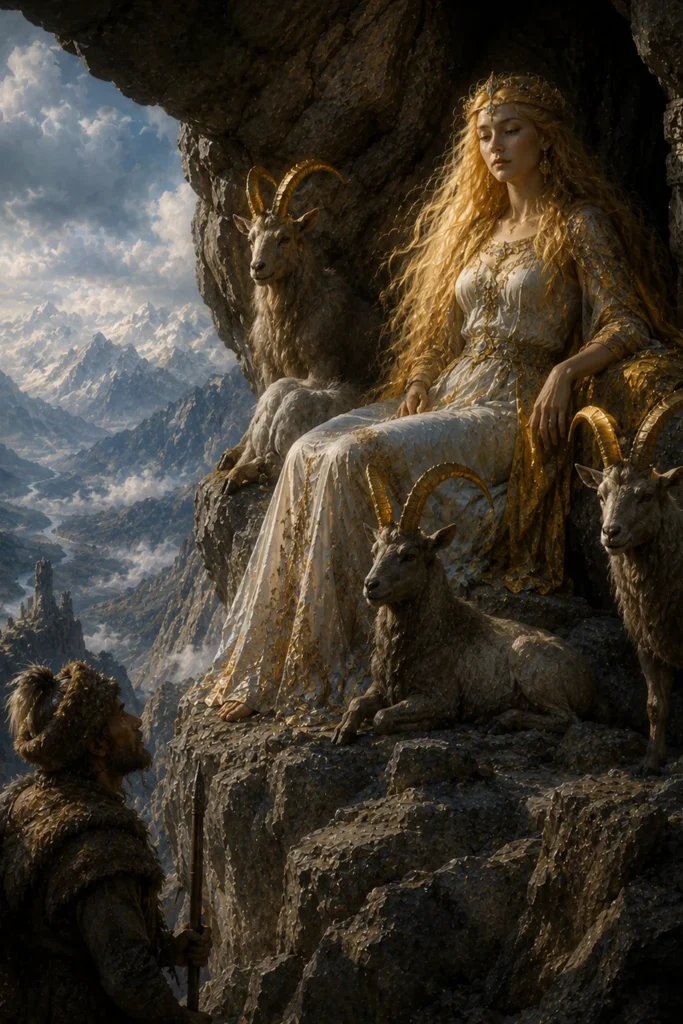
Dali, Svan Dæl, is the South Caucasian goddess of the hunt and of mountain animals, especially ibex and chamois. She is a beautiful, golden-haired mountain goddess who dwells in caves and rock faces of the high mountains.
She grants hunters success when they observe her taboos; breaking them she punishes severely, even with death. She is most densely attested in the oral tradition of the Svans in north-western Georgia, with related figures elsewhere in Georgia and the Caucasus.
Type: Hunting goddess, guardian and owner of the herds of hoofed animals
Origin: Svaneti, Georgia, South Caucasus
Texts: Oral tradition, recorded ethnographically
Period: oral tradition through to modern folklore collection
Appearance: beautiful golden-haired woman in caves and rock cliffs
Origin and source situation
Period of the Texts
Dali’s tradition is oral and recorded ethnographically; it reaches from the Svan storytelling tradition into contemporary Georgian folklore collection.
Area of Diffusion
Svaneti in north-western Georgia as the core region, along with related figures elsewhere in Georgia and the Caucasus.
Sources
Well documented: the tradition is accessible mainly through Kevin Tuite and Elene Virsaladze.
Name and variants
Georgian: Dali, Svan Dæl. According to Kevin Tuite, the name is related to a root meaning dusk or morning star, with reference to Venus; linguistically, this remains disputed.
Form and appearance
Appearance
Dali is usually a beautifully beautiful, naked woman with long golden hair and luminous skin, who dwells in caves and rock faces high in the mountains. She can take animal form, as an ibex or chamois, often with an identifying mark such as golden horns.
Effect
Dali is guardian and owner of the herds of hoofed animals, of ibex and deer. She grants hunters success if they observe her taboos and punishes breaches with death. Central is the tale of the love between Dali and a hunter; breaking her taboos, infidelity, betrayal or ritual impurity, leads to a fall or death.
Profile: Dali
The key aspects of the hunting goddess at a glance.
South Caucasian goddess, most densely attested in the oral tradition of the Svans, with related figures elsewhere in Georgia and the Caucasus.
Hunters and mountain dwellers: Dali grants or withholds hunting success for them, depending on whether they observe her taboos.
A beautiful woman with long golden hair and luminous skin; in animal form as ibex or chamois, often with golden horns.
Guardian and owner of the herds of hoofed animals, of ibex and deer; she grants hunting luck and watches over the rules of the hunt.
No temple cult, but hunting taboos and purity rules: no hunting during menstruation or childbirth in the household, no overkilling, no shooting at marked animals.
Artemis and Diana as mistresses of the animals; structurally related is Tkashi-Mapa, the forest mistress of Georgian tradition.
Dæl in the Svan tradition
Georgian Dali, Svan Dæl, is most densely attested in the oral tradition of the Svans in north-western Georgia, with related figures elsewhere in Georgia and the Caucasus. Kevin Tuite links the name to a root meaning dusk or morning star, with reference to Venus as a boundary star; this interpretation remains linguistically debated.
At the centre of the tales stands the love between Dali and a hunter: whoever is chosen by the goddess receives hunting luck, yet breaking her taboos, infidelity, betrayal or ritual impurity, leads to a fall or death. The hunt in the high mountains is thus bound into a tight web of rules over which the goddess herself watches.
Folklore, art and classification
Dali features prominently in Georgian folklore collection and in modern art; her tradition is accessible mainly through Kevin Tuite and Elene Virsaladze. Tuite also draws a comparison to the Achilles material and to Caucasian hunter heroes.
From a religious-studies perspective, Dali is well disposed towards respectful hunters and deadly towards those who break her taboos. An important clarification: she is popularly reduced to a goddess of love, but in folklore she is primarily mistress of wild animals and hunting goddess, whose love affairs are bound to the logic of the hunt and of purity; the morning-star etymology is a hypothesis.
Hunting taboos instead of temple cult
For Dali there is no temple cult, only hunting taboos and purity rules: no hunting during menstruation or childbirth in the household, no overkilling, no shooting at especially marked, divine animals. These rules are the actual form of her cult; whoever observes them is granted success by the goddess, whoever breaks them risks a fall and death in the high mountains.
From Artemis to the forest mistress
Dali corresponds to Artemis and Diana as well as to the mistress of the animals, Potnia Theron; Tuite draws a comparison to the Achilles material and to Caucasian hunter heroes. Structurally she is related to Tkashi-Mapa, the forest mistress, who in Mingrelian tradition is desired and pursued by the Ochokochi.
Frequently asked questions about Dali
Who is Dali?
The Svan-Georgian goddess of the hunt and mistress of the mountain animals, especially ibexes and chamois. She dwells in caves and rock faces of the high mountains.
Why does she punish hunters?
For breaking her taboos such as infidelity, betrayal or ritual impurity; those who honour her, she grants hunting success.
Is Dali a goddess of love?
She is popularly reduced to this, but she is primarily a hunting goddess and mistress of wild animals; her love affairs follow the logic of the hunt and of purity.
Further links
Further reading:
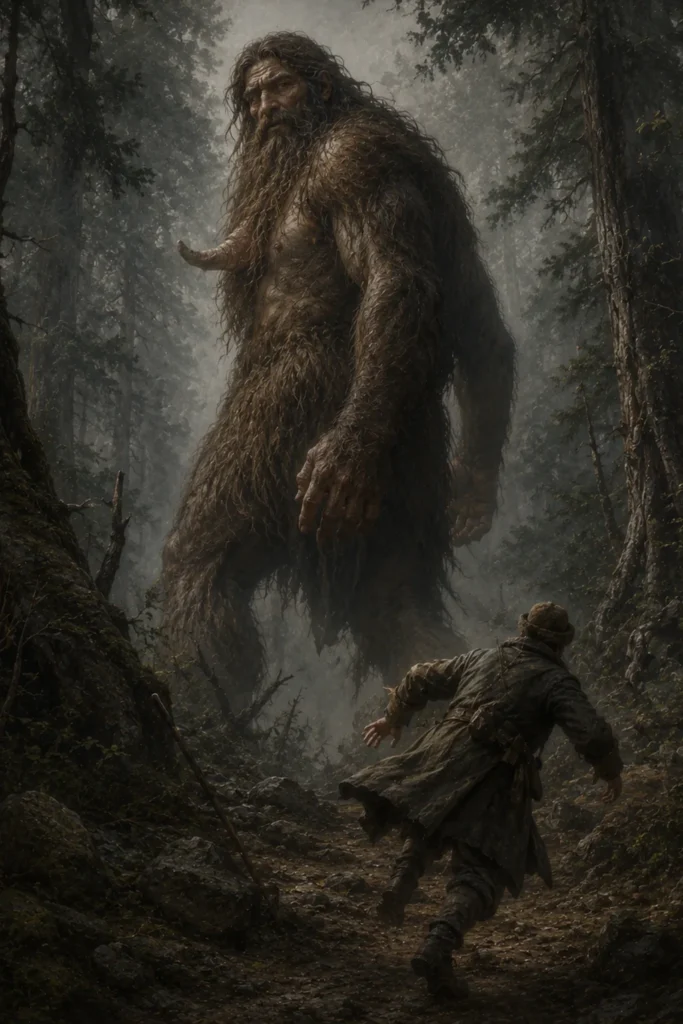
- Ochokochi – the wild man of the forest from the same Caucasian narrative world
- Oreads, Yama-no-Kami – further mountain figures
- Amulet, Sage, Salt – traditional protective means
- Protection Compass – protective means at a glance
Literature (selection)
Further standard works in the bibliography.
As Georgian goddess of the hunt and mistress of the mountain animals, Dali embodies the order of high-mountain hunting: she gives and takes hunting luck, and her taboos draw the line between favour and death.