iWell Guard

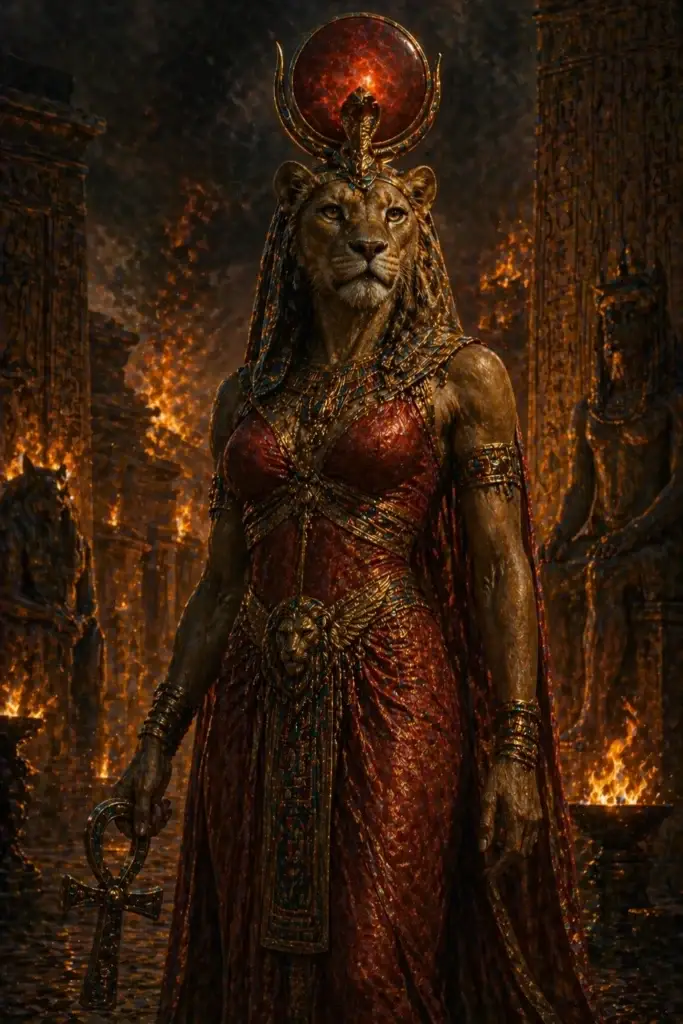
Shehbui, hot south wind with a lion's head

Shehbui is a god of the Egyptian tradition.

Lion-headed bringer of the hot south wind.

Table of Contents

Shehbui, the south wind god of Egypt
Shehbui

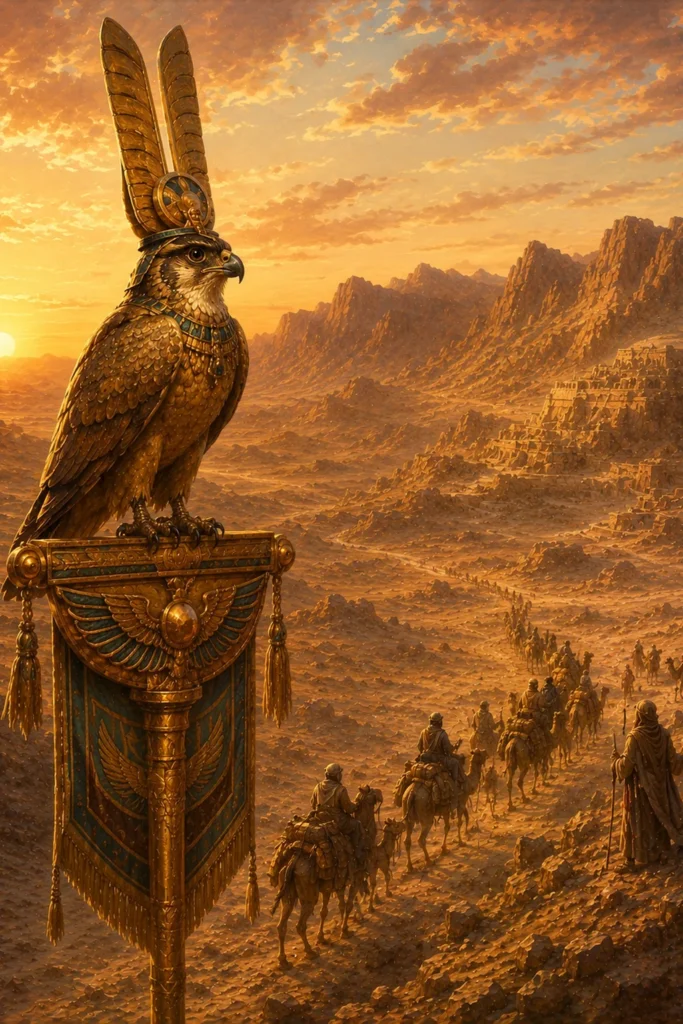
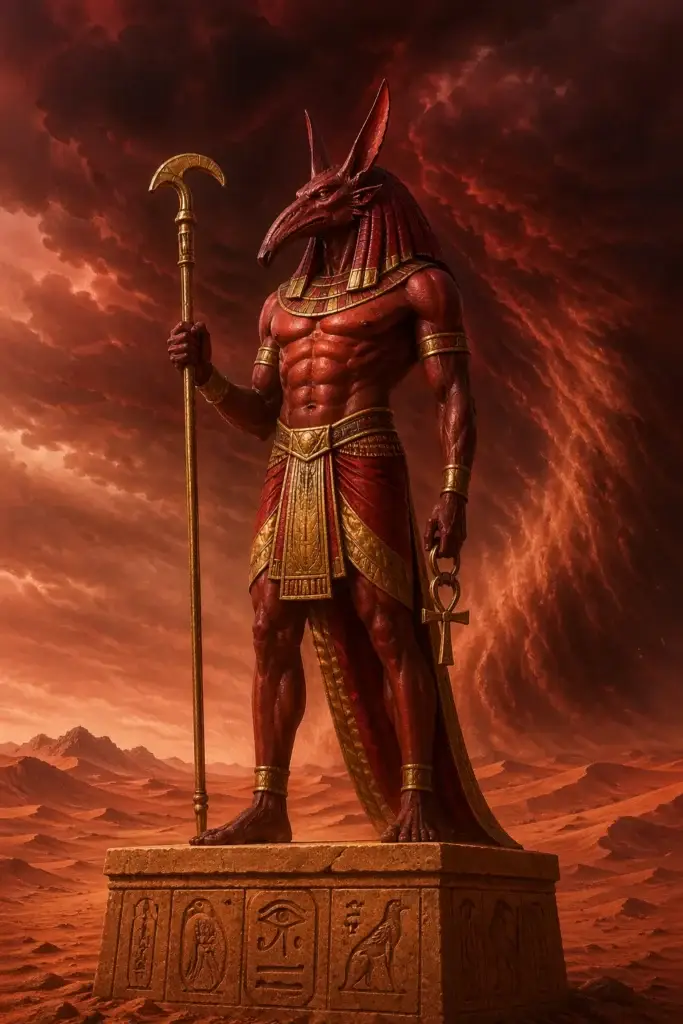
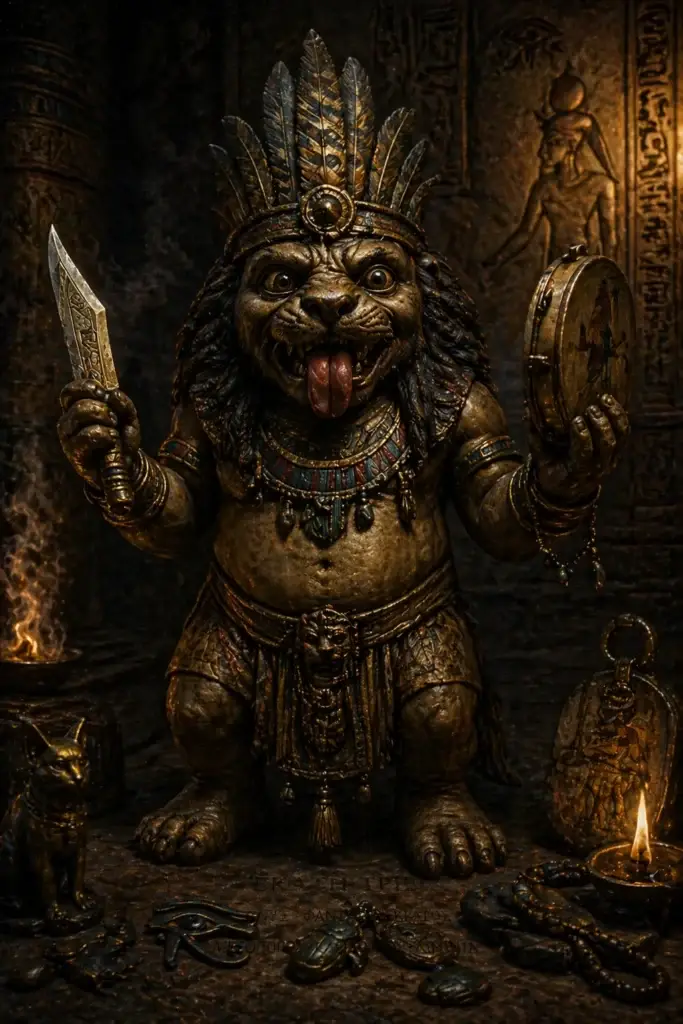
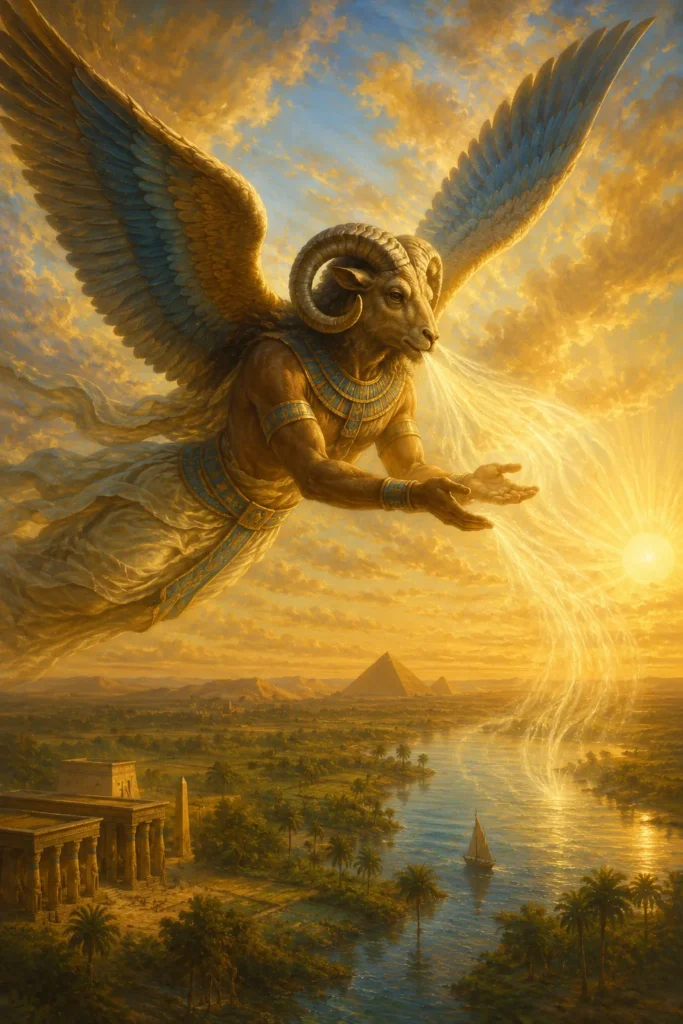
Shehbui, also spelled Schehbui, is the Egyptian god of the south wind and one of the four gods of the cardinal winds. He is widely recorded as a winged man with a lion’s head; the south wind was often regarded as a hot, less favourable desert wind.

Shehbui thus carries a dual nature that sets him apart from his siblings: theologically, like all four winds, he is the breath of life for the deceased, but climatically he is the wind that carries the heat of the desert across the Nile valley.

At a glance: Shehbui

Type: God of the south wind, one of the four gods of the cardinal winds
Origin: Four Winds tradition of temple and Book of the Dead lore
Texts: Dendera reliefs, Book of the Dead (particularly Spell 161)
Period: Graeco-Roman temple texts, Book of the Dead tradition
Appearance: winged man with a lion’s head, sometimes multi-headed

Historical Background

Period of the Texts

The attestations belong to the Graeco-Roman temple texts and the Book of the Dead tradition; the name form and its interpretation are uncertain.

Area of Diffusion

Egypt, with a focus on Dendera; in everyday experience the south wind represented the hot air from the desert in the south.

Sources

Thin: reliefs and the Book of the Dead carry the tradition, the iconography is not consistently confirmed.

Name and variants

Egyptian: the name form and its interpretation are uncertain; alongside Shehbui, the spelling Schehbui also circulates. As with Henkhisesui and Hutchai, a confirmed etymology is lacking, unlike with the north wind god Qebui.

Form and effect

Appearance

In the widespread tradition following Budge, Shehbui is a winged man with a lion’s head; he is sometimes also described as multi-headed. As with Hutchai, the following applies: the lion’s head is the popular attribution, while the reliefs here too can show multi-headed, winged mixed forms.

Effect

Shehbui brings the south wind and is part of the life-giving Four Winds system that brings breath to the deceased. However, the south wind was perceived as a hot desert wind.

Profile: Shehbui

The key aspects of the south wind god at a glance.

Tradition

One of the four winds of the temple and Book of the Dead tradition, attested alongside Qebui, Henkhisesui and Hutchai in Dendera and in the Book of the Dead.

Object of Influence

The hot south wind from the desert; in the funerary context, at the same time one of the four breath winds of Spell 161.

Depiction

Winged man with a lion’s head according to the traditional attribution; the reliefs also show multi-headed, winged mixed forms.

Sphere of Influence

Theologically the breath of life for the deceased like all four winds; climatically the oppressive desert wind of the south.

Forms of Warding

No separate cult is attested; no distinct rites or offerings have been recorded, the significance lies in the funerary-cosmological context.

Parallels

Typologically the Greek Notos; the lion-head symbolism links Shehbui to the circle of Sekhmet.

The wind from the desert in the Four Winds system

Shehbui is one of the four winds of the temple and Book of the Dead tradition, attested in the Dendera reliefs and in the Book of the Dead, particularly in Spell 161, in which the four winds bring breath to the deceased. The name form and its interpretation are uncertain; alongside Shehbui, the spelling Schehbui also circulates.

His distinctiveness lies in his cardinal direction. While Qebui brings coolness from the north, the south wind comes from the desert and was perceived as hot and less favourable. This changes nothing about the system: the south wind, too, belongs to the breath winds of the deceased, yet in everyday perception it carries a slight downside that the other winds lack.

Climatically unfavourable, theologically positive

Shehbui appears only in specialist and list-like contexts and is usually treated together with the other three winds.

From a religious-studies perspective, Shehbui shows the Four Winds as fundamentally positive, as the breath of life for the deceased; the south wind is perceived as less pleasant only climatically, not theologically. The lion-head attribution is traditional but not consistently confirmed.

Mitigation rather than warding off

No dedicated cult is attested for Shehbui; no individual rites or offerings have been passed down. His significance lies within the funerary-cosmological context. Where the hot south wind afflicted the living, the concern was not the warding-off of an evil being, but rather the tempering of a natural force that, theologically, was nonetheless counted among the life-giving winds.

Sekhmet circle and Notos

Shehbui shares the lion-headed symbolism with many hot and dangerous Egyptian aspects from the circle of Sekhmet. As the south wind, he stands typologically opposite the Greek Notos. His siblings in the four-wind system are Qebui, Henkhisesui and Hutchai.

Frequently asked questions about Shehbui

Which wind is Shehbui?

The south wind, often perceived as a hot desert wind; he is one of the four wind-direction gods.

Does he have a lion head?

This is the traditional attribution following Budge, though it is not entirely certain; the reliefs also show multi-headed composite forms.

Is the south wind a harmful wind?

Theologically, the four winds are positive; the south wind is only perceived climatically as less pleasant.

Further links

Recommended internal links:

Literature (selection)

A selection of key sources and studies:
  • Wilkinson, Richard H.: The Complete Gods and Goddesses of Ancient Egypt. London 2003.
  • Budge, E. A. Wallis: The Gods of the Egyptians. London 1904.
  • Leitz, Christian (Hg.): Lexikon der ägyptischen Götter und Götterbezeichnungen. Leuven 2002.

Further standard works in the bibliography.

As the Egyptian south wind, Shehbui carries the dual nature of his cardinal direction: a lion-headed wind god who brings breath to the dead while also reminding the living of the desert’s scorching heat.

Classification & Protection

IILEVEL
The Protection Compass assigns this being to influence level II, Noticeable influence.

Against its influence, cross-cultural tradition names these protective means:

Compare in the Protection Compass →

Recommended protective means

iWell Guard

The simplest protective means in this collection: 41 layers of fine gold 999, platinum, silver and silicon, manufactured in Ruhla, Thuringia. It requires no activation, is bound to no person, and is effective within a radius of around 50 meters, even without being worn.

All protective means at a glance →