Achachila, the deified ancestor in the mountain
By Ralf Ittermann · last reviewed on
The Achachila is a god of Aymara tradition.
The ancestor grandfathers who dwell in mountains, rocks and lakes.
Achachila, literally grandfather or ancestor, is the Aymara term for the deified ancestral mountain spirit. Achachilas dwell in mountains, rocks and lakes, protect herds, water and fertility, and form the complementary male counterpart to the earth mother Pachamama.
The term does not refer to a single mountain but to an entire type: great peaks such as Illimani, Illampu, Sajama or Huayna Potosí are each regarded as their own Achachila with an individual name and area of responsibility. The word is documented from the colonial period onward, since Ludovico Bertonio in 1612, and the cult remains a living practice on the Altiplano to this day.
Type: Deified ancestral mountain spirit, collective term of the Aymara
Origin: Aymara belief system of the Altiplano
Texts: Bertonio 1612, ethnography and living cult
Period: documented since colonial times to the present
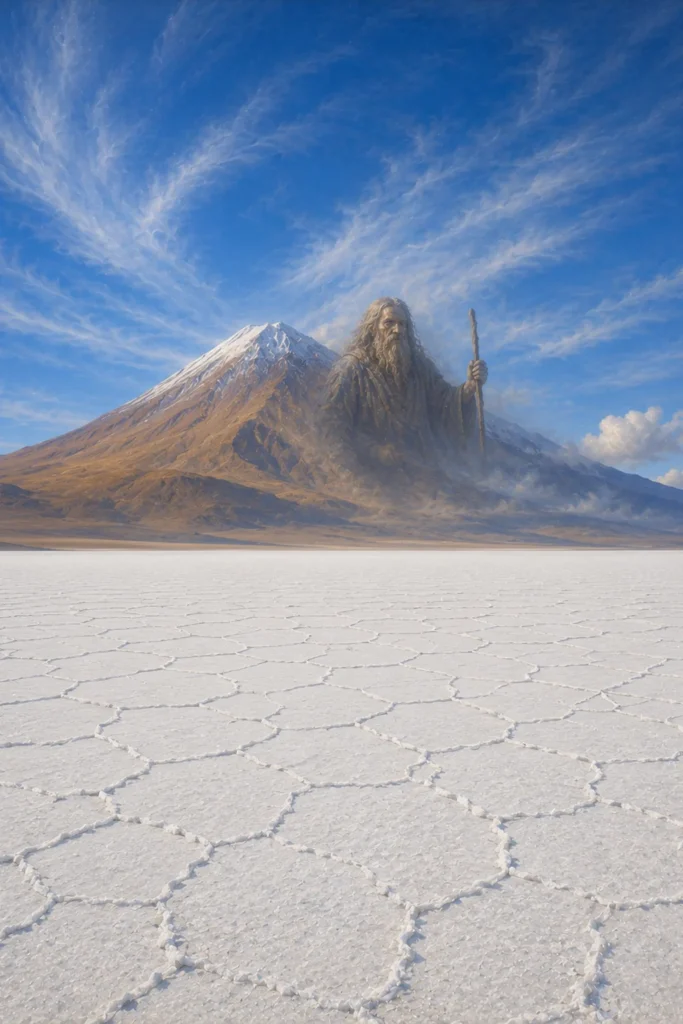
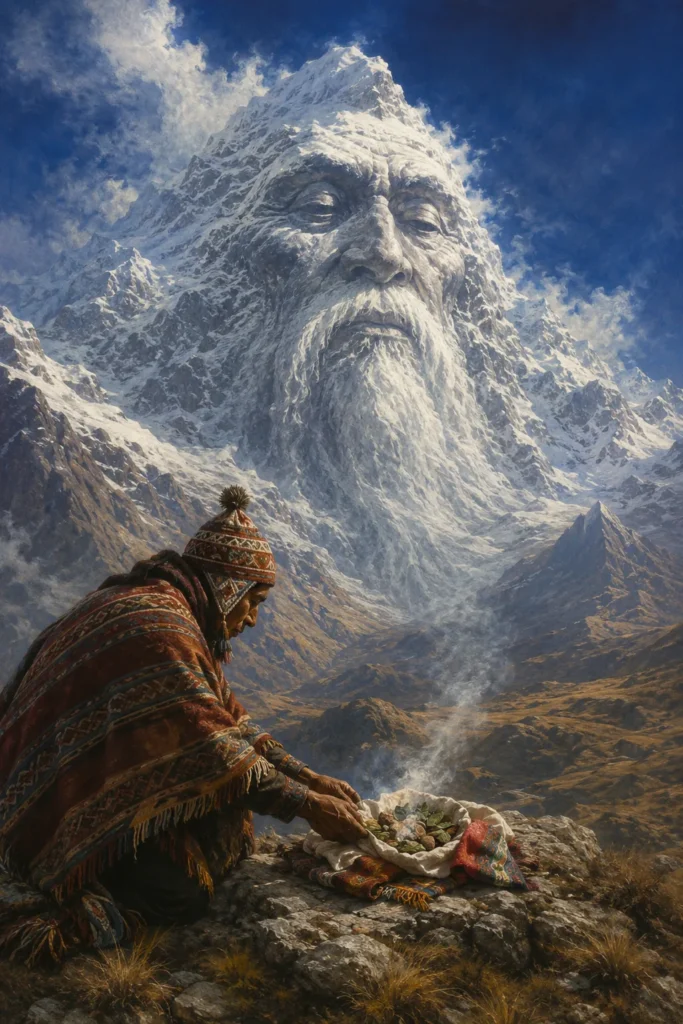
Appearance: old man with a long white beard, dwelling within the mountain
Region of origin and sources
Period of the Texts
Documented since Ludovico Bertonio in 1612; at the same time it is a living practice that continues to be recorded ethnographically to this day.
Area of Diffusion
The Bolivian Altiplano, southern Peru and northern Chile: the core region of the Aymara, including the Titicaca basin and the great cordillera peaks.
Sources
Well documented: Bertonio’s colonial vocabulary, the ethnography of the Andean region, and the living cult itself.
Name and variants
Aymara: achachila, grandfather or ancestral spirit, from achachi, old man. The name is programmatic: Achachilas are the souls of the ancestors who dwell in the landscape; their guiding principle is ayni, reciprocity, mutual giving.
Appearance and effect
Appearance
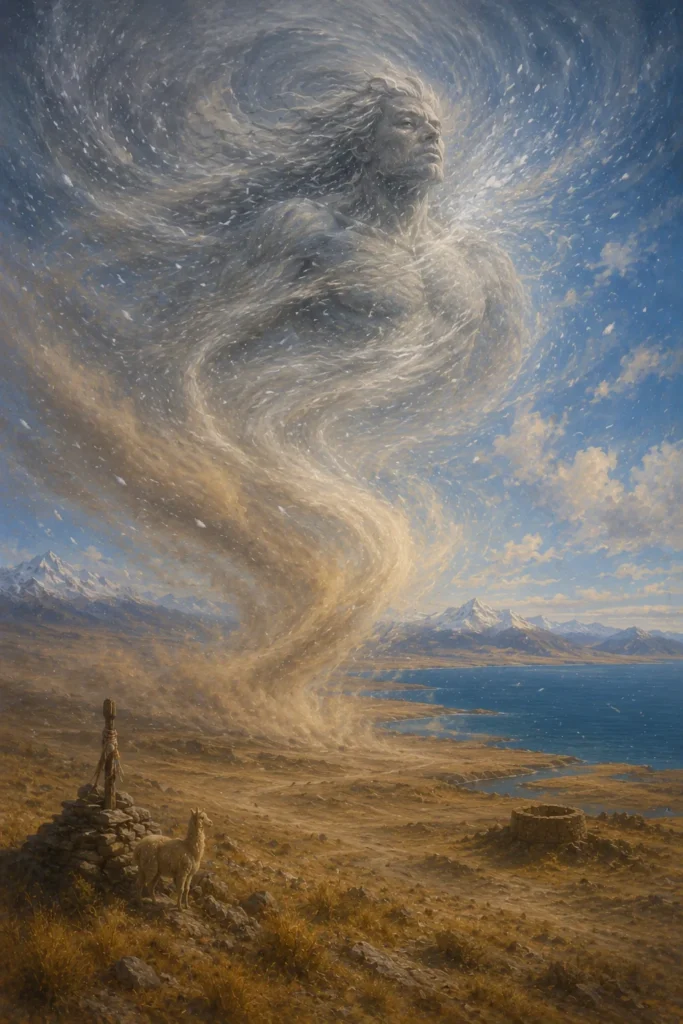
Achachilas are usually envisioned as old men with long white beards, an image of the snow-covered peaks. They dwell within the mountain and are lords of clouds, snow and hail.
Effect
As ancestral mountain spirits, Achachilas are protective lords of herds, water, rain, fertility and weather. If they are not fed and honoured, they send hail, frost, drought and illness; the relationship is one of exchange, not one-sided blessing.
Profile: Achachila
The key aspects of the ancestral mountain spirits at a glance.
Aymara belief system of the Altiplano: the Achachilas carry the genealogical bond to the landscape and form the male counterpart to the earth mother Pachamama.
Herds, water, rain, fertility and weather; every community knows the Achachilas of its own mountains.
Old man with a long white beard, dwelling in mountains, rocks and lakes; the whiteness of the beard reflects the snow of the peaks.
Protective lord and recipient of offerings under the principle of ayni: those who give receive protection; those who withhold gifts risk hail, frost, drought and illness.
The despacho, pago or waxt’a on the ritual cloth, the mesa, performed by the yatiri, the ritual specialist; the bundle is buried or burned.
The Quechua Apu, the Aymara Mallku, literally condor or lord, and the figure Machula: regional names for the same type of mountain spirit.
From the word for grandfather to a mountain-spirit cult
Aymara achachila means grandfather or ancestral spirit, from achachi, old man. The term is documented from the colonial period, in Ludovico Bertonio in 1612, and is anchored in a living cult. Achachilas are the souls of the ancestors who dwell in the landscape; the underlying principle is ayni, reciprocity, mutual giving.
This genealogical dimension distinguishes the Achachila from an abstract nature god: the mountain is an ancestor, not merely a natural force. This is why every community has its own Achachilas, from the hill behind the village to peaks venerated across the region, such as Illimani, Illampu or Sajama.
Living cult and classification
The Achachila cult remains alive on the Bolivian Altiplano, in the Titicaca region and in the Andean areas of southern Peru and northern Chile, and is strongly syncretised with Catholicism, for instance through mountain saints and Marian feasts.
From a religious-studies perspective, Achachila is a prime example of the Andean veneration of mountains as ancestral spirits. Four clarifications: Achachila is not Pachamama. Achachila, Apu and Mallku are not three different beings but regional names for the same type. Mallku means condor or lord, not simply mountain. And Achachilas are ancestral spirits, not abstract nature gods, which is why the genealogical dimension is central.
The despacho: feeding the grandfathers
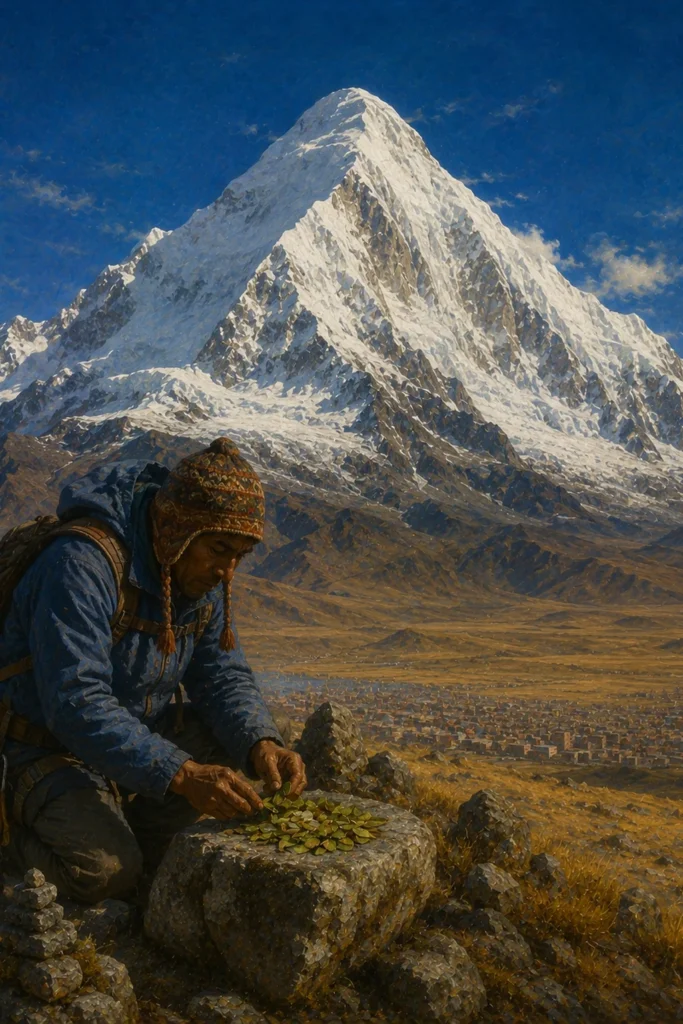
Well documented by sources is the despacho, also called pago or waxt’a, on the ritual cloth, the mesa: coca leaves as mediator, llama fat in place of the historical llama sacrifice, chicha and alcohol, incense, sweets, miniature figures, wool and seeds. The finished bundle is buried or burned. The rite is performed by the yatiri, the ritual specialist who knows which Achachila expects which offerings.
Apu, Mallku, Machula: one type, many names
Achachila corresponds to the Quechua Apu, as shown by pages on mountains such as Apu Salkantay or Apu Misti, to the Aymara Mallku, literally condor or lord, and to the figure Machula; at their core these are regional-language names for the same type of mountain spirit. The earth mother Pachamama, by contrast, is not a mountain spirit but forms a complementary pair with the Achachila.
Frequently asked questions about the Achachila
What does Achachila mean?
Grandfather or ancestor; the term denotes the deified ancestral mountain spirit of the Aymara.
Is Achachila the same as Apu?
Yes, in essence. Achachila (Aymara), Apu (Quechua) and Mallku are regional names for the same type of mountain spirit.
Is Achachila the same as Pachamama?
No. Pachamama is the earth mother; Achachila and Pachamama form a complementary pair.
Further links
Further reading:
- Pachamama – the earth mother as a complementary counterpart
- Illimani, Sajama, Huayna Potosí – great Bolivian Achachilas with their own page
- Smoke cleansing, Amulet – traditional protective means
- Protection Compass – protective means at a glance
Literature (selection)
Further standard works in the bibliography.
As the Aymara mountain spirit and ancestral grandfather of the mountains, the Achachila embodies a religiosity in which landscape and genealogy converge: the peak above the village is at the same time the community’s oldest relative.