Hone-onna and the Lantern of the Dead Lover
By Ralf Ittermann · last reviewed on
Hone-onna is a spirit of Japanese tradition.
Beautiful for her lover, a skeleton to everyone else.
Hone-onna, the bone woman, is a female spirit of the dead from Japanese Kaidan tales. To her beloved man she appears as a beautiful, living woman, but to outsiders as a skeleton. Her nightly visits drain her lover until he dies.
The name and Yokai form date back to Toriyama Sekien in 1779. The tale itself derives from the Kaidan Botan Doro, the Peony Lantern, recorded in Asai Ryoi’s collection Otogiboko of 1666, whose Chinese source lies in Qu You’s collection of around 1378.
Type: Female spirit of the dead, the bone woman of the Kaidan tales
Origin: Kaidan of the Edo period, adopted from China and japanised, named as Yokai in 1779
Texts: well documented, transmitted in literary and printed form
Period: Edo period to the present, adapted in Rakugo, Kabuki and film
Appearance: a skeleton that appears to her lover as a beautiful, living woman

Textual history
Period of the Texts
The Kaidan tale is attested across several stages: from Qu You’s Chinese collection of around 1378 through Asai Ryoi’s Otogiboko of 1666 to Toriyama Sekien’s naming of it as a Yokai in 1779.
Area of Diffusion
Widely disseminated in literary and printed form, originally adopted from China and made native to Japan; still alive today in Rakugo, Kabuki and film.
Sources
Good: the chain from Qu You’s Jiandeng xinhua through Asai Ryoi’s Otogiboko to Toriyama Sekien’s illustrated compendium is fully documented.
Name and variants
Japanese: The name combines hone, bone, and onna, woman. The name and Yokai form originate from Toriyama Sekien in 1779.
Form and effect
Appearance
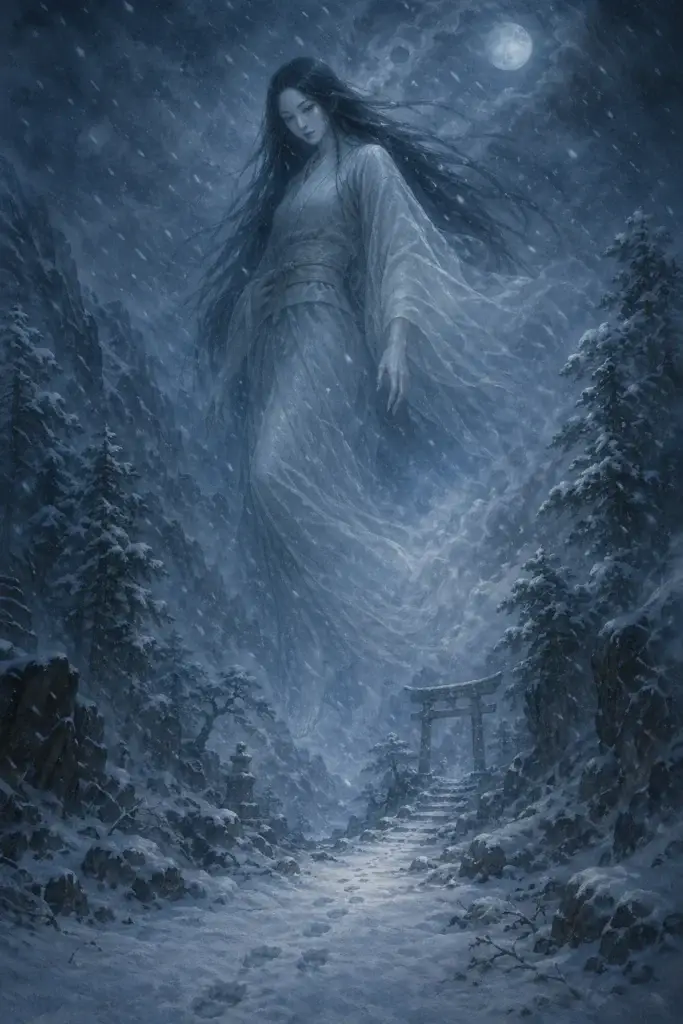
To her lover, the Hone-onna appears beautiful and alive; to outsiders, as a skeleton. She symbolises destructive erotic obsession that persists beyond death and serves as a vanitas motif, in which decay lurks behind beauty.
Effect
The Hone-onna visits her lover at night. The relationship drains him until he dies, as his life force is taken from him: her affection is thus deadly.
Profile: Hone-onna
The key aspects of the bone woman at a glance.
Part of the Japanese Kaidan tradition, adopted from a Chinese source and retold multiple times.
A single man: a former or current lover whom the dead woman visits at night.
A beautiful, living woman to her lover; a skeleton to outsiders.
Exhaustion through nightly visits that drain her lover’s life force until he dies.
Buddhist ofuda at doors and windows, along with the recitation of sutras, for as long as they are not removed.
The Peony Lantern: A Tale Travels to Japan
The name combines hone, bone, and onna, woman. The name and Yokai form originate from Toriyama Sekien in 1779. The tale itself goes back to the Kaidan Botan Doro, the Peony Lantern, contained in Asai Ryoi’s collection Otogiboko of 1666; its Chinese source is found in Qu You’s collection Jiandeng xinhua of around 1378.
Ueda Akinari, with his Ugetsu Monogatari of 1776, belongs to the same Kaidan tradition of skeleton and death-bride motifs, but is not the primary source of the Hone-onna: this leads via Asai Ryoi directly to Qu You’s Chinese source.
Botan Doro as Stage and Film Material
The Hone-onna is central to the Botan Doro tale, one of the three great Japanese ghost stories, widely adapted as Rakugo, Kabuki and film. In modern Yokai art she is a fixed image type, the woman half flesh, half bone.
From a religious-studies perspective, the Hone-onna links the unattended dead with the Buddhist teachings on karma and attachment: excessive attachment, desire, keeps the dead woman bound to the world. She is thus less a vengeful spirit than a spirit of attachment and desire.
Ofuda, sutras and a fragile protection
Handed down from the Botan Doro is defence through Buddhist ofuda, protective talismans bearing sutra texts, stuck to doors and windows to keep the spirit away, along with the recitation of sutras. A worn amulet stands for these Buddhist protective talismans. Holy water is regarded as a sign of purity against the draining apparition, while smudging and sutra recitation belong to the traditional defence. In the tale itself, however, the protection is fragile: the man lifts it himself, which seals his death, a motif of fateful longing.
Dead brides between Japan and Europe
The Hone-onna belongs to the dead-bride motifs known from the European Lenore ballad, in which the dead lover fetches the living woman. Related figures are the Greek Lamia and Empusa, who devour men in beautiful form, as well as the vanitas depiction of death and the maiden. Within Japan she is close to the devouring female Yokai, in particular the Onryo and the Ubume, but differs from both as a spirit of attachment and desire rather than a true vengeful spirit.
Frequently asked questions about the Hone-onna
Does the Hone-onna originate with Ueda Akinari?
No, primarily with Toriyama Sekien from 1779, following Asai Ryoi from 1666; the Chinese root lies with Qu You around 1378.
Why does the man not see her as a skeleton?
Love and desire blind him, while outsiders see the bones.
How does one protect oneself from her?
Through Buddhist ofuda and sutras, provided one does not lift the protection oneself.
Further links
Further reading:
- Japan – all beings of the Japanese tradition
- Onryo, Ubume – related Japanese spirits of the dead
- Yuan-gui – Chinese vengeful spirit for comparison
- Amulet, Holy water, Smudging – traditional protective means
- Protection Compass – protective means at a glance
Literature (selection)
Further standard works in the bibliography.
As the bone woman, the Hone-onna remains the quintessential Japanese dead bride: a love that endures beyond death and, in the end, still takes the beloved’s life.