Kijimuna, the red-haired fishermen's friends of Okinawa
By Ralf Ittermann · last reviewed on
The Kijimuna are spirits of the Japanese tradition.
Red-haired tree spirits of the Ryukyu Islands, friends of fishermen. Kijimuna, the red-haired fishermen’s friends of Okinawa, belong to the local spirit lore that this page summarises for orientation.
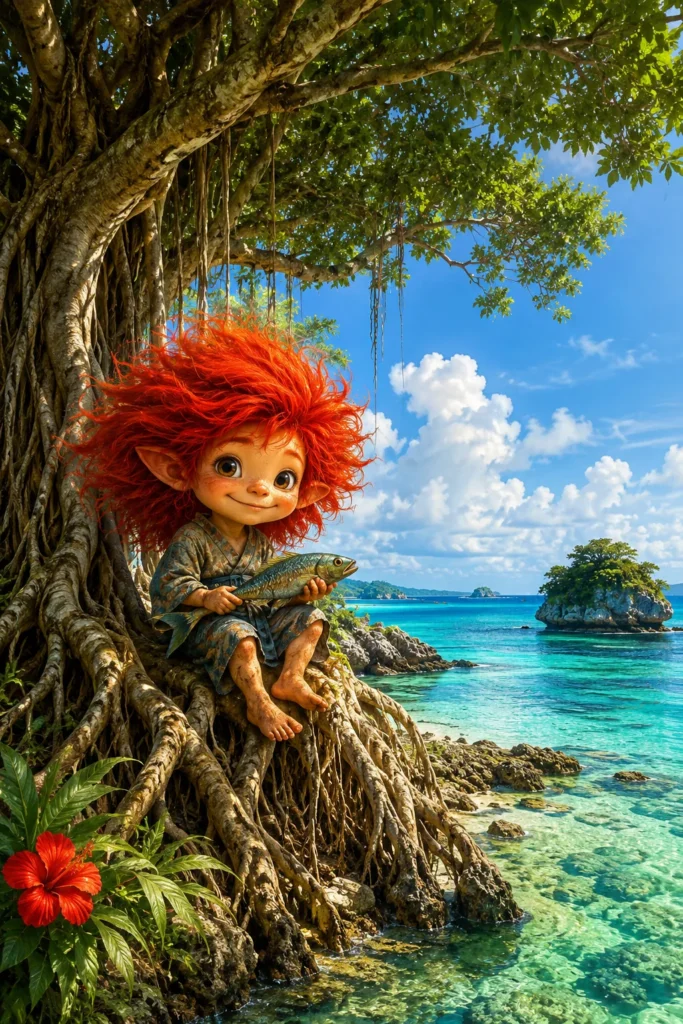
Kijimuna are red-haired tree spirits of Okinawa who live in old banyan trees, the gajumaru. Child-sized, with wild, brightly red hair, a large head and reddish skin, they are among the best-known figures of the Ryukyu Islands.
As skilled fishermen, they can form lifelong friendships with humans, often in exchange for a cooked meal. But whoever cuts down their tree or lights a fire beneath it risks their revenge: angered Kijimuna can set forests and houses ablaze.
Type: Tree spirits of the Ryukyu Islands, ambivalent nature beings
Origin: Oral Ryukyu tradition, today documented through modern collections
Texts: Regional collection and ethnography, without premodern fixation
Period: orally grown through to the present
Appearance: child-sized, with wild, brightly red hair, a large head and reddish skin
Traditional context
Period of the Texts
Purely orally grown island folklore without premodern fixation; the evidence comes from modern regional collection and ethnography.
Area of Diffusion
Okinawa and the Ryukyu Islands: there the old gajumaru trees are considered the dwelling place of the Kijimuna and to be spiritually powerful.
Sources
Orally transmitted and documented in modern times; detail variants are to be treated as variants of tradition, and there is no premodern primary literature.
Name and variants
Okinawan: The name literally means something like tree spirit or child of the tree. Alternative names are Bunagaya and Bungaya, which refer to the beings’ large head.
Appearance and behaviour
Appearance
The Kijimuna are red-haired, child-sized forest beings with a large head; red hair and reddish skin are their defining feature. As dwellers of ancient gajumaru trees, they embody the animate spirit of Okinawa’s subtropical forests.
Effect
The Kijimuna are excellent fishermen and are especially fond of fish eyes, of which they usually eat only one. They gladly help fishermen, often in exchange for a cooked meal, and the friendships can last a lifetime. Felling their tree or lighting a fire angers them; enraged Kijimuna can set forests and houses ablaze. They fear and hate the octopus and avoid fire and smoke.
Profile: Kijimuna
The most important aspects of Okinawa’s tree spirits at a glance.
Tree spirits within the animist Ryukyu belief, in which the gajumaru is considered spiritually powerful; representative of the spiritual power of trees.
Above all fishermen and villagers: they help some with the catch, and share tree and neighbourhood with others.
Child-sized figures with wild, bright red hair, a large head and reddish skin, living in the aerial roots of old banyan trees.
Help with fishing and lifelong friendship in return for good treatment; revenge, even fires, for felling the tree or lighting a fire at their dwelling tree.
Avoiding provocation: not felling an inhabited gajumaru tree and not lighting a fire at it. The octopus, which they fear, is considered a protective means.
Island folklore of the Ryukyu
The name Kijimuna is Okinawan and literally means roughly tree spirit or child of the tree; the alternative names Bunagaya and Bungaya refer to the large head. The tradition is purely oral island folklore without pre-modern primary literature, unlike the mainland Kodama; the records come from modern regional collections and ethnography.
Within Ryukyu belief, the Kijimuna are seen as representative of the spiritual power of trees: the old gajumaru is not a mere plant but an animated place where humans and spirits can meet, for good or ill.
Reception and classification
The Kijimuna are a fixed part of Okinawan culture and tourism: as a mascot, in local art and at festivals, and additionally popularised through GeGeGe no Kitaro. They are a likeable symbol of Okinawa’s nature and island identity.
From the perspective of religious studies, the Kijimuna are tree spirits within the animist Ryukyu belief system, in which the gajumaru is considered spiritually powerful. They are ambivalent nature beings between helper and avenger. It is important to note that Ryukyu culture is distinct and not identical to the mainland Japanese tradition.
A duty of respect rather than ritual
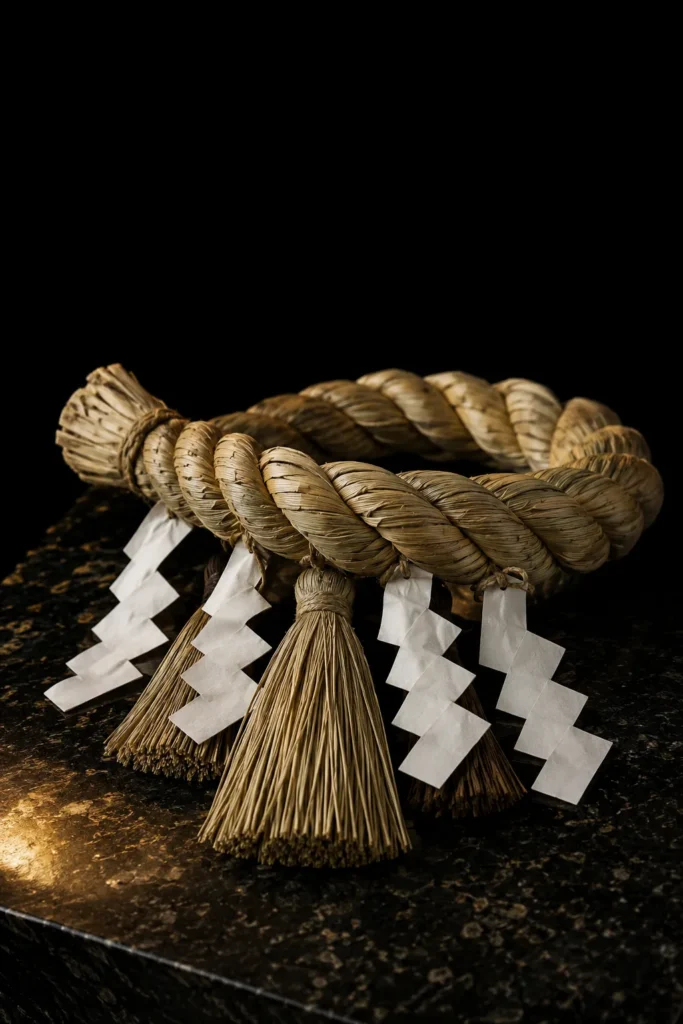
Central to dealing with the Kijimuna is avoiding provocation: one does not fell an inhabited gajumaru tree or light a fire at it. The octopus, which the Kijimuna fear and hate, is regarded as a traditional protective means. A formalised cult such as the shimenawa rope used for the Kodama is not documented in the same way; instead, the focus is on the duty of avoidance and respect, and on maintaining good relations, for instance through cooked meals for the helpful fishermen.
Tree spirits and goblins compared
Frequently asked questions about the Kijimuna
Where do Kijimuna live?
In old gajumaru or banyan trees on Okinawa and the Ryukyu Islands.
Are Kijimuna dangerous?
Generally not, as long as they are not offended; they can become lifelong friends and fishing helpers. Felling a tree or lighting a fire risks revenge, even fires.
What do they like and fear?
They love fish eyes and cooked meals; they fear and hate the octopus and avoid fire and smoke.
Further links
Further reading:
- Japan – all beings of Japanese tradition
- Kodama – the mainland tree spirit with a felling taboo
- Kappa – child-sized nature being with firm likes
- Amulet, Smoke Cleansing, Salt – traditional protective means
- Protection Compass – protective means at a glance
Literature (selection)
Further standard works in the bibliography.
As Okinawa’s tree spirit and red-haired goblin of the Ryukyu, the Kijimuna links the animateness of the old gajumaru trees with the everyday life of fishermen: a neighbour from the tree, who can be friend or avenger.