Div, the rejected gods of Persia
By Ralf Ittermann · last reviewed on
The Div are demons of the Persian tradition.
The rejected gods who work against truth and order. The profile places the Div, as rejected gods of Persia, within Zoroastrian demonology.
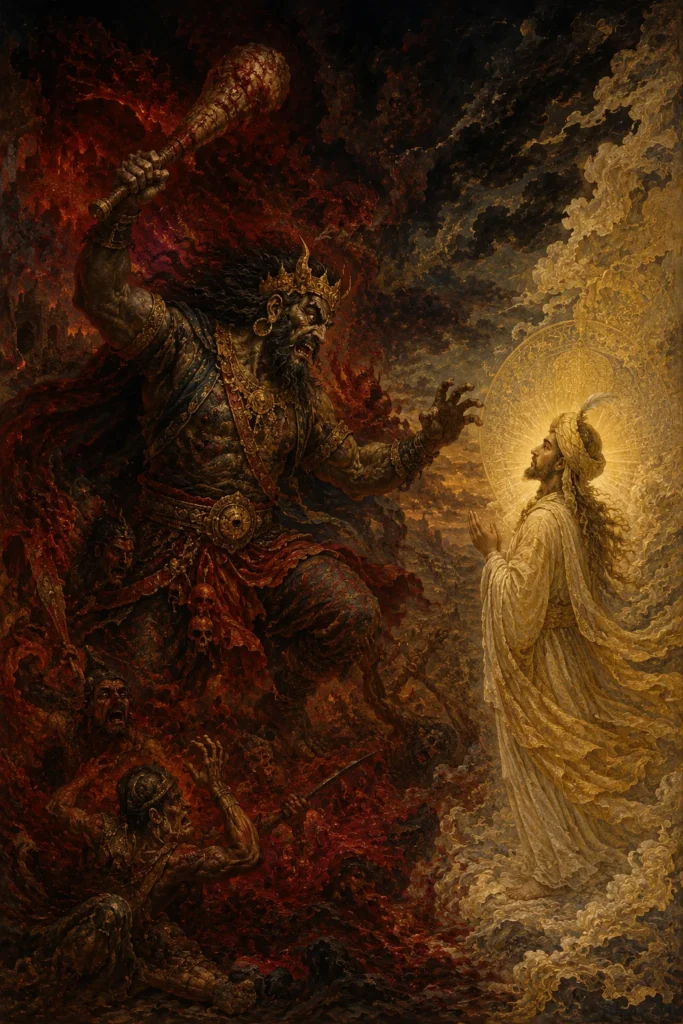
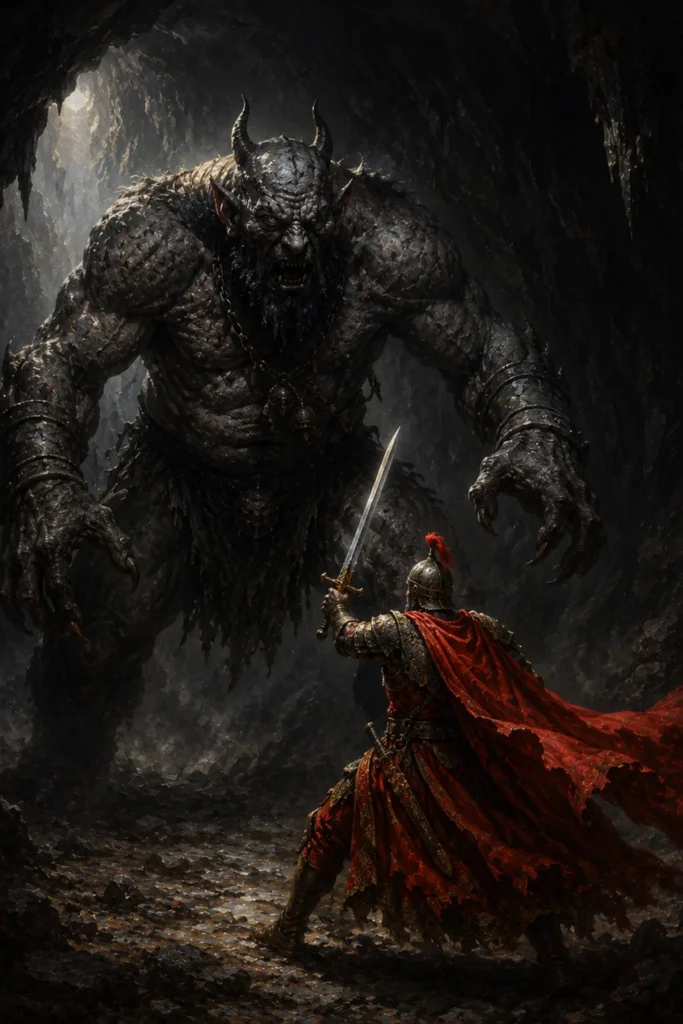
The Div, Avestan Daeva, is an entire demon class of Persian mythology: the rejected gods who work against the principle of truth and order. In the Shahnameh, the Div becomes a gigantic monster.
He is attested in all layers of the tradition, in the Gathas, in the Young Avesta, especially in the Vendidad, in Old Persian inscriptions, and in the Pahlavi books, and finally in Ferdowsi’s Shahnameh around 1000.
Type: Demon class, the rejected gods of Persian mythology
Origin: Old Iranian daiva, from Indo-Iranian daiva, god
Texts: Gathas, Young Avesta (Vendidad), Old Persian inscriptions, Pahlavi books, Shahnameh
Period: Zoroastrian through to the Shahnameh around 1000
Appearance: small evil genii to gigantic monsters
Context of Tradition
Period of the Texts
From the Gathas to the Shahnameh around 1000: the Div is attested in all layers of the Iranian tradition, especially in the Vendidad.
Area of Diffusion
The Iranian region, from the Avestan texts to Persian epic poetry; in the Shahnameh, the Divs of Mazandaran are at home.
Sources
Well documented: the Avesta, the Old Persian inscriptions, the Pahlavi books, and the Encyclopaedia Iranica.
Name and variants
Old Iranian: daiva, from Indo-Iranian daiva, god, with the Vedic cognate deva, the Indian god. Iranian forms are Middle Persian dew, New Persian div, consistently negative as demon.
Form and effect
Appearance
In the Young Avesta, the Div are small, evil genii; at the top of their list, directly after Angra Mainyu, stand the names Indra, Sauruua and Nanghaithja, the Vedic gods Indra, Sarva and Nasatya. In the Shahnameh, the Div becomes a gigantic monster.
Effect
The Div are the rejected gods and demons who work against the principle of Asha, truth and order. Their targets are the order of the world and its heroes.
Profile: Div
The most important aspects of the demon class at a glance.
Demon class of the Zoroastrian belief world, attested in all layers of the texts and epically elaborated in the Shahnameh.
The order of the world and its heroes: the Div work against the principle of Asha; in the epic, the hero Rostam fights against them.
In the Young Avesta, small, evil genii; in the Shahnameh, gigantic monsters such as the Div-e Sepid, the White Div.
Everything that undermines truth and order; at the top of their list, directly after Angra Mainyu, stand three old god names.
The veneration of Ahura Mazda and the Amesha Spentas, correct ritual, and the purity and warding code of the Vendidad.
The Vedic deva as the same word with reversed valuation; along with the fixed contrasting pair with the beautiful Peri.
The same word, two valuations: Daeva and Deva
Old Iranian daiva derives from Indo-Iranian daiva, god, and has its cognate in Vedic deva, the Indian god. The core finding is this: Iranian Daeva and Vedic Deva are the same word with reversed valuation, in India the good gods, in Iran the demons; conversely, in India the Asuras were demonised, while Iranian Ahura remained positive.
The Div is attested in all layers: in the Gathas, in the Young Avesta, especially in the Vendidad, in Old Persian inscriptions and in the Pahlavi books, and finally in the Shahnameh around 1000, where the small evil genii of the Avesta become the gigantic monsters of the epic.
The White Div and its classification
The Div is present in Persian visual and folk art right through to modern fantasy. Best known is the Div-e Sepid, the White Div: in Ferdowsi’s Shahnameh, he is the leader of the Divs of Mazandaran, whom the hero Rostam kills during his Seven Trials.
In the study of religion, the Div is a demon class. Three clarifications: the etymology equating it with Vedic Deva is confirmed, but the history of its demonisation is not. The narrative that Zoroaster turned the old gods into demons is only one of three hypotheses. And in the Gathas, the Daevas are not yet demons but a rejected category of gods.
Ritual, the Vendidad, and the inscription of Xerxes
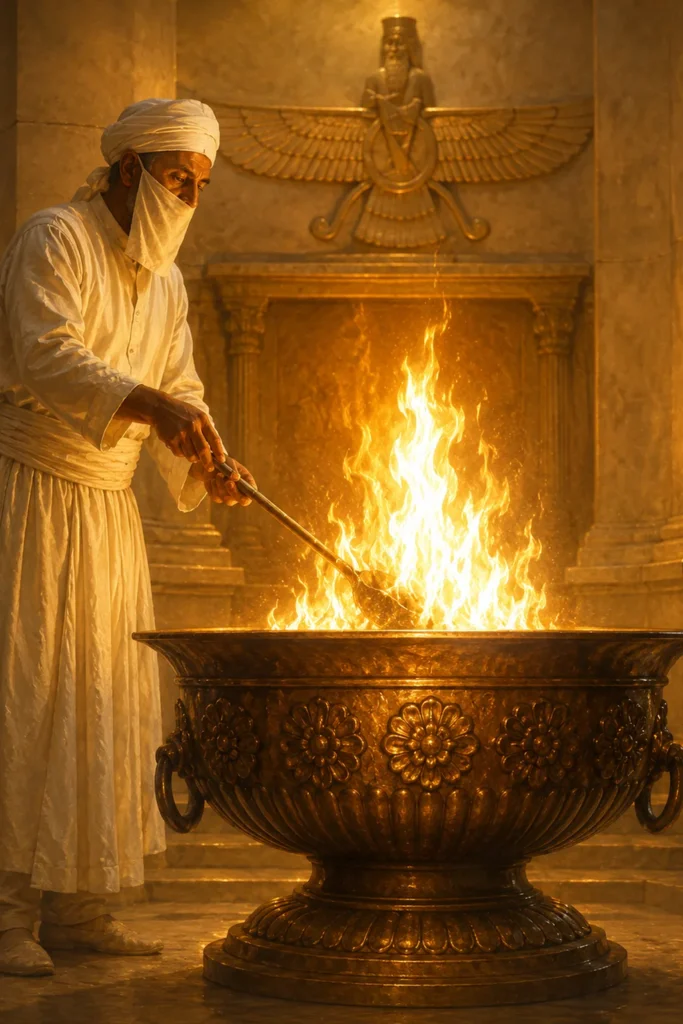
Protection from the Div is granted by veneration of Ahura Mazda and the Amesha Spentas, together with correct ritual; the Vendidad is an entire code of purity and defence against the demonic sphere. In royal form, the inscription of Xerxes attests to the same stance: it reports the destruction of a Daeva sanctuary on the command of Ahura Mazda.
Deva, Asura and the counterpart Peri
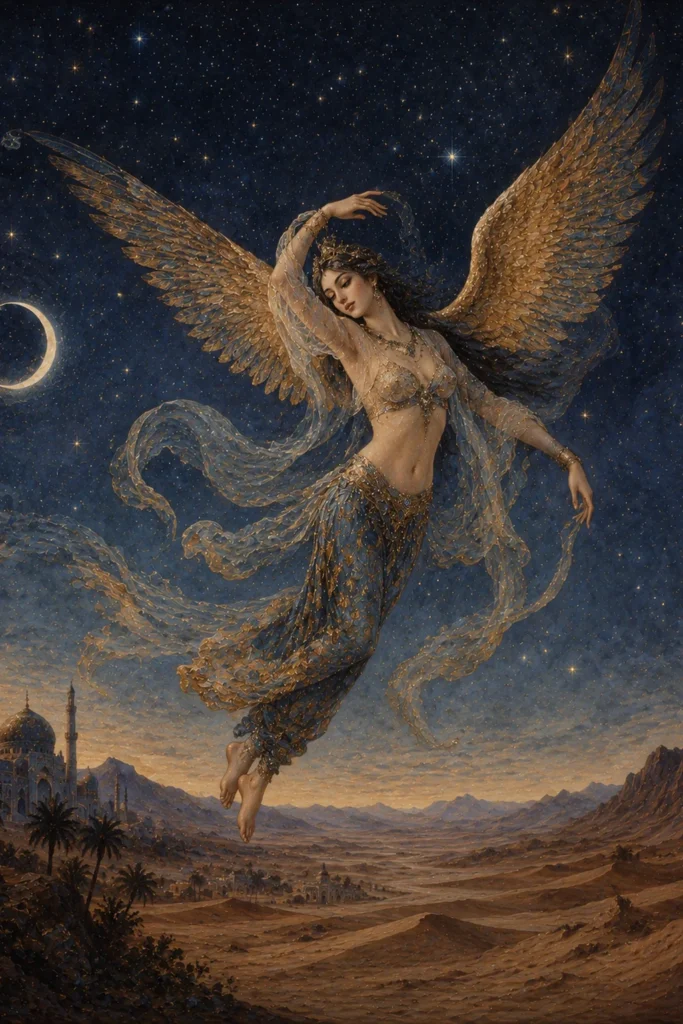
The closest parallel lies in India: Vedic Deva is the same word as Iranian Daeva, only with reversed valuation, and correspondingly the Asuras were demonised there. Within the Persian tradition, the ugly Divs form a fixed counterpart to the beautiful Pairika, the later Peri. The wrath demon Aeshma and the drought demon Apaosha belong to the same world of demons.
Frequently asked questions about the Div
What is a Div?
A class of demon in Persian mythology: the rejected gods who work against the principle of truth and order.
Is Div related to the Indian Deva?
Yes, it is the same word, valued negatively in Iran and positively in India. Correspondingly, in India the Asuras were demonised, while the Iranian Ahura remained positive.
Who is the Div-e Sepid?
The White Div, in the Shahnameh the leader of the Divs of Mazandaran. The hero Rostam kills him during his Seven Trials.
Further links
Further reading:
- Pairika – the beautiful Peri as the counterpart to the Div
- Aeshma, Apaosha – further beings of the Persian tradition
- Holy water, Amulet, Iron – traditional protective means
- Protection Compass – overview of protective means
Literature (selection)
Further standard works in the bibliography.
As the demons of Persia par excellence, the Div show how closely the history of religion and the history of language are intertwined: the word Daeva is the same as the Indian deva, only with reversed valuation.