Rauhnächte: the Twelve Nights between the years
By Ralf Ittermann · last reviewed on
Between Christmas and Epiphany lies a span of time that had rules of its own in the German-speaking lands. It was called the Twelves, the Rauhnächte or the Raunächte. In these nights the border between the visible and the invisible world was held to be permeable.
For the lexicon, these nights are the densest protective season of the year. Almost everything that tradition knows in the way of warding appears here in concentrated form: smoke, noise, holy water, threshold signs and a series of prohibitions. At the same time they gather the figures that have pages of their own elsewhere in the lexicon. Rituals involving smoke, noise and holy water shape these twelve nights between the years.
What are the Rauhnächte?
The Rauhnächte are the twelve nights between Christmas and the feast of the Epiphany on 6 January. The older name for them is the Twelves or the Twelve Nights. Regionally there are also names such as Innernächte, Unternächte or Glöckelnächte.
Folk belief ascribed a state of exception to this time. The order of the year was complete, the new one had not yet begun, and in this in-between space, according to tradition, wandering spirits and legendary figures were abroad. This explains the density of protective customs recorded for these nights.
Important for understanding: the Rauhnächte are not a being and not a single custom, but a span of time to which many customs attached themselves. What was done and left undone in them differed considerably from valley to valley.
When are the Rauhnächte? Dates
The most widespread count places the Rauhnächte on the nights from 25 December to 6 January. For the 2026/27 season this means: the sequence begins in the night of 25 to 26 December 2026 and ends in the night of 5 to 6 January 2027.
Beside it stand older and regional counts. In many places St Thomas’s Night, from 20 to 21 December, was regarded as the opening, because in the old calendar it fell on the longest night of the year. In this variant the sequence runs up to New Year’s night. Other regions began with Christmas Night from 24 to 25 December.
Whoever looks for one fixed date will therefore find none in the sources. Depending on the region even the number varies; the records name between three and twelve nights singled out. Common to all counts is the reference to the darkest time of the year.
Rauhnächte or Raunächte? Where the name comes from
Both spellings are in use, and both mean the same thing. The form with h points to one of the two current derivations, the form without h to the other.
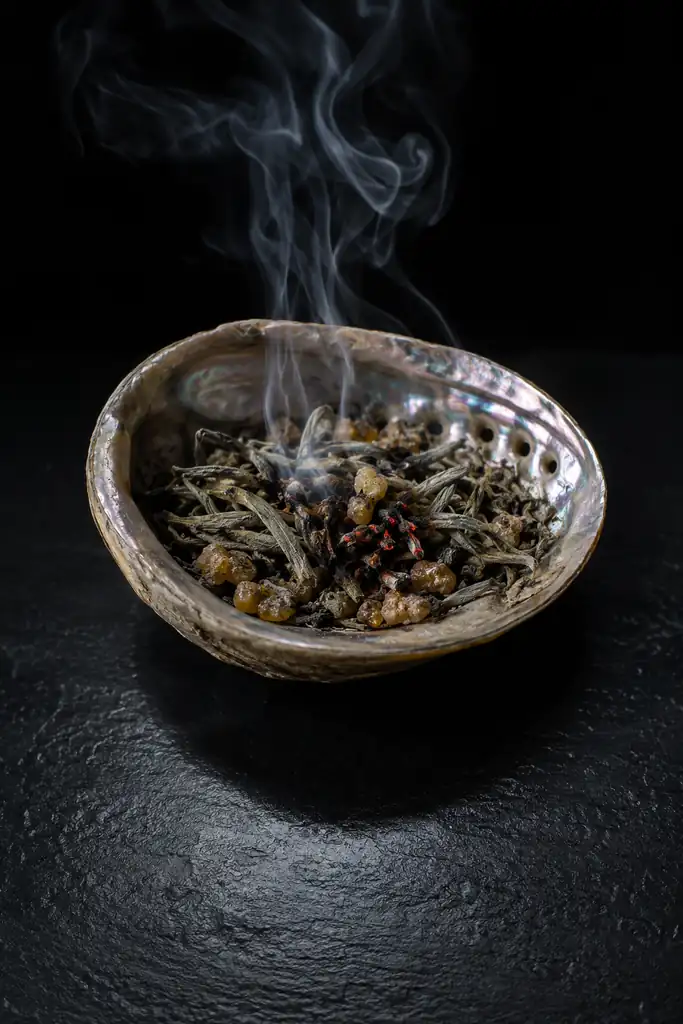
The first interpretation traces the name back to censing. Houses and stables were fumigated in these nights with frankincense and dried herbs, out of which Rauchnächte, smoke nights, and later Rauhnächte are said to have grown. The second interpretation starts from Middle High German ruch, meaning rough and hairy, and refers to the fur-clad fright figures that went about in these nights.
Research has not settled the question. Both derivations are linguistically possible, and both fit the recorded customs.
Origin: where does the custom come from?
The most popular explanation is a calendrical one. Twelve lunar months yield around 354 days, while the solar year counts 365. The eleven days of difference, reckoned in nights twelve, were accordingly held to be inserted time outside the normal order, in which other laws prevailed.
This calculation is catchy and is passed on to this day. As historical proof of a pre-Christian origin, however, it does not serve. Research into customs has repeatedly pointed out that the Twelves only become tangible from Christian times onward and that the closed period between Christmas and Epiphany was set by the Church.
The lexicon follows the sources here. Customs, prohibitions and legends are attested since the Middle Ages, partly in ecclesiastical condemnations, partly in legal sources. An unbroken line to Germanic festivals cannot be drawn from this. Much of what passes for ancient today received its form only in the 19th century, when collectors and Romantics elevated folk custom.
The figures of the Rauhnächte
In the legends of these nights a whole company of figures appears. Four of them shape the tradition in particular.
Frau Perchta examines, in the Alps and in Bavaria, whether the work of the year has been completed. Whoever had finished their spinning and put the house in order could hope for blessing; whoever had been careless, for rebuke. Frau Holle carries the same role in central Germany as the female figure of winter.
The Wild Hunt, legend has it, sweeps across the land in these nights, a train of riders, hounds and the dead that no one wished to meet. The folklore studies of the 19th century equated its leader with Odin, which counts as Jacob Grimm’s interpretation and does not stand so in the older sources.
Added to this is a motif told all over central Europe: in Christmas Night the animals in the stable speak with human voices. Whoever eavesdrops on them, the legend says, hears their own death foretold. The tale belongs to the wonder motifs of this season.
Censing in the Rauhnächte
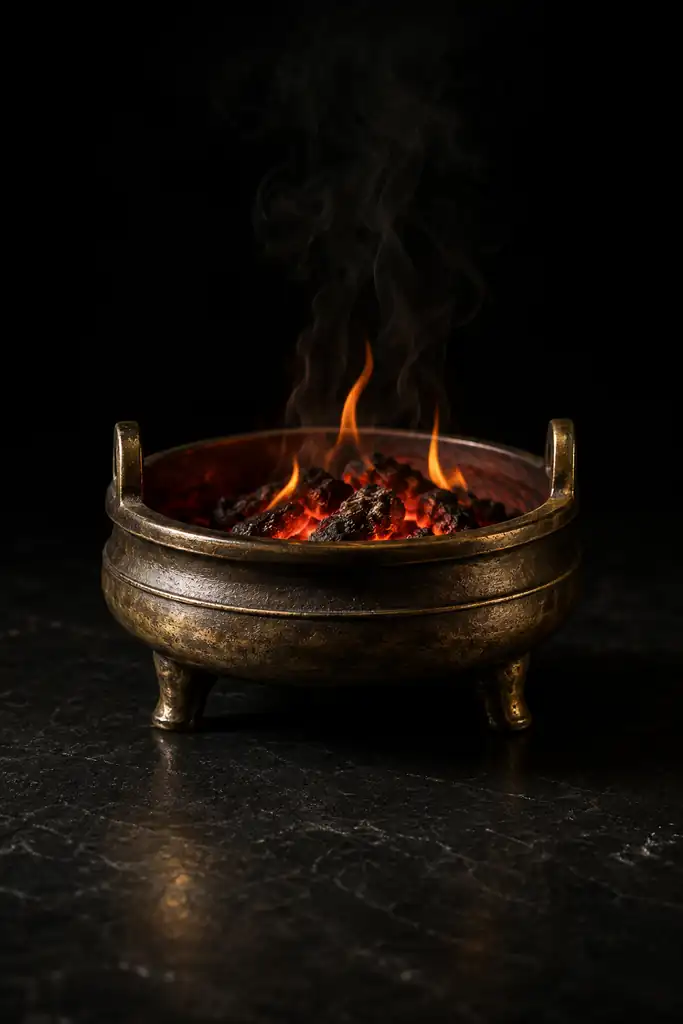
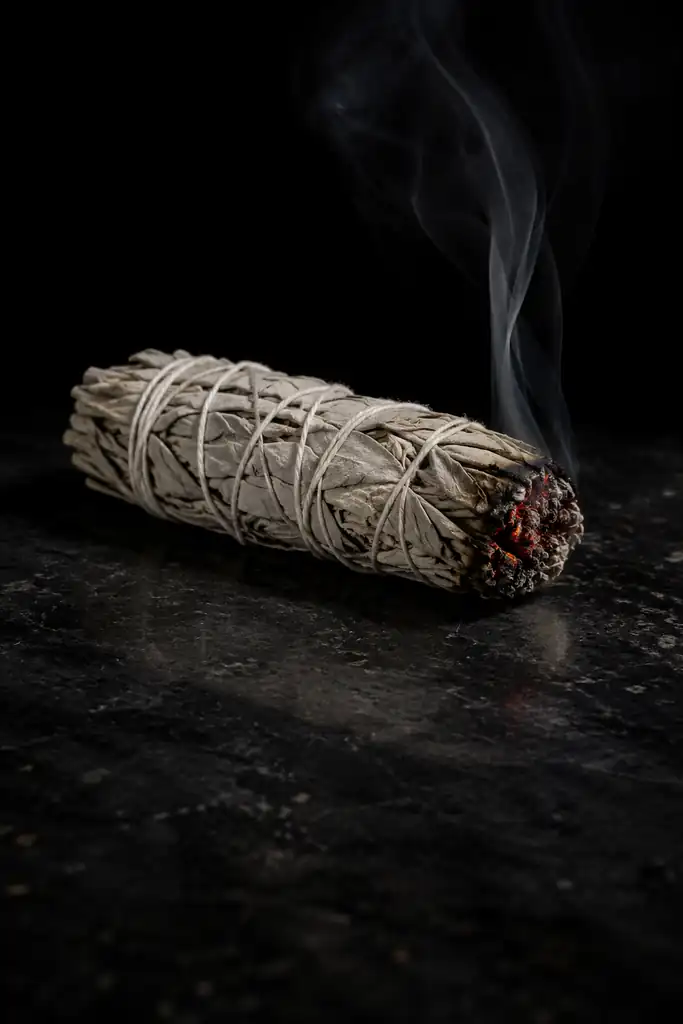
Censing is the custom that presumably gave the nights their name. It is recorded that farmhouses, parlours and stables were fumigated with frankincense and dried herbs, frequently by the master of the house, who walked through every room with a pan.
The practice is described as early as the 16th century, for instance by Johannes Boemus in 1520 and by Sebastian Franck in 1534. The smoke carried a double meaning. It was to keep wandering spirits away, and as consecrated smoke it was at the same time a blessing covered by the Church. In many regions consecrated water was carried along and the farmstead sprinkled with it.
Three nights count in tradition as the classic censing nights: St Thomas’s Night, the night before New Year and the eve of Epiphany. At the close, the star singers went from house to house and wrote the letters C, M and B on the lintel in consecrated chalk. They stand for the Latin blessing Christus mansionem benedicat, may Christ bless this house, and are read in popular belief as the initials of the Three Kings.
Continuing on, the lexicon describes the practice of censing and frankincense as traditional forms of protection in entries of their own.
Rules and prohibitions in the Twelves
The Rauhnächte were above all a time of prohibitions. Best known is the ban on washing laundry and hanging it out overnight. According to tradition the Wild Hunt could become entangled in the cloths, and whoever left white washing hanging would see it turned into a shroud in the coming year.
Further rules concerned order in the house. Work once begun was to be finished, wheels and distaffs stilled, and the parlours tidied. What had been lent out was fetched back, for whatever was out of the house in this time counted as lost. Lending to others was likewise left undone.
To this came rules of conduct. Noise belonged to the public processions; indoors, restraint prevailed, and quarrelling in the Twelves was said to echo through the whole year. Some regions forbade being out alone after nightfall.
These rules were the custom precepts of their time and are no instruction for today. They have survived above all as narrative lore and, in some rural regions, as habit.
Los nights and oracles
Beside the warding stands the foreshowing. The Twelves counted as Losnächte, lot nights, in which the coming year could be read. The most widespread form is the assignment: each of the twelve nights stands for one month of the new year, and its weather counted as an omen for the weather of that month.
The same logic lay over dreams. What was dreamt in the seventh night accordingly concerned July. Farmers’ rules and handwritten calendars preserved such observations across generations.
To this came oracles with simple means, from cutting apples and throwing shoes to lead-pouring on New Year’s Eve. Lead-pouring sets have been off the market in the European Union since April 2018, because their lead content exceeds the limits of the chemicals regulation. Sets made of tin and the pouring of wax have taken their place.
Modern Rauhnächte: journaling and thirteen wishes
Since the 1990s a new practice has formed around the Rauhnächte, spread through guidebooks, courses and social networks. It understands the twelve nights as a season for review and resolution and works with notebook, candle and set questions for each day.
Best known is the ritual of the thirteen wishes. It is described thus: before the Rauhnächte begin, thirteen wishes are written on separate slips of paper and folded. In each of the twelve nights one slip is burned unread; the thirteenth remains and is read. In this practice it counts as the wish one is to take care of oneself.
Historically this ritual is young. It does not appear in the sources of the 19th and early 20th centuries. It takes up older motifs, such as the assignment of the nights to months and burning as a close, and forms a modern custom out of them. The lexicon documents it as such.
The twelve nights at a glance
The following overview follows the most widespread count from 25 December to 6 January and shows the assignment to the months as well as the nights singled out in tradition. The season given is 2026/27.
- Preceding, 20 to 21 December: St Thomas’s Night, in many regions the opening and one of the censing nights.
- 1st night, 25 to 26 December: stands for January. In other counts the sequence already begins in Christmas Night.
- 2nd night, 26 to 27 December: stands for February. St Stephen’s Day.
- 3rd night, 27 to 28 December: stands for March.
- 4th night, 28 to 29 December: stands for April. Holy Innocents’ Day.
- 5th night, 29 to 30 December: stands for May.
- 6th night, 30 to 31 December: stands for June.
- 7th night, 31 December to 1 January: stands for July. New Year’s Eve, censing night and the classic oracle night.
- 8th night, 1 to 2 January: stands for August. New Year.
- 9th night, 2 to 3 January: stands for September.
- 10th night, 3 to 4 January: stands for October.
- 11th night, 4 to 5 January: stands for November. Glöckler night in the Salzkammergut.
- 12th night, 5 to 6 January: stands for December. Perchtennacht, eve of Epiphany and close of the sequence.
As the four most important nights, most accounts single out St Thomas’s Night, Christmas Night, the night before New Year and the Perchtennacht leading to 6 January.
Rauhnächte in the Alpine region: Perchten runs and Glöckler
In the eastern Alps the Twelves have kept their most visible form. There the Perchten move through the villages in these nights, in two shapes: the Schönperchten with decorated headdresses and the Schiachperchten with demonic wooden masks, fur and bells.
The best-known traditional procession is the Pongau Perchten run in the Salzburg country, held in turn in several communities around Epiphany. In the Salzkammergut the Glöckler run on 5 January with their glowing cap-lanterns; in Rauris the Schnabelperchten go about.
These runs are to be distinguished from the Krampus. The Krampus belongs to Advent as the companion of St Nicholas and runs on 5 and 6 December; the Perchten belong to the other end of the Christmas season. In modern show runs the two figures mingle.
Smoke, noise and protection: what holds the Twelves together
Set the customs of these nights side by side and a single pattern shows itself. Almost everything recorded belongs to warding: the smoke in the house, the consecrated water at the threshold, the chalk above the door, the noise of the bells in the procession, the stillness within.
Folklore studies read in this a concentration. At the point of the year held to be least ordered, tradition gathers its means of protection and sets them up in closed order. The fright figures that appear in it are part of this order, because their appearance is bounded and dated.
This also explains why so many motifs of these nights recur in other cultures. Smoke, noise and mask belong to the oldest and most widespread forms of warding, and the Twelves bring them together in a single span of time.
Frequently asked questions about the Rauhnächte
What must one not do in the Rauhnächte?
Tradition names three prohibitions above all. Laundry was not to be washed nor hung out overnight, because the Wild Hunt, legend says, becomes entangled in it. Work once begun was to be finished and distaffs cleared away. Lent objects were fetched back, and in this time nothing was given out of the house. These are custom rules of past times that live on today above all as narrative lore.
What exactly does one do in the Rauhnächte?
Four fields of action are recorded: fumigating house and stable with frankincense and herbs, the blessing at the threshold with consecrated water and the chalk inscription of the star singers, the reading of weather and dreams as omens for the twelve months, and the masked processions of the Alpine region. In today’s practice the review with a notebook and the ritual of the thirteen wishes are added, which counts as a young custom.
What are the 12 Rauhnächte?
The twelve Rauhnächte are the nights between Christmas and Epiphany, in the most widespread count from 25 December to 6 January. Older counts begin with St Thomas’s Night on 21 December or with Christmas Night. Each of the twelve nights counts in tradition as an omen for one month of the coming year.
Which are the 4 most important Rauhnächte?
Most accounts single out St Thomas’s Night from 20 to 21 December as the longest night of the old calendar, Christmas Night from 24 to 25 December, the night before New Year as the classic oracle night, and the Perchtennacht from 5 to 6 January as the close of the sequence.
Related beings and topics
The figures and practices of these nights are described individually in the lexicon: Frau Perchta and the Perchten as examiner of the Twelves, Frau Holle as her central-German counterpart, Odin in connection with the Wild Hunt, and the Krampus as the fright figure of Advent. An overview of the tradition is offered by the page on the Germanic tradition; the traditional forms of protection of this season are described under censing and frankincense.
Literature (selection)
Related key terms: rauhnaechte raunaechte twelve nights smoke nights censing perchtennacht.
iWell Guard and protective traditions
The variety of censing practices shows that people on different continents came to similar conclusions: a room or a person can be put, through deliberate acts, into a state that hinders or prevents influence from outside.
The iWell Guard takes up these traditions and condenses them into a worn sign of protection. What cultures achieved for the room by censing, the pendant is meant to achieve for the person: a lasting, carried-along reminder of the will to protection, fed from traditions across cultures.
Personal experiences may vary. Not a medical device. No promise of healing.