iWell Guard

The Apkallu: the wise protective figures of the Ancient Near East

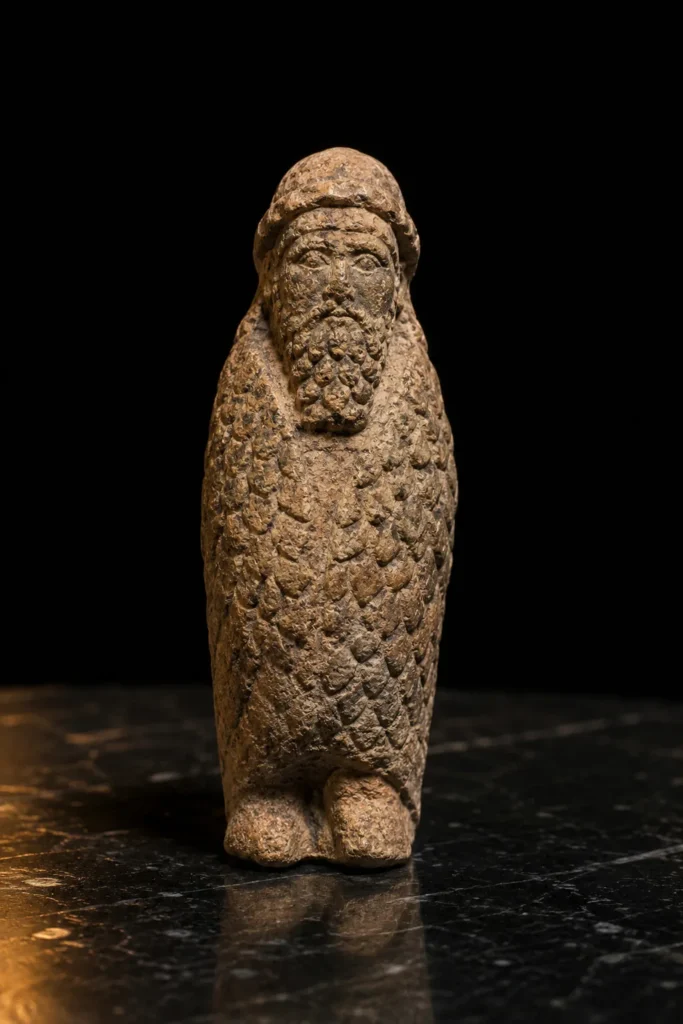
The Apkallu are the wise protective figures of the Ancient Near East. As small figures, they were buried beneath the floors of Mesopotamian houses to preserve the inhabitants from harmful powers.

Protective symbolMesopotamiaProtective figure
Apkallu - protective symbol, museum-style illustration

Classification

The Apkallu are protective figures from the Ancient Near East. In the Mesopotamian conception they were wise beings, and small figures in their form served to protect the houses of Mesopotamia.

What is distinctive about the Apkallu figures is the manner of their use. They were not worn and not displayed visibly, but concealed. They were buried beneath the floors of the houses.

From this hidden placement arises their special position among protective objects. The Apkallu worked from concealment. Their protective power was present without their being visible.

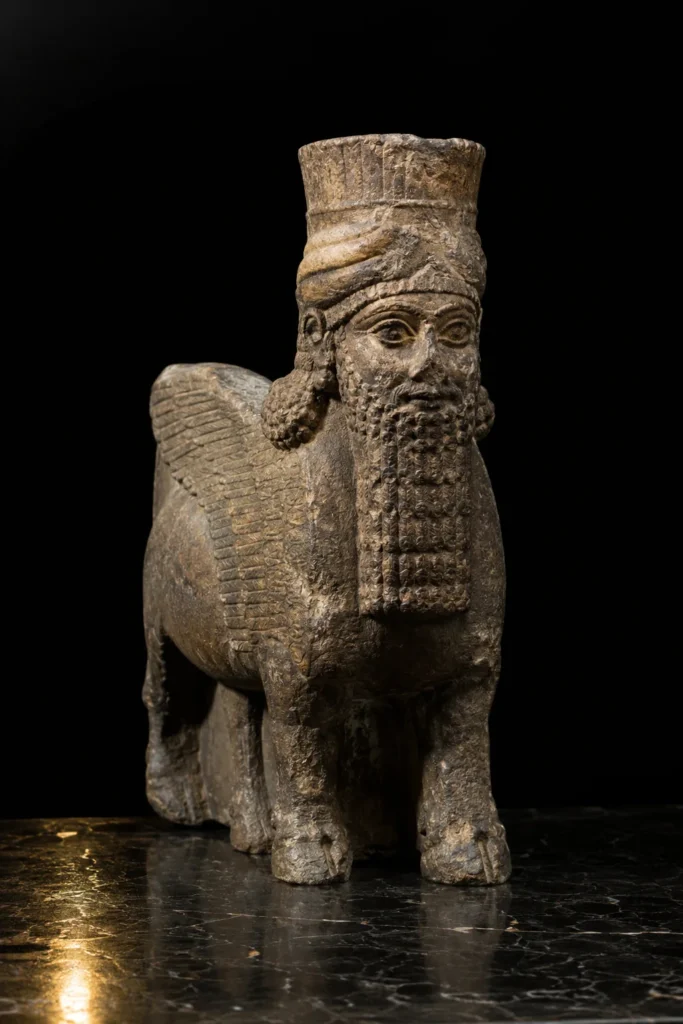
The Apkallu belong to the world of Mesopotamian protective spirits. Together with the winged gate guardians and other protective beings, they formed a system that secured the buildings and their inhabitants.

In religious studies, the Apkallu are a good example of concealed protective figures, of foundation deposits and of securing a house from the ground up. They are well attested through finds and through texts.

The name Apkallu points to wisdom. The Apkallu were regarded as wise beings, and it was precisely their wisdom that was part of their protective power. This connection is explained in what follows.

The Seven Sages

In Mesopotamian tradition, the Apkallu are known above all as the Seven Sages. These are seven wise figures from primeval times, from the age before the great flood.

These Seven Sages were credited with having brought humanity the foundations of culture. They were regarded as those who taught the knowledge, the arts and the order of civilization.

The Apkallu thus stood at the beginning of culture. They were the primeval teachers who brought to humankind that which raised their life above mere existence.

A well-known figure from this context is a sage who came out of the water and taught the people culture. He becomes known in later tradition under a Greek name.

The Seven Sages were not ordinary human beings. They were regarded as beings of a higher kind, half divine, of extraordinary wisdom and with a special closeness to the gods.

From this position of the Apkallu as primeval bearers of wisdom, their protective power can be explained. Beings who embodied the knowledge and the order of the world were able to ward off chaos and misfortune.

Form of the Apkallu Figures

The Apkallu were depicted in several different forms. Scholarship distinguishes above all three types, each with its own appearance.

The first type is the fish-cloaked Apkallu. This figure is a man who wears a fish like a cloak over his head and back. The fish points to the connection of the sages with the water and with the wisdom that came out of the water.

The second type is the bird-headed Apkallu. This figure has the body of a man and the head of a bird, usually with wings. It often holds objects in its hands that are connected with purification and blessing.

The third type is the wholly human-shaped Apkallu. This figure appears as a dignified man, frequently likewise holding objects in his hands that point to his task.

The small Apkallu figures buried in the houses were mostly made of clay. They were simply made, for their effect rested not on costly material but on their form and their consecration.

These three types of the Apkallu show that this was not a single being but a group of related protective figures. What they have in common is the connection with wisdom and protection.

Hidden Beneath the Floor

The characteristic way of using the Apkallu figures was to bury them. They were set into the ground beneath the floors of the houses, frequently in small containers.

The figures were buried in groups. Often there were several figures together, laid down jointly at one spot in the house.

Certain places in the house were especially important. The figures were buried above all where protection seemed most needed, such as at the thresholds, in the corners of the rooms and near the entrances.

These places were the points of the house felt to be at risk. Thresholds and corners were regarded as the places where harmful powers could enter. Precisely there the Apkallu were deployed.

The figures thus worked from concealment. No one saw them, yet their protective power pervaded the house. The protection was present without being visible.

This burial of protective figures is a custom known beyond Mesopotamia. In many cultures, concealed objects were placed during the construction of buildings in order to secure the structure.

Protection of the House

The Apkallu figures served the protection of the house and its inhabitants. They were meant to keep harmful powers, demons and illnesses away from the house.

The house was the living space of the family. To secure it meant to secure the people who lived in it. The protection of the house was thus a central concern of Mesopotamian protective practice.

The Apkallu secured the house from the ground up. By being buried beneath the floors, their protective power was present in the foundation of the house. The house stood, as it were, upon the protection of the sages.

Unlike a protective sign on the door, which secured a single spot, the protection of the buried Apkallu pervaded the whole building. They secured the ground on which the life of the family took place.

Frequently the Apkallu worked together with other protective beings. At the gates, winged gate guardians could stand, in the walls other protective signs could be placed, and beneath the floors the Apkallu could be buried.

The house was thus surrounded by a whole network of protective powers. The Apkallu were the hidden part of this network, working in the foundation.

The Ritual of Burial

The burial of the Apkallu figures did not happen casually. It was bound up with a ritual that followed precise rules.

From Mesopotamia, ritual texts have come down to us that describe the making and the burial of the Apkallu figures. These texts specify how the figures are to be produced, how they are to be consecrated and where they are to be buried.

The making of the figures was part of the ritual. The clay was shaped, the figure formed, and it was made into an effective protective object through acts of consecration.

The burial itself also followed fixed prescriptions. The number of figures, the place of burial and the accompanying actions were regulated. Only the correct procedure made the protection effective.

The ritual was carried out by a knowledgeable specialist, an incantation priest. He knew the texts and the actions and ensured that the burial of the Apkallu took effect.

The Apkallu figures thus show that Mesopotamian protective practice was precisely regulated. The protective object and the knowledge of its correct making and use belonged inseparably together.

Wisdom as Protection

One peculiarity of the Apkallu deserves special attention. Their protection was closely bound up with wisdom. The Apkallu were the sages, and it was precisely their wisdom that made them protectors.

Behind this stands a particular idea. Misfortune, demons and chaos were regarded as powers of disorder. Wisdom, by contrast, was the power of order, of knowledge and of culture.

The Apkallu, as bearers of primeval wisdom, embodied this order. Their presence in the house placed the house on the side of order and against the powers of chaos.

In this way the Apkallu differ from protective objects that ward off through a terrifying image. They do not ward off through fear but through the ordering power of wisdom.

This idea is instructive. It shows that protection in the Ancient Near East could be understood not only as warding off through terror, but also as securing through order and wisdom.

The Apkallu are thus a distinct type of protective being. Their protection is the protection of the sages, who stood at the beginning of culture and embodied order against chaos.

Apkallu and the Mesopotamian Protective Spirits

The Apkallu belong to a whole world of protective spirits that the Ancient Near East knew. These protective spirits jointly secured the buildings and the people.

To this world belong the winged gate guardians, which guarded the gates as great stone figures. On the page about the Lamassu they are described in more detail. While the Lamassu stood visibly at the gate, the Apkallu worked hidden in the foundation.

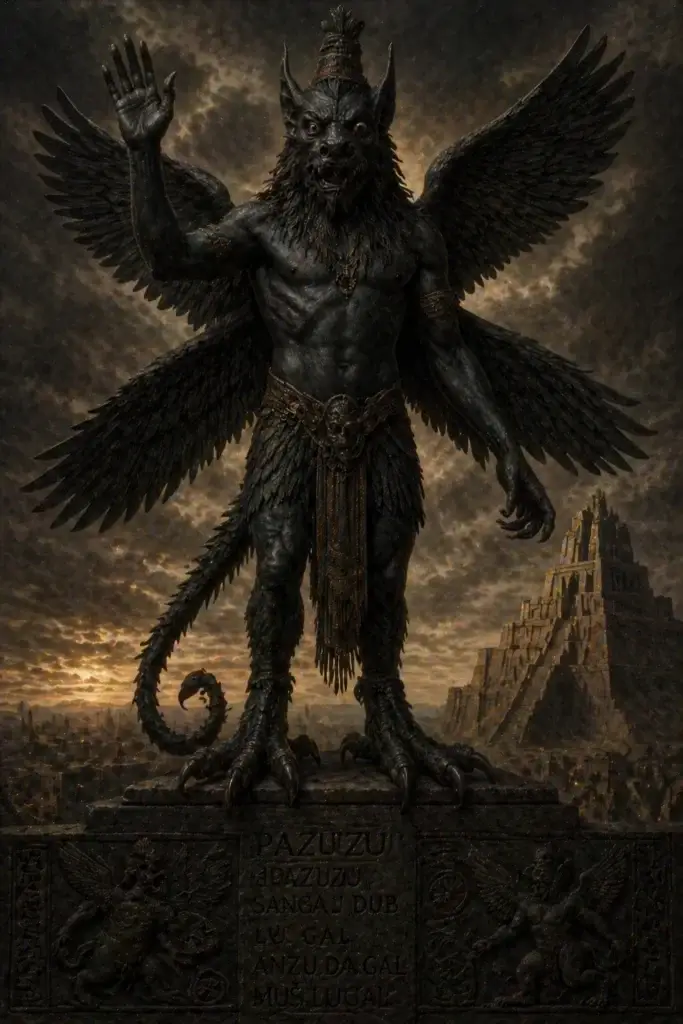
The Pazuzu amulet and the Lamashtu plaque also belong in this context. They were directed against the demoness Lamashtu and protected mother and child in particular.

These various protective beings and protective objects together formed a system. Different powers secured different places and were directed against different dangers.

The Apkallu had their fixed place in this system. They were the hidden protection of the house, the sages working in the ground, who secured the building from the ground up.

Mesopotamian protective practice was thus not a loose juxtaposition of individual customs, but an ordered whole. The Apkallu show how thoroughly considered this system for preserving buildings and people was.

Reception Today

The Apkallu are today known above all to specialists of the Ancient Near East. They do not belong among the widely familiar signs, but in Assyriology they are an important and well-researched subject.

Buried Apkallu figures have been found in excavations in Mesopotamia, frequently still in their original place beneath the floors. These finds can be connected with the surviving ritual texts.

From the interplay of finds and texts, a precise picture emerges. The Apkallu are one of the best understood examples of concealed protective figures and of foundation deposits.

For the study of Ancient Near Eastern religion, the Apkallu are of great value. They show how the protection of the house was understood and how it was set in motion ritually.

The Apkallu are also instructive for the Mesopotamian image of wisdom. They join the conception of the primeval teachers of culture with the conception of protection.

The Apkallu are thus a striking example of a protective object of a distinct kind. They protected from concealment, out of the foundation of the house, and their protection was the protection of wisdom against chaos.

References (selection)

  • Frans A. M. Wiggermann: Mesopotamian Protective Spirits. The Ritual Texts (1992)
  • Anthony Green: Neo-Assyrian Apotropaic Figures (Studien)
  • Jeremy Black, Anthony Green: Gods, Demons and Symbols of Ancient Mesopotamia (1992)
  • Stephanie Dalley: Myths from Mesopotamia (1989)
  • Eckart Frahm (Hrsg.): A Companion to Assyria (2017)

Related key terms: Apkallu Seven Sages protective figure foundation deposit fish cloak incantation wisdom Mesopotamia.

iWell Guard and Protective Traditions

iWell Guard stands in the cultural-historical line of portable protective objects to which the Apkallu figures also belong. A modern companion for people who live with protective symbols: made in Germany, 41 layers of genuine gold, platinum and silver, with a 30-day right of return.

Personal experiences may vary. Not a medical device. No healing promise.