Ngozi, the dead who demands accountability
By Ralf Ittermann · last reviewed on
Ngozi is a spirit of the Shona tradition of Zimbabwe.
A dead person who demands justice from the perpetrator’s family. The entry frames this spirit as a demand for accountability directed at the wrongdoer’s kin.
Ngozi is the avenging spirit of a person who was murdered or severely mistreated among the Shona of Zimbabwe. It returns to demand justice and reparation from the perpetrator’s family, bringing illness, ruin and death until atonement has been made.
This rests on a central idea of traditional Shona religion: the shedding of human blood creates a Ngozi, regardless of whether it involves murder or accidental death, a distinction that this belief, unlike Western concepts, does not make. The atonement rite kuripa ngozi is meant to appease the spirit and restore the disturbed balance between the families.
Type: Avenging spirit of a murdered or severely mistreated person
Origin: Shona ancestor belief and indigenous legal thinking of Zimbabwe
Texts: ethnographically documented by Gelfand, current specialist literature on conflict resolution
Period: traditionally rooted, still a highly current practice today
Appearance: no bodily image, acts through illness, misfortune and deaths in the perpetrator’s family

Source context
Period of the Texts
Ethnographically documented above all by Michael Gelfand, supplemented by current specialist literature on conflict resolution in Zimbabwe.
Area of Diffusion
Found in the Shona communities of Zimbabwe, where belief in the Ngozi remains part of everyday social life to this day.
Sources
Good: alongside Gelfand’s classic studies on Shona religion, current specialist literature is available on the role of the Ngozi in conflict resolution.
Name and variants
Shona: Ngozi denotes the angry, avenging spirit of a murdered or severely mistreated person, also of a relative neglected during their lifetime. The associated atonement rite is called kuripa ngozi, literally to compensate the Ngozi.
Nature and effect
Appearance
The Ngozi has no fixed bodily image. It does not show itself in form but in its effect, for it represents the idea that unatoned wrongdoing creates a cosmic imbalance that the spirit seeks to restore.
Effect
The Ngozi brings illness, economic ruin and death upon the perpetrator’s family, often across generations, until atonement has been made. Innocent family members are also affected, particularly when the perpetrator has already died.
Profile: Ngozi
The key aspects of the avenging spirit at a glance.
Rooted in the Shona ancestor belief of Zimbabwe and in indigenous legal thinking around blood guilt and compensation.
The perpetrator’s family, including innocent members, particularly when the perpetrator has already died.
No fixed bodily image; the Ngozi does not show itself in form but through illness, misfortune and deaths.
Enforces justice and reparation until the perpetrator’s family provides the required atonement.
The atonement rite kuripa ngozi, mediated by spirit mediums and traditional healers.
Where blood flows, a Ngozi arises
The Shona term ngozi denotes the angry, avenging spirit of a murdered or severely mistreated person, sometimes also of a relative neglected during their lifetime. Central to traditional Shona religion is an idea that differs markedly from Western notions: the shedding of human blood, whether deliberate or accidental, creates a Ngozi. No distinction is made between murder and accidental death.
The associated atonement rite is called kuripa ngozi, literally to compensate the Ngozi. It aims not at punishment but at balance between the families: unatoned wrongdoing is regarded as a disturbance of equilibrium that can only be set right again through compensation.
Not a museum piece, but current legal thinking
The Ngozi is highly current in Zimbabwe: it is the subject of debates on transitional justice as well as pastoral and psychiatric discussion and press coverage. It is a living cultural concept, not a mere museum motif.
From a religious-studies perspective, the Ngozi is a classic avenging dead, rooted in Shona ancestor belief and indigenous legal thinking. It functions as an instrument of social control and as a mechanism for conflict resolution: blood guilt demands compensation.
Compensation instead of revenge: the atonement rite
Well attested in sources is the kuripa ngozi, the compensatory payment made to appease, classically cattle given to the victim’s family. In the traditional, now controversial form, a woman from the perpetrator’s family could also be given to the victim’s family. Atonement and reconciliation rites, mediated by spirit mediums and traditional healers, aim at balance between the families, not mere punishment.
In dealing with the avenging spirit, smoke cleansing and the atonement rites of spirit mediums are regarded as appeasing, along with a worn amulet as a protective sign. Mugwort is also among the remedies that traditional healers include in the reconciliation rites.
Avenging dead in Japan and China
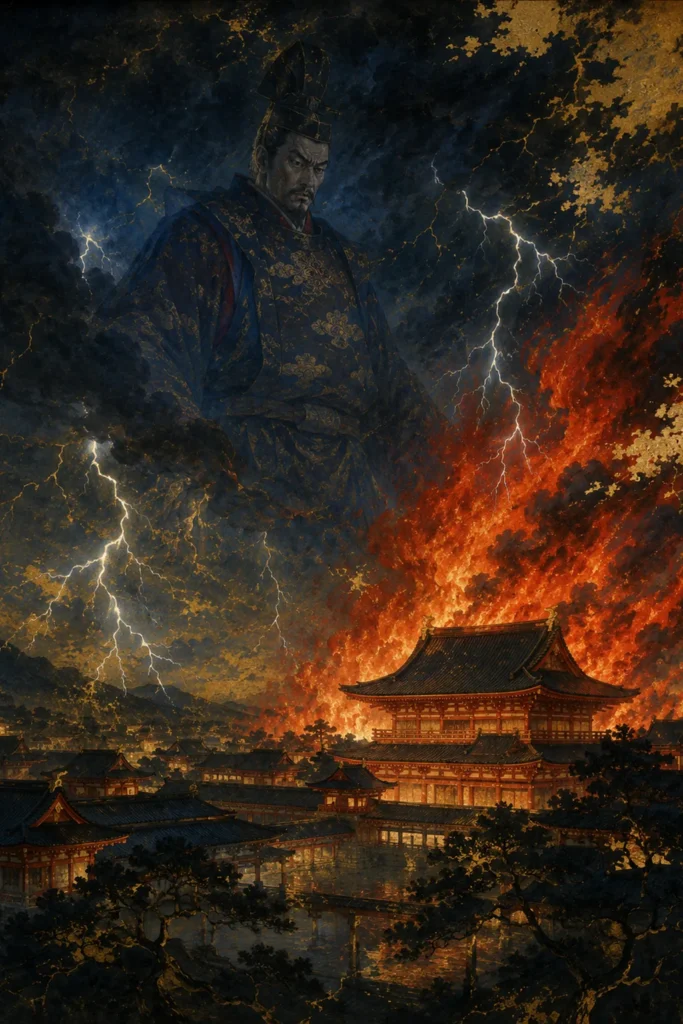
The Ngozi corresponds to the Japanese Onryo, the avenging spirit of someone severely wronged during their lifetime, and the Chinese Yuan-gui, the spirit of someone who died unjustly and seeks justice. The common core of all three figures is the avenging dead who was wrongfully killed. The Ngozi differs from the West African ancestor masquerade Egungun, which honours deceased ancestors as a whole, through its explicitly punitive character tied to a specific wrong.
Frequently asked questions about the Ngozi
How does a Ngozi arise?
Through murder or severe mistreatment, also through the neglect of a relative; even accidental shedding of blood counts.
How is it appeased?
Through kuripa ngozi, the compensation, classically cattle, given to the victim’s family, as well as through atonement rites mediated by spirit mediums.
Does it only affect the perpetrator?
No, innocent family members are also affected, particularly when the perpetrator has already died.
Further links
Further reading:
- Onryo – the Japanese avenging spirit of someone severely wronged
- Yuan-gui – the Chinese spirit of someone killed unjustly
- Egungun – the West African ancestor masquerade of the Yoruba
- Smoke cleansing, amulet, mugwort – traditional protective means
- Protection Compass – protective means at a glance
Literature (selection)
Further standard works in the bibliography.
As a Shona vengeful spirit, the Ngozi remains above all one thing: an avenging dead of Zimbabwe who gives no rest until the offending family renders the demanded atonement.