Chowaniec, the reared one with a soul price
By Ralf Ittermann · last reviewed on
The Chowaniec is a spirit of Slavic tradition.
Hatched from an egg, it brings wealth and demands the soul.
The Chowaniec, also Hodowaniec, the Reared One, is a Polish house spirit and at the same time an egg-hatched wealth spirit: often hatched from an egg carried under the armpit, it brings its keeper wealth and luck, but their soul is forfeit.
The Chowaniec thus belongs to the aitvaras-related wealth-spirit type, not to the benevolent Domovoi type. Its demonised form is attested chiefly in the witch-trial records of the 17th and 18th centuries, where the beings appear as diabły-chowańce.
Type: wealth spirit with a soul price, familiar in animal form
Origin: Polish folk belief
Texts: witch-trial records of the 17th and 18th centuries, collections by Pełka and Podgórski
Period: all of Poland, with a focus on the 17th/18th-century witch trials
Appearance: small house spirit or familiar in animal form

Origin and sources
Period of the Texts
Attested throughout Poland; the demonised form derives chiefly from the witch-trial records of the 17th and 18th centuries.
Area of Diffusion
Poland: the Chowaniec belongs to the established stock of Polish folk demonology, from the farmhouse to the trial records.
Sources
Well documented: the standard works by Pełka and Podgórski, as well as Moszyński’s Kultura ludowa Słowian.
Name and variants
Polish: chowaniec, from chować, to rear, nurture and keep, also to hide, dialectal hodować, to breed: the Reared One or the Kept One. Synonyms are hodowaniec, inkluz and domownik.
Appearance and behaviour
Appearance
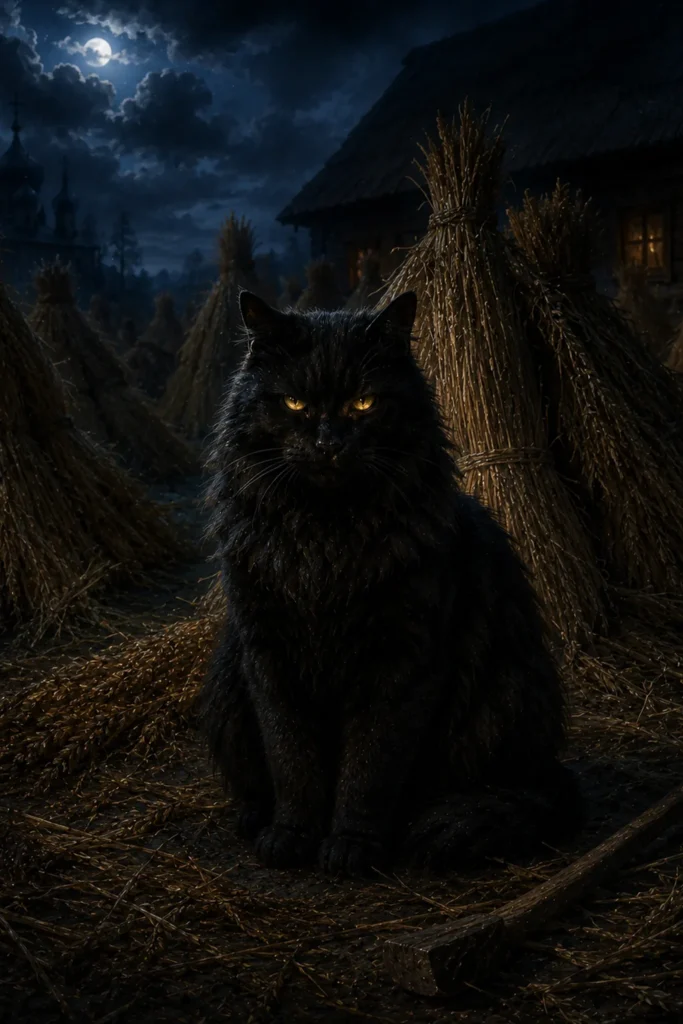
Originally, the Chowaniec is a small grey-bearded house spirit or dwarf, sometimes chick-like. Later it appears as a familiar in animal form: as a black cat, dog, toad or snake.
Effect
The Chowaniec brings prosperity and fetches money or grain, often stolen from a neighbour. The price is high: the keeper’s soul is forfeit to hell. If neglected, it turns malicious and makes people and livestock ill.
Profile: Chowaniec
The key aspects of the Polish spirit of wealth at a glance.
Polish folk belief; the Chowaniec belongs to the aitvaras-related wealth-spirit type, not the benevolent Domovoi type.
The keeper and their household: the Chowaniec brings them wealth, and in the end demands their soul.
Small grey-bearded house spirit, dwarf or chick-like being; later a familiar as a black cat, dog, toad or snake.
Brings prosperity, money and grain, often stolen from a neighbour; in return, the keeper’s soul is forfeit to hell.
Fed with unsalted food and milk behind the stove; neglect makes the Chowaniec malicious.
From foster child to the devil's familiar of the witch trials
The name comes from chować, to raise, foster and keep, also to hide: the Chowaniec is the raised one, a being one rears for oneself. The acquisition ritual is precisely recorded: a znosek, a yolkless dwarf egg, sometimes laid by a black hen, is incubated for nine days under the left armpit, during which one must not pray, wash or make the sign of the cross.
The demonised form of this figure is attested above all in the witch-trial records of the 17th and 18th centuries as diabły-chowańce. Behind it lies an older, milder layer, in which the Chowaniec stood closer to the benevolent house spirit; but the familiar figure is the devilish familiar of the trial records.
Modern revival and classification
The Chowaniec is a firm part of the current Polish wave of Slavic folklore and demonology in blogs and encyclopedias, without a single defining work.
From a religious-studies perspective, the Chowaniec is not a harmless imp but a wealth demon with a soul price, which, if neglected, makes people and livestock ill. Two clarifications are important: it is not simply the good house spirit; that was the older meaning, whereas the familiar figure is the devilish familiar. And the soul-price aspect is largely a Christian, Counter-Reformation overlay, not demonstrably proto-Slavic.
Feeding behind the stove
The traditional way of dealing with the Chowaniec is care, not warding off: it is fed with unsalted food and milk behind the stove, since neglect makes it malicious. It avoids salt, which is why plain, unsalted offerings are part of this ambivalent relationship. To be honest in classification: a proper ritual for getting rid of it is not well attested; what is recorded are rather practices of destroying the animal form in the context of witch trials.
Aitvaras, Skrzat and the spirits of wealth
The Chowaniec is very closely related to the Lithuanian Aitvaras, sharing egg-birth, stolen wealth and a soul price. The older layer of tradition is close to the Domovoi, but the familiar Chowaniec is clearly of the aitvaras type. The Polish Skrzat and the Slovak Škriatok belong to the same West Slavic family.
Frequently asked questions about the Chowaniec
What is a Chowaniec?
A Polish house spirit hatched from an egg, which brings wealth and in the end demands a soul.
How is it acquired?
By incubating a yolkless egg for nine days under the left armpit, without praying or washing.
Is it a good house spirit?
No. The familiar Chowaniec is a devilish wealth demon with a soul price.
Further links
Literature (selection)
Further standard works in the bibliography.
As a Polish house spirit of the aitvaras type and a wealth spirit hatched from an egg, the Chowaniec represents the dark side of house-spirit belief: prosperity that is not given but paid for with the soul.