Sara Sara, the maize mountain with the summit grave
By Ralf Ittermann · last reviewed on
Apu Sara Sara is a mountain god of the Quechua tradition.
Maize mountain of the Puna and site of the frozen mummy Sarita.
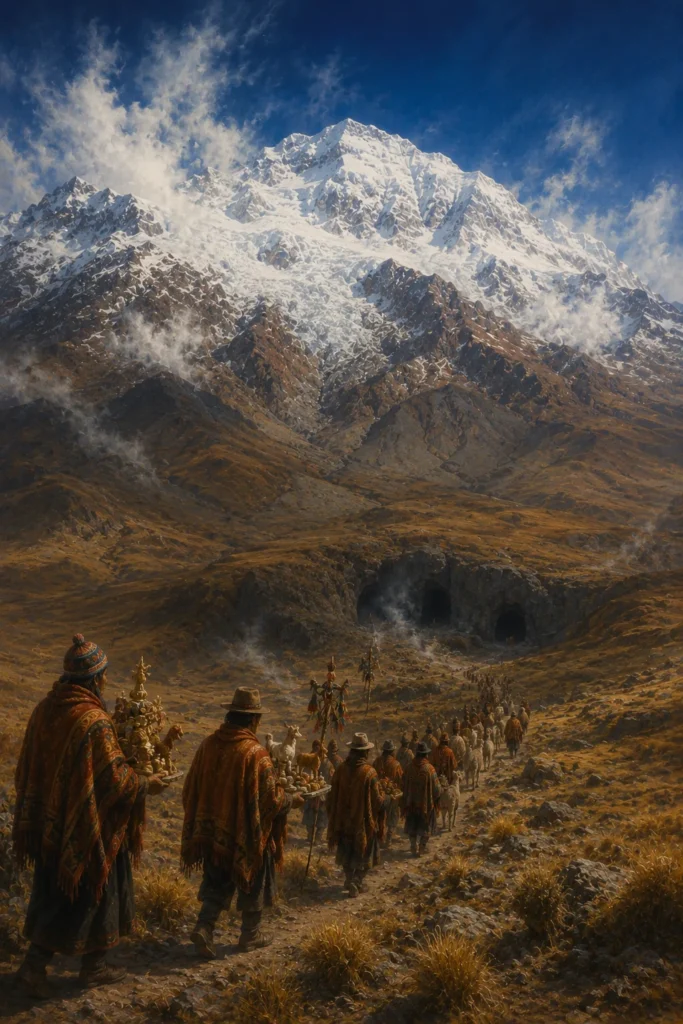
Apu Sara Sara is an extinct volcano about 5505 metres high on the border between Ayacucho and Arequipa, the northernmost of the great Capacocha volcanoes of southern Peru. In 1996, Johan Reinhard found the frozen mummy of a girl of about fifteen years, Sarita, at its summit.
For the region of Pausa and its herding communities, Sara Sara is a protective Apu, lord over livestock, water and fertility. Archaeologically, the mountain is one of the best-documented sacrificial mountains of the Andes.
Type: protective Apu over livestock, water and fertility
Origin: border of Ayacucho and Arequipa, southern Peru
Texts: Inca-period Capacocha, modern archaeology, mummy find 1996
Period: Inca-period Capacocha to the present
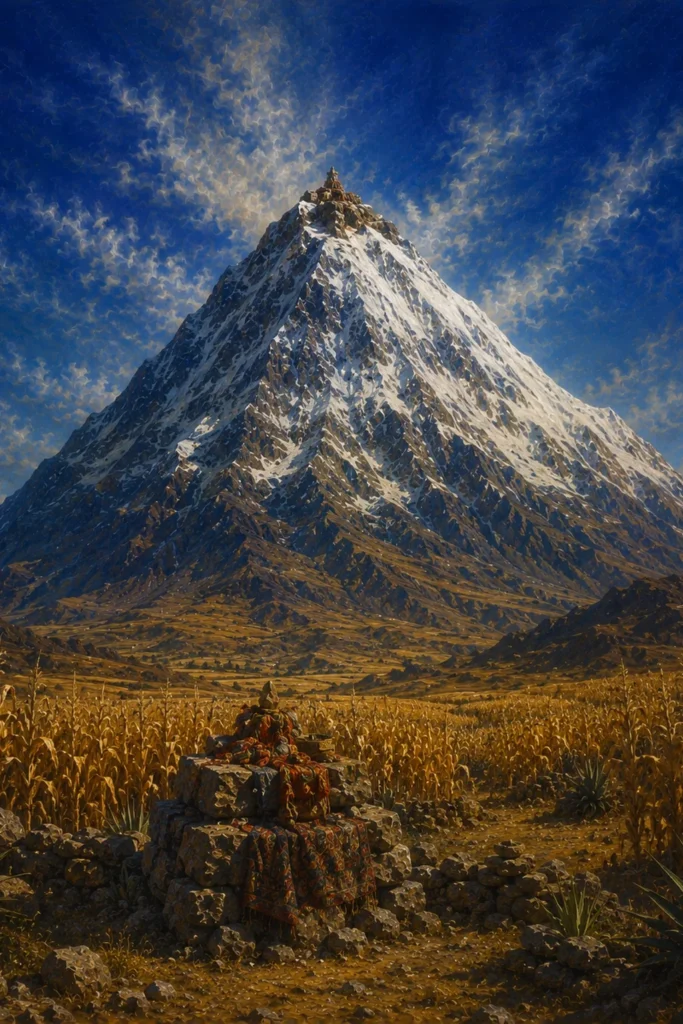
Appearance: striking solitary volcano above the Puna
Source context
Period of the Texts
Well attested is the Inca-period Capacocha; modern archaeology has explored the mountain intensively since the mummy find of 1996.
Area of Diffusion
The border area of Ayacucho and Arequipa in southern Peru; the addressees of the cult are considered to be the region of Pausa and its herding communities.
Sources
Very good: the mummy find of 1996 makes Sara Sara one of the archaeologically best-documented Apus; the living cult side is more thinly documented.
Name and variants
Quechua: sara, maize; the reduplication Sara Sara is interpreted as rich in maize. This interpretation, with its reference to fertility and maize, is widespread but not conclusively established.
Appearance
Appearance
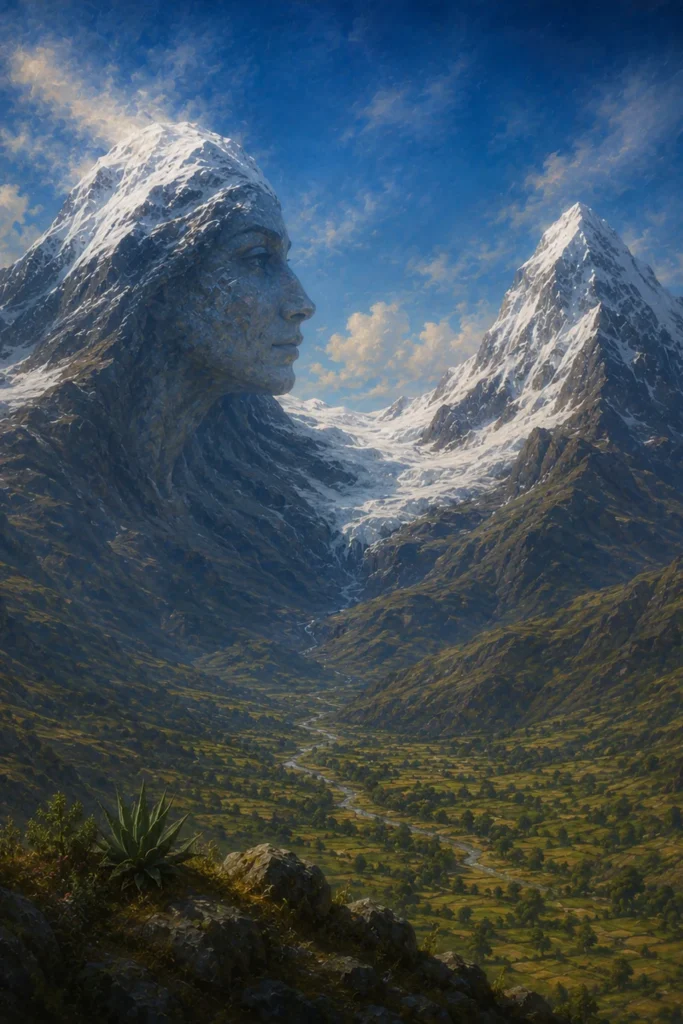
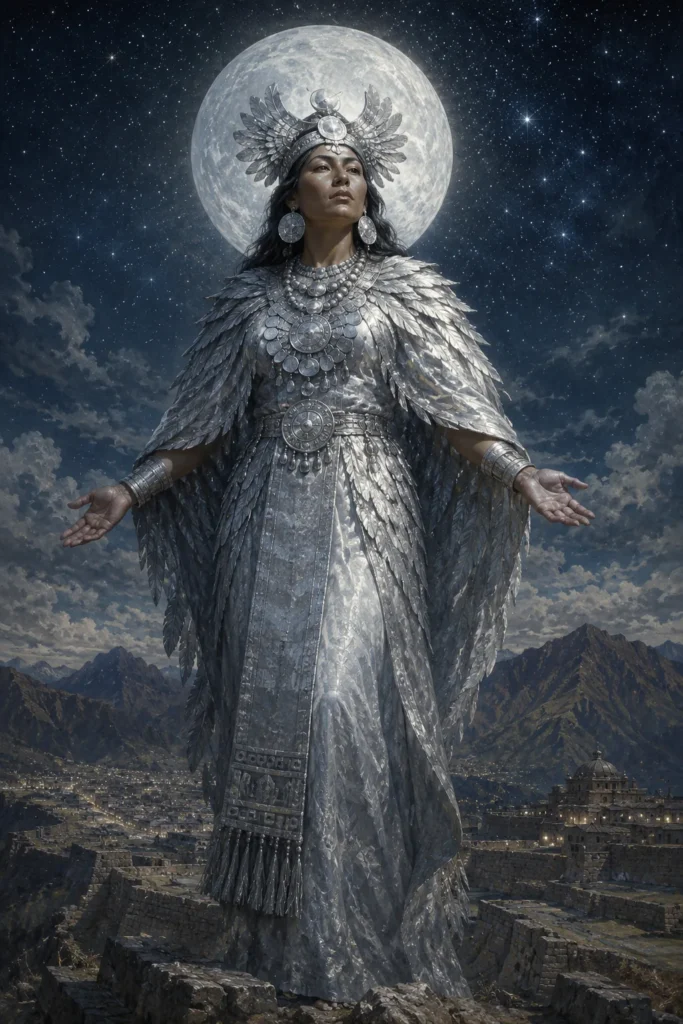
Sara Sara is a striking solitary volcano above the Puna. In local narrative tradition, the mountain is associated with fertility and femininity.
Effect
As Apu, Sara Sara is a regionally significant protective lord over livestock, water and fertility of the Pausa region; accordingly, it is mainly herding communities who turn to him.
Profile: Apu Sara Sara
The Capacocha mountain of southern Peru in its key points.
The northernmost of the great Capacocha volcanoes of southern Peru, archaeologically confirmed by the Inca-period high-altitude sacrifice.
The region of Pausa and its herding communities, whose livestock, water and fertility the Apu secures according to local understanding.
Extinct solitary volcano of about 5505 metres; associated with fertility and femininity in local narrative tradition.
Dominion over livestock, water and fertility; historically the recipient of the Capacocha, the Inca-period high-altitude sacrifice.
In Inca times, the Capacocha high-altitude sacrifice, archaeologically documented; today, the herders’ pago rites, which are only partially recorded ethnographically.
Apu Ampato with the mummy Juanita, along with Apu Pichu Pichu and Apu Misti in the same sacrificial landscape.
Maize name and mummy find
Quechua sara means maize; the reduplication Sara Sara is interpreted as rich in maize, a widespread but not conclusively established interpretation with a reference to fertility and maize. The name fits the character of the mountain, to which the region of Pausa entrusts livestock, water and fertility.
As a Capacocha mountain, Sara Sara is archaeologically confirmed: in 1996, Johan Reinhard recovered the frozen mummy of a girl of about fifteen years at the summit, who was given the nickname Sarita. This makes the mountain one of the few Apus whose Inca-period sacrificial cult is not merely inferred but tangible in the find itself.
Sarita in the museum, the mountain in research
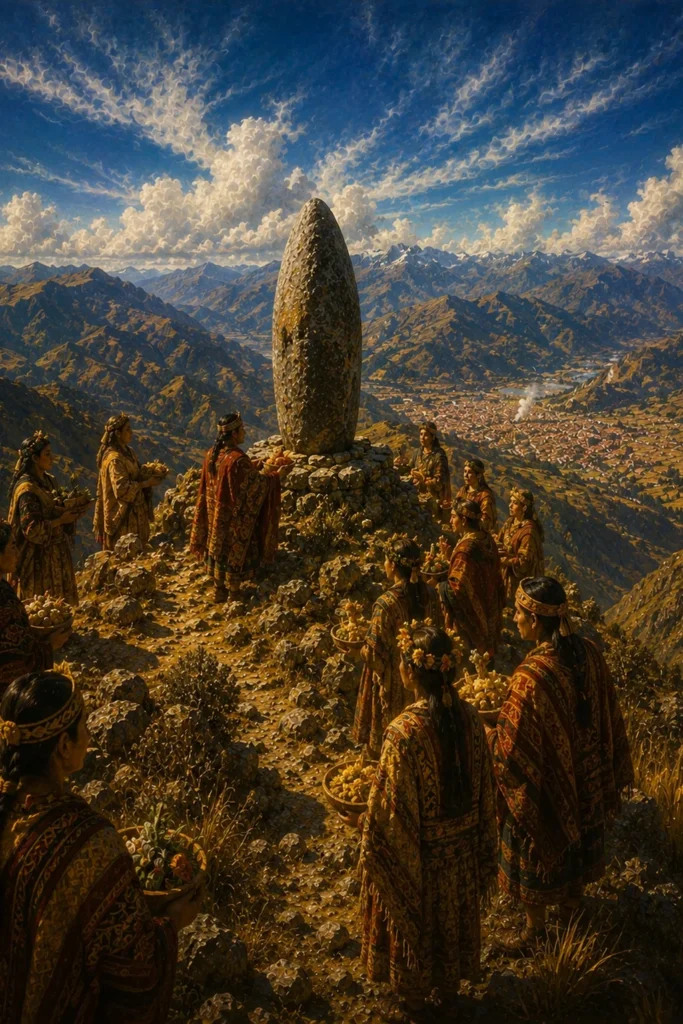
The mummy Sarita is displayed in a museum in Arequipa; regional myths, such as the motif of the Amazons of Apu Sara Sara, are addressed in Peruvian anthropology.
From a religious-studies perspective, Apu Sara Sara is an outstandingly well-documented Capacocha mountain. An important clarification: Sarita is a young, not an infant, sacrificial victim, and should not be confused with the Ampato mummy Juanita; these are two different mountains and mummies, both documented by Reinhard.
Capacocha then, pago now
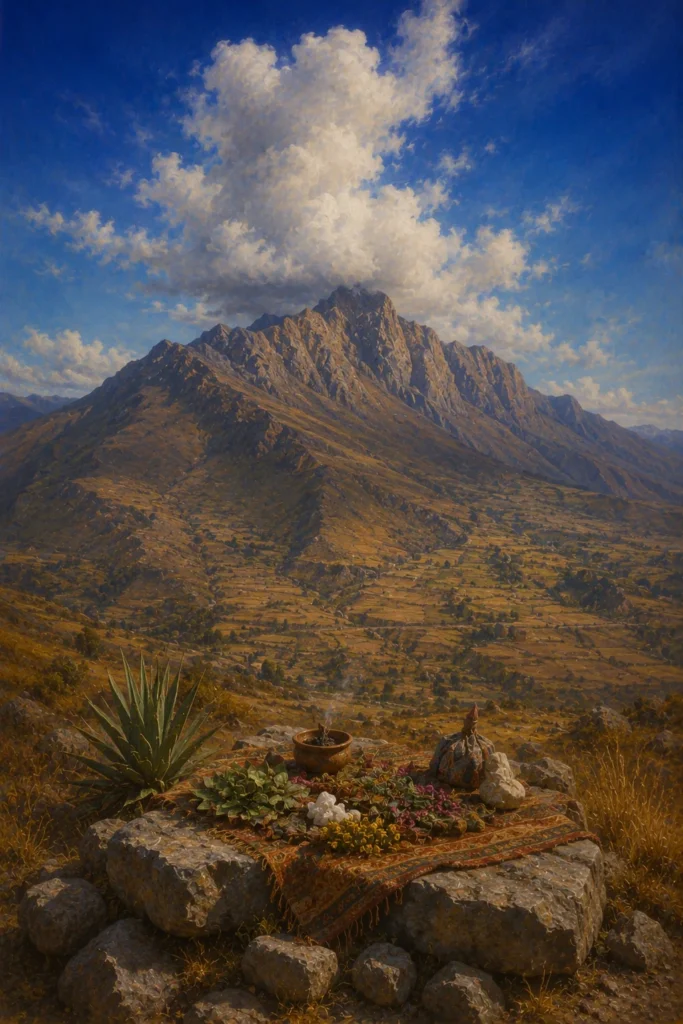
Well attested is the Inca-period Capacocha with its high-altitude child sacrifice, archaeologically documented at the summit. The present-day despacho and pago cult of the herding communities, with coca leaves as the central medium of the offering, is plausible and partly touched upon ethnographically; however, the living cult and myth side is somewhat more thinly documented than the archaeology.
Sara Sara in the sacrificial landscape of southern Peru
Apu Sara Sara stands alongside Apu Ampato with the mummy Juanita, Apu Pichu Pichu and Apu Misti in the same Capacocha landscape. The Apu concept corresponds in the Aymara region to the Achachila; with the earth mother Pachamama, the mountain shares its reference to fertility.
Frequently asked questions about Apu Sara Sara
What does Sara Sara mean?
Roughly rich in maize, from sara, maize; the interpretation with a reference to fertility is widespread but not conclusively established.
Who is Sarita?
The nickname of the frozen mummy of a girl of about fifteen years, found in 1996 on the summit of the mountain.
Is Sarita the same as Juanita?
No. They are two different mountains and mummies: Juanita comes from Ampato. Both finds were documented by Johan Reinhard.
Further links
Further reading:
- Apu Ampato – the mountain where the mummy Juanita was found
- Apu Pichu Pichu and Apu Misti – neighbours in the sacrificial landscape around Arequipa
- Smoke cleansing, Amulet – protective practices compared
- Protection Compass – protective means at a glance
Literature (selection)
Further standard works in the bibliography.
Apu Sara Sara has a double memory: as a striking volcano of Ayacucho above the Puna, to which the herders entrust their livestock and water, and as the grave of the Capacocha mummy Sarita, which secures the maize mountain’s firm place in Andean archaeology.