Cyhyraeth, the threefold wailing of the Welsh coast
By Ralf Ittermann · last reviewed on
Cyhyraeth is a spirit of Welsh tradition.
A threefold, weakening wailing announces death drawing near.
Cyhyraeth is a Welsh death omen that appears solely as a voice: a bodiless, dismal moaning and wailing that sounds three times, growing weaker with each occurrence, before a person dies. It has neither body nor form and is regarded as the Welsh counterpart to the Irish Banshee.
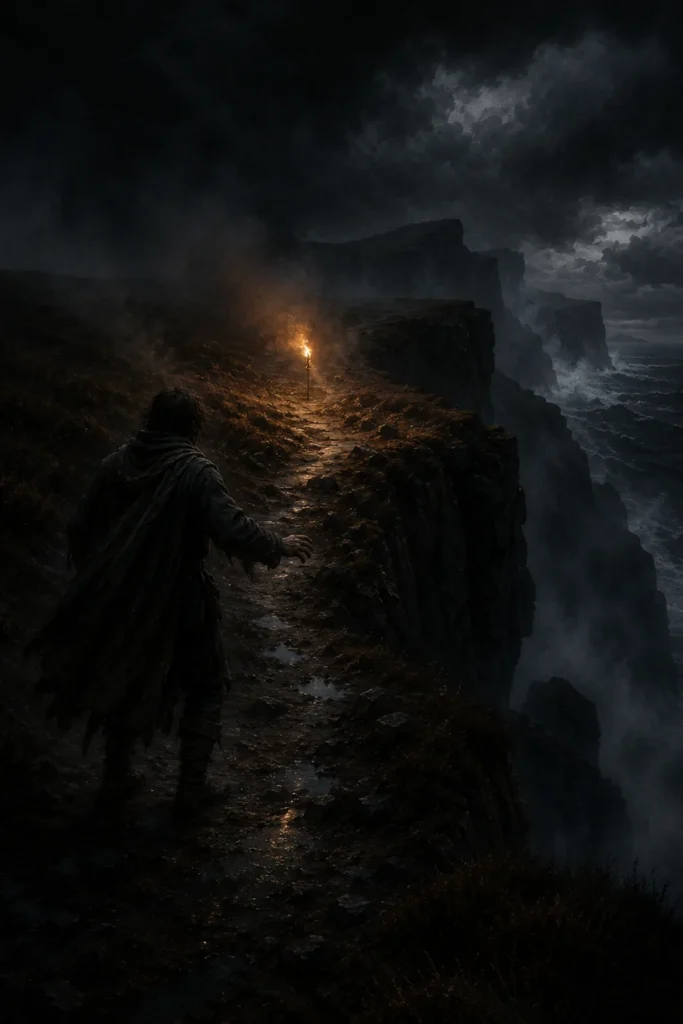
Wirt Sikes and Marie Trevelyan provide the most important sources, with a strikingly dense tradition along the River Tywi in eastern Dyfed and along the coast of Glamorgan. If the wailing sounds along the coast or over the sea, tradition holds that it foretells a fatal shipwreck.
Type: purely acoustic death omen without body or form
Origin: Welsh folk tradition
Texts: well documented by Wirt Sikes and Marie Trevelyan
Period: documented in the 18th and 19th centuries
Appearance: bodiless moaning and wailing, threefold and diminishing

Source context
Period of the Texts
The Cyhyraeth is well documented in the 18th and 19th centuries, above all in the collections of Wirt Sikes and Marie Trevelyan.
Area of Diffusion
Wales, with a particularly dense tradition around the River Tywi in eastern Dyfed and along the coast of Glamorgan.
Sources
Good: chiefly Wirt Sikes and Marie Trevelyan, supplemented by John Rhys and James MacKillop.
Name and variants
Language: Welsh, probably from cyhyr, muscle or sinew, with the ending -aeth: the name is interpreted as a being of mere flesh and bone, a ghost or death-wraith.
Nature and effect
Appearance
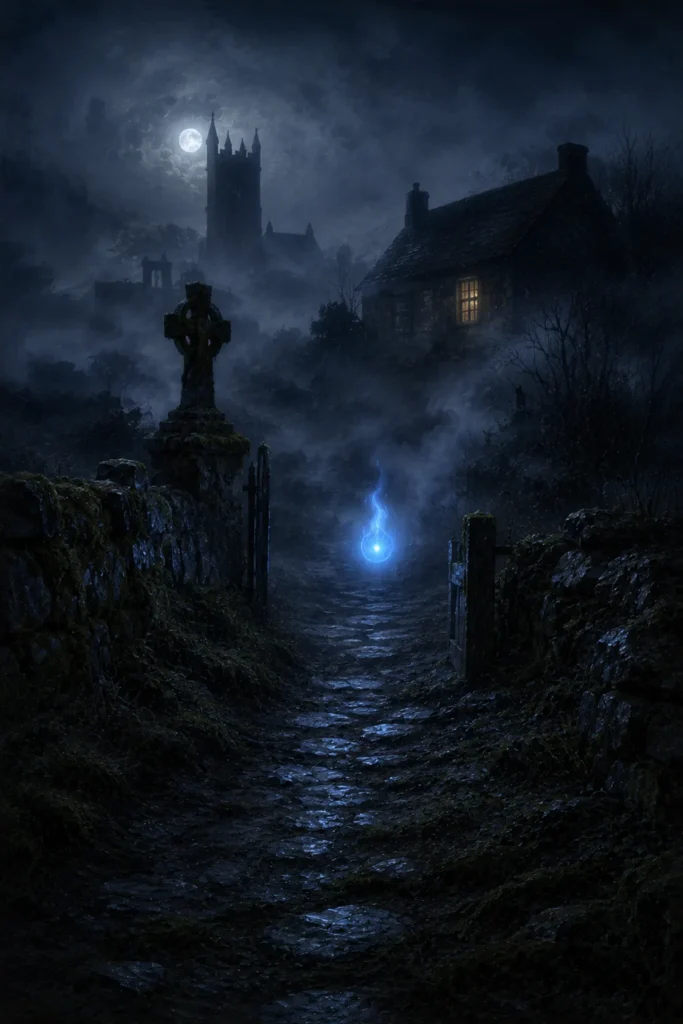
The Cyhyraeth has no body and no form; it is pure voice. The threefold, diminishing wailing structures the warning as a threefold signal, and even its name, which denotes a being of mere flesh and bone, points to a bodiless death-wraith whose horror lies solely in the sound.
Effect
The wailing sounds three times, growing weaker with each occurrence. If it sounds along a road, it indicates several deaths; if it sounds along the coast or over the sea, it foretells a fatal shipwreck. The Cyhyraeth is also said to sound for Welsh people who die far from home. Its effect is purely one of foretelling.
Profile: Cyhyraeth
The most important aspects of the bodiless wailing at a glance.
Welsh death omen of oral tradition, particularly densely attested along the River Tywi and the coast of Glamorgan.
The soon-to-die and their community; along the coast, entire ship crews.
No visible form, only a threefold, progressively weaker moan and wail.
Purely a herald: wailing along a road signals several deaths, wailing over the sea a shipwreck.
Interpret the wailing as a warning and prepare for death; no defence against the Cyhyraeth itself is recorded.
Other Welsh death omens include the Aderyn y Corff and the Canwyll Corff, as well as the Gwrach y Rhibyn, with whom the Cyhyraeth is often equated.
A voice of mere flesh and bone
The name Cyhyraeth probably derives from cyhyr, meaning muscle or sinew, with the ending -aeth, and is interpreted as a being of mere flesh and bone, a ghost or death wraith. The sound itself is described as bleak and unpleasant, similar to the moaning of a dying person. In parts of the tradition, the wailing is even an amplified version of the voice of the person who will soon die themselves, so that those nearby recognise who is about to die.
The Cyhyraeth is attested chiefly in Wirt Sikes and Marie Trevelyan, with a particularly dense tradition around the River Tywi in eastern Dyfed and along the coast of Glamorgan. If the wailing sounds along a road, it signals several deaths; if it sounds along the coast or over the sea, it announces a fatal shipwreck, often for an entire crew. The Cyhyraeth is also said, according to tradition, to sound for Welsh people who die far from home.
The Welsh voice of death today
Today the Cyhyraeth is often presented as one of the most striking Welsh death omens and appears regularly in folklore formats, blogs and collections. As a bodiless wail, it shapes the image of the Welsh banshee.
From a religious-studies perspective, the Cyhyraeth is a purely auditory death omen and a wraith concept: it announces death but does not cause it. It combines Celtic mourning and Otherworld motifs with later, partly biblically coloured notions of the afterlife, and shows how a pure voice can become a carrier of a foreboding of death.
An omen that cannot be warded off
Nothing is recorded regarding defence against the Cyhyraeth itself: it is a purely audible omen that can only be perceived and interpreted, not averted. The only attested response is to understand the sign as a warning and prepare for impending death. In dealing further with the death wail, people traditionally turned to holy water as a Christian sign, to the protective candle of the death vigil, and to the sound of consecrated bells, which was considered a protective sign against misfortune.
Banshee, Bean Nighe and the Welsh siblings
The Cyhyraeth corresponds to the Irish banshee, the wailing death fairy, and to the Scottish Bean Nighe, the washerwoman at the ford. Unlike the visible and tangible Bean Nighe, however, the Cyhyraeth remains a purely bodiless voice without any form. In Wales it is closely linked to the Gwrach y Rhibyn and is sometimes equated with her, though the Cyhyraeth is purely audible while the Gwrach y Rhibyn is also visible. Also related is the Scottish Caoineag, the weeping herald of the clan.
Frequently asked questions about the Cyhyraeth
Can you see the Cyhyraeth?
No. It is purely acoustic; only its wailing can be perceived, and it has no visible form.
Why does it wail three times?
The threefold, progressively weaker wailing is regarded as a triple warning before the person concerned dies.
What does the Cyhyraeth mean along the coast?
By the sea, its wailing announces a fatal shipwreck, often for an entire crew.
Further links
Further reading:
- Celtic – the Celtic world of gods and spirits in Britain
- Caoineag – the weeping death messenger of the Scottish clans
- Bean Nighe, Gwrach y Rhibyn – related Celtic death omens
- Aderyn y Corff, Canwyll Corff – further Welsh death signs
- Holy water, protective candle, bells – traditional protective means
Literature (selection)
Further standard works in the bibliography.
As a bodiless wail without form, the Cyhyraeth remains the Welsh banshee of the rivers and coasts: a voice that sounds three times and wants nothing more than to announce the approach of death.