Apsara, from water nymph to Indra's dancer
By Ralf Ittermann · last reviewed on
Apsara is a spirit of the Hindu tradition.
Celestial dancer, originally a water nymph.
The Apsara is a celestial nymph and dancer of Indian mythology, originally a water spirit. She dances at Indra’s court and is sent to disrupt the asceticism of sages growing too powerful. Danger from her is only indirect; the tradition knows no independently harmful action on her part.
Type: celestial nymph and dancer, originally a water spirit
Origin: Rigveda to Puranas
Texts: densely attested, Vedic to Puranic
Period: Vedic layer to the present
Appearance: beautiful dancer, companion of the Gandharvas
Textual history of the Apsaras
Period of the Texts
Attested from the Rigveda through the Mahabharata and Ramayana to the Puranas.
Area of Diffusion
The Indian subcontinent, spread by cultural export across all of Southeast Asia.
Sources
Dense: from Vedic hymns to Puranic literature.
Name and variants
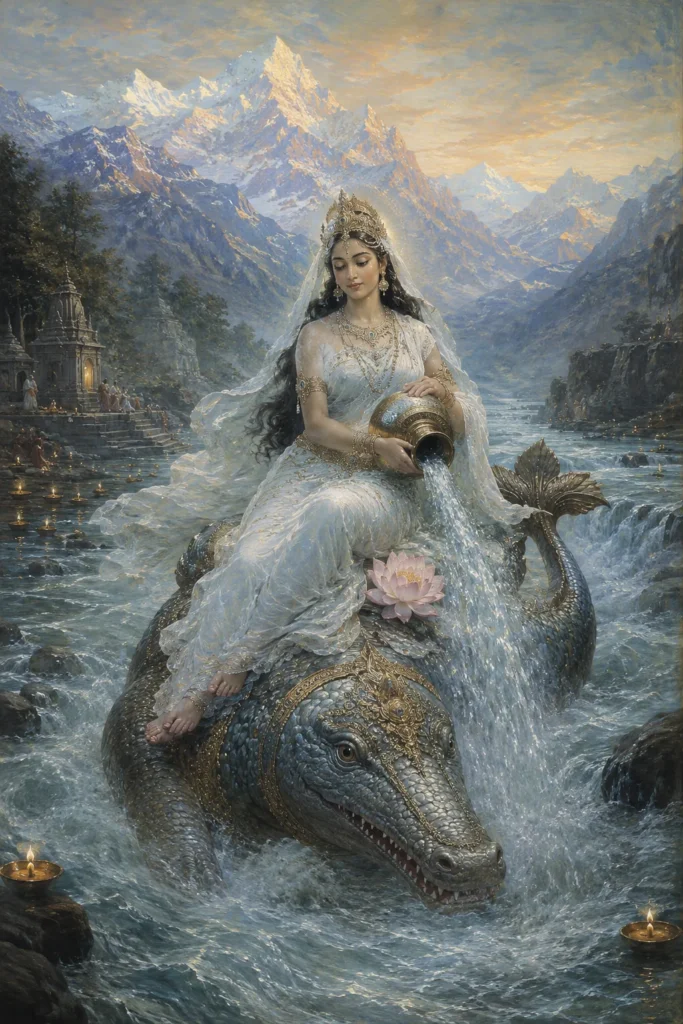
Sanskrit: The name is derived from ap, water; Yaska’s etymological work interprets Apsara as she who moves within the water.
Being and effect
Appearance
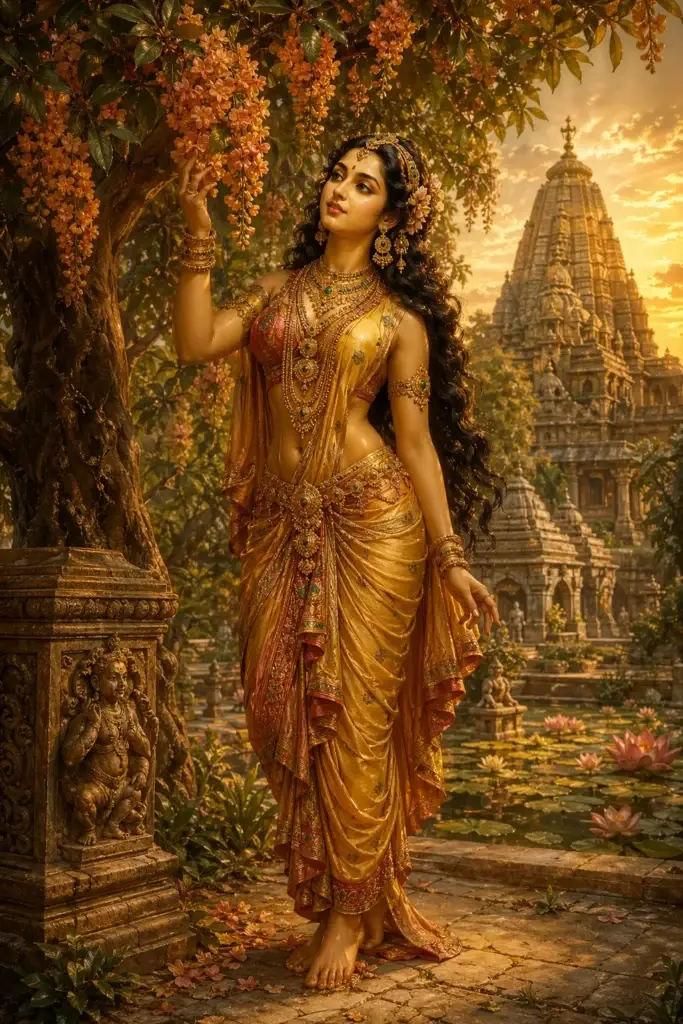
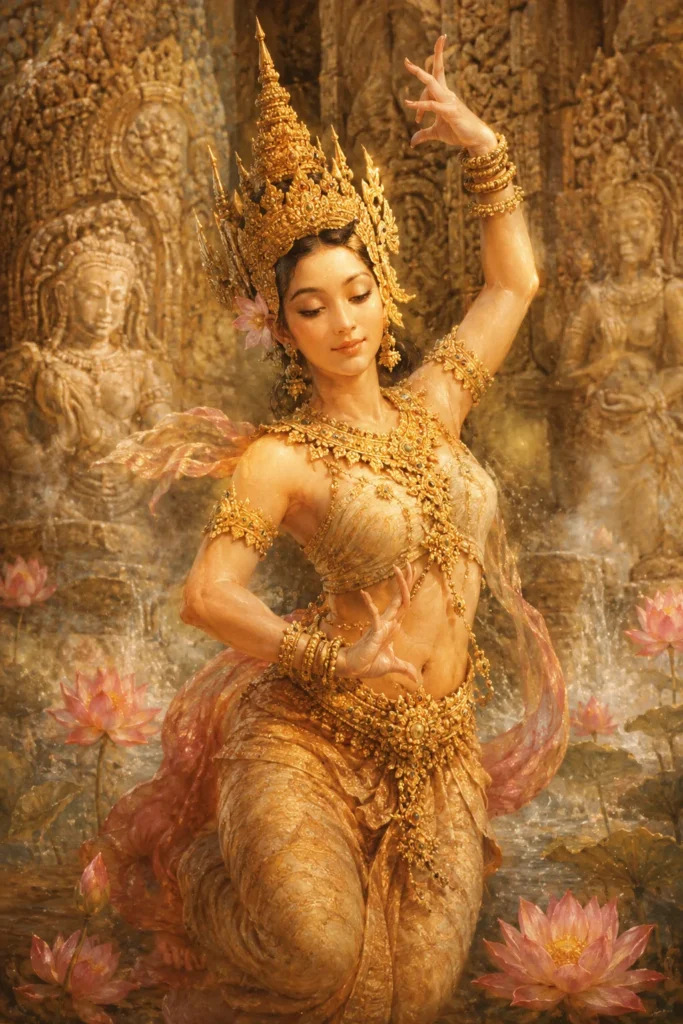
Apsaras are depicted as graceful dancers, embodying beauty and dance; at Angkor Wat numerous reliefs with headdresses are carved into the stone.
Effect
They dance at Indra’s court and receive fallen warriors. Those who fall under their spell are led away from asceticism and purpose; the danger lies solely in the entrancing hold of beauty.
Profile: Apsara
The key aspects of the celestial dancer at a glance.
Vedic to Puranic tradition, from the Rigveda and Atharvaveda to the Ramayana.
Dancing at Indra’s court, fallen warriors, the testing of powerful ascetics.
Beautiful dancer with rich adornment, carved at Angkor Wat.
Seduction as a tool of the gods, no independent harm.
No temple cult; veneration sublimated in Cambodian dance.
From the Ocean of Milk to Indra's court
The Rigveda and Atharvaveda list the Apsaras as inhabitants of the waters, with only Urvashi named. According to the Ramayana and Puranas, they rose from the foam of the churned Ocean of Milk and became shared property and companions of the Gandharvas. Famous are Urvashi and Menaka, who seduced Vishvamitra and became Shakuntala’s mother. A Mahabharata motif: Indra sends an Apsara to interrupt the penance of a sage grown too powerful.
From Angkor Wat to World Heritage
Angkor Wat and Khmer art are the main pictorial source for the Apsara; her classical dance was recognised by UNESCO as intangible cultural heritage in 2003. From a religious-studies perspective, Apsaras are semi-divine collective beings, not individual deities, with the exception of figures like Urvashi. Their lineage runs from Vedic water nymphs to the celestial dancers of Indra’s court.
Dance instead of temple cult
An independent temple cult with Apsara offerings is not attested; their veneration is sublimated in dance, most vividly in the Cambodian Apsara dance. Protection lies not in a banishment but in mastering one’s own desire. An amulet, incense burning as an Indian form of honour and salt as a purification means are considered relevant.
Water nymphs in cultural comparison
Frequently asked questions about Apsara
Are Apsaras goddesses?
No, semi-divine celestial nymphs without their own divine rank; Urvashi stands out as an individual figure.
Why do they seduce ascetics?
Because Indra fears a sage might accumulate too much power through asceticism; the Apsara interrupts his penance.
Further links
Further reading:
Literature (selection)
Further standard works in the bibliography.
Whoever searches for the Apsara nymph of the Rigveda finds the same heavenly dancer who performs at Indra’s court and, risen from the water, remains vivid to this day in the stone reliefs of Angkor Wat.