Strigoi, the bloodsucker of Romanian tradition
By Ralf Ittermann · last reviewed on
Strigoi is a demon of Romanian tradition.
The revived corpse that steals blood and life force. The article places the Strigoi in Romanian folk belief.
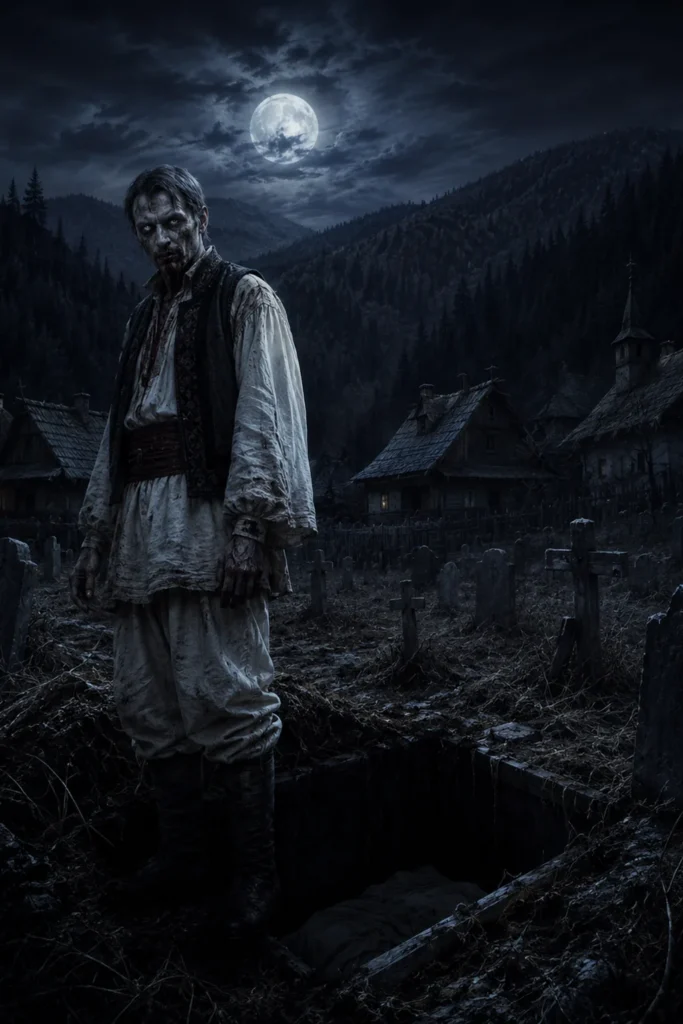
Strigoi is Romania’s undead bloodsucker and the folk-belief core of the Western vampire concept. As a revived corpse, he returns to his own family and steals blood and life force from people and livestock.
The historical vampire panics of the 18th century, which first brought the term vampire into Western European usage at all, concern Serbia and are not to be equated with the Strigoi belief. The belief is widespread in Romania, Moldova and the Carpathian-Balkan region, well documented by Agnes Murgoci and Paul Barber.
Together with the Moroi, his mortal counterpart, he forms the Romanian core pair of the vampire concept: an immortal corpse here, a mortal spirit there.
Type: Revived corpse, core of the Romanian vampire concept
Origin: Romanian folk belief around the evil, restless dead
Texts: well attested in Murgoci (1926) and Barber (1988)
Period: Romanian tradition, systematically documented from the 19th and early 20th century
Appearance: corpse resembling the living, undecayed, sometimes shapeshifting
Source context
Period of the Texts
The Romanian tradition around the Strigoi is systematically documented only from the 19th and early 20th century onwards; the vampire panics of the 18th century concern Serbia.
Area of Diffusion
Romania, Moldova and the Carpathian-Balkan region: here the belief in the Strigoi is historically and folkloristically most densely attested.
Sources
Good: Agnes Murgoci’s 1926 essay and Paul Barber’s 1988 study are considered key sources, along with contemporary reports of the Serbian vampire panics.
Name and variants
Romanian: The name is related to the verb a striga, to scream, probably transmitted via the Latin striga or strix, the night witch or night owl. A distinction is made between the strigoi viu, the living Strigoi, and the strigoi mort, the dead Strigoi, considered the truly dangerous type.
Form and effect
Appearance
The Strigoi outwardly resembles the deceased, is undecayed and, upon exhumation, sometimes shows blood in the mouth, which was interpreted as proof. He can take animal form, become invisible and change his size, so that he can enter a house through a keyhole.
Effect
The Strigoi steals blood and life force from family, neighbours and livestock; he draws milk from cows and nursing mothers and brings a creeping succession of deaths. He is active at night and lethargic by day, embodying the evil dead who finds no rest.
Profile: Strigoi
The key aspects of the Romanian bloodsucker at a glance.
Core of the Romanian vampire concept; the historical vampire panics of the 18th century concern Serbia.
First his own family, then neighbours and livestock, from whom he steals blood and life force.
A corpse resembling the living, undecayed, able to take animal form and change its size.
Theft of blood and life force, milk loss in cows and mothers, a creeping succession of deaths within the family.
Exhumation, staking through the heart, decapitation and burning of the heart, as well as garlic and proper burial.
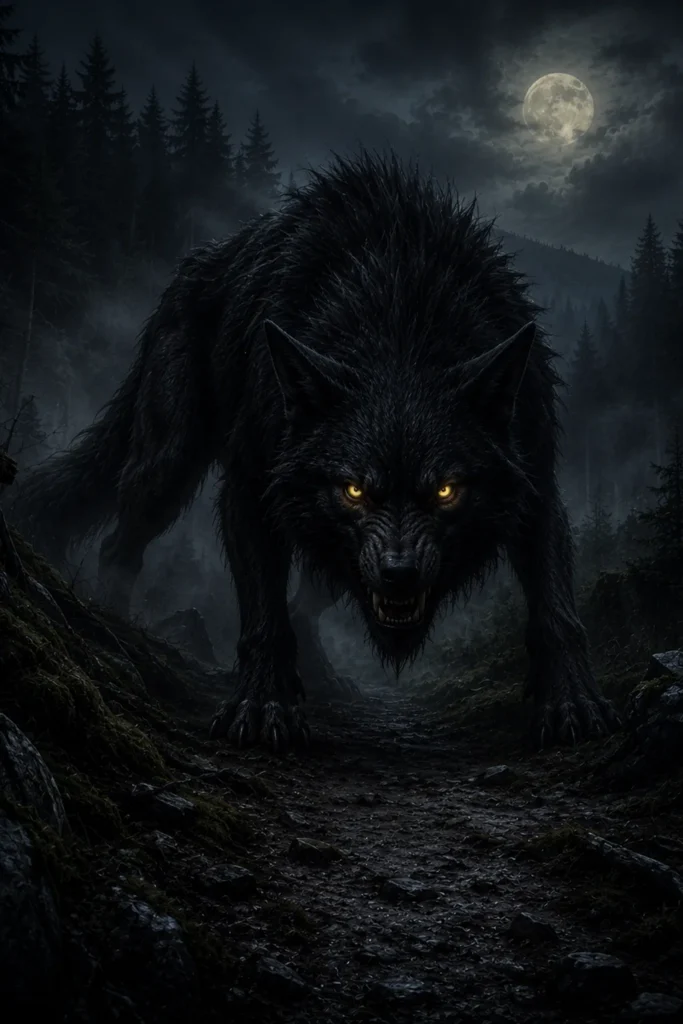
Moroi, his mortal counterpart, and the Pricolici, his werewolf variant, along with the Greek Vrykolakas.
Striga, scream and the two types of the Strigoi
The name Strigoi is connected to the Romanian verb a striga, to scream, probably mediated through the Latin striga or strix, the night witch or screech owl. Tradition distinguishes two basic types: the strigoi viu, the living Strigoi, a person or sorcerer whose soul already wanders while they are still alive and steals harvest and milk yield, and the strigoi mort, the dead Strigoi, who rises from the grave, returns to their own family and weakens the relatives until they die.
The documented vampire panics of the 18th century concern Serbia and the Serbian terms vampir and vukodlak, not the Romanian Strigoi tradition; the connection with the Strigoi belief is an equation, not evidence. Central cases are Petar Blagojević in Kisiljevo in 1725, whose report contained the first printed use of the word Vampyri in the West, and Arnold Paole in Medveđa around 1732, whose case was investigated by a formal military-medical commission.
From Kisiljevo to Dracula
The Strigoi is at the core of the Western vampire concept. Emily Gerard’s essay Transylvanian Superstitions of 1885 named Strigoi, Pricolici and Vrkolak and provided Bram Stoker with material for Dracula of 1897. Today the Strigoi is central to vampire pop culture, in films, series and role-playing games.
From a religious-studies perspective, the Strigoi is a prime example of the Romanian opposition between good and bad dead: the good dead pass over without trouble, the bad find no rest and return. The vampire panics of the 18th century are regarded, in the history of religion and medicine, as a case in which folk belief, Orthodox ideas of the afterlife, experience of epidemics and misinterpreted decomposition phenomena converged; Paul Barber explains the evidence of the exhumations physiologically.
Staking, garlic and warding off the Strigoi
Well attested are exhumation and staking through the heart, with hawthorn in Serbia and aspen wood in Russia, along with beheading, removing and burning the heart, and burning the entire corpse. Garlic was stuffed into the mouth, nose and ears of the dead and is regarded as the classic means against the undead bloodsucker. As prevention, correct burial and the scattering of mustard seeds and wild rose helped, as did thorny protective wood such as hawthorn; rowan also counts as a protective tree. Holy water, as a consecrated sign, is also part of the Christian defence against the restless dead.
Strigoi among European vampires and revenants
The Strigoi, together with the Moroi, forms the Romanian core pair of immortal and mortal type, and is related to the Pricolici, its werewolf variant. Outside Romania it corresponds to the Greek Vrykolakas, the Polish Upiór and the South Slavic Vukodlak; further parallels are the Germanic Nachzehrer and the Nordic Gjenganger.
Frequently asked questions about the Strigoi
What is the difference between strigoi viu and strigoi mort?
The strigoi viu is a living person or sorcerer whose soul already wanders while they are still alive; the strigoi mort is a reanimated corpse from the grave and is considered the more dangerous type.
Is the Strigoi historically documented?
The belief itself, yes. The vampire panics around Petar Blagojević in 1725 in Kisiljevo and Arnold Paole around 1732 in Medveđa are on record and were officially investigated, but concern Serbia and Serbian terms (vampir, vukodlak); their connection with the Strigoi is an equation, not evidence.
How does one protect oneself against a Strigoi?
Through staking with hawthorn or aspen wood, beheading, burning the heart, garlic and above all correct burial.
Further links
Further reading:
- Moroi – the mortal counterpart of the Strigoi
- Pricolici, Vrykolakas – related vampire types
- Garlic, rowan, holy water – traditional protective means
- Protection Compass – protective means at a glance
Literature (selection)
Further standard works in the bibliography.
As the Romanian vampire par excellence, the Strigoi remains the standard against which revenants and bloodsuckers of other cultures are measured: from the living strigoi viu to the feared strigoi mort, it stands for the bad dead who find no rest.