Dağ İyesi, owner-spirit of the mountains
By Ralf Ittermann · last reviewed on
The Dağ İyesi is a spirit of Turkish tradition.
The lord of the mountain, who rewards respect and punishes breaches of taboo. Local belief describes the Dağ İyesi as owner-spirit of the mountains, guarding what belongs to it.
The Dağ İyesi (Turkish dağ iyesi, lord or owner of the mountain) is a local spirit of Turkish and Central Asian folk belief within Tengrism. Every place, mountain, river, forest or spring has its own iye as a tutelary local spirit; the Dağ İyesi is the guardian spirit of the respective mountain.
Whoever respects the mountain is granted good fortune in hunting and grazing and safe passage; pollution, overuse or disrespect he punishes. At the core of the belief lies the sanctity of mountains as places where heaven and earth meet.
Type: Local and guardian spirit of the respective mountain
Origin: Turkish and Central Asian folk belief, Tengrism
Texts: Ethnographic and mythological literature (İnan, Bayat, Roux)
Period: Turkish folk belief and Tengrism up to the present
Appearance: shape-shifting, as an old man, animal or invisible presence

Origin and belief system
Period of the Texts
The iye belief belongs to Turkish and Central Asian folk belief and Tengrism; it spans from the historical mountain and peak cult to its revival in Neo-Tengrism.
Area of Diffusion
The world of the Turkic peoples and Central Asia; the Dağ İyesi is always bound to his particular mountain.
Sources
Well documented as a pattern of the iye belief, alongside the water, forest and house spirit; fundamental are İnan, Bayat and Roux.
Name and variants
Turkish: iye or eye means lord, owner or possessor in the Turkic languages, dağ means mountain; Dağ İyesi is thus the owner and guardian spirit of the mountain.
Appearance and behaviour
Appearance
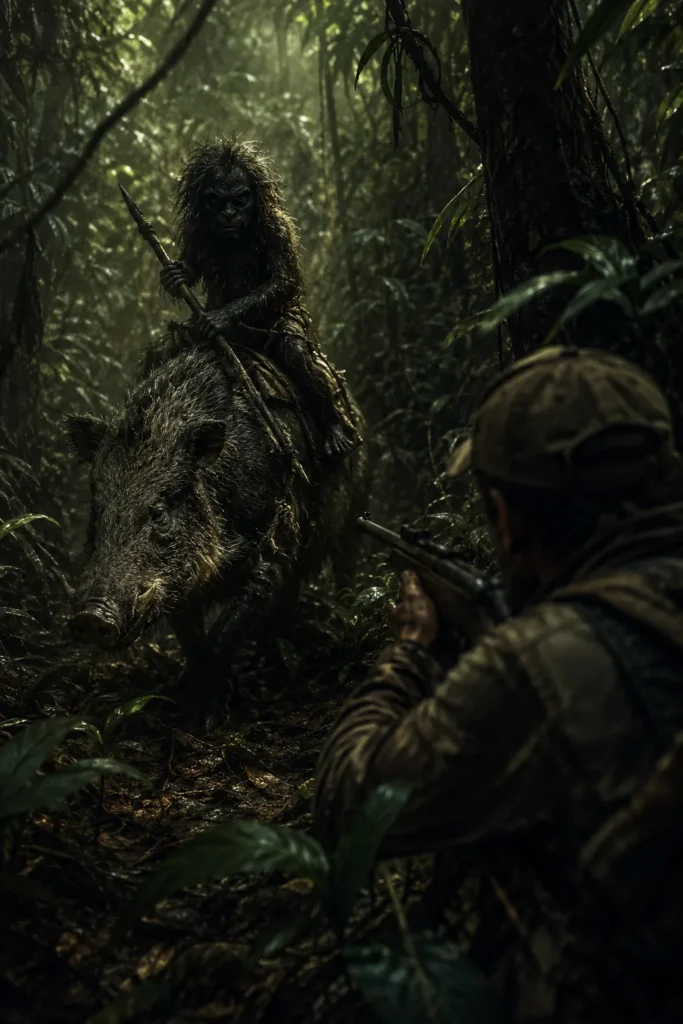
The Dağ İyesi is usually formless or shape-shifting and may appear as an old man, an animal or an invisible presence. At its core lies the sanctity of mountains as places where heaven and earth meet.
Effect
As the guardian and ruling spirit of the respective mountain, he grants good fortune in hunting and grazing and safe passage where respect is shown; he punishes pollution, overuse or disrespect of the mountain.
Profile: Dağ İyesi
The key aspects of the mountain lord at a glance.
An element of Turkish and Central Asian folk belief and Tengrism: every place has its iye, and the mountain has its Dağ İyesi.
Hunters, herders and travellers: whoever uses or crosses the mountain moves within the domain of the mountain lord and owes him respect.
Usually formless or shape-shifting: as an old man, an animal or merely an invisible presence on the mountain.
Good fortune in hunting and grazing, safe passage and the integrity of the mountain; punishments strike pollution, overuse and disrespect.
Mountain and pass shrines, stone cairns such as the obo or ovoo, ribbons tied to trees, small offerings of milk and fat, invocations and avoidance taboos.
The Mongolian gazriin ezen with its ovoo cult, the Altaic lords of the mountain and, structurally, the Japanese Yama-no-Kami.
One mountain, one owner: the iye belief
Iye or eye means lord, owner or possessor in the Turkic languages, dağ means mountain; the Dağ İyesi is the owner and guardian spirit of the mountain. He is an element of Turkish and Central Asian folk belief and Tengrism and is widely documented alongside the water, forest and house spirit.
The historical mountain and peak cult, in which sacred mountains are regarded as places of ancestors and heaven, is well attested. The systematising interpretation that Tengri created the iye and assigned them their domains, however, is not a single unified original source, but a later ordering of the material.
Revival and classification
The Dağ İyesi is a core concept of the modern Turkish mythology system and is experiencing a revival in Neo-Tengrism.
In religious studies, he is fundamentally protective and ambivalent, dangerous only in cases of disrespect and breach of taboo towards the mountain. Two clarifications: he is not a god in the strict sense, but a local guardian spirit within an animistic-Tengristic system. And the neat formula that Tengri created the iye is a modern systematisation, while the historical sources are more local and less uniform.
Obo, ribbons and avoidance taboos
Well documented are mountain and pass shrines, stone cairns such as the Mongolian-Turkic obo or ovoo, ribbons tied to trees, small offerings of milk and fat, invocations and avoidance taboos. The historical mountain and peak cult, in which sacred mountains are regarded as places of ancestors and heaven, is well attested. Protection from the mountain lord is thus identical with respect for the mountain itself: whoever observes the taboos has nothing to fear.
Mountain lords from the steppe to Japan
Dağ İyesi corresponds to the Mongolian gazriin ezen, the lord of the place with its Ovoo cult, the Altaic lords of the mountain, and the Slavic spirit of the place. Structurally, he is related to the Japanese Yama-no-Kami, the mountain god of Japanese folk religion.
Frequently asked questions about Dağ İyesi
What does Dağ İyesi mean?
Lord or owner of the mountain: in the Turkic languages, iye means lord or spirit of a place, and dağ means mountain.
Is Dağ İyesi a god?
No. He is a local spirit of place and protection within an animistic-Tengristic system, not a god in the strict sense.
How is he venerated?
Through stone cairns such as the obo or ovoo, ribbons tied to trees, small offerings of milk and fat, and avoidance taboos on the mountain.
Further links
Further reading:
- Yama-no-Kami – the Japanese mountain god as a structural parallel
- Achachila, Almas – further beings of the mountain world
- Amulet, Smoke cleansing, Salt – traditional protective means
- Protection Compass – an overview of protective means
Literature (selection)
Further standard works in the bibliography.
As lord of the mountain and Turkish spirit of place, Dağ İyesi represents a simple basic rule of folk belief: the mountain does not belong to humans, and whoever enters it is a guest.