Vasorrú bába, the old woman with the iron nose
By Ralf Ittermann · last reviewed on
The Vasorrú bába is a spirit of Hungarian tradition.
The forest witch with the iron nose, terror of fairy tales.
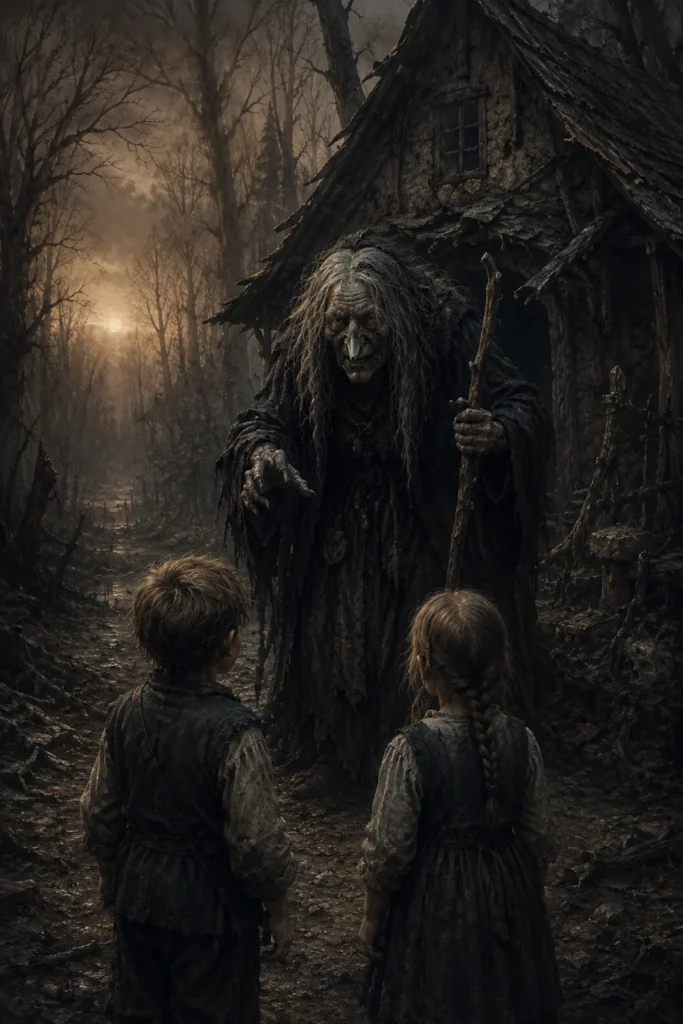
Vasorrú bába, the iron-nosed old woman, is a fairy-tale forest witch of Hungarian tradition who dwells in a hut in the forest and catches children. She is the Hungarian counterpart to the Slavic Baba Yaga and is at once a threat and a possible helper.
Her defining feature is the iron nose: metal on the face points to the non-human, and according to one interpretation even to old shamanistic sacrificial dolls. In Hungarian, the term Vasorrú bába stands for the evil fairy-tale witch par excellence.
Type: Fairy-tale forest witch, terror of children and threshold guardian
Origin: Hungarian fairy-tale and folk tradition, ethnographically documented
Texts: Hungarian fairy-tale collections and ethnography (Dégh, Balassa/Ortutay)
Period: Hungarian folk tradition up to the present
Appearance: old witch with an iron nose, ugly old woman of the forest
Textual history
Period of the Texts
The figure belongs to Hungarian fairy-tale and folk tradition and is ethnographically documented; as a fairy-tale figure she is widely attested, as a figure of belief she remains vague.
Area of Diffusion
The Hungarian-speaking region. Her forest hut at the edge of the inhabited world marks the threshold between the human and the otherworldly realm.
Sources
Widely attested as a fairy-tale figure, vague as a figure of belief: the Hungarian fairy-tale collections and the standard ethnographic works are decisive.
Name and variants
Hungarian: vas, iron, orr, nose, and bába, old woman or witch: the old woman fitted with the iron nose. The word baba: a Slavic loanword for midwife, old woman or witch.
Being and effect
Appearance
The iron nose is the defining, unsettling feature: metal on the face points to the non-human and tool-like, and, according to the shamanistic interpretation, to the sacrificial doll. The forest hut at the edge of the inhabited world makes the ugly old woman of the forest a threshold guardian between the human and the otherworldly realm.
Effect
In fairy tales she catches children to eat or enslave them, and sets trials and dangers for heroes on their journey. Like Baba Yaga, she is at once a threat and a possible helper and giver figure: whoever outwits her or follows the correct rules can receive help, information or magical gifts from her. She guards thresholds between the worlds.
Profile: Vasorrú bába
The most important aspects of the iron-nosed witch at a glance.
Hungarian counterpart to the Slavic Baba Yaga; in Hungarian, the standard term for the evil fairy-tale witch par excellence.
Above all children, whom she catches, and fairy-tale heroes, for whom she sets trials and dangers on their journey.
Old, ugly forest witch with an iron nose, dwelling in a hut at the edge of the inhabited world, at the threshold to the otherworldly.
Catching children and testing heroes, but also help, information and magical gifts for the one who outwits her or knows the rules.
No cult rituals, but fairy-tale logic: cunning, clever answers, polite address, tasks completed and flight at the right moment.
The Slavic Baba Yaga as the closest relative, along with Mother Holle and the witch in the gingerbread house of German fairy tales.
Sheet iron and midwives: two interpretations of the nose
The name is literal: vas, iron, orr, nose, and bába, old woman or witch, thus the old woman fitted with the iron nose. The word baba is a Slavic loanword with the double meaning of midwife, old woman and witch.
There are two interpretations of the iron nose: a reference to old shamanistic traditions, in which wooden spirit dolls wore a metal plate on the face so that they would not rot when smeared with offerings, and the folk reinterpretation of midwives into the supernatural. Both interpretations lead to the margins of Hungarian religious history, into pre-Christian sacrificial practice and village social history.
Reception and classification
The Vasorrú bába is a fixed presence in the Hungarian folk fairy tale; the term stands in Hungarian for the evil fairy-tale witch par excellence. Through her kinship with Baba Yaga, she is part of one of the most powerful witch motifs of European narrative tradition.
From the perspective of religious studies, the Vasorrú bába is a terror of children and a threshold guardian at the forest’s edge, an ambivalent old woman between threat and giver figure, in whom the diminished figure of an old mistress over life, death and transition shines through. The shamanistic interpretation of the iron nose points to pre-Christian sacrificial practice. It remains important to clarify: the tradition is fairy-tale-like, not cultic; no real apotropaic rituals have been handed down.
Cunning rather than banishing spells: dealing with her in fairy tales
The tradition is fairy-tale in nature, not cultic: no real protective rituals are recorded, only fairy-tale logic. One escapes the witch through cunning, clever answers and knowledge of the rules, for instance by addressing her politely, completing her tasks, outwitting her with a counter-question, or fleeing at the right moment. The figure served as a bogey to keep children away from the forest and its dangers.
The Baba Yaga family and her neighbours
The Vasorrú bába is the Hungarian counterpart to the Slavic Baba Yaga and part of the wider Baba Yaga family, in which the iron nose is a common attribute. Related figures include Frau Holle and the witch in the gingerbread house of German fairy tale, as well as the iron-nosed old women of Russian fairy tales. In the Carpathian region, the Romanian forest mother Muma Pădurii and the Polish Dziwożona stand alongside her as further forest crones.
Frequently asked questions about the Vasorrú bába
What does Vasorrú bába mean?
Literally ‘old woman or witch with an iron nose’, in Hungarian the standard term for the evil fairy-tale witch.
Is she the same as Baba Yaga?
She is the Hungarian counterpart and belongs to the Baba Yaga family; the iron nose is a typical Baba Yaga trait.
How is she defeated in the fairy tale?
Not through strength, but through cunning, clever answers and adherence to the rules of the fairy tale.
Further links
Literature (selection)
Further standard works in the bibliography.
As the iron-nosed witch, the Vasorrú bába is the Hungarian fairy-tale witch par excellence: a threshold guardian at the forest’s edge who either devours or rewards, depending on whether one knows her rules.