Apu Ampato and the ice mummy Juanita
By Ralf Ittermann · last reviewed on
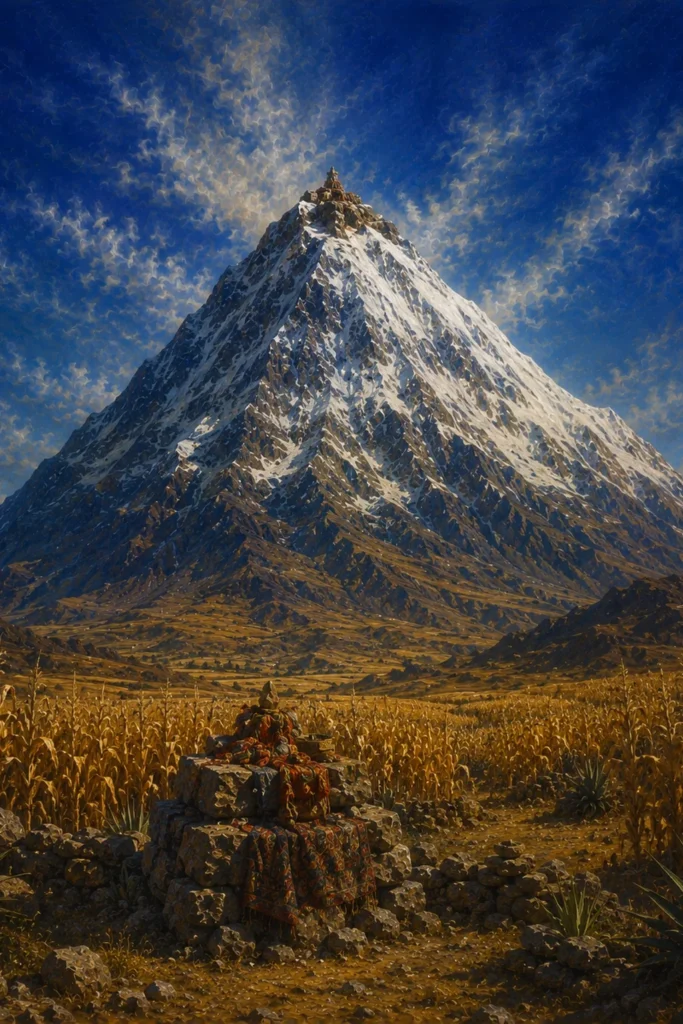
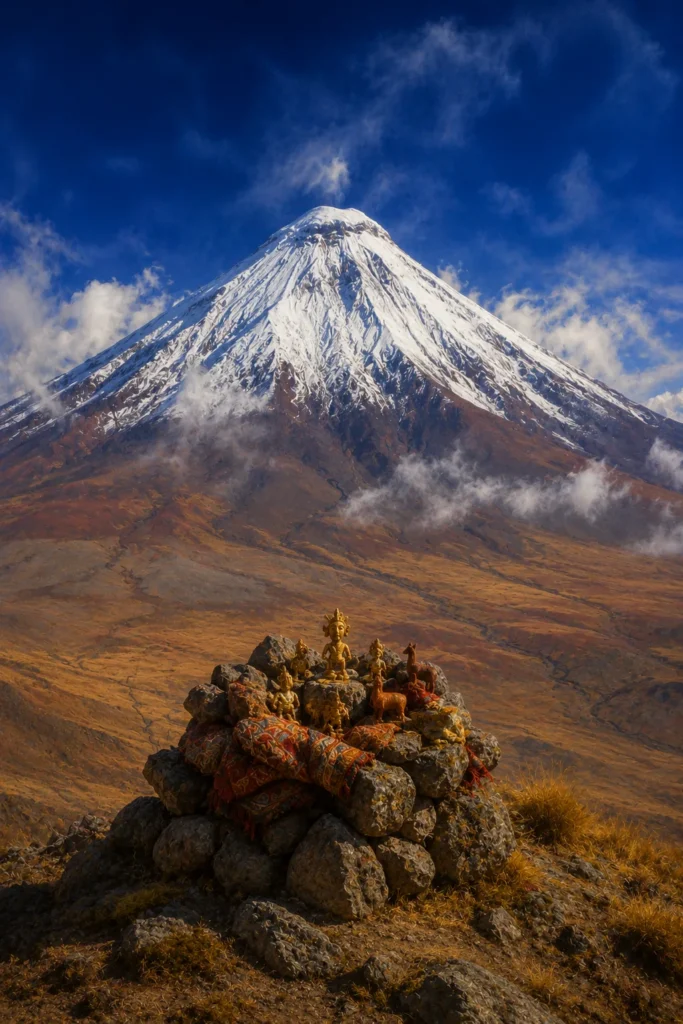
Apu Ampato is the mountain god of the Quechua tradition.
The summit where the ice mummy Juanita was found in 1995.
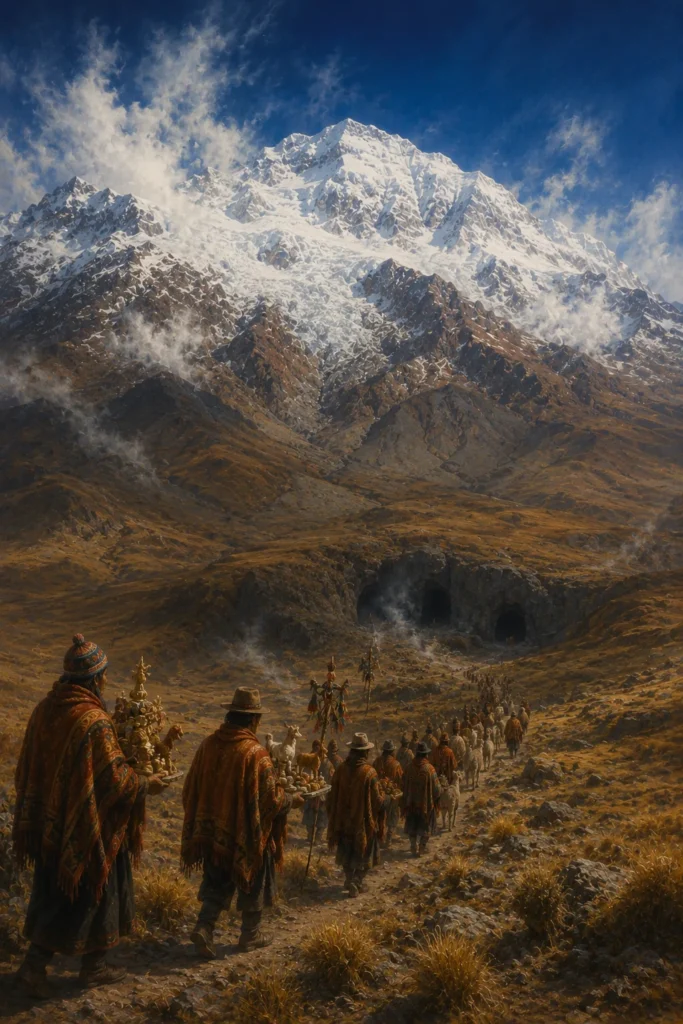
Apu Ampato is a dormant volcano roughly 6288 metres high in the Arequipa region of southern Peru, and the country’s best-known Capacocha find site. In 1995 Johan Reinhard and Miguel Zárate discovered the frozen mummy Juanita, the Dama de Ampato, on its summit, a girl sacrificed around 1440 to 1480.
This makes Ampato the mountain where the Inca-era high-altitude sacrifice is not only known through ethnographic accounts but is directly documented archaeologically. As an Apu, it is regarded by the surrounding region as a source of meltwater and fertility; the Inca state religion made it the recipient of its highest offerings.
Type: Apu, protective mountain that grants water and fertility
Origin: Arequipa region, southern Peru
Sources: Inca-era Capacocha, modern archaeology since Reinhard 1995
Period: Inca era to present
Appearance: snow-capped volcanic cone, roughly 6288 metres high
Region of origin and sources
Period of the Texts
The sources begin with the Inca-era Capacocha and extend into modern archaeology; the 1995 summit find forms the core of the documentation.
Area of Diffusion
Arequipa region, southern Peru. Ampato rises above the Puna, in the immediate vicinity of the active volcano Sabancaya.
Sources
Very good: excavations since Reinhard 1995 directly document the summit sanctuary, supplemented by more recent studies such as Socha and Reinhard 2021.
Name and variants
Quechua: hampatu means toad or frog, which is why Ampato is often interpreted as Toad Mountain; this derivation is not definitively established. As an Apu, Ampato is a living mountain deity, not merely a landform.
Appearance
Appearance
Ampato is a snow-capped, dormant volcanic cone about 6288 metres high. Volcanic ash falls from the neighbouring Sabancaya caused the summit’s ice cap to thaw, contributing to the exposure of the mummy that the mountain had preserved for over five centuries.
Effect
As an Apu, Ampato provides the meltwater on which the surrounding region’s agriculture depends, and received the highest state offerings of the Inca in return.
Profile: Apu Ampato
The key facts about the Capacocha mountain at a glance.
Apu of the Quechua tradition and sanctuary of the Inca state religion; also Peru’s best-known Capacocha find site.
Water and fertility for the surrounding region: its meltwater feeds the fields of the Arequipa region.
Snow-capped volcanic cone, personified as an Apu; the mountain needs no cult image, for it is itself the deity.
Recipient of the Capacocha, the highest state offering of the Inca, involving human sacrifice, precious-metal figurines and textiles.
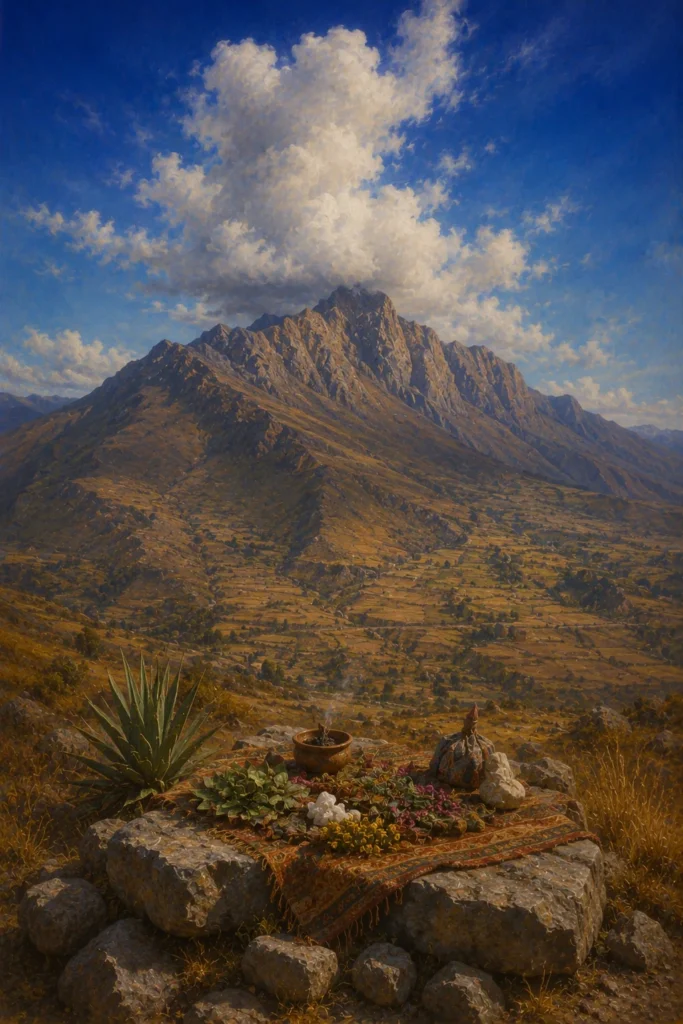
In Inca times the Capacocha at the summit; today Despacho and Pago offerings, in which coca leaves, llama fat and chicha are directed to the Apu.
The Capacocha summits Llullaillaco, Misti and El Plomo show the same sacrificial pattern; as an Apu, Ampato is the Quechua counterpart to the Aymara Achachila.
Juanita and the Capacocha of Ampato
Quechua hampatu means toad or frog; whether Ampato truly means Toad Mountain because of this is not definitively established. In any case, the mountain owes its outstanding standing not to its name but to the Capacocha, the Inca-era high-altitude sacrifice that is directly documented archaeologically there.
In 1995 Johan Reinhard and Miguel Zárate found the frozen mummy of a girl on the summit, sacrificed around 1440 to 1480: Juanita, the Dama de Ampato. Ash falls from the neighbouring volcano Sabancaya had thawed the ice and exposed the find. Since 1996 the mummy has been on display at the Museo Santuarios Andinos of the Universidad Católica de Santa María in Arequipa.
Worldwide response and classification
The 1995 find received worldwide media attention; since 1996 the mummy has been one of the best-known exhibits of Andean archaeology and can be seen in Arequipa.
From the perspective of religious studies, Apu Ampato is the model case of an archaeologically attested Inca-era summit sacrifice. Two clarifications are important: Juanita is a modern nickname, not an Inca-era name, the girl’s real name is unknown. And Ampato was the site of sacrifice, not necessarily the target deity of every single offering.
From state sacrifice to Despacho
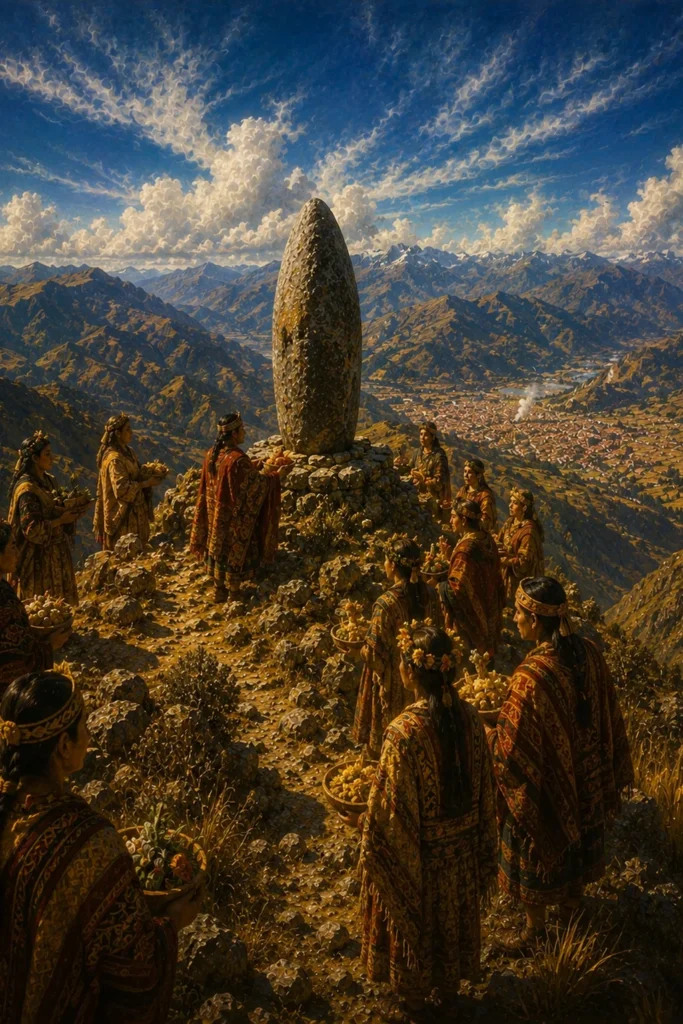
Well attested by sources is the Capacocha: the human sacrifice, together with miniature figurines of gold, silver and Spondylus, and textiles, documented at Ampato not only ethnographically but directly through archaeology. Today’s veneration is bloodless: it follows the general Despacho and Pago forms, in which coca leaves serve as the central mediator to the Apu, accompanied by llama fat and chicha.
Capacocha summits compared
Apu Ampato stands alongside the other Capacocha summits that show the same summit-sacrifice pattern: with Apu Misti in the same region, with Llullaillaco and El Plomo further south, and with Apu Pichu Pichu, whose sacrificial finds are covered by the same specialist study. As an Apu, it has its counterpart in the Achachila of the Aymara; it remains closely connected to the earth mother Pachamama.
Frequently asked questions about Apu Ampato
Who is Juanita?
The modern nickname of the frozen mummy of a girl sacrificed around 1440 to 1480 on the summit of Ampato. Her real name is unknown.
What does Ampato mean?
Probably Toad Mountain, from hampatu, toad or frog; this interpretation is not definitively established.
How was the sacrifice found?
In 1995 by Johan Reinhard and Miguel Zárate, exposed by ash falls from the neighbouring volcano Sabancaya, which caused the summit ice to thaw.
Further links
Further reading:
- Apu Misti and Apu Pichu Pichu – Capacocha mountains of the same region
- Apu Sara Sara – another sacrificial mountain of southern Peru
- Achachila – the Aymara counterpart to the Apu
- Pachamama – the earth mother of the Andes
- Smudging, Amulet – traditional protective means
- Protection Compass – protective means at a glance
Literature (selection)
Further standard works in the bibliography.
As the mountain god of Arequipa, Apu Ampato represents a rare closeness of myth and evidence: what elsewhere remains tradition is here tangible in the mummy Juanita, recovered from the ice of its summit.