Šotek, the rascal in the flour
By Ralf Ittermann · last reviewed on
The Šotek is a spirit of the West Slavic tradition.
The goblin that protects livestock, brings money and plays pranks.
The Šotek, also called Šetek or Skřítek, is a Czech house goblin: a predominantly benign, mischievous house spirit that protects livestock, brings grain or money, and plays pranks.
To be distinguished from it is the more devilish plivník, bound by a pact for the soul. The Šotek itself is richly attested in Bohemia and Moravia, from the 16th to the 18th century, and lives on in language to this day, for instance in the tiskařský šotek, the printer’s imp.
Type: Benign-mischievous house goblin
Origin: Bohemia and Moravia
Texts: Máchal and Zíbrt; mentioned by Hus, Comenius and in the Mastičkář play
Period: richly attested 16th to 18th century
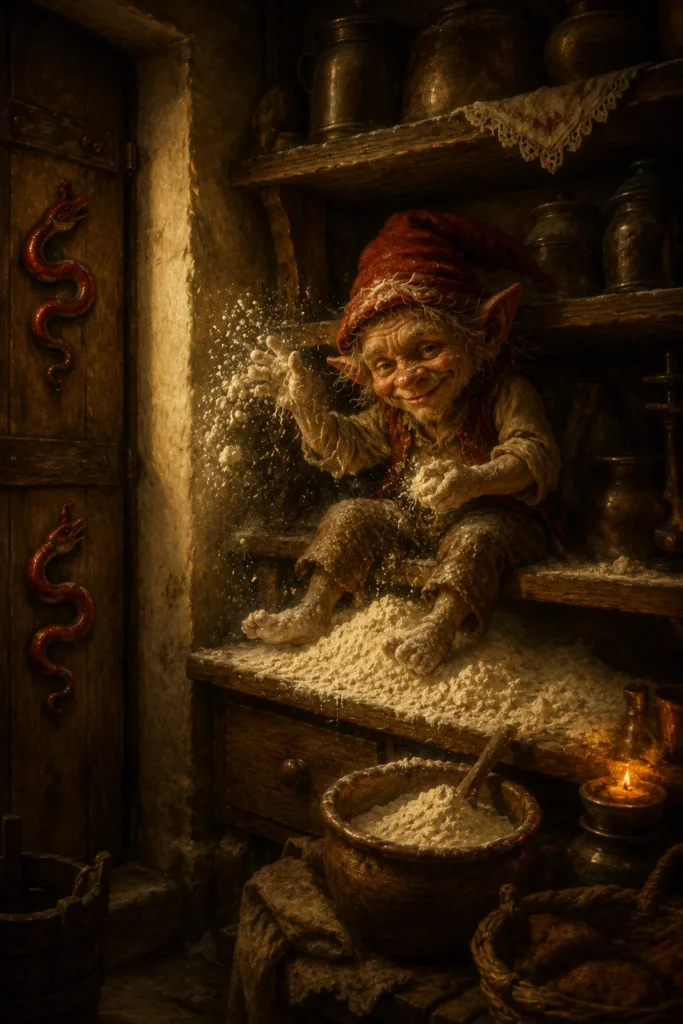
Appearance: small, sometimes with claws, hides in flour, appears as a chick
Context of tradition
Period of the Texts
Richly attested from the 16th to the 18th century in Bohemia and Moravia; already Hus and the Mastičkář play equated skřítek and diblík with the devil.
Area of Diffusion
The Czech lands, above all Bohemia and Moravia: there the Šotek is a firmly established part of house-spirit belief.
Sources
Well documented: Máchal’s Bájesloví slovanské, Zíbrt’s study on the Skřítek and Erben’s Slovanské bájesloví.
Name and variants
Czech: skřítek traces back to the German scrat, forest spirit, from the Germanic family. Importantly, šotek is usually not derived from the scrat line but from šet, old man; in part, its origin is considered unresolved.
Form and effect
Appearance
The Šotek is small, sometimes with claws, hides in flour and appears as a wet chick; in Slovenia it wears a red cap that makes it invisible. The egg motif is confirmed for it too: it is most often raised from an egg carried in the armpit, not only in the case of the plivník.
Effect
The Šotek protects livestock, brings grain or money, and plays pranks. Typologically distinct is the plivník, zmok or rarášek, a more devilish wealth spirit bound to a pact for the soul, involving the egg of the black hen and a blood covenant; the boundaries are fluid and blurred by later demonisation.
Profile: Šotek
The key aspects of the Czech house goblin at a glance.
Czech house-spirit belief; at its core the domovoy-related house protector, secondarily merged via the armpit egg with the aitvaras wealth type.
House, farmstead and livestock: the Šotek protects the animals, brings grain or money, and remains a rascal all the while.
Small, sometimes with claws, hidden in flour or appearing as a wet chick; in Slovenia with a red cap that makes it invisible.
Benign-mischievous house spirit: livestock protection, gifts of grain and money, along with pranks; it takes revenge on those who harm it.
Setting out food on Thursdays and on Christmas Eve, placing a small wooden figure, and against unwanted visitors, two red-painted metal snakes at the door.
Between šet and scrat: names and evidence
The name family is twofold: skřítek derives from the German scrat, forest spirit, while šotek is usually not traced back to this strand but to šet, old man; in part the origin is considered unresolved. The figure is richly attested in Bohemia and Moravia from the 16th to the 18th century.
The learned tradition shows both lines of interpretation: Comenius and Pěšina compared the house spirit to the Roman Lares and Penates, while Hus and the Mastičkář play equated skřítek and diblík with the devil. From this later demonisation arose names such as lucek from Lucifer, diblík from ďábel and pikulík from peklo.
From Goblin to Printing Error
The tiskařský šotek is the printer’s imp responsible for meaning-distorting printing errors; colloquially the gremlin for missing things bears this name, and Karel Čapek illustrated the poštovní skřítci.
From a religious-studies perspective, the Šotek is predominantly benign and mischievous, taking revenge on those who harm him; the plivník strand would be considerably more dangerous. Three clarifications: Šotek and plivník are typologically distinct. Rarášek is not a pure synonym for šotek but is diabolical today. And Šotek should not be hastily equated etymologically with the scrat strand.
Food Offerings and Metal Snakes on the Door
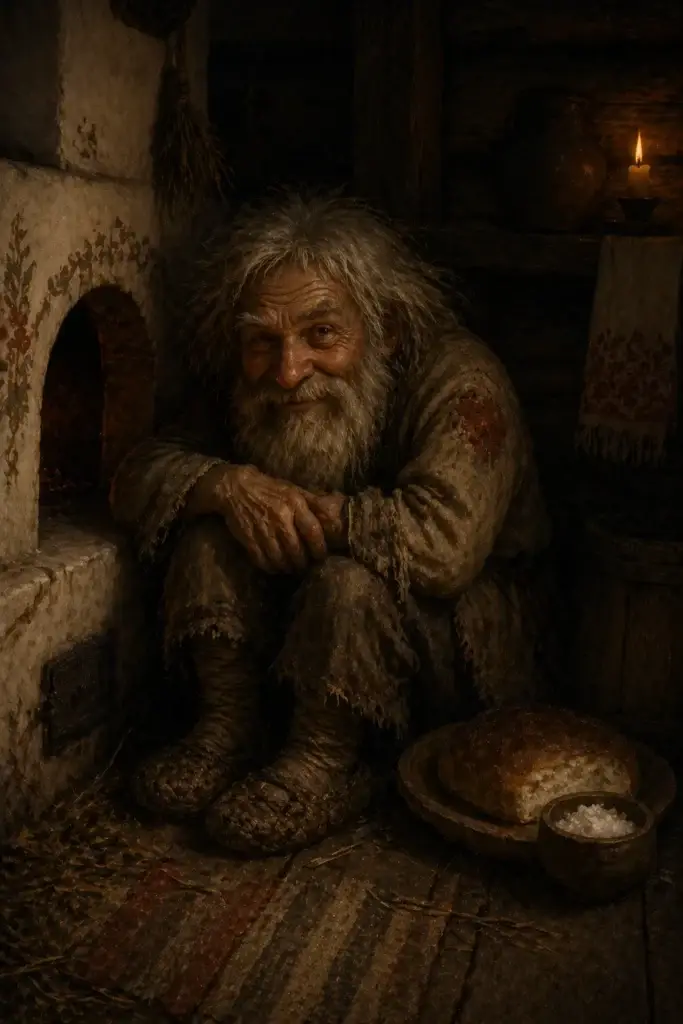
Dealing with the Šotek involves laying out food for him, on Thursdays and on Christmas Eve, and setting up a small wooden figure. To guard against unwelcome visitors, people nailed two red-painted metal snakes to the door. Getting rid of him is difficult; the transmitted practices are folkloric material collected regionally and vary accordingly.
Schrat, Skrzat and the Goblin Family
The Šotek corresponds to the German Schrat and Kobold, the Polish Skrzat, the Slovak Škriatok and the East Slavic Domovoi; for the plivník strand, the German Bilwis and the English imp are comparable. Its core is the domovoj-related house protector, secondarily merged, via the armpit-egg motif, with the aitvaras-type wealth spirit.
Frequently Asked Questions about the Šotek
What is a Šotek?
The Czech house goblin, a predominantly benign and mischievous house spirit.
Is the Šotek the same as the plivník?
No. The plivník is the more diabolical wealth spirit bound by a pact for the soul; the Šotek is milder.
What is the tiskařský šotek?
The printer’s imp, proverbial for meaning-distorting printing errors.
Further links
Literature (selection)
Further standard works in the bibliography.
As a Czech house goblin and mischievous house spirit, the Šotek stands midway between the benevolent house protector and the diabolical wealth spirit: a rogue you feed, but had better not harm.