Si'lat, transformation artist among the djinn
By Ralf Ittermann · last reviewed on
The Si’lat is a demon of Arabian tradition.
The shapeshifter who leads travellers astray, to their death. Storytellers count the Si’lat among the shapeshifting djinn feared by desert travellers.
The Si’lat, also Si’la, is a shapeshifting female djinn of Arabia: a highly gifted artist of transformation who mostly appears in the form of a beautiful woman. She leads travellers astray in desolate desert regions and seduces men.
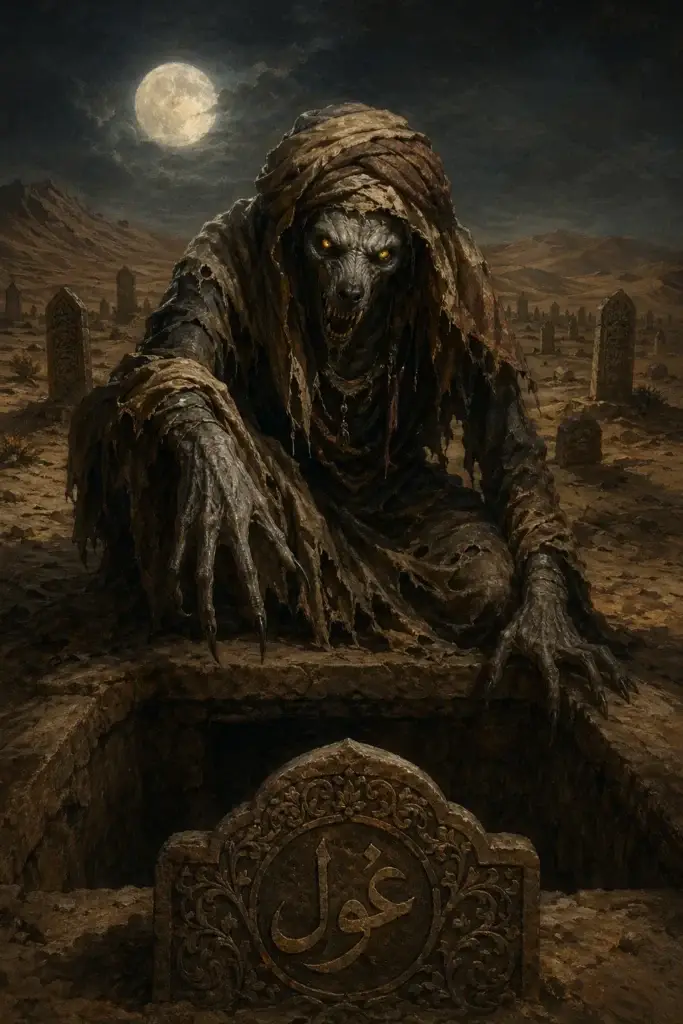
She is attested in pre-Islamic and Islamic Arabia in lexicography and poetry; a Mesopotamian variant lives on as a water demon in Iraq. In al-Qazwini she appears as a variant of the Ghul, who torments her victim, plays with him and forces him to dance before devouring him.
Type: Shapeshifting female djinn, own djinn class
Origin: Pre-Islamic and Islamic Arabia
Texts: Lexicography, poetry, al-Qazwini
Period: pre-Islamic and Islamic, in Iraq to this day
Appearance: mostly a beautiful woman, changeable; in Iraq with long hair, sometimes a fish tail

Historical Classification
Period of the Texts
Pre-Islamic and Islamic: the Si’lat is attested in lexicography and poetry of both eras, the classical description is given by al-Qazwini in the 13th century.
Area of Diffusion
Arabia and Mesopotamia: alongside the desert tradition of the peninsula, a variant lives on as a water demon in Iraq.
Sources
Well documented: the lexicography, al-Qazwini’s cosmography, and modern research, above all El-Zein and Lebling.
Name and variants
Arabic: si’la, plural sa’ali, with the basic lexicographical meaning witch or cunning, dangerous woman. Even the name, then, does not depict a monster but a dangerously clever female figure.
Form and effect
Appearance
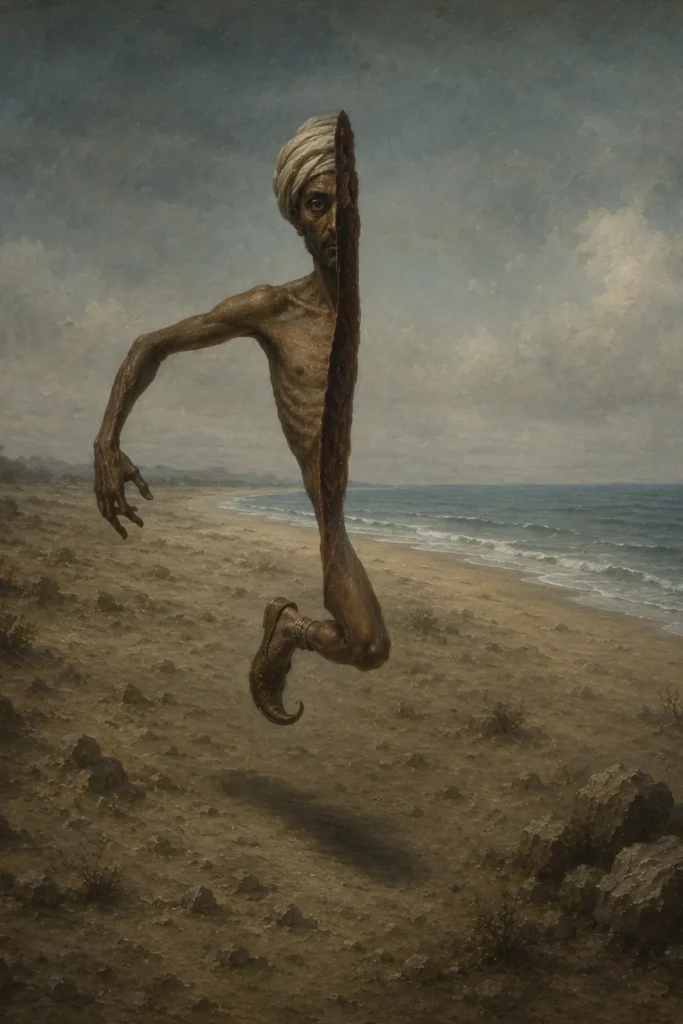
The Si’lat is female and a highly skilled shapeshifter, usually appearing as a beautiful woman. There is a genuine contradiction in the tradition here: early sources describe her as fixed in form, while later sources emphasise precisely her outstanding changeability. The Iraqi variant shows a woman with long hair, sometimes with a fish tail.
Effect
The Si’lat leads travellers and nomads astray in desolate desert regions until death, seduces and marries men, and gives birth to hybrid beings. In al-Qazwini’s account, she torments her victim, plays with him and forces him to dance before devouring him.
Profile: Si'lat
The most important aspects of the shapeshifter at a glance.
A distinct class within Djinn taxonomy alongside the Ghul and Ifrit; used synonymously with the Ghul in early sources, later becoming its female counterpart.
Travellers and nomads in desolate desert regions, whom she leads astray, and men whom she seduces and marries.
Usually a beautiful woman of great changeability; the Iraqi water variant has long hair, sometimes a fish tail.
Leading astray unto death, seduction, marriages with humans and hybrid offspring; in al-Qazwini’s account also the deadly game with the victim.
The wolf hunts the Si’lat at night, which is why wolf teeth are regarded as an amulet; the call to prayer is recited against Ghul-like beings.
The Ghul as her closest relative, along with Umm al-Duwais and Aisha Qandisha as seductive demonesses.
From witch to Djinn class
The Arabic word si’la, plural sa’ali, lexicographically means witch or a cunning, dangerous woman. From this basic meaning, the figure grew into the Djinn taxonomy: the Si’lat is documented in pre-Islamic and Islamic Arabia in lexicography and poetry, and became its own class alongside the Ghul and Ifrit.
The tradition is not uniform here. Early sources use Si’lat and Ghul synonymously and describe the Si’lat as fixed in form; later sources narrow her to the female counterpart of the Ghul and emphasise precisely her changeability. The Banu Si’lat legend eventually makes her the mother of shapeshifting Djinn, and a Mesopotamian variant survives as a water demon in Iraq.
Folk belief, popular culture and classification
The Mesopotamian variant of the Si’lat is living folk belief; popular culture, by contrast, often conflates the figure with the Christian succubus motif, which is a distortion.
From a religious-studies perspective, the Si’lat belongs to the Djinn taxonomy. Important clarifications: equating her with a succubus is a mistake; historically she is primarily the female, shapeshifting expression of the Ghul complex; and the contradiction between fixed and changeable form reflects early versus later sources.
The wolf as enemy of the Si'lat
The traditional protection against the Si’lat is remarkably specific: according to al-Qazwini, the wolf hunts the Si’lat at night because Djinn cannot escape into the ground when he is near. From this belief arose a tangible protective means, wolf teeth, which were worn as an amulet. In addition, the recitation of the call to prayer is considered effective against Ghul-like beings, an acoustic defence within desert tradition.
Ghul, Ifrit and the daughters of the Si'lat
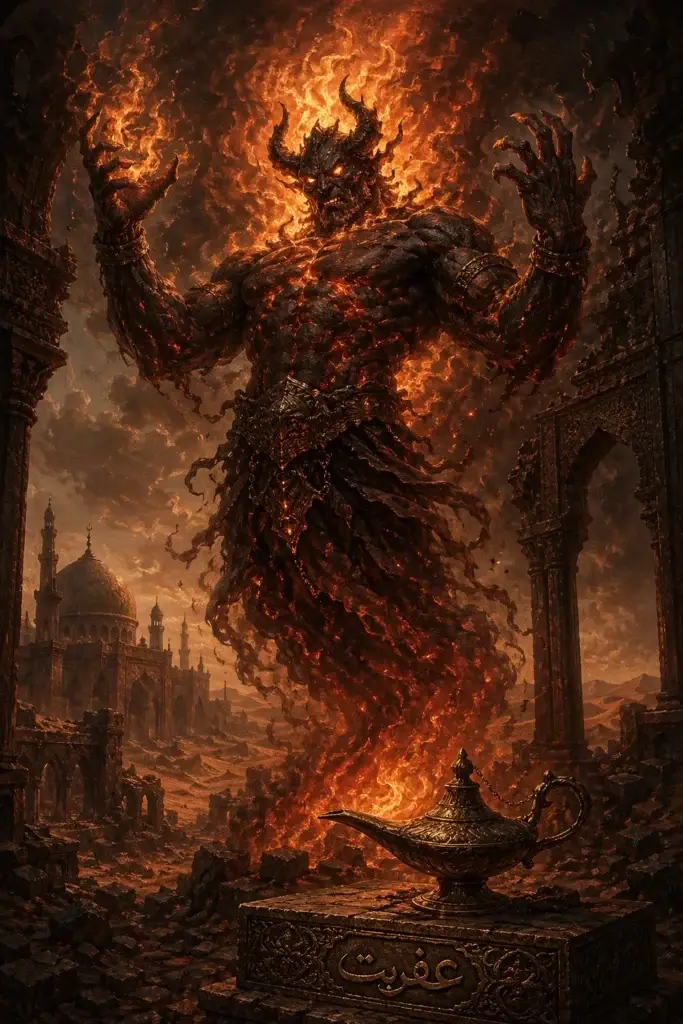
The Si’lat stands alongside Ghul and Ifrit as its own Djinn class; in early sources, Si’lat and Ghul are synonyms, while later the Si’lat is narrowed to the female counterpart of the Ghul. The Banu Si’lat legend makes her the mother of shapeshifting Djinn. As seductive demonesses, she is joined by Umm al-Duwais and Aisha Qandisha, and with the Ghaddar she shares the role of a danger to travellers.
Frequently asked questions about the Si'lat
What is a Si’lat?
A shapeshifting female Djinn of Arabia, who leads travellers astray and seduces men.
Is the Si’lat the same as the Ghul?
Early on they are synonyms; later the Si’lat is the female counterpart of the Ghul.
What protects against her?
According to al-Qazwini, the wolf, and wolf teeth worn as an amulet.
Further links
Further reading:
- Islam – all beings of the Islamic faith tradition
- Ghul – the desert demon whose female counterpart she is
- Umm al-Duwais, Aisha Qandisha – related seductresses
- Iron, amulet, holy water – traditional protective means
- Protection Compass – protective means at a glance
Literature (selection)
Further standard works in the bibliography.
As a female Djinn and shapeshifter, the Si’lat combines two motifs that Arabic tradition otherwise keeps separate: the seductive, beautiful stranger and the ravening creature of the wilderness.