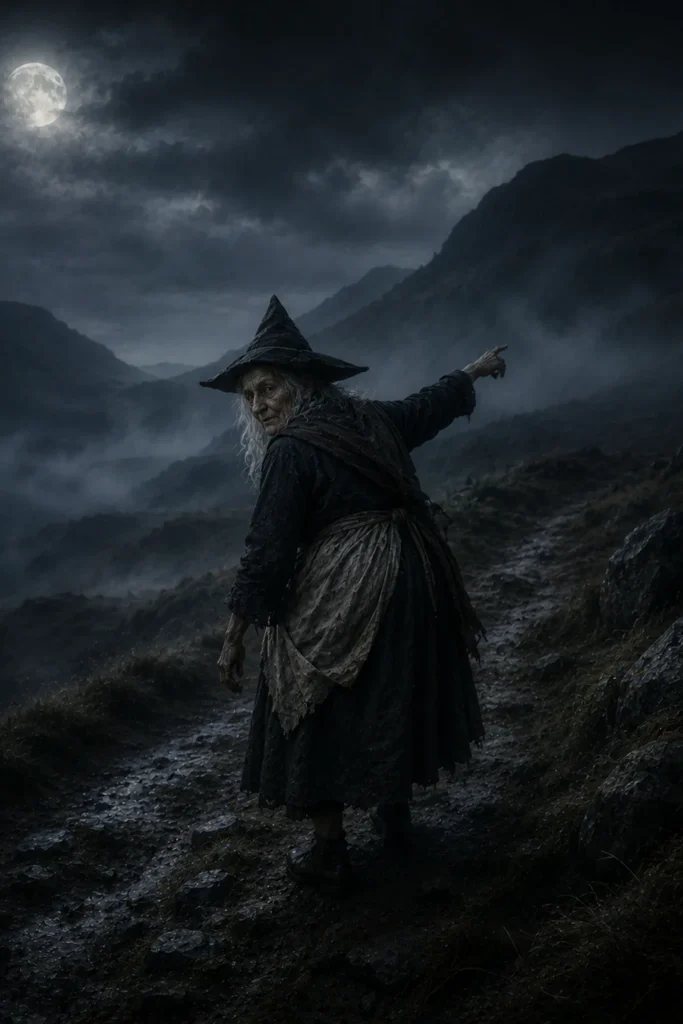
Wirry-cow, the bogeyman without a fixed form
By Ralf Ittermann · last reviewed on
Wirry-cow is a spirit of Scottish tradition.
A collective name for everything that instils fear in the night.
Wirry-cow is not a fixed figure but the Scottish collective term for anything that instils fear: bogeyman, goblin, ghost, devil and even the scarecrow come to life all fall under this name. As a diffuse figure of fear, it served above all as a childhood scare figure used to enforce obedience.
Unlike the Welsh and Scottish death omens of Celtic tradition, the Wirry-cow does not announce a death. The belief is widespread in the Scottish Lowlands and Northern England, documented in dictionaries and in the work of Sir Walter Scott.
Type: Collective term for bogeyman, goblin, ghost and devil
Origin: Scottish-Northern English vernacular, Scots-speaking area
Texts: John Jamieson’s dictionary of 1808, literary use by Walter Scott
Period: attested lexically since the early 19th century
Appearance: no fixed being, a shifting figure of terror

Historical Classification
Period of the Texts
Attested lexically and literarily since the early 19th century, without a closed body of legend of its own.
Area of Diffusion
Scotland, especially the Lowlands, as well as Northern England within the shared Scots-speaking area.
Sources
Lexical and literary: mainly dictionaries and individual literary attestations, no fixed body of legend.
Name and variants
Scots: The name is made up of wirry, to harass or strangle, related to the German ‘würgen’, and cowe, a word for goblin or object of terror. Related: wirry-hen (a brawler) and wirry-carle (a feared fellow).
A form without a fixed shape
Appearance
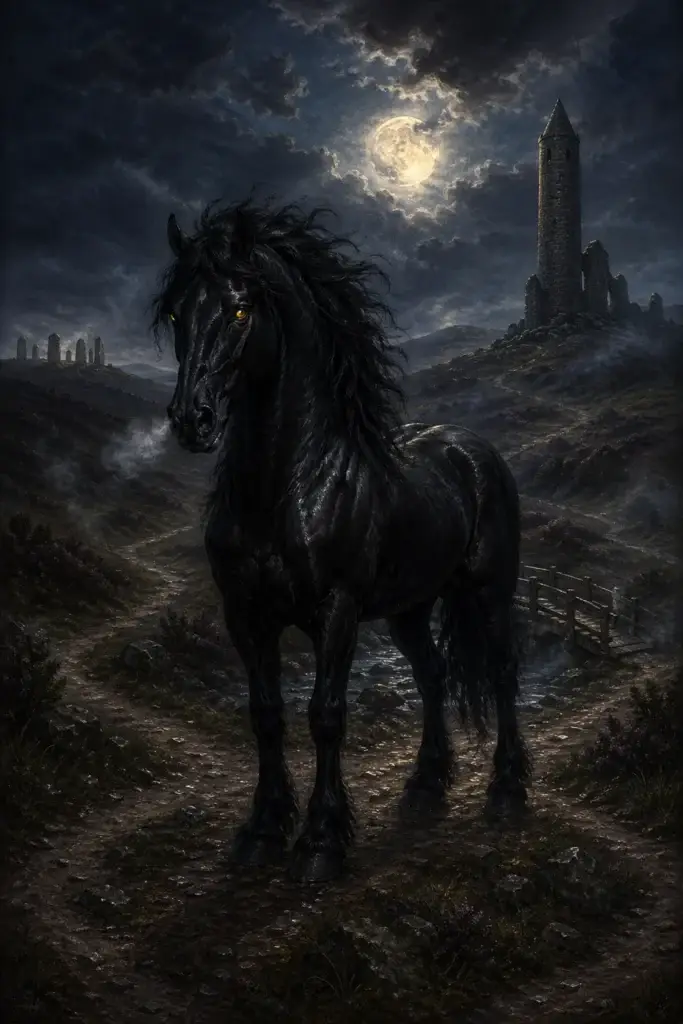
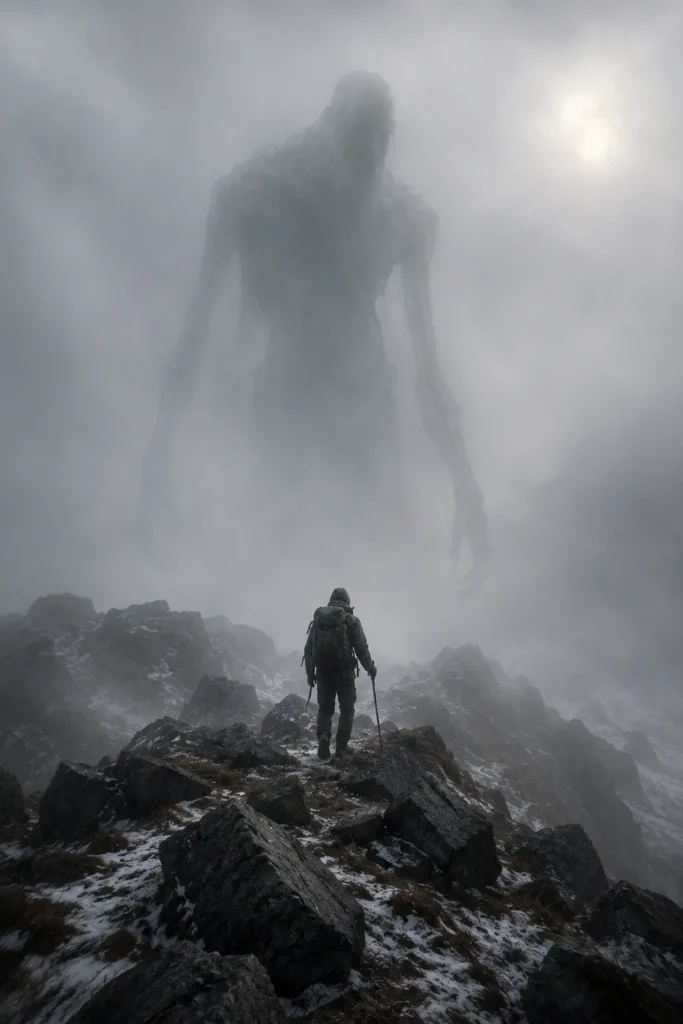
The Wirry-cow has no fixed form but is defined functionally by its capacity to frighten. In tales it appears sometimes as a misshapen cow-like figure with a long neck and short legs, sometimes as a dirty, ragged figure hung with stones and dirt, and sometimes as a scarecrow come to life with small, sharp eyes. As a scarecrow, it stands on the boundary between mere object and animated figure of terror.
Effect
The Wirry-cow functions as a collective figure of terror and an omen of misfortune, as well as a classic childhood scare figure used to compel children into obedience. At the same time, it is a folk term for the devil or a ghost, with which it is partly equated.
Profile: Wirry-cow
The key aspects of the Scottish figure of terror at a glance.
An expression of Scots, drawn from remnants of pagan beliefs and fused with Christian demonology.
Above all children, whom it helped guide towards obedience as a scare figure; more generally, a symbol of fear.
Variable: a cow-like figure with a long neck, a ragged figure hung with stones, or a scarecrow come to life.
Upbringing through fear as well as a folk term for the devil or a ghost; not a death omen.
No distinct protective rituals have been passed down; protection lies in the children’s obedience and in general Christian defences against the devil.
Unlike pure death omens such as the Bean Nighe or the Cyhyraeth, the Wirry-cow does not announce a death, but frightens without any fixed cause.
Wirry, Cowe and the language of fear
The name is made up of wirry, Scots for to harass or strangle and related to the German ‘würgen’, and cowe, a word for goblin or object of terror. This derivation goes back to John Jamieson’s Etymological Dictionary of the Scottish Language of 1808. Related word forms are wirry-hen, a brawler, and wirry-carle, a feared fellow.
The Wirry-cow draws on remnants of pagan beliefs and merges with Christian demonology, so that it is partly equated with the devil. It is attested literarily in the work of Sir Walter Scott, who wrote the figure into the written tradition of Scots.
Worricow in Walter Scott and after
The Wirry-cow is attested literarily in Sir Walter Scott’s Guy Mannering of 1815, where worricow stands for a goblin or malicious spirit. It appears regularly in lists of Scottish fabled beings and is regarded as a textbook example of a dialectal Scots term for terror.
The Wirry-cow is not a death omen and not a psychopomp, but a folk figure of terror and upbringing at the intersection of residual paganism and Christian demonology. It illustrates the range of British-Isles Celtic spirit belief, spanning from precise omens to diffuse figures of fear. As a lexical-folkloristic subject without a body of legend of its own, the attestations rest mainly on dictionaries and literary mentions.
Obedience instead of an exorcism formula
No distinct protective rituals against the Wirry-cow itself have been passed down, since it is not a being that can be precisely warded off, but a figure of expression and upbringing. Protection lies in its social function, the obedience of children, as well as in the general Christian defences against the devil, with whom it is partly equated: consecrated Holy Water as a Christian sign, cold iron, regarded in Scottish folklore as protection against goblins and figures of terror, and the sound of consecrated bells as a protective sign against misfortune.
Bogeyman, boggart and term for the devil
The Wirry-cow belongs to the general type of bogeyman and bugbear, related to the English boggart and the bogeyman. It is also related to the Gaelic Urisk, the spirit of lonely places, and, as a term for the devil, to the broader Christian-demonological figures of terror. It stands deliberately in contrast to the pure death omens of the Celtic isles, such as the Bean Nighe and the Cyhyraeth, which announce death without frightening in themselves.
Frequently asked questions about the Wirry-cow
Is the Wirry-cow a spirit of death?
No. It is a collective bogey figure, bugbear, goblin, devil or scarecrow, not a herald of death like the Bean Nighe or the Ankou.
Where does the name come from?
From the Scots wirry, to harass or throttle, and cowe, goblin or object of terror.
Where does it appear in literature?
In Sir Walter Scott’s Guy Mannering of 1815, in the form worricow.
Further links
Further reading:
- Celtic – Celtic world of gods and spirits in Britain
- Bean Nighe, Cyhyraeth – Welsh-Scottish omens of death in contrast
- Ankou – the inescapable death-guide of Brittany
- Holy Water, Iron, Bells – traditional protective means
- Protection Compass – protective means at a glance
Literature (selection)
Further standard works in the bibliography.
As a Scots bogey figure and creature of fright, the Wirry-cow has no fixed form: a collective name for anything that inspires fear in the dark, from goblin to scarecrow come to life.