Gui-po, the amah who does not leave the household even beyond death
By Ralf Ittermann · last reviewed on
Gui-po is a spirit of the Chinese tradition.
The old servant returns, sometimes helpful, sometimes hostile. The profile explains that the old servant does not leave the household even after death, returning sometimes to help and sometimes to trouble it.
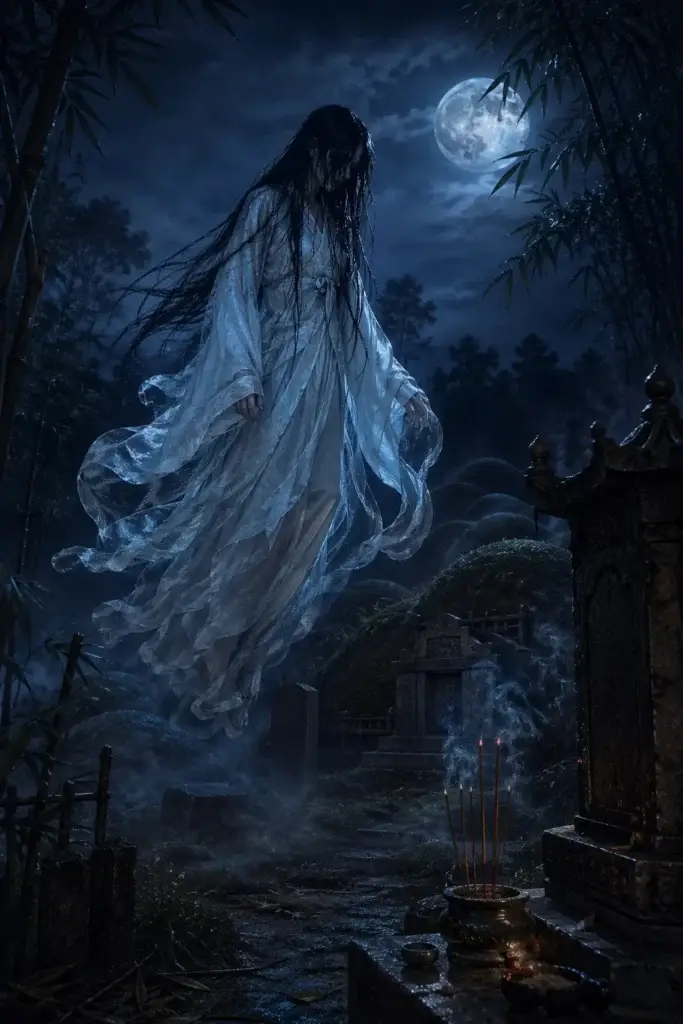
Gui-po, also written gui po, is the spirit of an old woman, often a servant or nanny, who returns to the household after death. Her nature is ambivalent: some Gui-po help caringly around the house and with the children, others appear in hideous form and are hostile.
The belief is widespread throughout the Chinese cultural sphere, particularly in the context of the historical culture of household servants in wealthy families. Unlike the feared spirits of vengeance and substitute victims, the Gui-po directs her actions towards the household itself, towards the children and the other occupants of the house.
Type: Spirit of an old woman, often a servant or nanny, with an ambivalent nature
Origin: Chinese folk belief surrounding household servants and ancestral bonds
Texts: folk tradition documented in dictionaries and folklore
Period: attested continuously, into present-day horror film
Appearance: old woman, sometimes peaceful and friendly, sometimes repulsive and violent

Context of tradition
Period of the Texts
Attested continuously in folk tradition, supported by dictionaries and folklore, with survival into present-day horror film.
Area of Diffusion
The Chinese cultural sphere as a whole, with a focus in the context of the historical culture of household servants in wealthy families.
Sources
Sources: dictionaries and folklore collections attest to the figure; a single canonical source is lacking.
Name and variants
Chinese: The name gui po combines gui, spirit, and po, old woman or matron, into the ghostly old woman. She is often interpreted as the spirit of an amah, a servant or nanny who worked in wealthy families during her lifetime.
Nature and effect
Appearance
The dual nature is characteristic: some Gui-po are benevolent and help people in need, while others appear in a hideous form and are threatening. This makes it one of the more nuanced spirit types, not consistently evil.
Effect
The Gui-po knows no substitute-victim motif. Its effect ranges from protective and caring to threatening, depending on the particular tale; it embodies the ambivalence of the bond to the household beyond death.
Profile: Gui-po
The most important aspects of the household spirit at a glance.
A figure closely related to ancestor worship: the faithfully serving spirit who continues its bond to the household beyond death.
The household, the children and the other household members whom the Gui-po once served.
An old woman, depending on the tale either peaceful and friendly or repulsive and violent.
Dual nature between care and threat, without the substitute-victim motif found in other spirits.
General ancestor and spirit veneration; in the case of hostile appearances, appeasement through offerings.
Unlike the Yuan-gui or the You-hun-ye-gui, the Gui-po does not seek a substitute victim and is not fundamentally hostile.
The amah who remains in service to the household
The Gui-po is often interpreted as the spirit of an amah, a servant or wet nurse who worked in wealthy families during her lifetime and returns after death to help in the household or care for children. This places the Gui-po close to ancestor worship: the faithfully serving spirit who continues its bond to the household.
This closeness to service also explains its dual nature: where there was care during life, it can continue to act after death; where resentment or neglect remained, the same figure can become a hostile apparition.
The silent old woman of ghost stories
The Gui-po is less prominent than the vengeful and substitute-victim types, but appears in collections of Chinese ghost stories and in horror films as an ambivalent old woman figure.
The Gui-po shows that not every Gui is evil. As a faithfully serving spirit bound to the household, she stands between the well-tended ancestor and the restless dead, embodying the close bond of house, service and care.
Honouring and appeasing household spirits
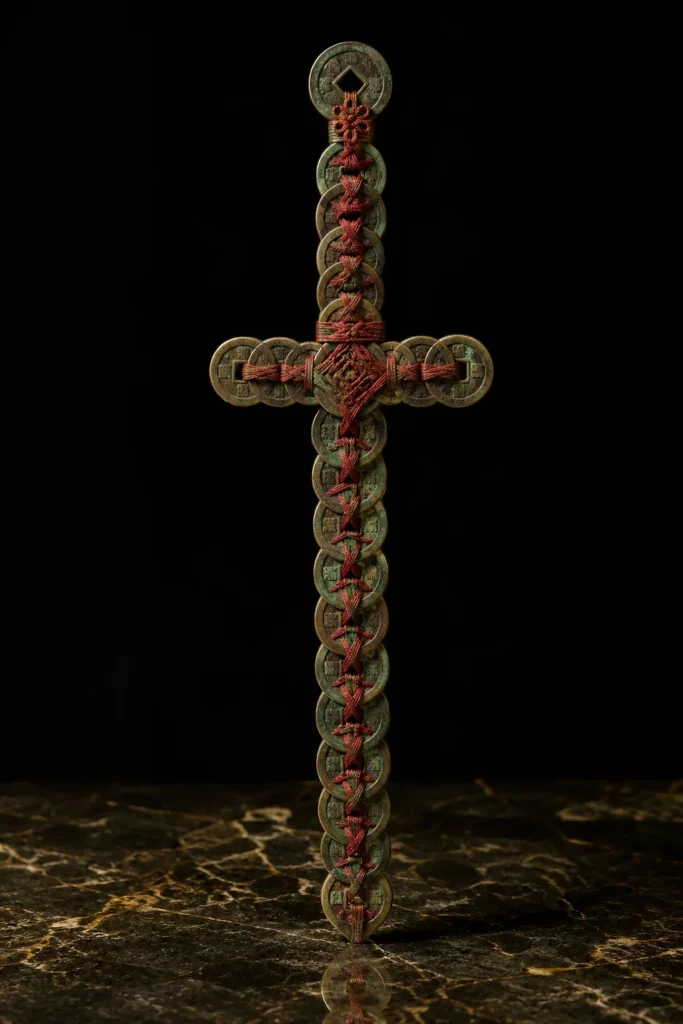
The focus is on general ancestor and spirit veneration and, in the case of hostile appearances, appeasement through offerings. Censing and offerings are part of honouring and appeasing the household spirit, a worn amulet serves in the sense of household veneration, and holy water is the sign used in dealing with hostile appearances. The Ghost Festival with offerings and the burning of joss paper belong to the wider context.
Household spirits across cultures
The Gui-po corresponds to the European White Lady, a household spirit with a dual character, the Slavic Kikimora, a female household spirit, and the notions of returning nurses and nannies as protective household spirits.
Frequently asked questions about the Gui-po
Is the Gui-po evil?
Not necessarily. Some Gui-po are helpful and caring, others hostile; its nature is ambivalent.
Where does it come from?
It is often regarded as the spirit of a deceased servant or wet nurse who returns to the household.
Does it seek a substitute victim?
No, unlike the Shuigui or the Diao-si-gui, it knows no substitute-victim motif.
Further links
Further reading:
- China – all beings of the Chinese tradition
- Yuan-gui, You-hun-ye-gui – related Chinese spirits of the gui series
- Incense, amulet, holy water – traditional protective means
- Protection Compass – protective means at a glance
Literature (selection)
Further standard works in the bibliography.
As a Chinese household spirit, the Gui-po shows that appearance does not necessarily mean threat: she is at once the spirit of the old woman who continues to care for the family she once served.