iWell Guard

Household Spirits, Hearth and Home Guardians Worldwide

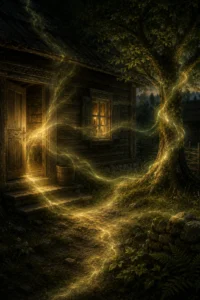
Household spirits are beings that inhabit, protect or haunt the domestic space, reflecting a very old religious idea: the house as an animated, negotiable place.

From the Slavic Domovoi to Scottish Brownies and Scandinavian Tomte to Japanese Zashiki-warashi, a related basic pattern appears worldwide, complemented by kitchen and hearth gods, nocturnal pressing spirits such as the Alp and Toggeli, and childhood bogey figures such as the Butz.

Whoever lives in a house is rarely alone.

Topic OverviewCross-cultural

Table of Contents

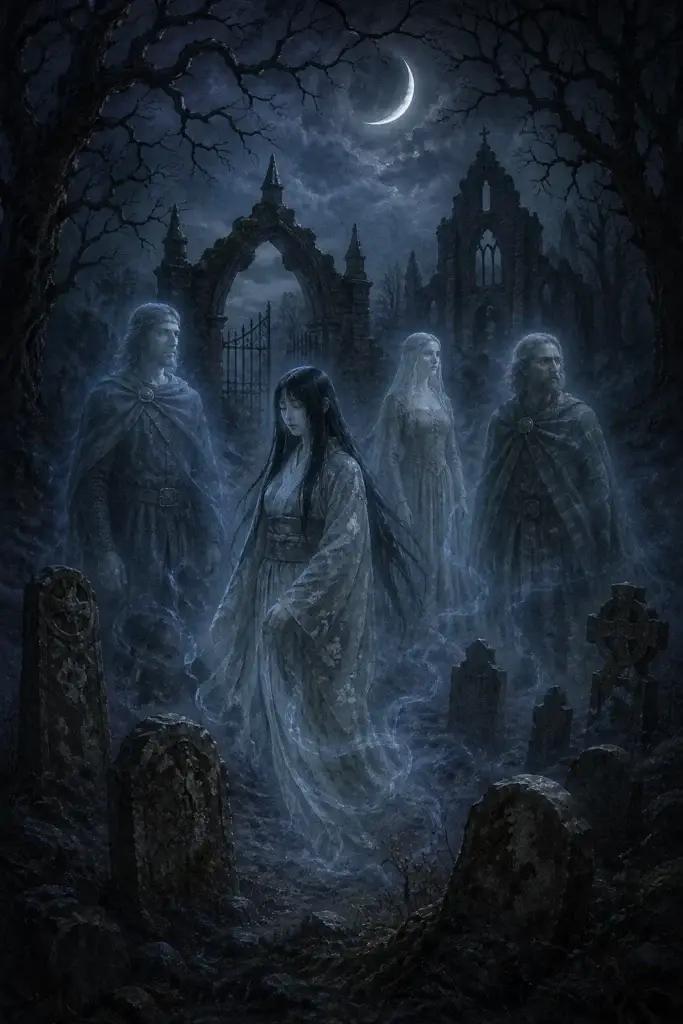
Spirits of the Dead: cross-cultural collective illustration of the spirit subcategory

Quick Overview (Definition List)

Type: Spirit Class: Household spirits Distribution: Cross-cultural (Europe, East Asia, Southeast Asia) Main features: Attachment to house, farmstead or hearth, alternation between benevolence and punishment, nocturnal activity, obligation of offerings Related subcategories: Hearth and kitchen gods, pressing spirits, childhood bogey figures, luck-bringers

Term and Scope

The term household spirit denotes a being bound to a particular building, farmstead or family, watching over order, prosperity and safety there, provided it is respected. It differs from nature spirits, which are bound to places in the open landscape, and from ancestral spirits, which are linked to a specific deceased person.

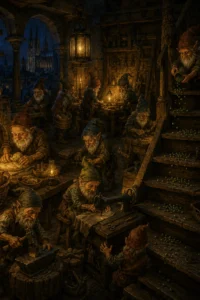
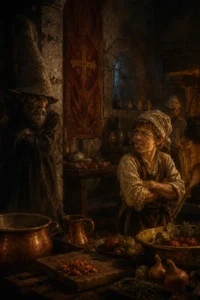
The Russian Domovoi, the German Kobold, the Scottish Brownie and the Scandinavian Nisse or Tomte belong to a widespread type: a usually invisible, small and moody being that tends the house and stable in exchange for respect and small offerings.

Classification

In the iWell Guard classification, household spirits form the subclass of spirits that is bound to a dwelling place rather than to a landscape or a person.

They differ from hearth and kitchen gods, who hold a more properly divine rank and are embedded in an official cult, and from nocturnal pressing spirits such as the Alp and Toggeli, whose effects target the sleep of a single person rather than the whole house. The idea of a watchful yet also punishing household spirit arose independently in agrarian societies across Europe and Asia.

Examples from Cultural History

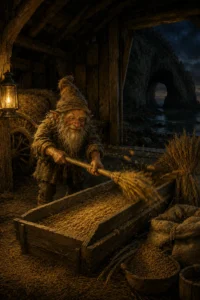
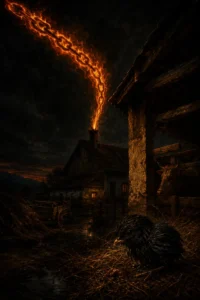
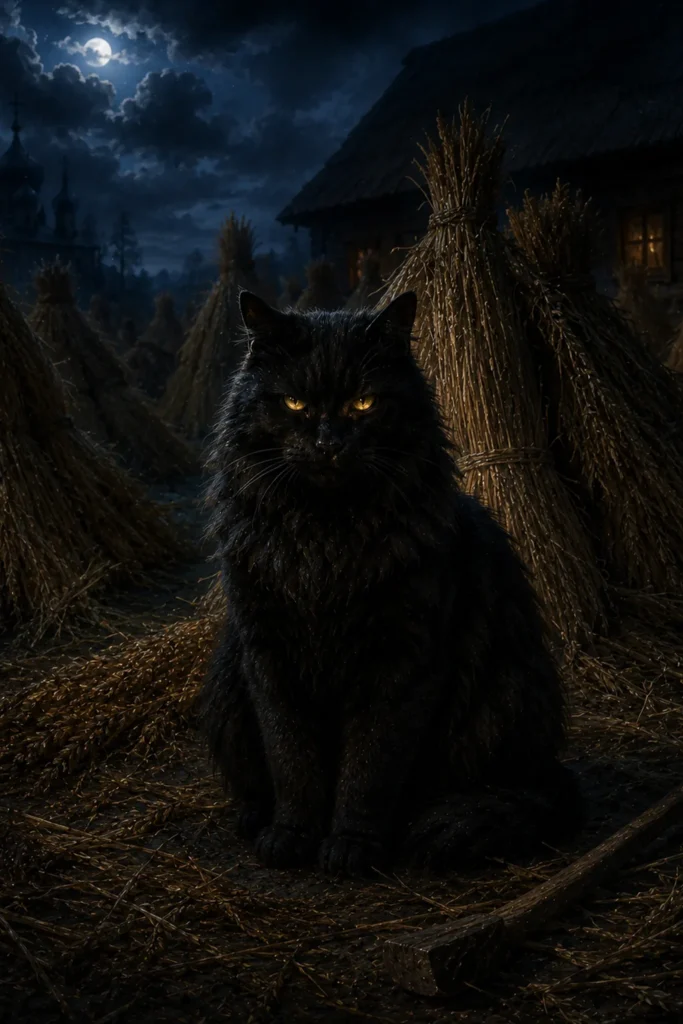
In Russia and Ukraine, the Dvorovoi watches specifically over the farmyard and the animals as a counterpart to the Domovoi, while the Ovinnik dwells in the grain-drying barn and watches over the harvest, a strict being to which the outbreak of a fire was attributed in cases of negligence.

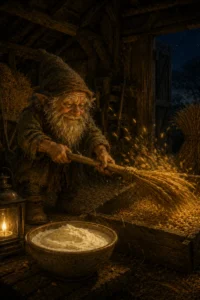
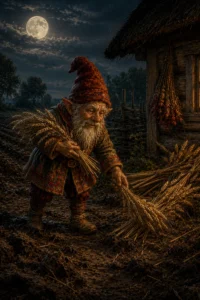
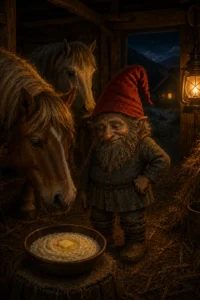
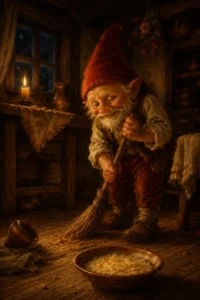
In Scandinavia, the Nisse or Tomte looks after the farmstead and livestock and is traditionally appeased at Christmas time with a bowl of porridge. In Scotland and England, the Brownie secretly does the housework at night but vanishes offended as soon as it is given clothing, a motif also found in the German Heinzelmännchen of Cologne.

On ships in the Baltic and North Seas, the Klabautermann watches over crew and cargo, a seafaring variant of the same basic pattern applied to the ship as a mobile dwelling.

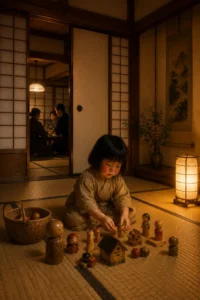
In Japan, the Zashiki-warashi is regarded as a childlike figure whose presence brings prosperity to a household and whose departure heralds the family’s economic decline. In Korea, the hearth god Jowang and the house god Seongju watch over the kitchen and main house together with further household deities in what is known as Gasin belief.

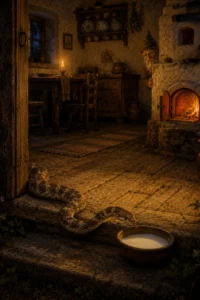
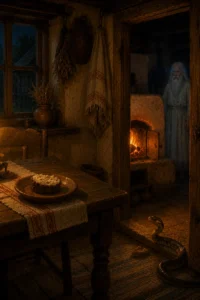
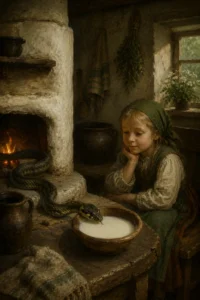
In the Baltic region, the house snake Zaltys was regarded as a sacred animal whose killing brought misfortune, while the fiery Aitvaras brought wealth into the house as a luck-bringer, albeit at a morally questionable price.

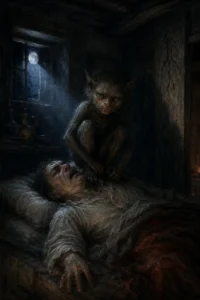
Besides the benevolent household spirits, the Alpine region also has nocturnal pressing spirits: the Drud and the Toggeli sit on sleepers’ chests and produce a feeling of breathlessness, related to the north German Alp. The Butz, in turn, served mainly as a bogey figure used to warn disobedient children to settle down.

Examples from Different Traditions

In Vietnam, the trio of kitchen gods (Táo Quân), which also includes the hearth spirit Ong Dia, looks after every household and travels once a year on a carp to heaven to give a report. In Thailand, the small spirit house San Phra Phum marks the dwelling of the land spirit, while the figure of Nang Kwak is regarded as a luck-bringer for businesses.

In Poland and the Czech Republic, folklore knows the Chowaniec, the Skrzat and the Hospodáříček as house-bound kobold variants, and Slovakia knows the Skriatok. Wales and the Isle of Man hand down their own, usually shaggy forms of the same type in Bwbach and Fenodyree, while Latvia with the Mājas gars and Estonia with Haldjas and Haltija know comparable attachments to house and farmstead.

Sources

Household spirits are widely documented in nineteenth-century folklore collections: the Brothers Grimm recorded Kobold and Heinzelmännchen legends, Russian folklorists such as Alexander Afanasyev collected Domovoi traditions, and Scandinavian folklore preserved Nisse and Tomte customs.

For East Asia, Japanese regional chronicles and the Korean Gasin tradition provide evidence of Zashiki-warashi, Jowang and Seongju; the practice of veneration remains locally alive in rural regions of Korea to this day. For Southeast Asia, ethnographic studies on Thailand and Vietnam document the still visible practice of spirit houses and kitchen-god festivals.

Present-Day Significance / Related Beings

The household spirit still serves today as an image for the close bond between residents and their home, in children’s books, in everyday language about the ‘gremlin in the machine’, and in tourist-marketed customs such as the Zashiki-warashi inns of Japan or the spirit houses of Thailand. Related subcategories are the hearth and kitchen gods, who hold a more properly divine rank, and the nocturnal pressing spirits, whose effects target individual sleepers rather than the whole house.

Protective Practices around the Household Spirit

The traditional protective practices against unfriendly or moody household spirits and pressing spirits are varied: iron at the threshold, a horseshoe above the door, salt on the doorstep or a pentagram on the stable door were meant to prevent unwanted spirits from entering. In many regions the threshold itself was treated as a particularly sensitive zone, and bells and smoke cleansing with herbs also belong among the regularly repeated purification rituals of the house.

Deeper Layer in the History of Religion

The idea of a being bound to the house is, in the history of religion, closely related to ancestor worship: in several traditions the household spirit was originally interpreted as the spirit of a deceased family founder or first settler who continues to act within the house. This derivation can be demonstrated in Slavic as well as in East Asian tradition and explains why household spirits are usually described as fundamentally benevolent yet sensitive to disrespect.

On iWell Guard, this connection in the history of religion between ancestor veneration and belief in household spirits is identified as a distinct line of research, without subordinating one interpretation to the other.

Selected bibliography on household spirits:

  • Lecouteux, Claude: The Tradition of Household Spirits: Ancestral Lore and Practices. Inner Traditions, Rochester (VT) 2013.
  • Ivanits, Linda J.: Russian Folk Belief. M. E. Sharpe, Armonk (NY) 1989.

Note: This selection is for orientation; detailed articles follow their own curated source list.

Household Spirits in the iWell Guard Protection Field

Household spirits fall under protection layers 1 and 2 of the iWell Guard mantra. Nocturnal pressing spirits and disrespectfully treated household spirits that disturb a resident’s sleep or peace are rejected by the protective shield.
The iWell Guard position follows the historical observation that most household-spirit traditions understand their beings not as fundamentally hostile but as co-inhabitants in need of care, who are met with respect and small offerings. Protection is directed against disturbing or frightening manifestations, not against the respectful care of a benevolent household spirit.


Further standard works in the bibliography.

iWell Guard and Protective Traditions

The household-spirit concepts documented here are a scholarly classification of cross-cultural ideas.

iWell Guard draws on the millennia-old practice of domestic protective objects: from iron and horseshoes at the threshold, through protective signs on the door lintel, to amulets that individual residents wore against nocturnal pressing spirits such as the Alp. An overview of traditional protective approaches is offered by the Protection Compass.

A contemporary form of this, made in Germany, with a clearly documented material architecture (41 layers, genuine gold, platinum, silver). 30-day right of return.

Not a medical device. No promise of healing. Personal perceptions may vary.