Banshee, spirit of the Celtic tradition
By Ralf Ittermann · last reviewed on
Banshee is a spirit of the Celtic tradition.
The “woman of the fairy mound”, lamenting figure, and death herald.
The Banshee is regarded as a mourning figure, a harbinger of death, and a family spirit of ancient Irish lineages.
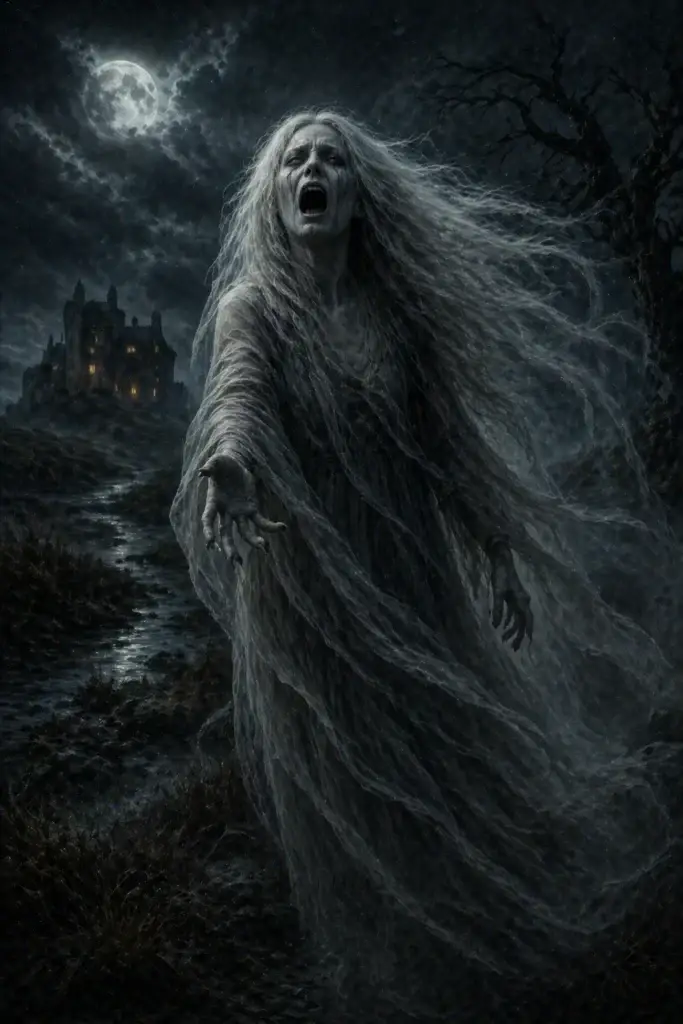
Banshee
The Banshee, from Irish bean sídhe, “woman of the fairy mound”, is the best-known death herald of the Celtic tradition. She laments before the home of a particular family when one of its members is about to die.
Her cry or lament is so distinctive that witnesses in folk narratives typically know at once: a death in the family is imminent.
Unlike demonic messengers, the Banshee does not bring death.
She only announces it. In many traditions she is an ancestral figure, a protective presence who makes the coming passage known and bears witness to it. The specific bond with certain Irish families, typically those of Gaelic noble heritage whose names begin with “O'” or “Mac”, is a defining characteristic.
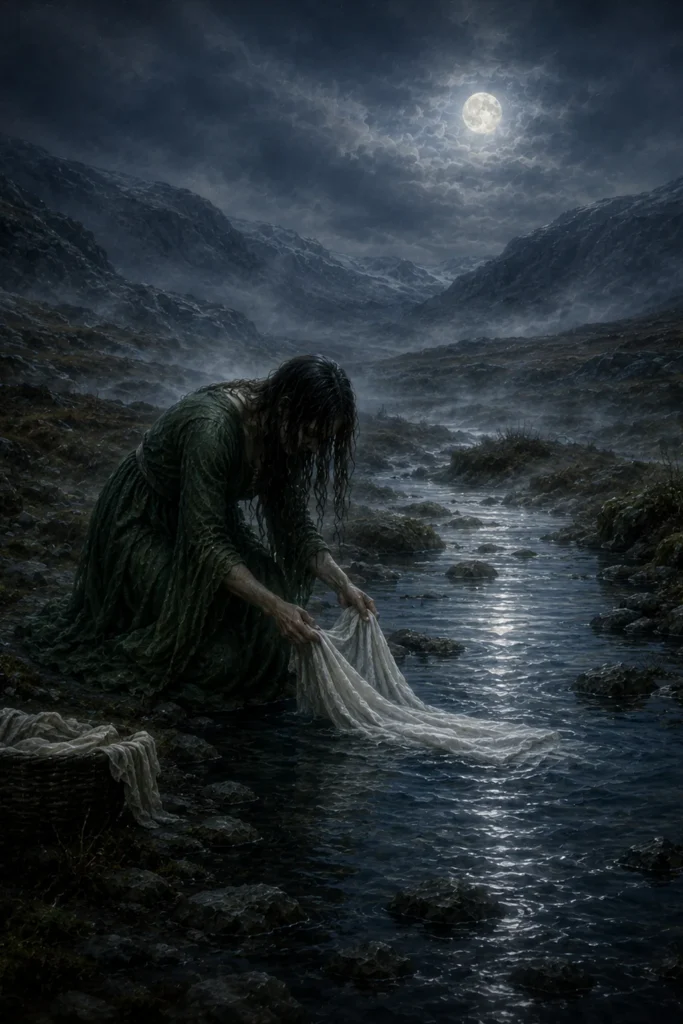
The Scottish counterpart is the bean nighe (“washing woman”), who washes the bloodied garments of the dying at a stream.
Quick Overview: Banshee
Type: Death herald, lamenting figure
Origin: Ancestral figure or protective presence of specific families; part of the Aes Sídhe
Sources: Medieval Irish annals, folk narratives (Yeats, Lady Gregory)
Period: Medieval to present
Core region: Ireland; Scottish counterpart bean nighe
Distinction from the Dullahan: Unlike the Dullahan, the headless male rider, the Banshee is a female lamenting figure, not a death-bringer but a harbinger who announces the imminent death of a family member through her cry.
Classification
Medieval Irish annals mention lamenting figures appearing before royal deaths. A dense body of folk tradition in Ireland and Scotland since modern times, richly documented in the 19th and 20th centuries by Yeats, Lady Gregory, and Evans-Wentz. Modern popular-cultural reception continues the figure.
Ireland as the core region; Scotland with the bean nighe; the Isle of Man and Gaelic-speaking parts of Scotland with their own variants. Beyond the Gaelic world, the Irish diaspora carries the tradition to North America and Australia.
Medieval and early modern annals (including the Annals of the Four Masters, compiled 1632 to 1636), pilgrimage accounts, Yeats’ Fairy and Folk Tales of the Irish Peasantry (1888), Lady Gregory’s Visions and Beliefs (1920), Evans-Wentz’s Fairy-Faith (1911), and ethnographic archives.
Name and Variant Spellings
Irish: bean sídhe, “woman of the fairy mound” (sídhe: fairy mound). Anglicised to banshee.
Scottish Gaelic: ban-sìth; related figure bean nighe (“washing woman”).
Manx: ben shee.
Related terms: bean chaointe (lamenting woman, in the everyday practice of the death lament).
In the older tradition the Banshee is often an ancestress of a specific family whose soul, after death, became the guardian of the living. This explains the specific family bond: five Irish noble families, O’Neill, O’Brien, O’Connor, O’Grady, and Kavanagh, are explicitly named in the classical tradition.
Characteristics
Appearance
A female figure, often dressed in white or grey. Long hair that she combs with a silver comb. Red eyes from weeping. Three stages of age are possible, young woman, mother, old woman, depending on family tradition. In the Scottish bean nighe form: at a stream’s edge, washing bloodied garments.
Behavior
Appears before the house or at the stream when a family member is about to die. She laments, sings, or cries; the caoineadh (lament song) is the central element. She never touches the dying; she only announces. In some accounts she leaves the comb behind; picking it up brings misfortune.
Area of Influence
The specific family home, the ancestral seat, certain streams. In the Irish diaspora she sometimes follows the family across the sea; laments heard in Boston and Toronto are recorded in the tradition.
Mythological Classification
Part of the Aes Sídhe, the inhabitants of the Otherworld. Not demonic but ambivalent: a being whose presence is dreadful yet not malevolent. Christianised interpretation sees her as a “soul between the worlds”.
Profile: Banshee
The most important aspects of the Banshee at a glance.
Part of the Aes Sídhe, the Celtic Otherworld inhabitants. Often understood as the ancestress of a particular family. Not demonic, but awe-inspiring.
Specific Irish families (especially those with O’- or Mac- names). In the diaspora the Banshee follows the family across the sea.
Dressed in white or grey, long hair, silver comb. Red eyes from weeping. In the Scottish form: washing bloodied garments at a stream.
Laments, cries, sings, and announces death, but does not cause it. Whoever hears her knows: a death in the family is near. She touches no one; her appearance is not an attack.
The Banshee cannot be warded off; she is an announcer, not a cause. The customary response is respect: her comb is left where it lies. Prayers for the dying are offered rather than exorcism.
Keres (Greek, battlefield death messengers), Valkyrjar (Germanic), Dullahan (Celtic, actively brings death), Sluagh (Celtic host of the dead).
Practice and Tradition
Response to the Lament
Whoever hears a Banshee gathers the family, prepares for the death, and summons a priest. There is no active defense, only preparation. In some traditions people remain silent until the lamenting ceases; at that point death has occurred.
The Silver Comb
A silver comb left behind by a Banshee is dangerous. Whoever picks it up draws misfortune upon themselves. Folk tradition tells of those wise enough to use iron tongs so as never to touch the comb directly.
Ceremonial Death Lament (caoineadh)
The human death lament at Irish funerals mirrors the Banshee motif. Professional lament women (bean chaointe) were partly opposed, partly tolerated by the Church in the 19th century. The caoineadh song is a distinct liturgical form in its own right.
Parallels and Reception
Ancient Parallels
Keres collect souls on the battlefield; Valkyrjar choose the fallen. The Banshee announces, she does not collect. This is a distinct function: not a death-bringer but a death herald.
Romanticism and Modernity
Yeats places the Banshee at the poetic centre of Irish folklore. Modern films, series (The Banshees of Inisherin, 2022), and fantasy role-playing games continue the figure. Irish diaspora literature returns to the motif at moments of generational change.
Cultural Context: In Ireland the Banshee represents the continuity between the living and the dead, and the transmission of the family as a transgenerational unit. In a culture shaped by emigration, this carries central comfort: the ancestress remains present, even across the sea.
The Name and Its Origins in Irish Fairy Belief
The word banshee is the anglicised form of the Irish bean sí, literally “woman of the síd“. The síd in Irish tradition is the fairy mound, the dwelling place of the áes sí, the “people of the mounds”.
This designation connects the Banshee to the Túatha Dé Danann, those mythic beings who, according to the tradition of the Lebor Gabála Érenn, withdrew into the mounds and earthen chambers of Ireland after their defeat by the Milesians.
By her name alone, the Banshee is therefore not a distinct category but a woman from this Otherworld people. In the lived tradition of early modern Ireland, however, the term narrowed to a specific function: that of the death-announcing lament woman bound to particular families.
The idea that long-established Irish families, often those bearing the prefix “O” or “Mac”, each have their own Banshee is well attested in the folklore collections of the 18th and 19th centuries.
Linguistically and functionally related are the Scottish Gaelic bean sìth and the bean nighe, the “washing woman”, who washes the bloodied garments of the soon-to-die at fords. Scholars see these figures as regional expressions of a shared Gaelic heritage.
For a sober presentation it must be said that the Banshee in this specific role is barely traceable in Old Irish literature. Her consolidation as a death messenger belongs, much like that of the Dullahan, primarily to the early modern oral tradition and its written recording.
The Lament: Banshee and the Tradition of Keening
The Banshee cannot be understood without Irish mourning culture. In Ireland, until the 19th and in some areas the early 20th century, the practice of caoineadh, anglicised as keening, the ritual lament sung at wakes and funerals, was widespread.
Certain women, often hired for the purpose, sang improvised lament songs that honored the life of the deceased and gave the community’s grief a form.
In many respects the Banshee is the supernatural mirror image of this earthly lament woman. She sings or cries before anyone dies, effectively anticipating the death lament.
This parallel is not coincidental. Several folklorists have noted that the concept of the Banshee is rooted in the same culture in which the professional lament woman was a familiar presence.
The Catholic Church was long critical of keening and sought to curb the more extravagant lament forms it regarded as pagan. With the decline of the practice in the 20th century, the Banshee also lost part of her social background. What remained was the narrative figure.
For the study of religion this connection is instructive, since it shows that the supernatural being and the social practice mutually reinforced each other. The Banshee was not merely a frightening story but part of a whole approach to dying and death that encompassed omens, lament, and community.
Selected Bibliography
Further standard works in the literature index.
The protective practices described here represent a religious-studies classification of historical traditions. iWell Guard connects to this cultural-historical line of wearable protective objects and represents a contemporary form of it. More about iWell Guard →
Frequently Asked Questions about the Banshee
What is a Banshee?
A Banshee (Irish bean sídhe, woman of the fairy mound) is a death-herald spirit of Celtic mythology, in particular the Irish tradition. Her lamenting or crying announces that a member of a specific family will soon die. Banshees are regarded as women of the Aos Sí, the Otherworld people, and are often bound to particular long-established Irish families.
How can you recognize a Banshee?
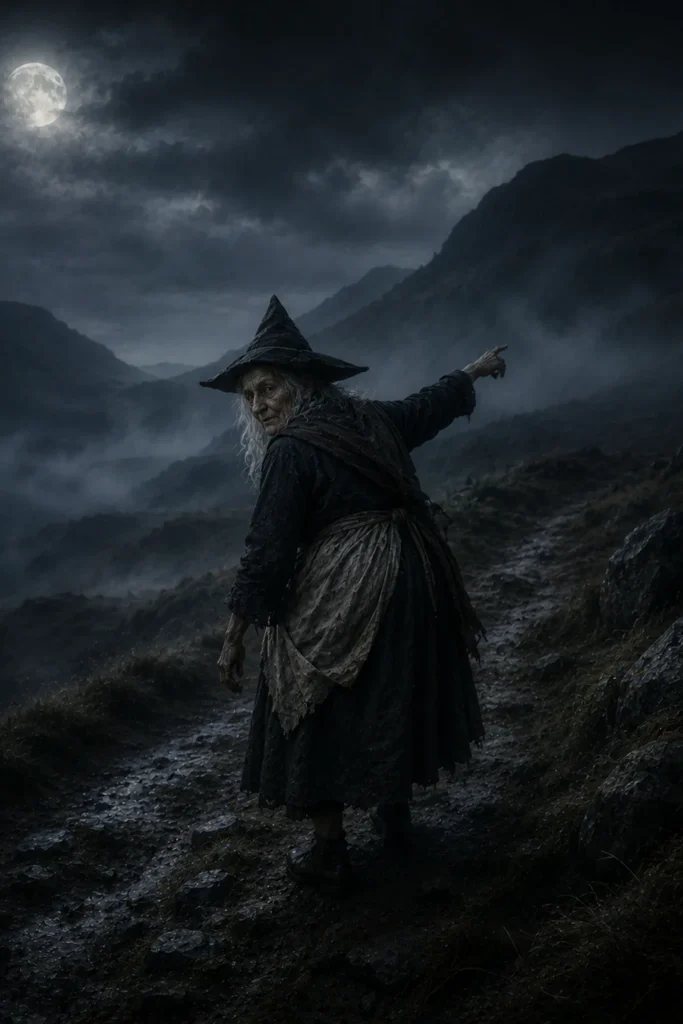
Classic Banshee traits: a female figure, often with grey or red hair, dressed in white or grey, sometimes with eyes reddened from weeping. She is rarely seen; almost always she is only heard as a mournful wail in the night. In some traditions she appears old and wizened, in others young and beautiful; she is always, however, streaming with tears.