Apu Verónica, the Holy Tear above the Urubamba Valley
By Ralf Ittermann · last reviewed on
Apu Verónica is a mountain god of Quechua tradition.
Waqay Willka, the Sacred Tear, water-giver of the Cordillera. Apu Verónica’s name translates as the Holy Tear, a water-giving peak above the valley.
Apu Verónica, in Quechua Waqay Willka, Sacred Tear, is at about 5893 metres the highest peak of the Cordillera Urubamba near Cusco and an important water and fertility Apu. Travel guides usually write it as Apu Veronica, and the Spanish name has come to overlay the older Quechua name.
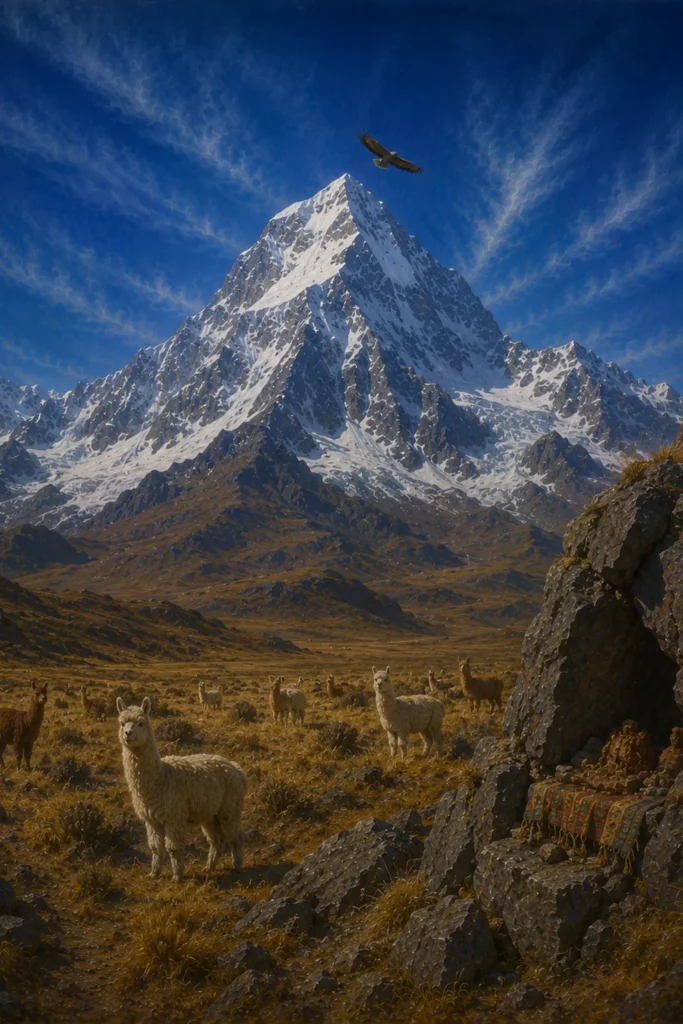
The mountain rises as a snow-white pyramid above the valley at the Málaga Pass and is regarded as the guardian of the Cordillera Urubamba. However, a considerable part of the circulating material on it is popular and imprecise, which makes classification demanding.
Type: water and fertility Apu, guardian of the Cordillera
Origin: Cordillera Urubamba, Cusco region
Texts: moderate source base, much popular material
Period: pre-Hispanic, colonial overlay, modern veneration
Appearance: striking, snow-white pyramid

Historical Classification
Period of the Texts
Veneration is rooted in pre-Hispanic tradition, was overlaid in the colonial period, among other things in the Spanish name, and continues in modern form.
Area of Diffusion
The Cordillera Urubamba in the Cusco region; the mountain dominates the valley at the Málaga Pass and the surrounding region.
Sources
Moderate: alongside a few reliable works, much popular, imprecise material circulates, above all from tourism.
Name and variants
Quechua: Waqay Willka, Sacred Tear, from waqay, to weep, and willka, sacred; a variant, Wayna Willka, means Sacred Youth. The Spanish name Verónica is a later overlay.
Beings and effect
Appearance
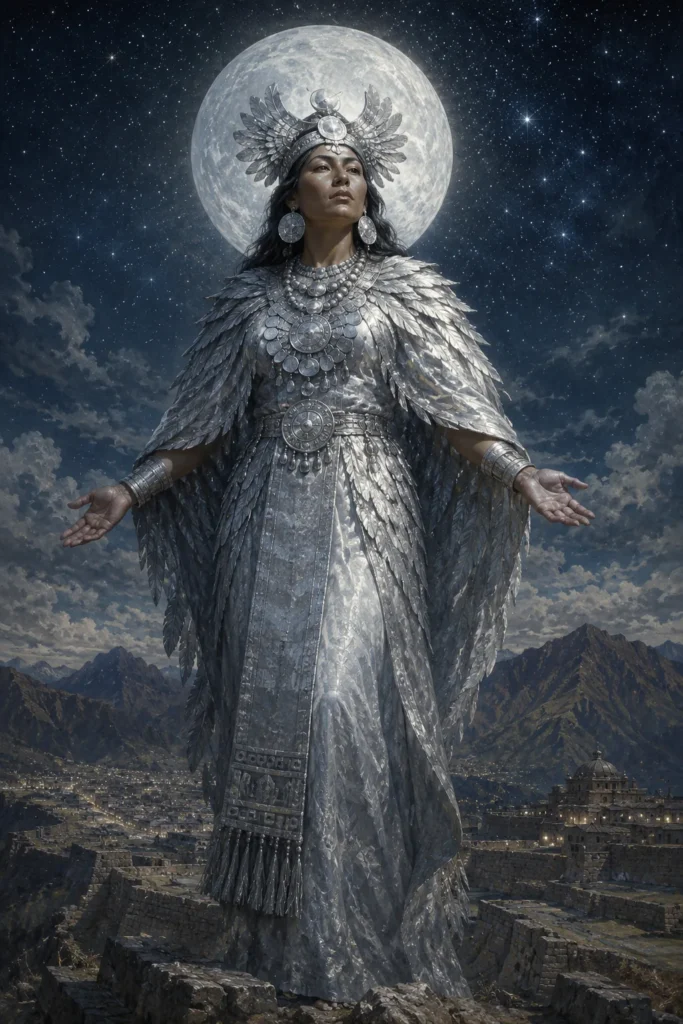
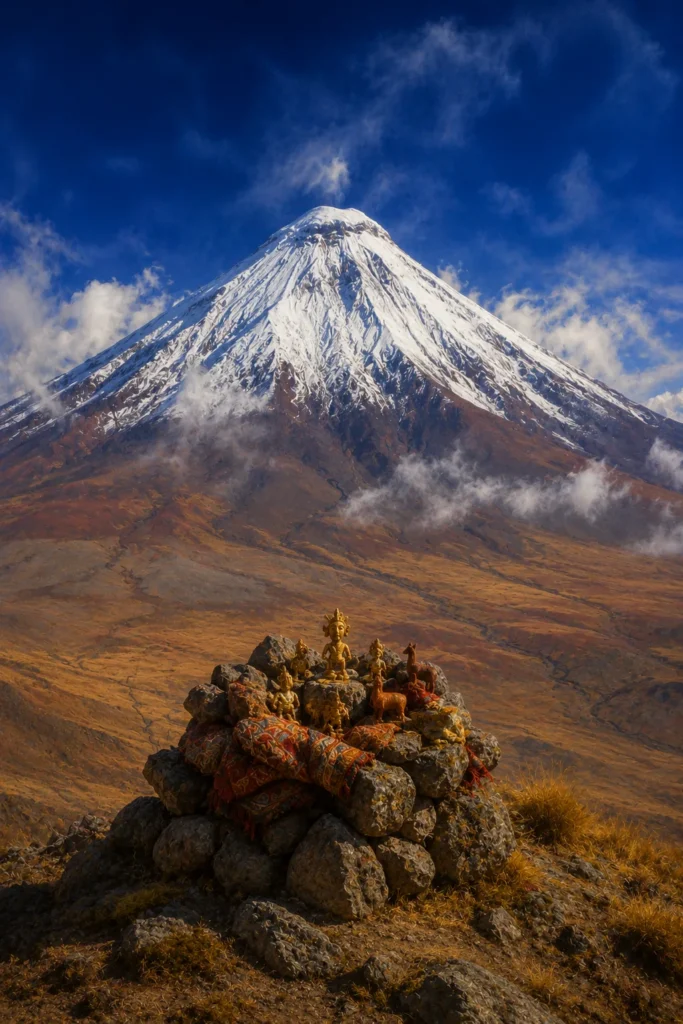
Verónica is a striking, snow-white pyramid above the valley at the Málaga Pass. In the image of the tear, water, grief and purity come together.
Effect
As an Apu, Verónica is an important water and fertility mountain of the region and guardian over the Cordillera Urubamba; the water of the valleys depends on its snow.
Profile: Apu Verónica
What is established about the Sacred Tear, summarised briefly.
The highest peak of the Cordillera Urubamba and an important Apu of the Cusco area, whose Quechua name was overwritten during the colonial period.
Water and fertility for the region around the Cordillera Urubamba, whose valleys are fed by the mountain’s snow.
A snow-white pyramid of about 5893 metres above the Málaga Pass; the image of the tear links grief and purity.
Giving of water, fertility and watch over the Cordillera; the name also tells of grief and purity.
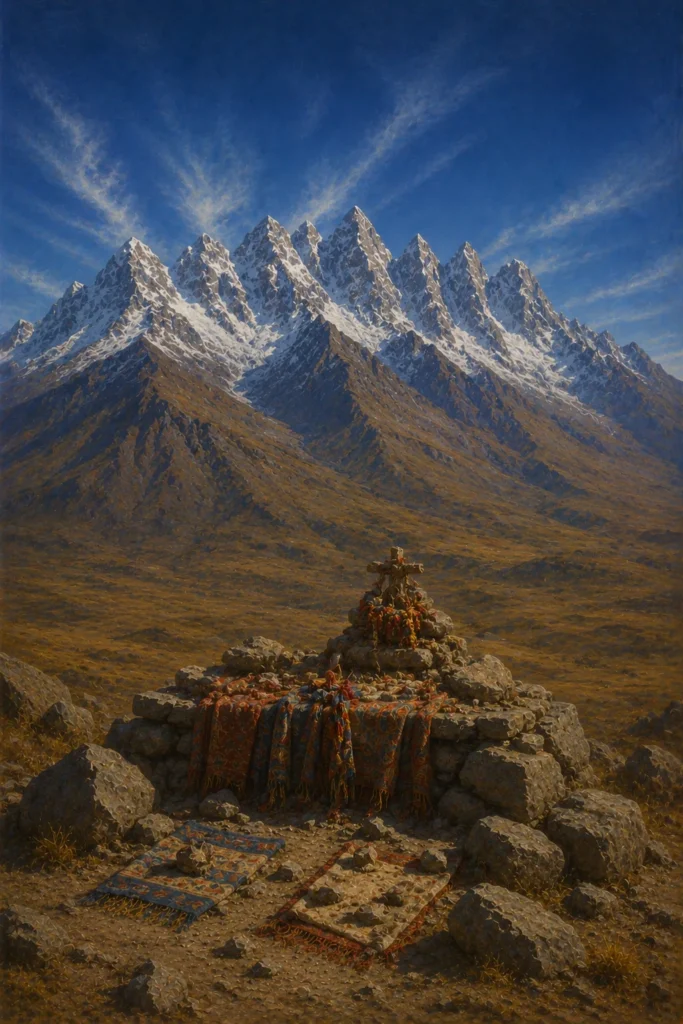
Despacho and pago ceremonies are plausible; a confirmed Capacocha find site at the summit is not documented.
Apu Salkantay and Apu Ausangate as great neighbours; like them, Verónica is connected to Pachamama.
Waqay Willka: a name between grief and legend
Waqay Willka means Sacred Tear, from waqay, to weep, and willka, sacred; alongside it stands the variant Wayna Willka, Sacred Youth. The Spanish name Verónica has overlaid the older Quechua name without displacing it.
Ethnohistorically, the name Wakay Willka is linked to Manco Inca’s retreat in 1536 and his grief over the loss of the empire. This derivation is popular but has a legendary tinge and should be cited with caution; it shows more how the mountain is told about than where its name actually comes from.
Between mountaineering goal and Lágrima Sagrada
Verónica is a mountaineering goal and is heavily marketed for tourism as the Sacred Tear, Lágrima Sagrada.
From a religious-studies perspective, Apu Verónica is real and important as an Apu, yet a large part of the circulating material is popular and imprecise. Important clarifications: the feminine connotation stems above all from travel blogs and is disputed, since Apus are predominantly connoted as male; the Manco Inca derivation has a legendary tinge; and the height varies by source between about 5893 and 5911 metres.
Cult forms without a summit find
Despacho and pago ceremonies for the Apu are plausible and correspond to regional practice, in which coca leaves convey the offering. A confirmed Capacocha find site at the summit, however, is not documented, which is understandable given the technically demanding face. This finding should honestly be marked as unproven: the cult is likely, but the archaeological evidence is lacking.
Neighbours in the cordilleras of Cusco
Apu Verónica stands alongside Apu Salkantay and Apu Ausangate as a Cusco Apu with water and fertility function. Like all Apus, he is connected to the earth mother Pachamama; the concept of the powerful ancestral mountain is also known from the Achachila of the Aymara.
Frequently asked questions about Apu Verónica
What does Waqay Willka mean?
Sacred Tear, from waqay, to weep, and willka, sacred; the Spanish name Verónica is a later overlay.
Is Verónica female?
The feminine connotation stems above all from travel blogs and is disputed; Apus are predominantly connoted as male.
Are there summit offering finds?
A confirmed Capacocha find site at the summit is not documented, which is understandable given the technically demanding face.
Further links
Further reading:
- Apu Salkantay – the wild neighbouring Apu of the Cusco region
- Pachamama – the earth mother, to whom every Apu is connected
- Smoke cleansing, Amulet – forms of protection compared
- Protection Compass – protective means at a glance
Literature (selection)
Further standard works in the bibliography.
As a mountain god near Cusco, Apu Verónica remains both at once: the Sacred Tear of the Andes, in whose image water, grief and purity flow together, and the truly venerated fertility mountain, whose snow feeds the valleys of the Cordillera Urubamba.