Wormwood – protective herb by the bed against evil spirits
By Ralf Ittermann · last reviewed on
Wormwood (Artemisia absinthium) is known in German-speaking folk belief above all as a protective herb for the sleeping place. Placed under the pillow or kept near the bed, it was meant to keep evil spirits and demons away during the night, when a person is at their most defenceless.
As a close relative of mugwort, wormwood shares numerous properties of the genus Artemisia, but differs clearly in tradition from its better known relative in terms of smell, bitterness and the uses attributed to it.
In folk belief, wormwood is regarded as a protective herb that guards against evil spirits during sleep.
Quick Overview
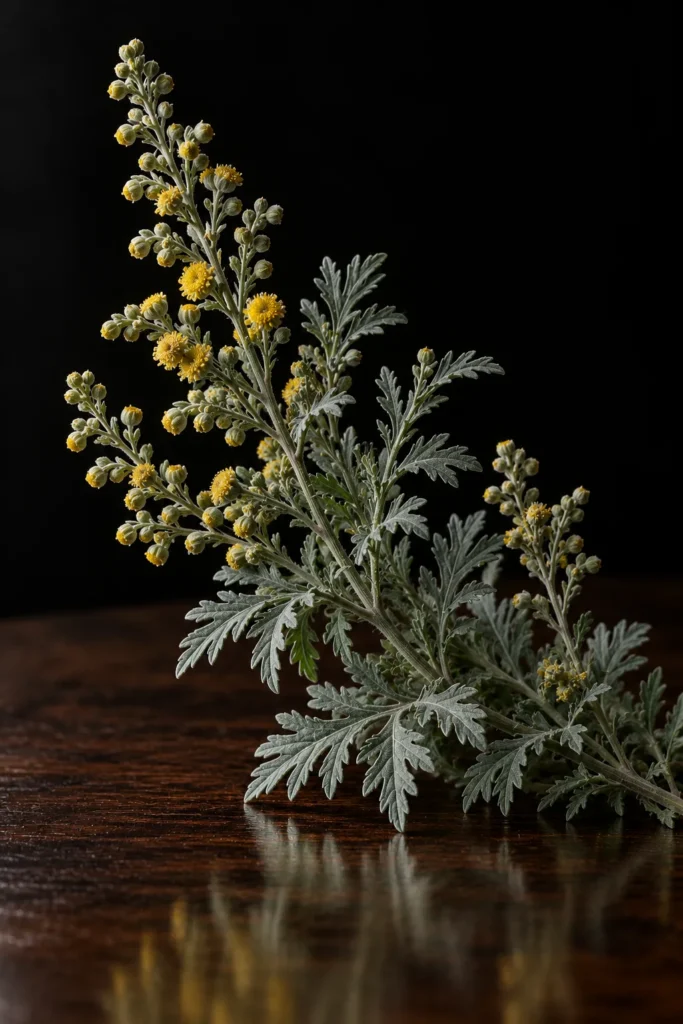
Wormwood (Artemisia absinthium) is a strongly aromatic, silvery-grey haired subshrub of the genus Artemisia, to which mugwort also belongs. Its intensely bitter taste and pungent smell shaped its reputation in folk tradition as well as its later use as an ingredient of absinthe.
As a protective herb, wormwood is documented above all in connection with the sleeping place, and it is also used as incense.
Origin and Tradition
The genus name Artemisia refers to the Greek goddess Artemis, who was regarded as protector of women and guardian of transitions, a role that is reflected in the protective tradition of the entire plant genus. Wormwood itself is documented as a medicinal and protective plant already in ancient sources.
In central European folk belief, the notion took hold that wormwood could keep demons and night spirits away from the sleeper if kept near the bed, under the pillow or on the bedroom window frame. Night was regarded in folk belief as a particularly dangerous time, in which a person, asleep, was defencelessly exposed to the influence of foreign powers.
Wormwood is also documented as a practical protective means against moths and vermin: dried bundles were kept in wardrobes and among books, and sometimes mixed into ink to protect it from being eaten by mice.
Operating Principle According to Tradition
The intense, bitter smell of wormwood was regarded in tradition, similar to juniper, as the actual working principle: what is unpleasant, or at least harsh, for humans was meant to be unbearable for demons and spirits of disease.
Burnt as incense, the smoke of wormwood was meant to develop a cleansing, strengthening effect and help to set boundaries, against foreign influences as well as, in a figurative sense, against one’s own uncertainty. Placed by the bed, it thus acted as a kind of nocturnal guardian, securing the threshold between waking and sleeping.
Cross-Cultural Distribution
The genus Artemisia is represented as a group of protective plants in almost all European folk traditions, though wormwood and mugwort differ in their respective roles. While mugwort is regarded above all as a herb of the road and protection while travelling, wormwood is more strongly connected with the domestic, especially nocturnal, protective space.
Similar ideas about bitter, strongly scented herbs as protection against night spirits are found in the Slavic and Baltic regions. Wormwood is also documented as a medicinal and protective herb in Anglo-Saxon England, among other things in the already mentioned ‘Nine Herbs Charm’, which invokes several herbs related to Artemisia against poison and disease.
What It Is Used Against
At the centre of the tradition lies protection against demons and evil spirits believed to haunt the sleeper. Wormwood was also regarded as protection against nightmares and against the so-called night hag pressure, a feeling of oppression during sleep interpreted in folk belief as an attack by a demonic figure.
As an incense herb, it was also attributed a cleansing effect against negative influences in the living space. The Protection Compass assigns these threat scenarios in detail.
Application and Limits
According to traditional practice, a bundle of dried wormwood was placed under the pillow or attached to the bed frame. Burning dried wormwood twigs as incense in the bedroom, usually in the evening before going to bed, is also documented.
Wormwood should always be distinguished in use from its close relative mugwort: both plants belong to the genus Artemisia and resemble each other in appearance, yet tradition assigns them different areas of emphasis, mugwort for the road and travel, wormwood for the bed and sleep.
A limitation of the tradition lies in the bitterness of the plant itself, which traditionally called for caution in handling it. Folk belief occasionally emphasises this with the observation that wormwood may be protective in small amounts but harmful in large amounts, a notion that does not constitute medical advice.
Literature (selection)
Related key terms: wormwood artemisia bed protection alp pressure.
iWell Guard and Protective Traditions
That sleep, the most defenceless moment of the day, required particular safeguarding in folk belief shows how seriously earlier generations took the boundary between waking consciousness and the unprotected night. Wormwood by the bed was an attempt to actively secure this boundary.
The iWell Guard takes up this idea of constant, place-independent safeguarding, though it does not replace wormwood but represents its own contemporary symbol for the same basic need.
Personal experiences may vary. Not a medical device. No promise of healing.