Joan the Wad, a light of luck from Cornwall
By Ralf Ittermann · last reviewed on
Joan the Wad is a spirit of English folk tradition.
The pixie queen whose torch brings luck rather than misfortune.
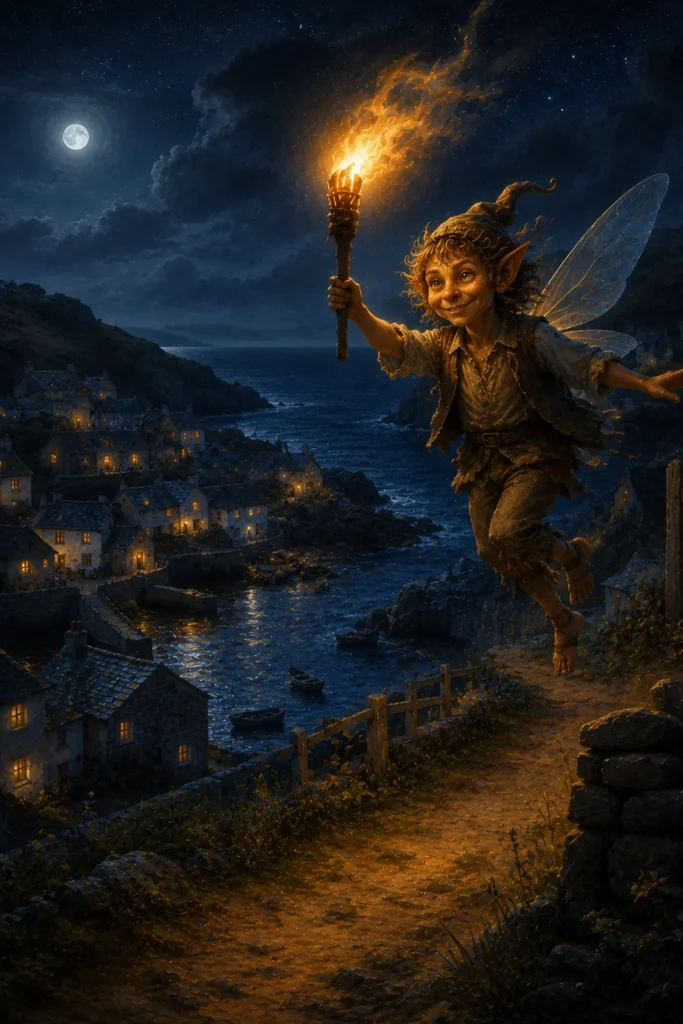
Joan the Wad is Cornwall’s will-o’-the-wisp and is regarded as Queen of the Pixies, with Jack o’ the Lantern as King at her side. Her name means Joan with the torch; she is especially associated with the village of Polperro.
Unlike most will-o’-the-wisps, the emphasis with her lies on luck and protection, while the misleading trait recedes. The tradition was recorded in Cornwall, and partly in Devon, during the 19th and 20th centuries.
Type: Benevolent will-o’-the-wisp and bringer of luck, Queen of the Pixies
Origin: Cornish folk belief
Texts: folklore literature of the 19th and 20th centuries
Period: recorded in the 19th and 20th centuries
Appearance: small fairy being, perceived as a torch light
Region of origin and sources
Period of the Texts
The tradition was recorded in the 19th and 20th centuries; it belongs to Cornish folk belief and its folklore literature.
Area of Diffusion
Cornwall, especially the village of Polperro, and partly Devon: the far south-west of England.
Sources
Moderate: the evidence comes from folklore literature, alongside the traditional rhyme invoking Joan and Jack.
Name and variants
Cornish-English: wad is an East Cornish dialect word for a torch or a bundle of straw bound as a light. Joan the Wad thus means Joan with the torch.
Being and effect
Appearance
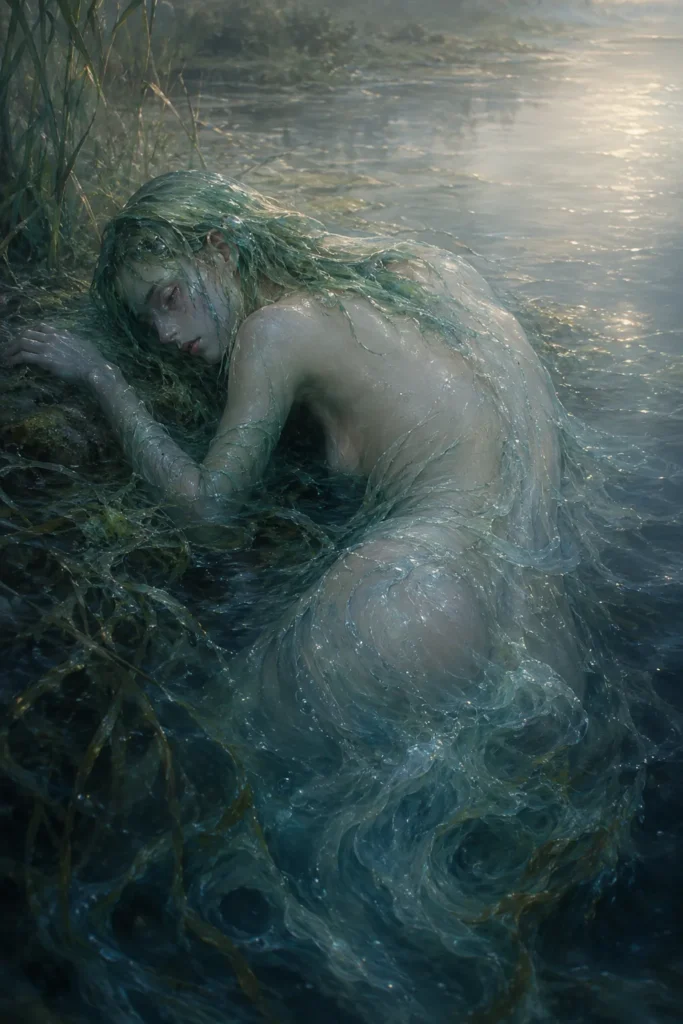
Joan the Wad is a small fairy being, a pixie, perceived through her light, the wad. As Queen of the Pixies, she embodies the leading light of the Cornish fairy world.
Effect
She has a dual nature: on the one hand a will-o’-the-wisp that can mislead wanderers in the moor, on the other, and more strongly emphasised, a bringer of luck and protection. According to the saying, luck smiles on whoever carries Joan the Wad with them.
Profile: Joan the Wad
The key aspects of the pixie queen at a glance.
Cornish folk belief: the pixie world of Cornwall, with Joan as Queen and Jack o’ the Lantern as King.
Wanderers and seekers of luck: her light can mislead some, while others regard her as a bringer of luck and protection.
Small pixie being, visible chiefly as a torch light, the wad, after which she is named.
A will-o’-the-wisp with an emphasis on luck and protection; the rhyme asks her and Jack to light the way home in bad weather.
No defence needed: she is regarded as a bringer of luck. Against pixie misdirection, the old advice helps: do not follow the light.
Polperro, the rhyme and the pixie kingdom
The name explains the figure: wad is an East Cornish dialect word for a torch or a bundle of straw bound as a light, so Joan the Wad means Joan with the torch. She is the female counterpart to Jack o’ the Lantern and is especially linked to the village of Polperro.
A rhyme survives that calls on her and Jack to light the way home when the weather is bad. It shows the distinctly Cornish colouring of the motif: here the light in the night is not primarily a threat but a hoped-for guide.
From folk belief to lucky charm
Joan the Wad is heavily commercialised: the lucky charms were devised by F. T. Nettleinghame and registered in 1932; to this day they are sold in Polperro as pewter pendants. The lucky-charm cult is thus modern, not ancient.
From a religious-studies perspective, Joan the Wad shows how a will-o’-the-wisp motif was turned benevolent and later built up commercially into a lucky charm. The old folk belief must be kept separate from the 20th-century marketing charm, which is often passed off as an ancient ritual.
Lucky charm rather than protective means
In the original folk belief, no particular means of warding off is recorded, since Joan the Wad is regarded more as a bringer of luck. Wearing a Joan-the-Wad amulet as luck protection is a 20th-century motif and not old apotropaic magic. Those wishing to protect themselves from being misled by pixies knew the general advice not to follow the light and to stay on the path.
Jack, pixies and the other lights
Joan the Wad is the direct counterpart to Jack o’ the Lantern and is related to the pixie-luring motif, becoming pixie-led. Among the ranks of British will-o’-the-wisps, she stands alongside the Welsh Ellylldan and the Scottish Spunkie; the English Hobby Lantern also belongs to this family of lights, though it represents their misleading standard form.
Frequently asked questions about Joan the Wad
What does the name Joan the Wad mean?
Joan with the torch; wad is an East Cornish dialect word for a torch or a bundle of straw bound as a light.
Is Joan the Wad dangerous?
Hardly. She can lead people astray, but is mostly regarded as a bringer of luck and protection within the Cornish pixie world.
Is the lucky charm old?
No. The pendants were devised by F. T. Nettleinghame and registered in 1932; the lucky-charm cult is modern and commercial.
Further links
Further reading:
- Hobby Lantern – the misleading English counterpart
- Ellylldan and Spunkie – the Celtic neighbouring lights
- Amulet, protective candle, salt – traditional protective means
- Protection Compass – an overview of protective means
Literature (selection)
Further standard works in the bibliography.
As a Cornish will-o’-the-wisp, Joan the Wad holds a special role: the queen of the pixies uses her torchlight not only to mislead but is above all regarded as a bringer of luck and protection, whose charms are still sold in Polperro today.