Boggart, when the house spirit turns into a plague
By Ralf Ittermann · last reviewed on
The Boggart is a spirit of English folk tradition.
He causes poltergeist disturbances, spoils milk and moves along with the family. Folklore marks the moment when a helpful house spirit turns into a household plague.
The Boggart is a malevolent house spirit and poltergeist from northern England, especially from Lancashire and Yorkshire. He causes disturbances at night, pulls off blankets, spoils milk, smashes crockery and torments the occupants.
In many legends he is a Brownie who has been corrupted through offence or neglect. If the plagued family moves away, he often follows in the removal cart, a famous wandering motif of northern English folklore.
Type: Malevolent house spirit and poltergeist
Origin: Northern English folklore
Texts: Roby, Briggs
Period: densely documented in the 18th and 19th centuries
Appearance: invisible or dark and shaggy

Context of tradition
Period of the Texts
Boggart legends are densely documented from Lancashire and Yorkshire in the 18th and 19th centuries; recorded among others by John Roby.
Area of Diffusion
Lancashire, Yorkshire and northern England; a famous place association is the Boggart of Boggart Hole Clough near Manchester.
Sources
Good: the collection of legends by John Roby from the 19th century, as well as the folklore reference works of Briggs and Wright.
Name and variants
English: boggart, from the bug word family, which also includes bogle, bogey and bogeyman; behind it lies Middle English bugge, the frightening figure.
Being and effect
Appearance
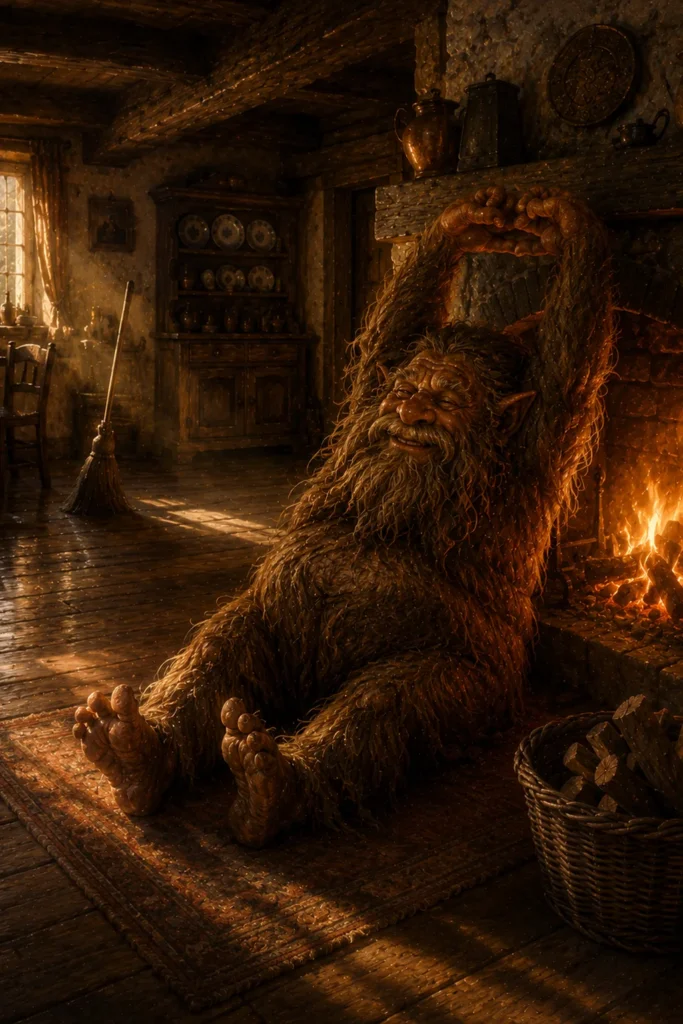
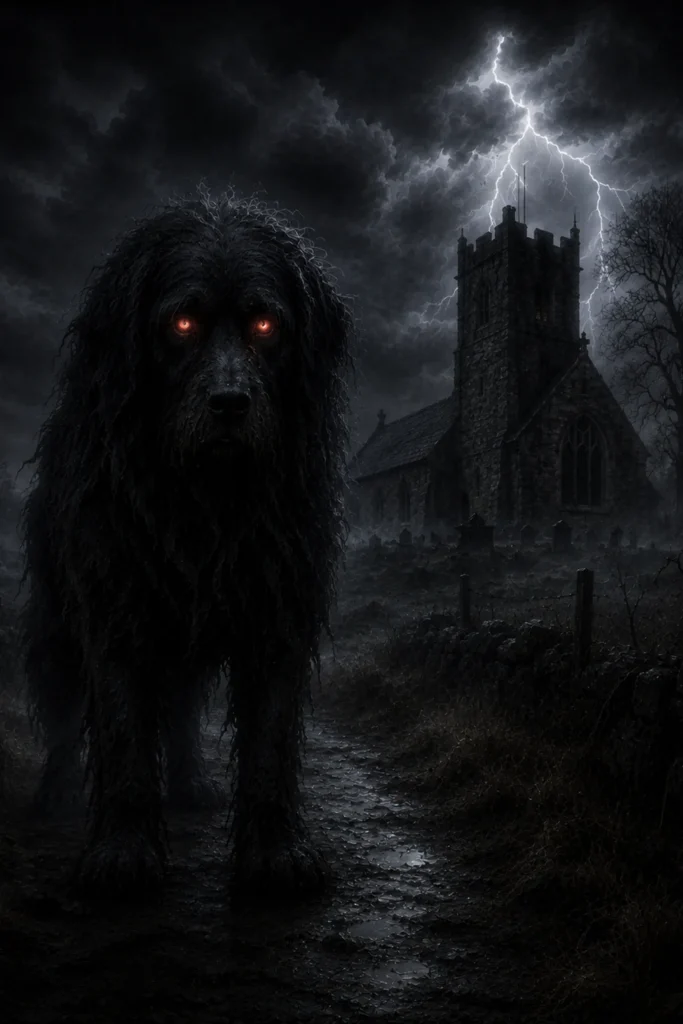
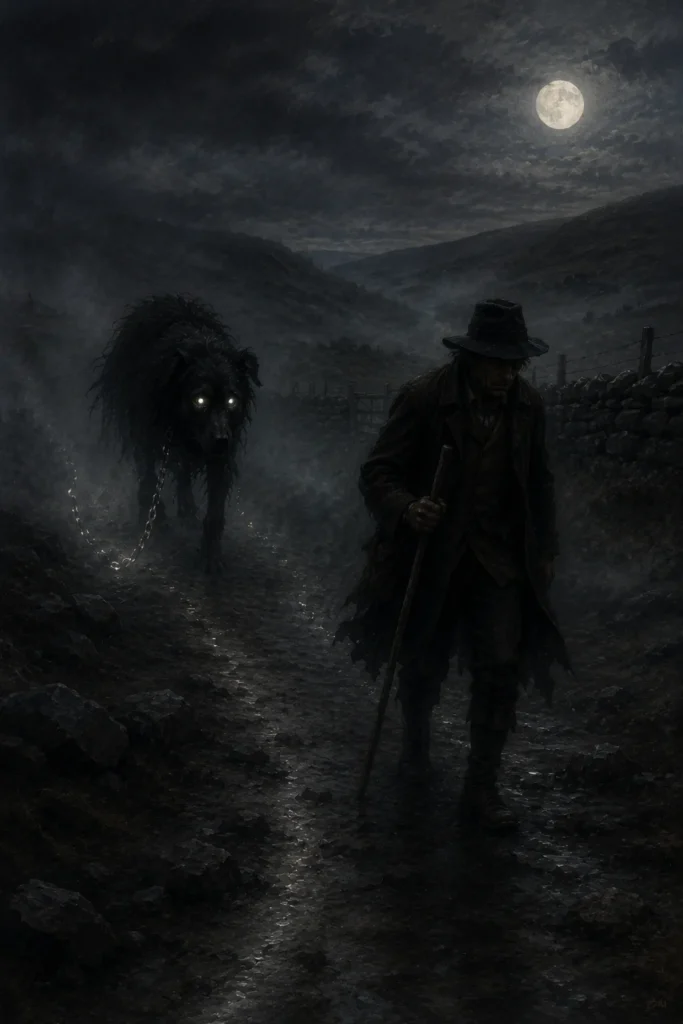
The boggart is usually invisible and recognisable only by its effects, or it appears as a dark, shaggy, sometimes animal-shaped being. It acts through noises, movements and pranks more than through form.
Effect
The boggart makes noise at night, pulls off blankets, spoils milk, breaks crockery, torments livestock and plays tricks on the household. If the family moves away, it often follows along in the moving cart. It is the malicious counterpart to the helpful brownie, linked to it by the motif of corruption.
Profile: Boggart
The key aspects of the poltergeist at a glance.
Northern English ghost and place legends of the 18th and 19th centuries; its name belongs to the bug word family of frightening figures.
House and family: the boggart torments the household and livestock, and its wandering motif shows that it follows the family, not just the house.
Usually invisible, recognisable only by noise and pranks; if it does appear, it takes the form of a dark, shaggy, sometimes animal-shaped being.
Rumbling, spoiled milk, broken crockery, pulled-off blankets and tormented livestock; a classic nocturnal haunting in the house.
Appeasement through politeness, banishment through exorcism and blessing; iron and naming it were considered risky, as a name might provoke it.
The helpful Brownie as its counterpart, along with the Scottish bogle and the Welsh bwca; in a broader sense, the German poltergeist.
From the bug word family: the origin of the boggart
The name boggart belongs to the bug word family, which also includes bogle, bogey and bogeyman; behind it lies Middle English bugge, the frightening figure. The boggart thus carries fear in its very name, unlike its helpful relatives of the Brownie type.
Boggart legends are densely attested in the 18th and 19th centuries from Lancashire and Yorkshire, such as the boggart of Boggart Hole Clough near Manchester, recorded by John Roby. A recurring narrative motif is the failed move: the tormented family flees, and the boggart travels along in the moving cart.
From local haunting to Harry Potter
J. K. Rowling turned the boggart in Harry Potter into a shape-shifting being that takes on the observer’s worst fear; this literary interpretation departs from folklore. In northern England, the boggart remains a fixed part of local ghost and place legends.
From the perspective of religious studies, the boggart is a malicious house spirit and poltergeist, often a corrupted brownie. Important clarifications: brownie and boggart are two states of the same hobgoblin spectrum, helpful versus offended and malicious. The Harry Potter boggart is a modern invention. And its wandering motif shows that it is bound to the family, not just to the house.
Appease, banish, avoid
Since moving away rarely helped, people tried to appease the boggart through politeness or to banish it with exorcism and blessing. Iron and naming it were considered risky, as a name might provoke it. These ideas are recorded in folklore and vary by region; northern English folklore knows no universally valid defence.
Bogle, bwca and the corrupted brownie
The boggart corresponds to the Scottish bogle, the Welsh bwca and the corrupted Brownie; in a broader sense, the German poltergeist and the offended hobgoblin stand alongside it. Its core is the place-bound house spirit that has turned into a poltergeist, not a nature demon. Within the British family, Hob, Hobgoblin and Silkie are also related.
Frequently asked questions about the boggart
What is a boggart?
A malicious house spirit and poltergeist of northern England, in many legends a brownie that was corrupted by insult or neglect.
Does moving away help against the boggart?
Usually not. In many legends it simply moves with the family and travels along in the moving cart.
Is the boggart from Harry Potter authentic?
No. The shape-shifting being of fear is a modern literary interpretation that departs from northern English folklore.
Further links
Further reading:
- Brownie – the helpful counterpart to the boggart
- Hob, Hobgoblin – other British house spirits
- Iron, Salt, Holy Water – traditional protective means
- Protection Compass – protective means at a glance
Literature (selection)
Further standard works in the bibliography.
As an English poltergeist and, in many legends, a corrupted brownie, the boggart shows the dark side of belief in house spirits: the same force that can bless a farm torments it once offended.