Pangkarlangu, the giant with the hair belt
By Ralf Ittermann · last reviewed on
The Pangkarlangu is a spirit of the Aboriginal tradition of Australia.
The ogre who takes lost children of the desert.
Pangkarlangu is a huge, child-eating ogre of the Warlpiri in the Australian Central Desert. He belongs to the class the Warlpiri call man-eaters, and serves as a bogeyman figure who teaches children not to wander alone into the desert.
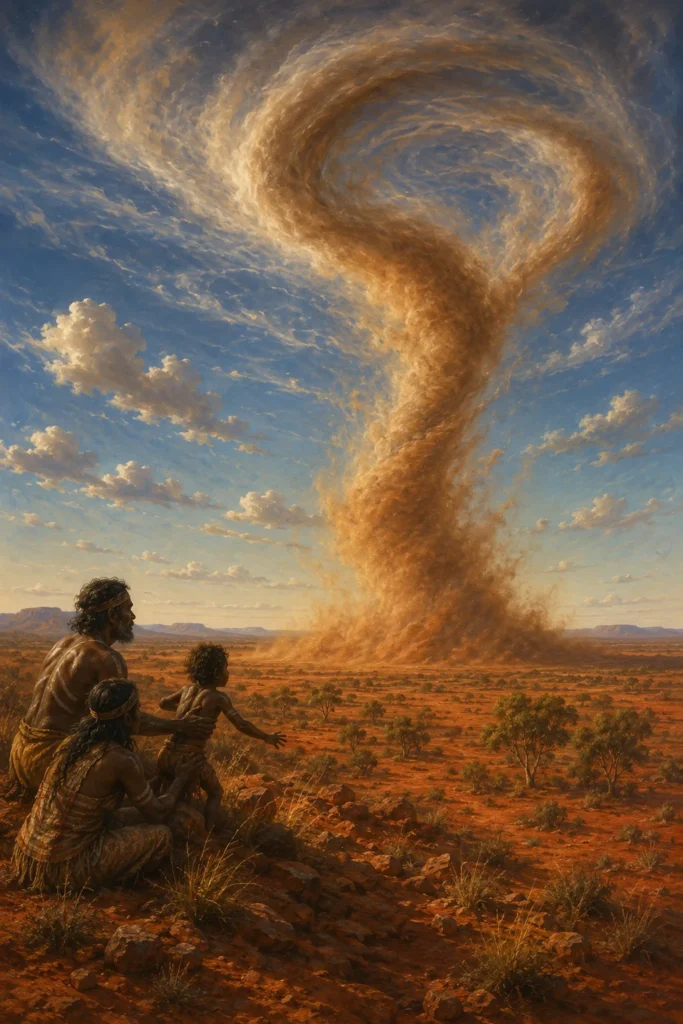
Behind the fearsome figure lies a real danger: a lost child can die of thirst within hours during the desert summer. The stories of Pangkarlangu translate this danger into a figure children can understand.
Type: Child-eating ogre giant from the class of man-eaters
Origin: Warlpiri tradition
Texts: ethnographic documentation, primarily Musharbash and Nicholls
Period: living tradition, passed on to this day
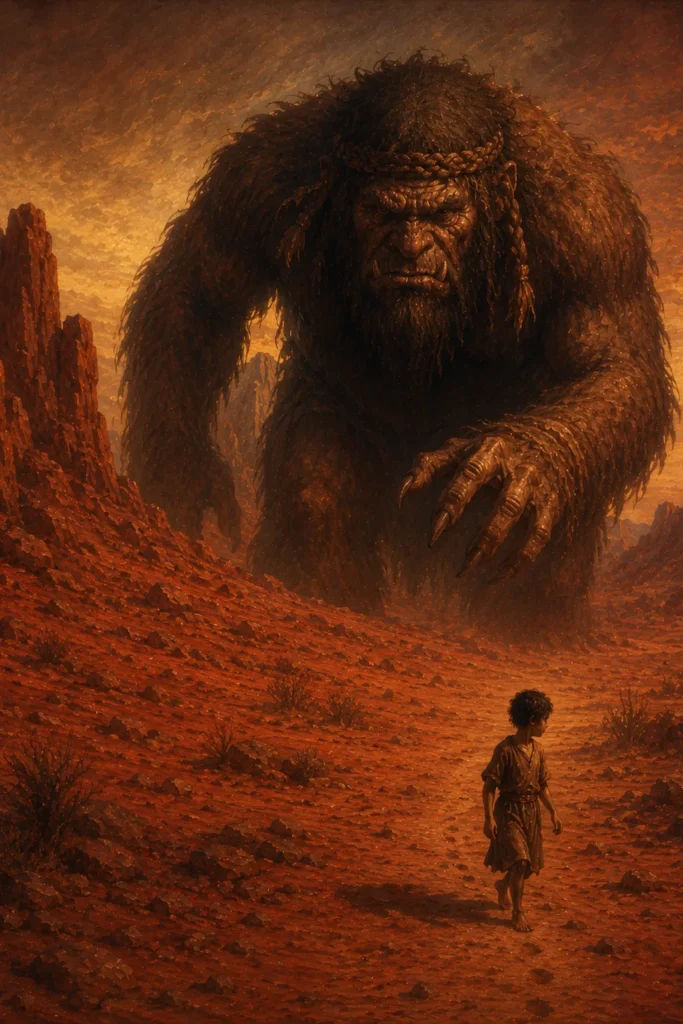
Appearance: huge, hairy, sharp-clawed, appearing neckless
Historical Background
Period of the Texts
The Warlpiri tradition is passed on to this day; it has been documented academically above all by Yasmine Musharbash and Christine Nicholls.
Area of Diffusion
The Australian Central Desert, especially the Tanami region in the Northern Territory; neighbouring groups probably share variants.
Sources
Well documented: Musharbash has published directly on Pangkarlangu, along with Nicholls and the Dreamtime children’s book by Molly Tasman Napurrurla.
Name and variants
Warlpiri: Pangkarlangu, also Pankalangu, a word from the Central and Western Desert language. It is the proper name of the ogre belonging to the class the Warlpiri call man-eaters.
Form and effect
Appearance
Pangkarlangu is a huge, hairy, sharp-clawed man-eating giant appearing neckless; Warlpiri descriptions resemble popular depictions of Neanderthals. He wears a plaited hair-cord belt around his waist that plays a role in the stories; in figurative art he is often depicted with oversized genitals, signalling malevolence.
Effect
In the stories he captures babies and small children who wander away from camp, strings them onto his hair belt and roasts them. The social function is behavioural control: teaching children not to wander alone into the desert, where a lost child can die of thirst within hours in summer.
Profile: Pangkarlangu
The key aspects of the ogre giant at a glance.
Warlpiri tradition of the Tanami region; Pangkarlangu is the best-known named representative of the man-eater class.
Children in particular: the stories are aimed at babies and small children who might wander away from camp.
Huge, hairy, sharp-clawed and appearing neckless, with a plaited hair-cord belt; in art often depicted with oversized genitals as a sign of malevolence.
Behavioural control: the ogre teaches children not to wander alone into the desert, thereby encoding the real danger of dying of thirst.
Conveyed through stories, songs, school books and dramatic performance; the relationship is educational and cautionary.
Ngayurnangalku and Mamu as man-eating figures; worldwide the ogre and bogeyman traditions.
An ogre with a purpose: origin and transmission
Pangkarlangu, also Pankalangu, is a Warlpiri word from the Central and Western Desert language. The name is the proper name of the ogre belonging to the class the Warlpiri call man-eaters. The belief is upheld chiefly by the Warlpiri of the Tanami region in the Northern Territory; neighbouring groups probably share variants of the figure.
The manner of transmission is remarkable: Pangkarlangu lives on not only in stories and songs but also in school books and dramatic performance. The Lajamanu storyteller Molly Tasman Napurrurla acts out the ogre for schoolchildren; her illustrated Dreamtime children’s book The Pangkarlangu and the Lost Child has made the figure known beyond the region.
Painting, children's book and classification
Pangkarlangu is a recognised motif of Papunya-era and later desert painting, for instance in the work of Charlie Tjararu Tjungurrayi, and is the titular figure of the illustrated Dreamtime children’s book The Pangkarlangu and the Lost Child by Molly Tasman Napurrurla.
From a religious-studies perspective, Pangkarlangu is a child-eating ogre with a social function. Important clarifications: the anthropologist Yasmine Musharbash has published directly on him. Much of the vivid detail in the descriptions goes back to Nicholls and should be attributed accordingly. And he encodes a real, deadly environmental danger.
Warning through storytelling
Protection from Pangkarlangu is not conveyed through rituals but through stories, songs, school books and dramatic performance; the Lajamanu storyteller Molly Tasman Napurrurla acts out the ogre for schoolchildren. The relationship is educational and cautionary: those who know the stories stay by the camp, and that is exactly their purpose.
Bogeyman figures compared
Pangkarlangu is directly parallel to the Ngayurnangalku of the Martu and the spirit power Mamu of the Anangu as a man-eating and child-eating figure of the Western Desert. Across cultures he is closely related to the ogre and bogeyman traditions that fulfil the same task worldwide: keeping children away from real dangers.
Frequently asked questions about Pangkarlangu
What is a Pangkarlangu?
A huge, child-eating ogre of the Warlpiri in the Australian Central Desert, from the class of man-eaters.
What function does belief in him serve?
He teaches children not to wander alone into the desert, where a lost child can die of thirst within hours in summer.
How is he passed on?
Through stories, songs, school books and dramatic performance, for instance by the storyteller Molly Tasman Napurrurla.
Further links
Further reading:
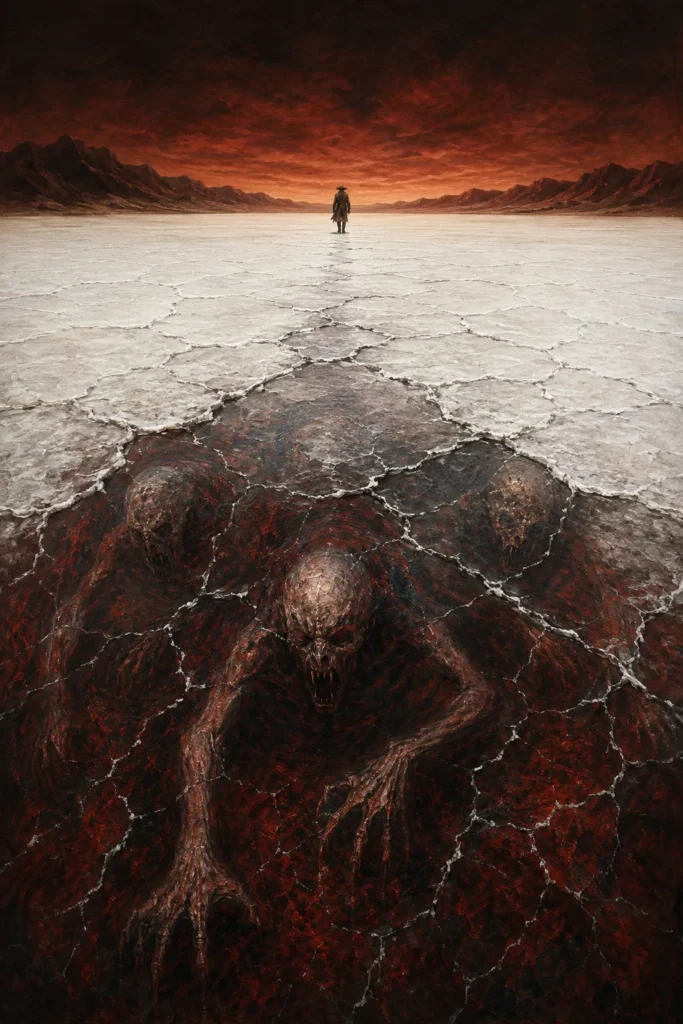
- Ngayurnangalku – the man-eaters beneath the salt lake
- Mamu – the evil spirit power of the Anangu
- Amulet, Salt, Smoke cleansing – traditional protective means
- Protection Compass – protective means at a glance
Literature (selection)
Further standard works in the bibliography.
As a Warlpiri ogre, Pangkarlangu is more than a figure of horror: the child-eater with the hair belt keeps alive a lesson on which lives in the Central Desert can depend.