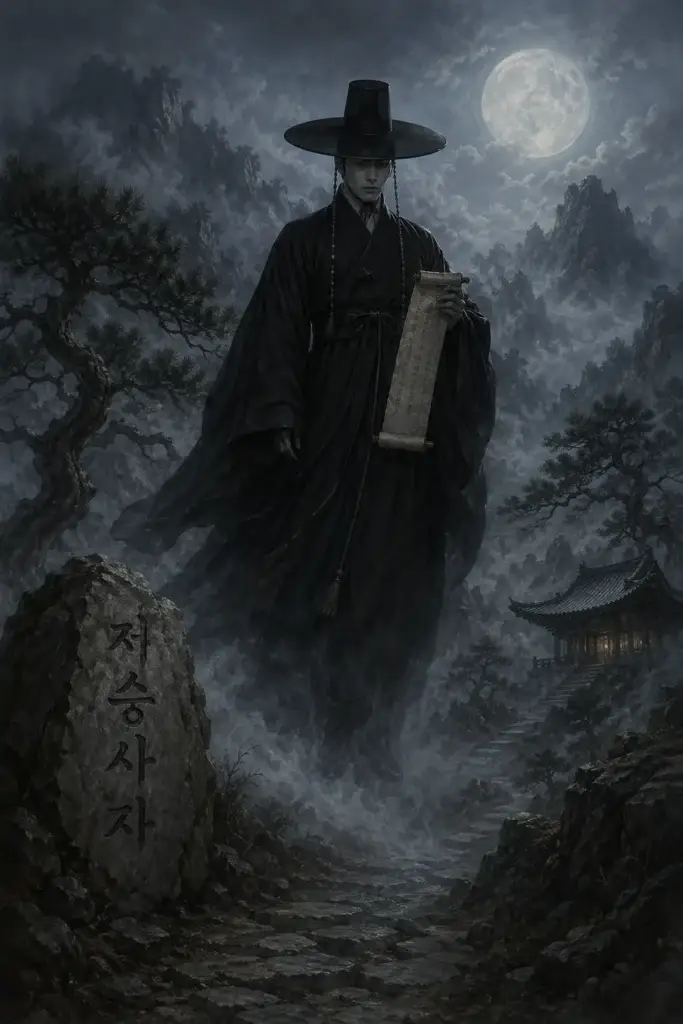
Cheonggak-gwishin, restless between grudge and longing
By Ralf Ittermann · last reviewed on
Cheonggak-gwishin is a spirit of Korean tradition.
Restless out of loneliness, released only through the ghost marriage. The profile describes Cheonggak-gwishin as caught between grudge and longing, restless until released by a ghost marriage.
Cheonggak-gwishin is, in Korea, the spirit of a man who died unmarried. Without marriage and descendants, he falls outside the order of ancestor worship, and his pent-up grudge, the Han, keeps him bound to this world as a restless bachelor spirit.
The name combines cheonggak, the unmarried young man, with gwishin, spirit; a common synonym is Mongdal-gwishin. As a subtype of the Korean gwishin, the restless dead, he is considered especially moody and can cause illness in the living. His motive, however, is less outright revenge than a restless longing for partnership and descendants.
Type: spirit of a young man who died unmarried, bachelor spirit
Origin: Korean ancestor and spirit belief, subtype of the gwishin
Texts: oral folk tradition, centred in the Joseon era
Period: Joseon era to the present
Appearance: young man, often unkempt and full of longing, without a fixed iconic image

Historical Classification
Period of the Texts
Centred in the Joseon era: the oral folk tradition extends from this period to the Korean present.
Area of Diffusion
All of Korea. Belief in the restless bachelor spirit is widespread throughout the country.
Sources
Moderate to thin: no specialised scholarly monograph exists for this being; the account draws on folk tradition and reference works such as the studies by Grayson and Walraven.
Name and variants
Korean: Cheonggak denotes the unmarried young man, gwishin the spirit, together meaning the spirit of the bachelor. A common synonym is Mongdal-gwishin.
Appearance
Appearance
The Cheonggak-gwishin appears as a young man, often looking unkempt and full of longing, without the fixed iconic image of the female spirit. He is the symbol of an unfulfilled social role and the male counterpart to the virgin spirit.
Effect
He is considered especially moody and can cause illness in the living. His motive is less outright revenge than restless longing for partnership and descendants.
Profile: Cheonggak-gwishin
The key aspects of the bachelor spirit at a glance.
Subtype of the Korean gwishin, rooted in ancestor worship and the concept of Han, accumulated grievance.
Diffuse and inconsistent; it is generally regarded as bringing illness, without a fixed target group.
A young man, often unkempt and yearning, without a fixed iconic image.
Misfortune and illness arising from restless longing rather than targeted revenge.
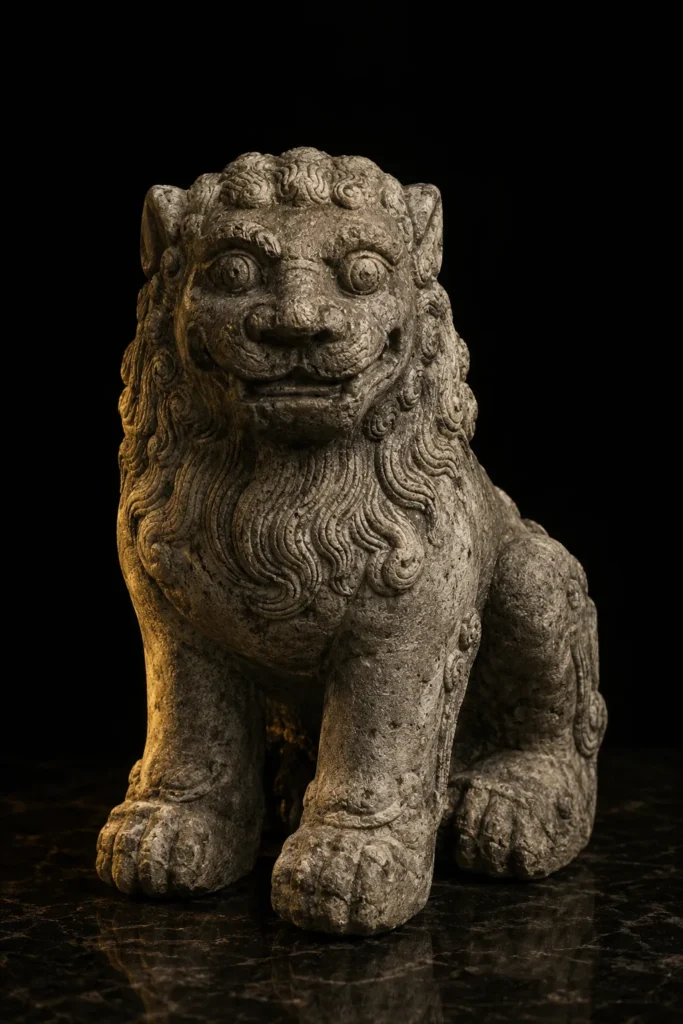
The shamanic spirit wedding of the mudang; in some regions also phallic stone statues for appeasement.
The Dalgyal-gwishin within Korea, along with the Thai Mae Nak as a related figure of unfulfilled attachment.
Han and the order of the ancestors
The name combines cheonggak, the unmarried young man, and gwishin, spirit; a common synonym is Mongdal-gwishin. The Cheonggak-gwishin is a subtype of the Korean gwishin, the restless dead. The central explanatory concept is Han, the accumulated, often unjust grievance and unfulfilled longing that keeps the soul bound to this world.
A man who dies unmarried and childless receives neither the funeral rites of married men nor the social dignity of a completed life. His Han is the loneliness and longing for a companion that sets him outside the order of Confucian ancestor worship.
Less prominent than the female spirit
The Cheonggak-gwishin appears in Korean folklore and television anthologies, but is less common in K-horror than the female spirit. As Mongdal-gwishin, he is present in collections of legends.
From a religious-studies perspective, the Cheonggak-gwishin is a model example of the unattended dead standing outside the Confucian order of ancestors. The spirit wedding is the shamanic reintegration into the social order, retroactively granting the deceased the completion that was denied to him.
The spirit wedding of the mudang
The core ritual is the shamanic spirit wedding, which marries the bachelor spirit and the maiden spirit in the afterlife. If the mudang performs the ritual successfully, the life is considered symbolically completed, and the spirit finds rest. In some regions, phallic stone statues serve to appease unmarried dead. Incense burning and offerings are part of the shamanic appeasement ritual, a worn amulet serves to ward off the restless spirit, and consecrated holy water is a sign used in dealing with the unattended dead.
East Asian spirit weddings and their counterpart
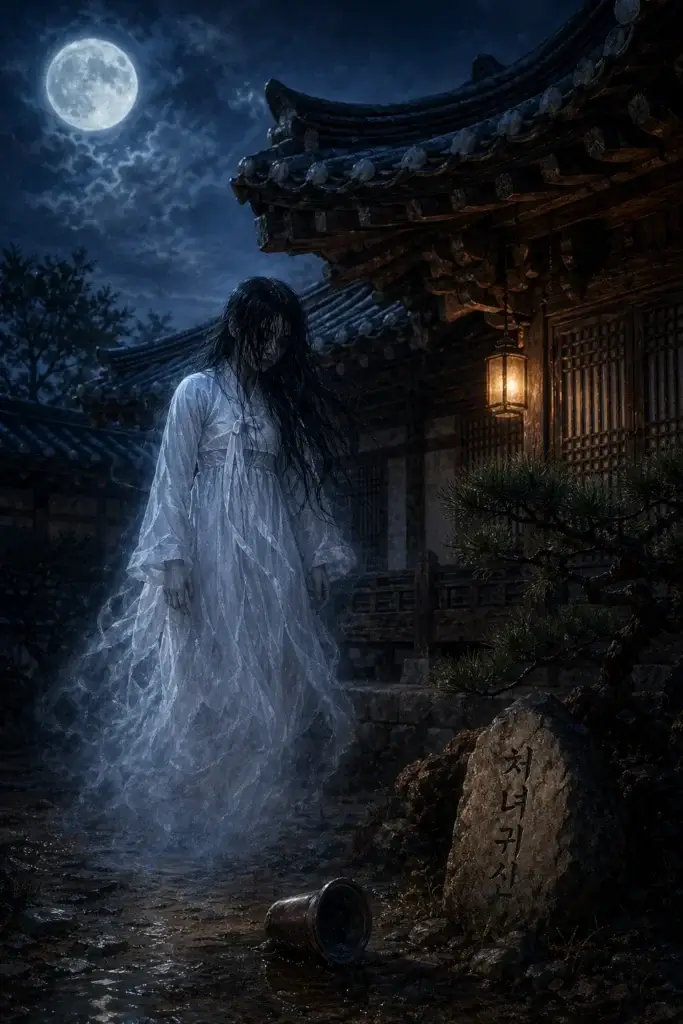
His direct female counterpart is the maiden spirit Cheonyeo-gwishin, with whom he is joined through the spirit wedding. Structurally related is the Chinese spirit wedding minghun for those who died unmarried, as well as other East Asian spirits of the unmarried dead. Within Korea, he is closely related to the Dalgyal-gwishin, and among thematically related figures, to the Thai Mae Nak.
Frequently asked questions about Cheonggak-gwishin
Is this the same as Mongdal-gwishin?
Yes, Mongdal-gwishin is a common synonym for the bachelor spirit.
Why is he dangerous?
Less out of revenge: the pent-up longing, the Han, can manifest as misfortune or illness affecting the living.
Can he be released?
Yes, classically through a posthumous spirit wedding with a maiden spirit, performed in the ritual of the mudang.
Further links
Further reading:
- Korea – all beings of Korean tradition
- Dalgyal-gwishin – related spirit from Korea
- Mae Nak – Thai parallel of unfulfilled attachment
- Incense burning, amulet, holy water – traditional protective means
- Protection Compass – overview of protective means
Literature (selection)
Further standard works in the bibliography.
As the Korean bachelor spirit, the Cheonggak-gwishin, also called Mongdal-gwishin, remains above all a figure of loneliness: not an avenging angel, but a dead man whose Han is only put to rest through the spirit wedding.