Szélanya, the wind mother at the wind hole
By Ralf Ittermann · last reviewed on
Szélanya is a goddess of Hungarian folk tradition.
The wind mother who governs the winds from the mountain.
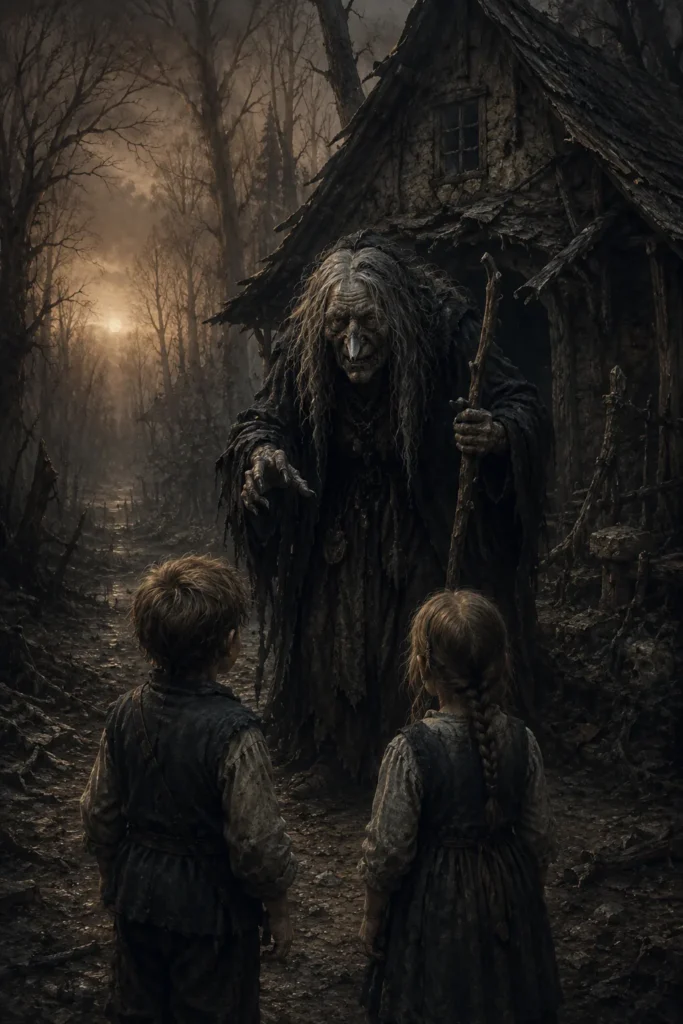
Szélanya, also written more simply as Szelanya, is the wind mother of Hungarian folk belief: a personification of the wind who sits as an old woman in a cave at the wind hole and manages the winds from there.
Important for classification: Szélanya is genuinely attested as a fairy-tale and folk-belief motif, not as a cult deity. The wind goddess with a Turkic pantheon circulating online is a modern construction. The actually influential complex of folk belief is the illness-bringing wind, against which the Hungarian incantations are directed.
Type: Wind mother, personification of the wind
Origin: Hungarian folk belief, collected in the 19th and 20th centuries
Texts: ethnographic lexicon, incantation collections, fairy tales
Period: oldest incantation record 1516, collections from the 19th and 20th centuries
Appearance: old woman in a cave at the wind hole

Context of Tradition
Period of the Texts
Hungarian folk belief concerning the wind was collected in the 19th and 20th centuries; the oldest textual record of the incantation type is the Szelestei incantation of 1516.
Area of Diffusion
The Hungarian-speaking area: there the wind mother is at home as a fairy-tale and folk-belief figure, alongside the wind son and wind king.
Sources
Genuinely attested as a fairy-tale and folk-belief figure, not as a deity: the Hungarian ethnographic lexicon and the incantation collection by Éva Pócs; Ipolyi’s mythological systematisation of 1854 is considered speculative.
Name and variants
Hungarian: szél means wind, anya mother, hence wind mother; the texts often use szél anyja, the mother of the wind. The ethnographic lexicon lists under the entry wind the personifications Szélanya, wind son and wind king, who blow from a hole in a mountain.
Appearance and behaviour
Appearance
In the genuine material, Szélanya is an old woman or mother in a cave or at the wind hole who manages the winds. In one variant, the wind mother lives in her cave with five wind sons.
Effect
As a narrative figure, Szélanya is mistress and manager of the winds. The actually influential complex is the illness-bringing wind: it was said that someone had been struck by the wind; illnesses were considered brought by the wind, the witches’ wind, or the wind of the beautiful women. The whirlwind is regarded as a wind of hell in which witches and devils dance.
Profile: Szélanya
The most important aspects of the wind mother at a glance.
Personification of the wind in Hungarian folk belief, listed alongside the wind son and wind king as a fairy-tale motif in the ethnographic lexicon.
The winds, which she manages from a hole in a mountain; in folk belief she belongs to the complex of the illness-bringing wind.
Old woman or mother in a cave at the wind hole; in one variant with five wind sons at her side.
Mistress and manager of the winds; the whirlwind is regarded as a wind of hell, illnesses as brought by the wind.
Throwing an axe or knife into the whirlwind, not spitting into it, not cursing the wind; along with the incantations that send the wind’s affliction away.
Szélatya as the male counterpart, the Slavic wind mothers as well as the Turkic-Altaic Yel Ana as a subsequently attached layer.
From the wind hole in the mountain to the wind goddess of the internet
Szél means wind, anya mother; in the texts the figure often appears as szél anyja. The Hungarian ethnographic lexicon lists under the entry wind the personifications Szélanya, wind son and wind king, who blow from a hole in a mountain; in one variant the wind mother lives in a cave with five wind sons. There she is explicitly classified as a personification and fairy-tale motif.
A second layer was added later: Arnold Ipolyi’s mythological systematisation of 1854 is considered speculative and over-interpreted, and the modern notion of a Hungarian wind goddess builds on its legacy. Anyone wishing to understand the wind mother must separate the two layers: the genuine folk-belief motif of the old woman at the wind hole and the later systematisation into a deity.
Divided reception and classification
Reception is divided: academically, Szélanya is regarded as a personification motif, whereas popularly and among neopagans she is seen as a wind goddess in a reconstructed Turanian pantheon; online, the two levels are constantly conflated.
From a religious-studies perspective, the personified female wind, szél anyja, is genuine folk belief in fairy tales and notions of illness. Important clarification: the wind goddess Szélanya, daughter of Kayra, with her own cult, is by contrast a romantic systematisation in Ipolyi’s legacy and a modern Turanist-neopagan invention, not attested as a deity.
Axe, taboo and ráolvasás: warding off the wind
An attested cult of Szélanya does not exist. What is attested is practical warding off: it was taboo to curse the wind; an axe or knife was thrown into the whirlwind and one did not spit into it. In the incantations, the ráolvasás against wind-borne illnesses, the personified affliction is sent away, told to return to where it came from. The oldest textual record is the Szelestei incantation of 1516. A fixed formula invoking Szélanya as a named deity is not reliably attested.
Wind mothers and wind figures compared
The next counterpart is found closer to home: Szélatya, the wind father and wind king, the male personification of the same wind complex; the wind mother manages the winds from her cave, while the wind king releases or withholds them. Szélanya corresponds to the Slavic wind mothers, among them the Polish Wietrzyca; the Turkic-Altaic Yel Ana is the layer that was attached later. Sending away the personified wind of illness is a widespread type of incantation; as a more distant counterpart of a wind lord, the Sami Bieggolmai may be mentioned.
Frequently asked questions about Szélanya
Who is Szélanya?
The wind mother, a personification of the wind in Hungarian folk belief and in fairy tales. She manages the winds from a hole in a mountain.
Is she a real goddess?
No: attested as a figure of fairy tale and folk belief, not as a deity; the cult goddess with a Turkic pantheon is a modern construction.
What is ráolvasás?
An incantation in which the personified wind affliction is addressed and sent away, told to return to where it came from.
Further links
Further reading:
- Szélatya – the wind father and wind king as male counterpart
- Wietrzyca – the Slavic wind woman
- Bieggolmai – the Sami wind man
- Iron, Salt, Amulet – traditional protective means
- Protection Compass – protective means at a glance
Literature (selection)
Further standard works in the bibliography.
As the Hungarian wind mother and mistress of the winds, Szélanya belongs to the fairy tales and incantations of folk belief: not a cult goddess, but a figure who still shows how a people turned the wind into a person.