Calling on the Guardian Angel: The Plea for Assistance
By Ralf Ittermann · last reviewed on
The invocation of a protective being is one of the most widespread forms of religious practice: the plea to a powerful, well-disposed being to watch over someone, to accompany a person, or to avert a harmful influence.
The phrase “calling on the guardian angel” brings together many different traditions that, while they use different names and images for these protective beings, share the same basic idea: the human being is not alone and can ask for assistance.
This tradition is by no means limited to Christianity, even though the notion of the personal guardian angel in the German-speaking world is shaped above all by the Christian tradition.
Corresponding notions are found in almost all regions of the world and worldview systems: in Islam there are the guardian angels, in Hinduism the personal deity, in Shinto the Ujigami as protective spirits of a house or clan, and in African traditions the ancestral spirits who protect their descendants.
The invocation of the guardian angel belongs to the category of protective rituals and invocations.
Quick Overview
In the tradition, the guardian angel or the protective being corresponding to it is regarded as a being assigned to a particular person, accompanying them, warning them, and shielding them against harmful influence.
The invocation, the prayer, or the plea addressed to this being, according to this tradition, activates or deepens the protective relationship.
Protective beings of this kind are attested in Christian, Jewish, Islamic, Hindu, Buddhist and animist traditions. According to most traditions, protection is not considered automatic, but a relationship that must be cultivated.
Origin and Tradition
The earliest evidence of personal protective beings comes from ancient Mesopotamia. There, the concept of the Lamassu and the Shedu denotes protective spirit beings assigned to a house or a person and standing as a buffer between the human being and harmful forces.
These beings were depicted in images, invoked, and honored with offerings. Their absence or withdrawal was considered a cause of illness and misfortune.
In ancient Greece there is the concept of the Daimon, a personal protective spirit allotted to a person at birth. Socrates describes his Daimon as an inner voice that restrains him from missteps.
This notion is not identical with the Christian guardian angel, but it shows the same basic structure: a higher being personally assigned to the human individual.
In Judaism, the idea of the personal guardian angel develops out of the biblical narratives in which angels appear as divine messengers. In the Talmud and in Jewish mysticism, especially in the Kabbalah, angels are described as companions assigned to a person. The angel Metatron and other named angels appear as protectors.
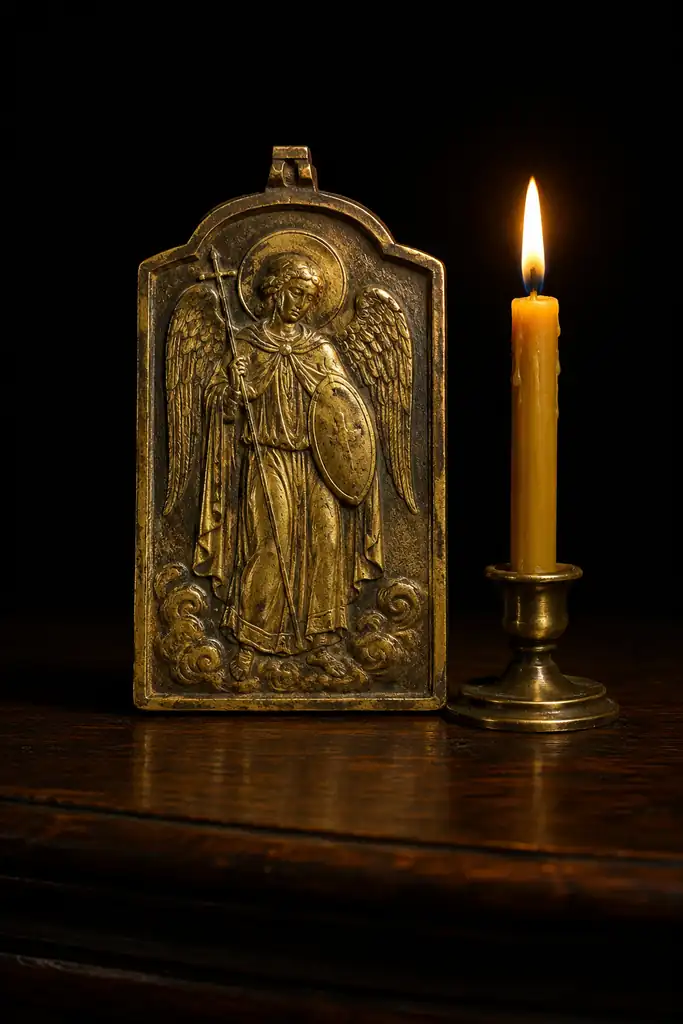
In Christianity, the notion of the personal guardian angel consolidates above all through biblical passages such as Psalm 91 (“For he will command his angels concerning you to guard you in all your ways”) and through the patristic theology of the 2nd to 5th centuries.
Origen and Clement of Alexandria explicitly discuss that an angel is allotted to every person. Out of liturgical practice, the guardian angel prayer develops, which remains widespread in German folk Catholicism to this day.
In Islam, the tradition knows the Hafaza, the guardian angels assigned to every person who record their deeds. Alongside this, Islamic folk piety features practices of invoking these guardian angels for protection, especially against jinn and the evil eye.
Principle of Action According to Tradition
The principle of action of the guardian angel invocation rests on a relational notion. The guardian angel or the protective being is assigned to the person, but in many traditions its help requires an active desire on the part of the human being.
The invocation is the sign that the person desires this assistance and acknowledges the relationship. Those who do not call upon the angel are not necessarily left without protection, but in folk piety active prayer is considered a strengthening of the protective relationship.
In many traditions, the guardian angel protects not through direct confrontation with a harmful being, but through strengthening and warning: it warns the person in dreams, draws their attention to dangers, and strengthens their inner resilience.
Direct defense, that is, the angel fighting a demon, is likewise attested, but rather in hagiographic literature than in folk tradition.
Cross-Cultural Distribution
Beyond the Abrahamic religions, the notion of the personal protective being is found in many further traditions.
In Hinduism, the concept of the Ishta-Devata, the personally venerated deity, is closely related: whoever regards a particular deity as their personal protective deity and invokes it regularly stands under its special protection. Ganesh, Durga or Hanuman are particularly often invoked in this function.
In Japanese Shinto, the Ujigami, the protective spirit of a family or clan, watches over its own. Temples and shrines are maintained in its honor. In the Buddhist tradition of Japan, Bodhisattvas such as Kannon appear as protectors who can be asked for assistance.
In animist traditions of Africa and Oceania, it is frequently the ancestral spirits who take on this protective function. They are regularly invoked, honored with offerings, and asked for their attention. This protective relationship is closely linked with the social fabric of the community.
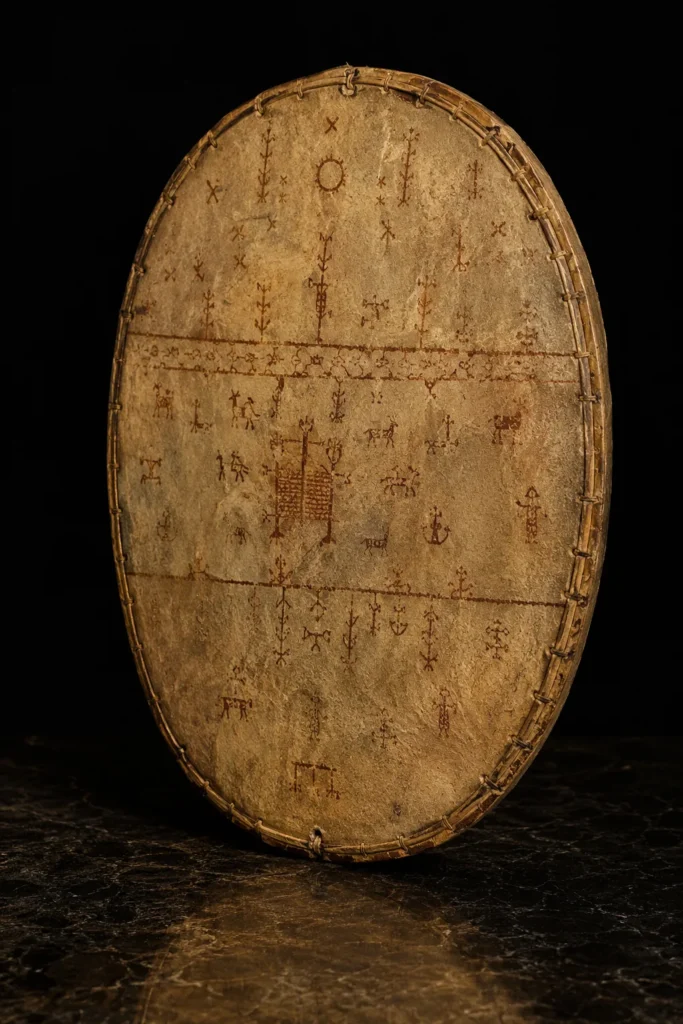
In shamanic traditions of Siberia and North America too, there is the concept of the personal protective spirit or power animal, which serves the shaman or the person concerned as companion and protection.
What It Is Used Against
The invocation of the guardian angel is, in the tradition, directed against the entire spectrum of harmful influences that can befall a person from outside. Particularly often mentioned are:
Demons and evil spirits, who are considered enemies of the human being and seek to harm them in body, spirit or soul. The evil eye and harmful magic, that is, influences triggered by human intent. Accidents and unforeseen dangers of everyday life, against which the guardian angel warns and steers as an invisible companion.
Attacks by night spirits and nightmare beings that act during sleep, that is, a state of vulnerability. More general threats to life such as illness, travel and war, for which medieval Christianity developed special guardian angel prayers.
Application and Limits
In the tradition, the invocation of the guardian angel is regarded as an always permissible and welcome practice that requires no special qualification.
Every person, according to Christian folk piety, has their guardian angel, and everyone may call upon it. This openness distinguishes the guardian angel invocation from the specialized banishing formula or the charming, which in the tradition are bound to particular persons.
The traditional limits of the guardian angel invocation concern effectiveness rather than permissibility: it presupposes sincerity and trust. A prayer spoken without inner participation is considered of little effect in folk tradition.
Moreover, the guardian angel is not a tool for harmful intentions: it protects, but in the Christian and Islamic tradition it is not described as a being that could be directed against other people.
Closely related in content to the guardian angel invocation is charming, where one person asks for protection on behalf of another. The difference is that charming employs a traditional formula, whereas the guardian angel invocation can be freer in word and form.
Literature (Selection)
Related key terms: calling on the guardian angel angelic invocation protective prayer.
iWell Guard and Protective Traditions
The notion of the protective being as an ally that can be invoked and that stands by the human individual in difficult moments is one of the most enduring spiritual experiences of humanity. The iWell Guard brings together protective symbols from traditions in which these allies bear different names and shapes.
It is not intended as a substitute for personal practice, but it can serve as a worn reminder: of the conviction that protection is not only material and that connections to protective beings are considered real and worth cultivating in all cultures.
Personal experiences may vary. Not a medical device. No promise of healing.