Yuan-gui, the accusation of unatoned injustice
By Ralf Ittermann · last reviewed on
Yuan-gui is a spirit of Chinese tradition.
It seeks justice for its death and forgives once atonement has been made. The account frames this spirit’s return as an accusation raised against an unatoned injustice.
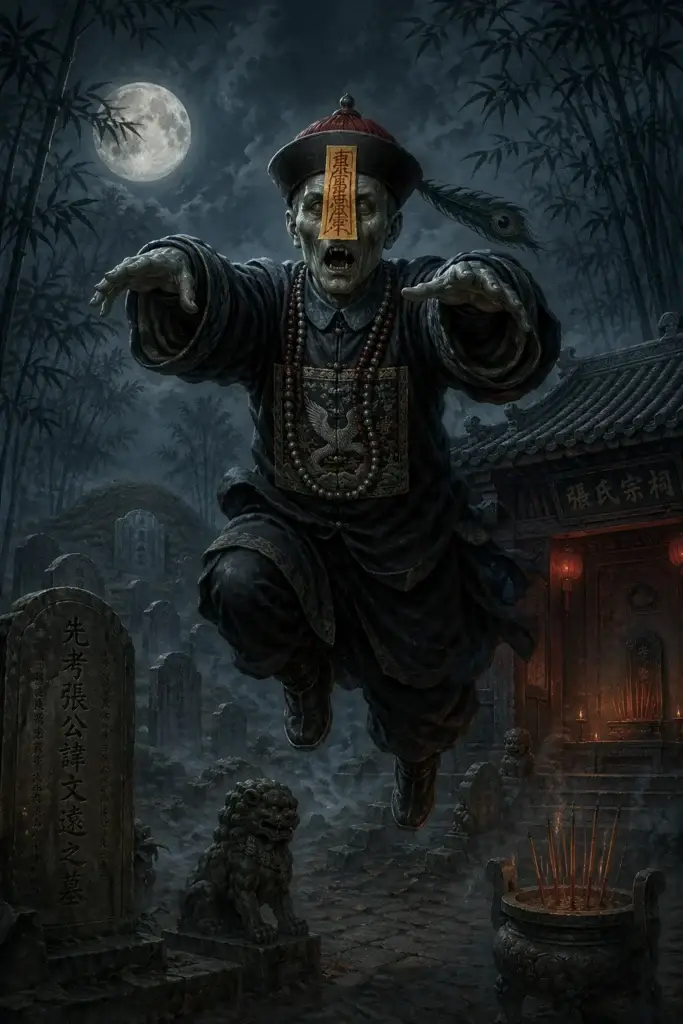
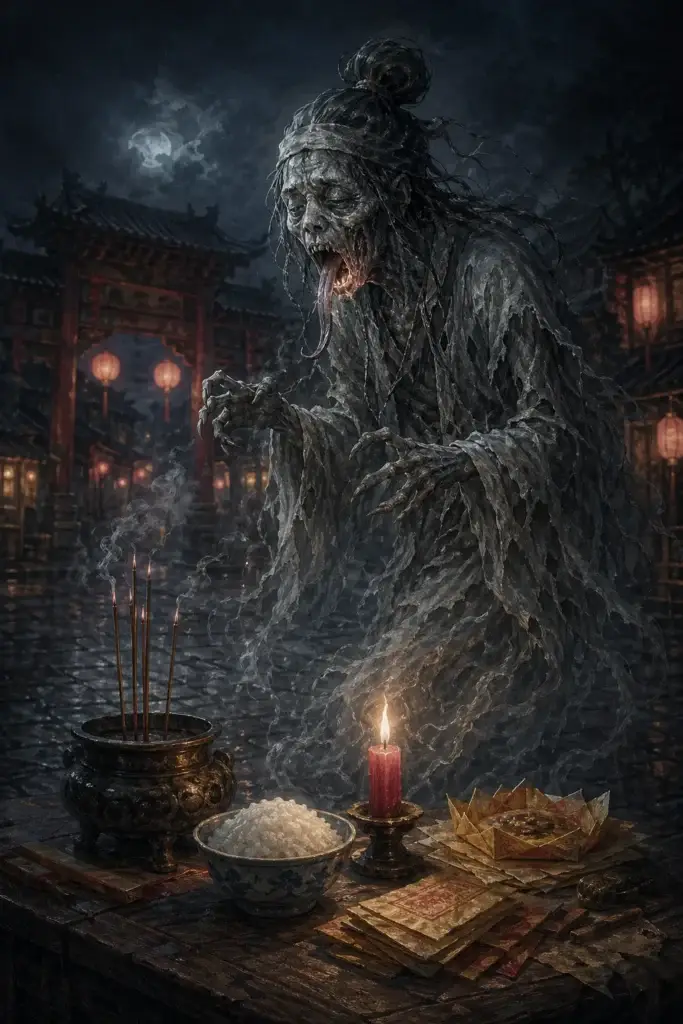
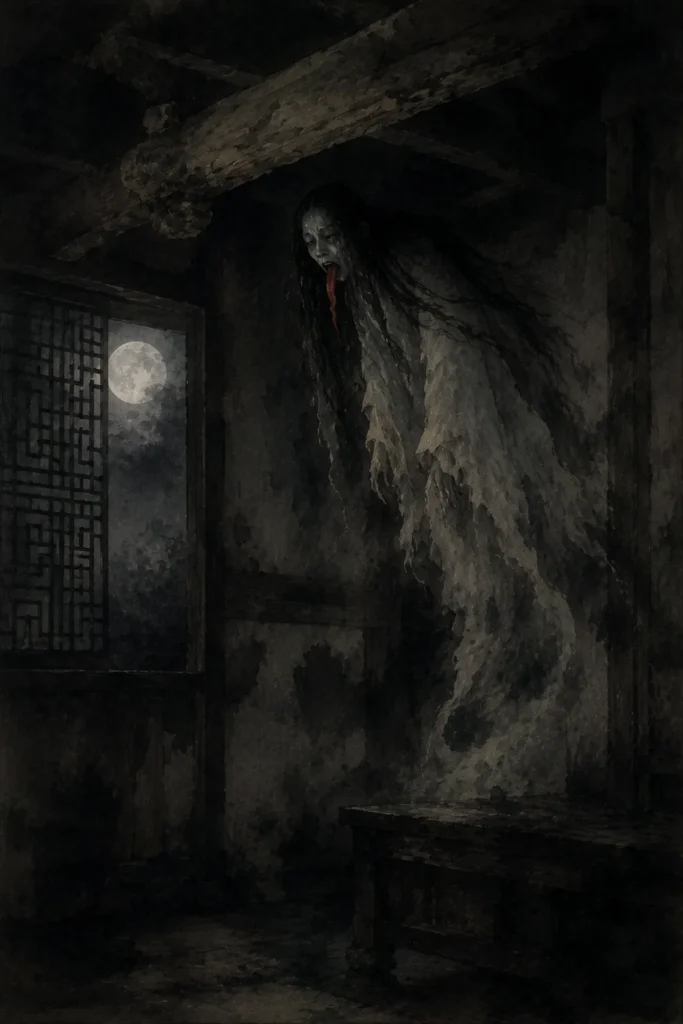
Yuan gui (Yuan-gui) is the spirit of a person who died wrongfully or violently in Chinese belief, one that carries unresolved resentment. It seeks justice or revenge and pursues those responsible, but usually forgives once the injustice has been acknowledged and atoned for.
The belief is very old and already attested in the Zuo Zhuan of the Zhou period; the textual record is well documented in classical literature. Victims include the murdered, the falsely accused, or the executed who were denied proper burial rites, and the belief is known throughout the whole of Chinese culture.
Type: Spirit of a person who died wrongfully or violently
Origin: Very old, attested since the Zhou dynasty, prominent in Pu Songling
Texts: Zuo Zhuan, Liaozhai Zhiyi, and other classical literature
Period: from the Zhou era to present-day Hong Kong horror film
Appearance: a restless, often sombre spirit able to communicate with the living

Textual history
Period of the Texts
Very old: the belief is already attested in the Zuo Zhuan of the Zhou period and reaches a literary peak with Pu Songling in the 18th century.
Area of Diffusion
The whole of the Chinese cultural sphere, without regional restriction to any single province or city.
Sources
Well documented: the classical literature from Zuo Zhuan to Pu Songling, together with Teiser’s study on the Chinese Ghost Festival.
Name and variants
Chinese: The name combines yuan, injustice or resentment, and gui, spirit: a spirit with unresolved resentment. A related form is yuanhun.
Form and effect
Appearance
The Yuan-gui embodies the idea that injustice does not remain cosmically unatoned: it is an instrument of balancing justice. In stories, it often leads the living to evidence uncovering its wrongful death.
Effect
The Yuan-gui knows no substitute-victim motif, unlike Shuigui and Diao-si-gui. It is considered very dangerous and powerful, capable of killing and causing great suffering, often more so than the merely hungry spirit. Characteristic, however, is that it forgives once the injustice has been acknowledged and atoned for: at its core, it is not a blindly malicious spirit but one seeking justice.
Profile: Yuan-gui
The key aspects of the spirit of injustice at a glance.
A very old figure of Chinese spirit belief, attested since the Zhou period and given literary shape by Pu Songling.
Those responsible for the injustice, as well as helpers who contribute to its clarification and to justice.
A restless, often sombre spirit of a murdered, falsely accused, or executed person, able to communicate with the living.
Pursuit of the guilty, up to a threat to life and limb; forgives once atonement and reparation have been made.
Acknowledgement and atonement of the injustice, rehabilitation of the victim, proper burial, and offerings.
You-hun-ye-gui as a masterless collective without a resentment motif, the Japanese Onryo as the closest parallel.
From the Zuo Zhuan to the confessing judge
The name Yuan-gui combines yuan, injustice or resentment, and gui, spirit: a spirit with unresolved resentment; the related form is yuanhun. These are the spirits of people who died a wrongful or violent death, the murdered, the falsely accused, or the executed who were denied proper burial rites. The belief is old and already attested in the Zuo Zhuan of the Zhou period.
In a story by Pu Songling, a woman wrongly executed returns as a spirit and pursues the corrupt judge until he confesses. Such stories reveal the basic pattern of the Yuan-gui: it does not seek harm indiscriminately but rather clarification and justice for its own death, and it ceases to pursue the guilty only once the injustice comes to light.
Between classical literature and horror film
The Yuan-gui is one of the richly documented figures of classical Chinese literature, prominent in Pu Songling, and a standard motif of Chinese and Hong Kong horror film, in which the vengeful spirit seeks justice.
From the perspective of religious studies, the Yuan-gui is the spirit of unatoned injustice and embodies the principle of retribution, bao, by which injustice is cosmically balanced out. That it is appeased through justice rather than banishment shows the close connection between belief in the dead and moral order.
Reparation instead of banishment
The central defence is not combat but reparation: rehabilitation of the victim, proper burial, and atonement rites. In addition, the Ghost Festival and offerings belong to the handling of the restless dead. Holy water is regarded as a sign in dealing with it, incense and offerings are among the rites for the wrongfully dead, and the sound of consecrated bells was held to be a protective sign against misfortune.
Onryo, Erinys, and the western vengeful spirit
The Yuan-gui corresponds most closely to the Japanese Onryo, the vengeful spirit, often of a betrayed woman, with which it shares the root of the resentment motif. Also related are the western vengeful spirit of gothic literature and the Greek Erinyes, who avenge unatoned bloodguilt.
Within the Chinese series of gui, the Yuan-gui is distinguished from Shuigui and Diao-si-gui: both seek a substitute victim, a motif foreign to the Yuan-gui, which is driven solely by resentment against those responsible for its death. The Wutou-gui also belongs to this series. It differs from the masterless, nameless You-hun-ye-gui in the deeply personal character of its resentment.
Frequently asked questions about Yuan-gui
Are all gui evil?
No. The Yuan-gui usually forgives once the injustice has been made right; it is above all those responsible for its death who are in danger.
How is it appeased?
Through acknowledgement and atonement of the injustice, rehabilitation of the victim, and a proper burial.
Does it seek a substitute victim?
No: unlike Shuigui and Diao-si-gui, it seeks justice, not a substitute victim.
Further links
Further reading:
- China – all beings of Chinese tradition
- You-hun-ye-gui – the masterless dead without personal resentment
- Onryo – the Japanese vengeful spirit as the closest parallel
- Diao-si-gui, Shuigui, Wutou-gui – further figures of the Chinese series of gui
- Holy water, incense burning, bells – traditional protective means
Literature (selection)
Further standard works in the bibliography.
As both a spirit of injustice and a Chinese vengeful spirit, the Yuan-gui shows that fear is secondary here: whoever acknowledges and atones for the injustice is forgiven, and the vengeful spirit becomes a resting dead once more.