Wutou-gui and the nightly question about one's own head
By Ralf Ittermann · last reviewed on
Wutou-gui is a spirit of Chinese tradition.
Headless, it wanders about at night asking for its own head. The entry describes a nightly search in which the headless spirit asks after its own head.
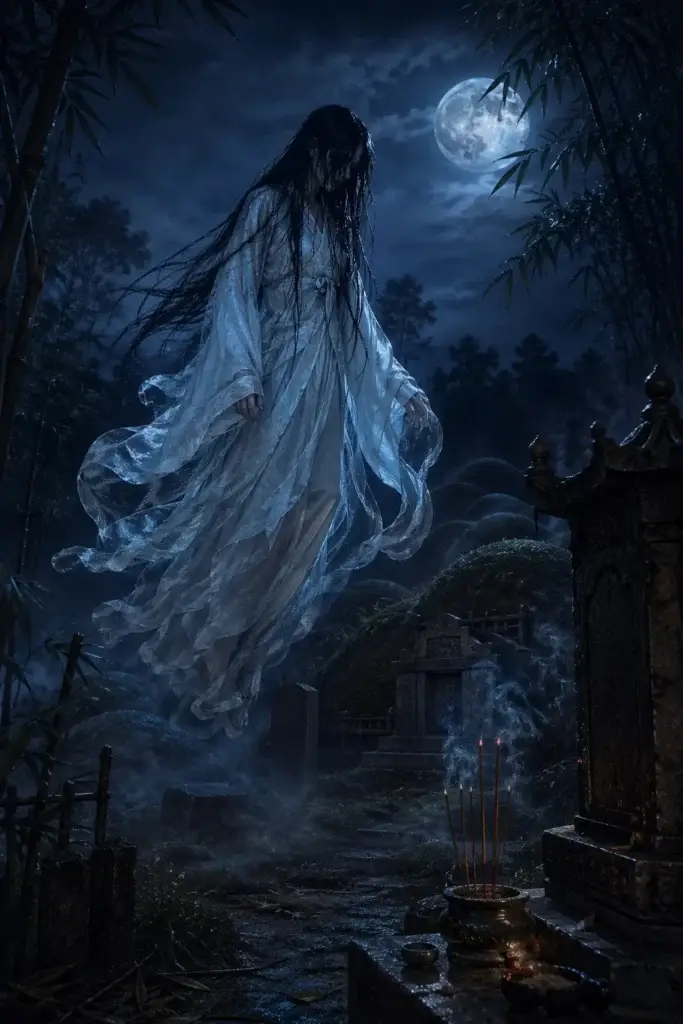
Wutou-gui, also rendered in transcription as wutou gui, is the headless spirit of a beheaded person in Chinese folk tradition. It wanders aimlessly, sometimes carrying its own head under its arm, and at night approaches passers-by with the same recurring question about its head.
Unlike, for example, the Shuigui, the Wutou-gui knows no substitute-victim motif: its effect is more unsettling and frightening through its nocturnal appearance than deliberately deadly. The legend was fed by the frequent, often publicly carried out beheading punishments in Chinese history.
Type: Headless spirit of a beheaded person
Origin: Chinese folk belief in the context of historical beheading punishments
Texts: Collections such as Pu Songling’s Liaozhai Zhiyi, along with folkloric studies
Period: Folk tradition in the context of historical beheading punishments, continuing to this day
Appearance: headless spirit, wandering aimlessly, sometimes carrying its own head

Historical Background
Period of the Texts
The legend arose in the context of the frequent, often publicly carried out beheading punishments in Chinese history and continues to be passed down to this day.
Area of Diffusion
The entire Chinese cultural sphere.
Sources
Means: Attested in collections of Chinese ghost stories such as Pu Songling’s Liaozhai Zhiyi as well as in modern horror film.
Name and variants
Chinese: wu means without, tou head, gui spirit: wutou gui literally means headless spirit. It refers to the spirits of people who died by beheading, through execution or accident.
Appearance and restlessness
Appearance
The Wutou-gui appears headless, sometimes carrying its own severed head under its arm. The missing or severed, carried head is the central motif, a symbol of the unatoned, incomplete death and the lost identity.
Effect
It wanders aimlessly and approaches passers-by at night with the question about its head; the search embodies the longing for wholeness and rest. It knows no substitute-victim motif; its effect is more unsettling and frightening than deliberately deadly.
Profile: Wutou-gui
The key aspects of the headless spirit at a glance.
Folk tradition in the context of the frequent, often public beheading punishments in Chinese history.
Nocturnal passers-by, whom it approaches with the question about its head.
Headless figure, wandering aimlessly, sometimes carrying its own head under its arm.
Frightening and haunting rather than deliberate killing; it knows no substitute-victim motif.
General spirit veneration, redemption and atonement rites as well as offerings during the Ghost Festival; the proper burial of the complete corpse brings peace.
Related to the Diao-si-gui, the Yuan-gui and the You-hun-ye-gui; unlike the Shuigui, it does not seek a substitute, only its own head.
Beheading and the integrity of the body
The name Wutou-gui combines wu, without, tou, head, and gui, spirit: it refers to the spirits of people who died by beheading, through execution or accident. The frequent, often publicly carried out beheading punishment in Chinese history fed these legends.
In Buddhist-Daoist terms, the Wutou-gui is a classic violently and incompletely deceased being; the mutilated body binds the soul, also with regard to the Confucian notion of the integrity of the body received from one’s parents.
The headless frightening figure of the Ghost Month
The Wutou-gui appears in collections of Chinese ghost stories and in horror film as a classic headless frightening figure and belongs to the fixed repertoire of the Ghost Month.
In religious studies, the Wutou-gui is a violently and incompletely deceased being whose mutilated body binds the soul. It combines the fear of violent death with the Confucian concern for the integrity of the body.
Burial and redemption rites
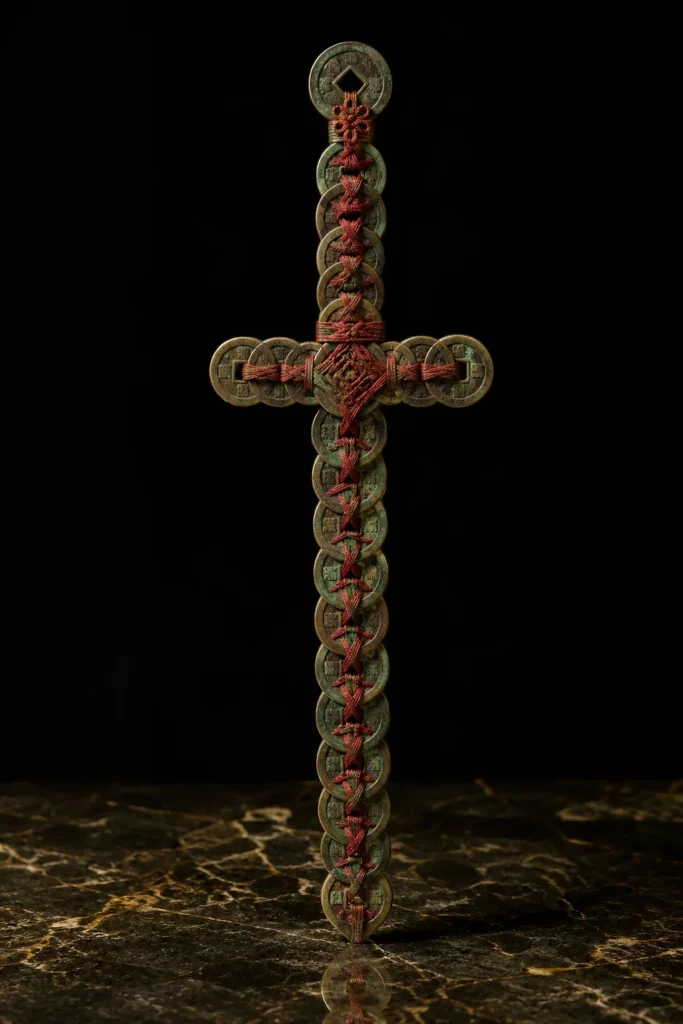
The focus is on general spirit veneration as well as redemption and atonement rites for those violently killed, along with offerings during the Ghost Festival, accompanied by incense burning. Holy water is regarded as a sign in dealing with the violently deceased, and the sound of consecrated bells as a protective sign against eerie spirits. The proper burial of the complete corpse is considered a way to bring the spirit to rest.
Headless figures compared
The Wutou-gui corresponds to the Irish Dullahan, the headless rider who carries his head, and the headless horseman of Western folklore as in Sleepy Hollow. Related are medieval motifs of beheaded figures continuing to move. Within China, it stands alongside the Diao-si-gui, the Yuan-gui and the You-hun-ye-gui as a violently deceased being, though its appearance is bound solely to the missing head.
Frequently asked questions about the Wutou-gui
Why does the Wutou-gui search for its head?
The severed head stands for the incomplete death; the search embodies the longing for wholeness and rest.
Is the Wutou-gui actively deadly?
Mostly not; its effect is primarily frightening and haunting, and it knows no substitute-victim motif as with the Shuigui.
Where does the legend come from?
From the context of the frequent, often public beheading punishments in Chinese history.
Further links
Further reading:
- China – all beings of Chinese tradition
- Diao-si-gui, Yuan-gui, You-hun-ye-gui – further violently deceased Gui spirits
- Shuigui – the drowned spirit compelled to find a substitute victim
- Holy water, incense burning, bells – traditional protective means
Literature (selection)
Further standard works in the bibliography.
As a beheaded spirit and China’s headless spirit, the Wutou-gui remains a haunting figure of dread: not a substitute-victim hunter like other gui, but an apparition that seeks only its own lost head.