Hospodáříček, the little house lord of Bohemia
By Ralf Ittermann · last reviewed on
The Hospodáříček is a spirit of the West Slavic tradition.
The little house lord who protects house, hearth and family.
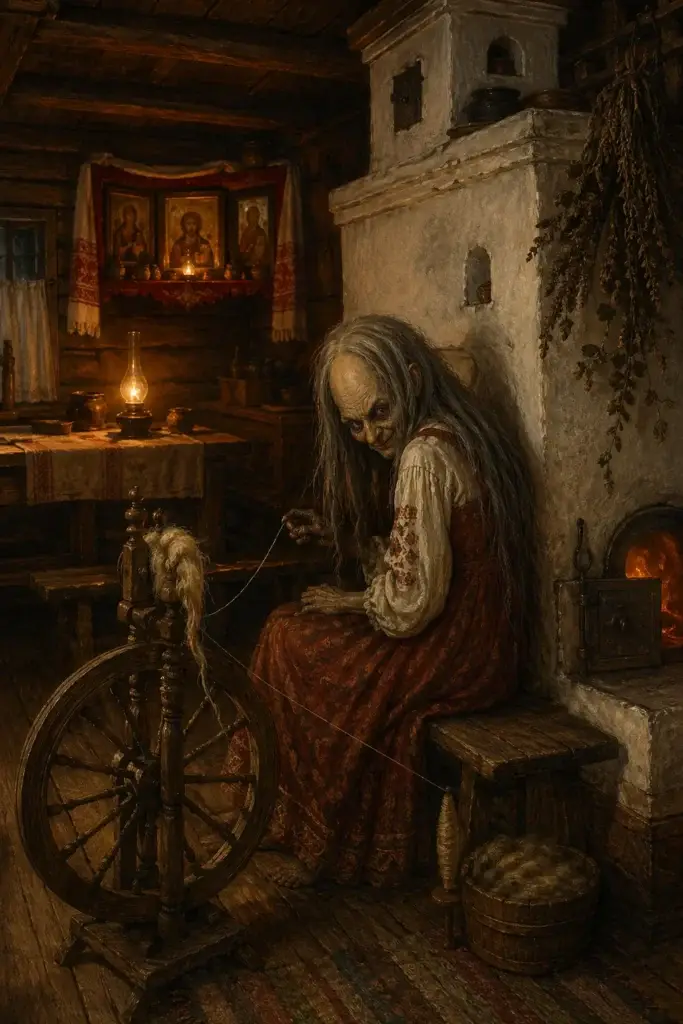
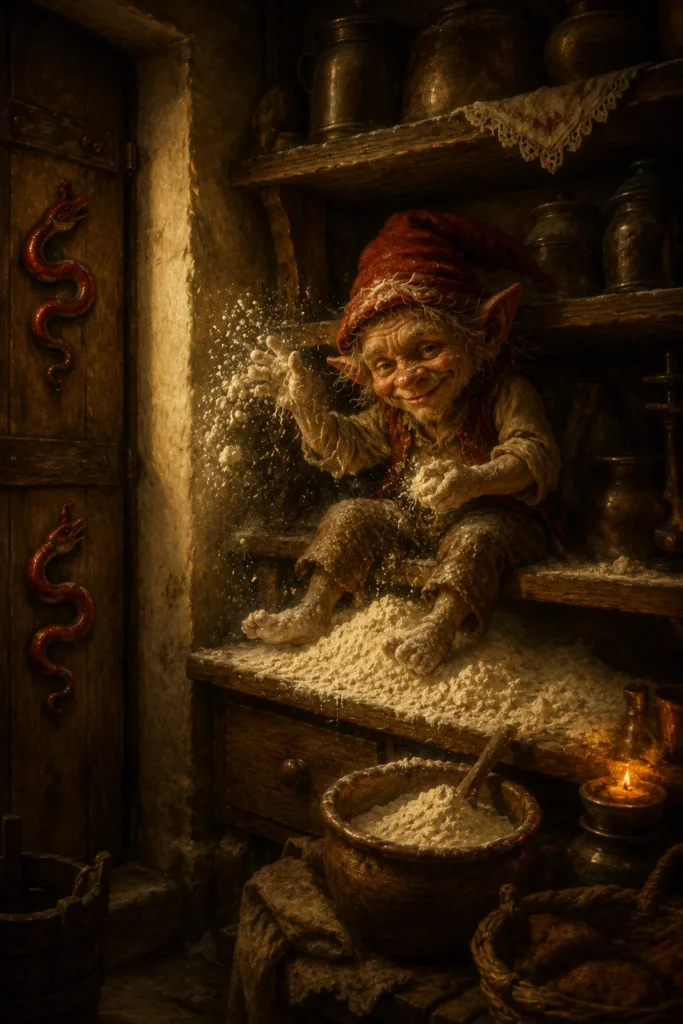
The Hospodáříček, the little house lord, is a Bohemian house spirit, a protective spirit of the house and hearth. It often appears as a house snake by the hearth or under the threshold, or as a small old man behind the stove.
It is the West Slavic, snake-shaped variant of the East Slavic Domovoi: the same benevolent type under another name. The house-snake belief has been documented since the 17th century and remains alive regionally to this day.
Type: Protective spirit of the house and hearth of the Domovoi type
Origin: Bohemian-Czech folk belief
Texts: Máchal and Váňa; earlier testimonies in Thietmar and Kosmas
Period: house-snake belief since the 17th century, regionally to this day
Appearance: house snake or small old man behind the stove

Textual history
Period of the Texts
The house-snake belief has been documented since the 17th century and remains alive regionally to this day; earlier testimonies on the Slavic house-god complex come from Thietmar and Kosmas with their penates.
Area of Diffusion
Bohemia and Moravia, along with Lusatia and Poland: the West Slavic region of house-snake belief.
Sources
Well documented: the standard works of Máchal and Váňa, as well as Moszyński’s Kultura ludowa Słowian.
Name and variants
Czech: hospodář means house lord or host, from proto-Slavic gospodi, lord of the guests. The diminutive Hospodáříček means little house lord.
Being and effect
Appearance
Both forms are attested: a house snake, usually a grass snake or Aesculapian snake, under the threshold or by the hearth, and a small old man behind the stove, resembling a deceased grandfather. The house-snake motif is a strong pan-Slavic motif.
Effect
The Hospodáříček is a benevolent protector of house, hearth, family and livestock, and increases prosperity. Killing the house snake brings misfortune and death: if the snake dies, the house lord must die too.
Profile: Hospodáříček
The key aspects of the Bohemian house spirit at a glance.
West Slavic, snake-shaped variant of the East Slavic Domovoi type; part of the Slavic house-god complex.
House, hearth, family and livestock: the Hospodáříček protects the homestead and increases the prosperity of its inhabitants.
House snake, usually a grass snake or Aesculapian snake, under the threshold or by the hearth; alongside it a small old man behind the stove.
Pure protective spirit: it safeguards house and hearth; danger arises only if it is harmed, for example by killing the snake.
Respect and care for the hearth, a bowl of milk for the house snake at the threshold, wave and snake patterns in the fresh hearth plaster.
From house lord to house snake: the Domovoi legacy
The name already tells the story: hospodář is the house lord or host, from Proto-Slavic gospodi, lord of guests, and the diminutive turns it into the little house lord, the invisible co-inhabitant of the homestead. Earlier evidence for the Slavic house-god complex is provided by Thietmar and Cosmas with their penates.
The belief in the house snake itself is documented from the 17th century onward and remains regionally alive to this day: the snake beneath the threshold is regarded as the embodiment of the house spirit, and its wellbeing is tied to the wellbeing of the house. The Hospodáříček is thus the West Slavic, snake-shaped variant of the East Slavic Domovoi, not a second, separate being.
Folk piety and classification
The Hospodáříček is a firmly established part of Bohemian folk piety; neopagan-esoteric amulets today blur the terms Domovoi and Hospodáříček.
From a religious-studies perspective, the Hospodáříček is a pure protective spirit; danger arises only if it is harmed, for example by killing the snake, not from the being itself. Three clarifications: it should not be confused with the aitvaras-related Šotek or Rarášek, which is a different type. Domovoi and Hospodáříček are not two beings but the same type under East and West Slavic names. And the notion that the snake drinks milk is a folkloric rationalisation of the grass snake at the cowshed.
Milk bowl and snake pattern
Dealing with the Hospodáříček is a matter of care, not warding off: it involves respect and tending to the hearth, along with a bowl of milk for the house snake at the threshold. Women drew wave or snake patterns into the fresh hearth plaster, inscribing the presence of the house spirit into the centre of the home. Whoever harms or kills the snake reverses the relationship: the protective spirit then brings misfortune and death.
Domovoi, Žaltys and the house snakes
Frequently asked questions about the Hospodáříček
What is the Hospodáříček?
A Bohemian house spirit and protective spirit of the hearth, often depicted as a house snake or a little man behind the stove.
What happens if the house snake is killed?
It brings misfortune and death; if the snake dies, the house lord must die.
Is it the same as the Domovoi?
Yes, at its core. It is the same type under East and West Slavic names.
Further links
Further reading:
- Slavic – all beings of the Slavic tradition
- Domovoi – the East Slavic house spirit of the same type
- Žaltys, Šotek – related beings and ones to distinguish
- Salt, Amulet, Smoke cleansing – traditional protective means
- Protection Compass – protective means at a glance
Literature (selection)
Further standard works in the bibliography.
As a Bohemian house spirit and as a house snake at the hearth, the Hospodáříček embodies the friendliest form of Slavic house belief: a little house lord to be approached with a bowl of milk, not with protective charms.