Ceffyl Dŵr and the vow of silence for its riders
By Ralf Ittermann · last reviewed on
Ceffyl Dwr is a demon of Celtic (Welsh) tradition.
Deadly in North Wales, often helpful and warning in South Wales. The tradition binds its riders to a vow of silence, its nature shifting between menace and warning depending on the region.
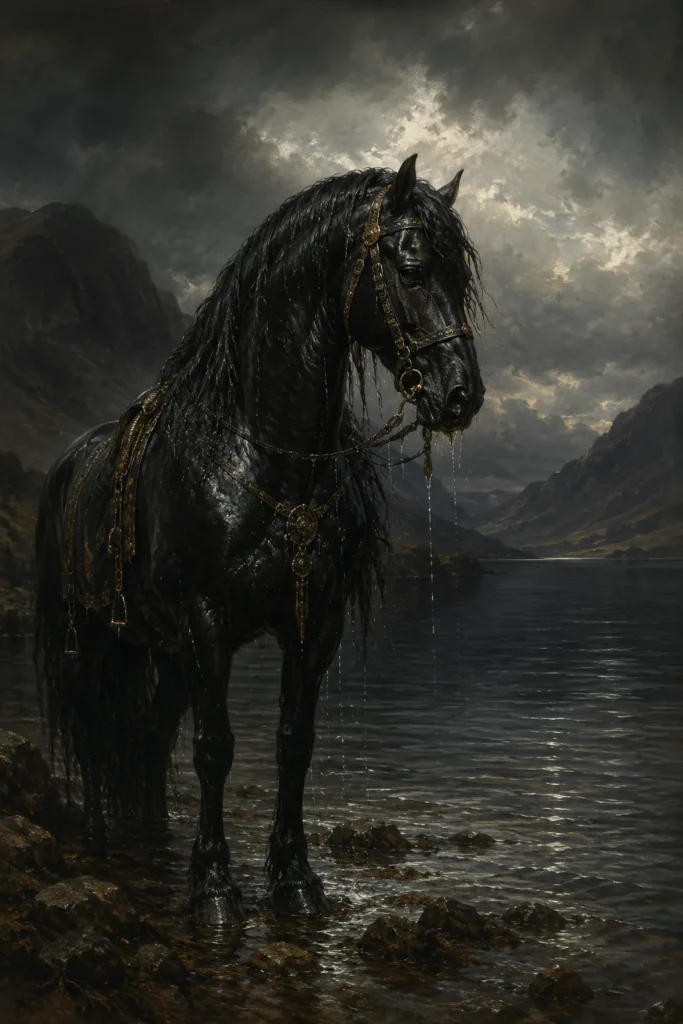
The Ceffyl Dŵr is the water horse of the Welsh mountains: it lures tired travellers, carries them into the air and lets them fall, or drags them into the water.
Regionally divided: in North Wales sinister, in South Wales often a shining horse that warns and leads safely.
Type: water horse
Origin: Welsh legendary tradition
Texts: Owen 1887, Trevelyan 1909
Period: since the late 19th century
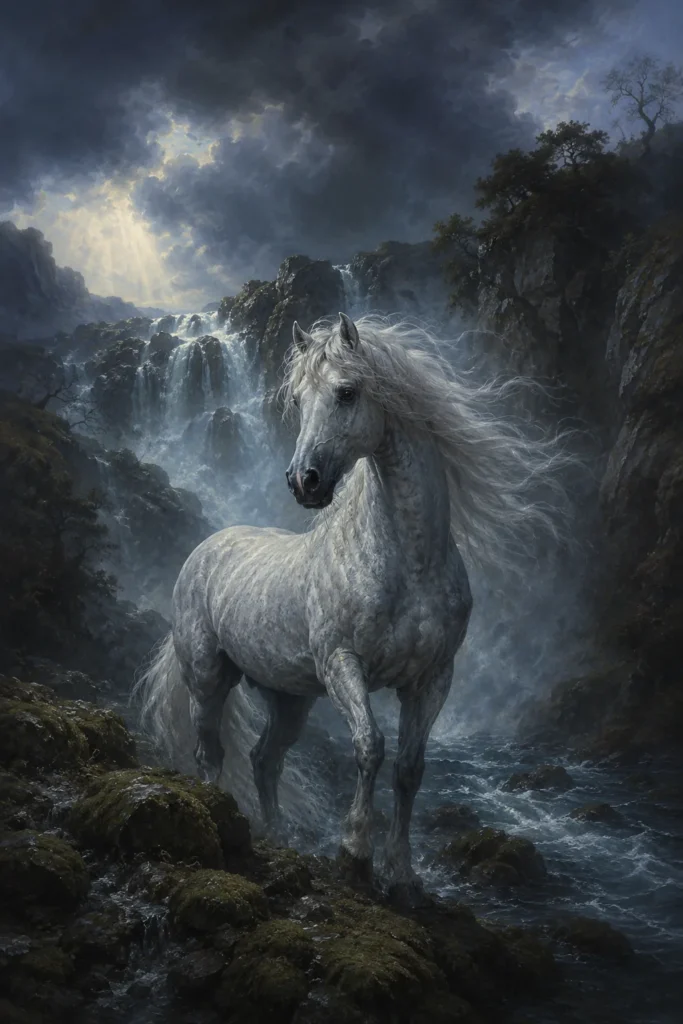
Appearance: grey or black horse with a white mane
Context of Tradition
Period of the Texts
Recorded in writing since the late 19th century by Owen and Trevelyan.
Area of Diffusion
Wales: mountain lakes, waterfalls and coasts, varying by region.
Sources
Sources: regional collections, above all Owen 1887 and Trevelyan 1909.
Name and variants
Welsh: Ceffyl Dŵr combines ceffyl, horse, and dŵr, water. Unlike the Scottish Kelpie, its tradition is regionally divided.
Form and transformation
Appearance
Usually a grey or black horse with a white mane, on the coast with backward-turned hooves.
Effect
It lures tired wanderers, rises into the air and dissolves into mist, or drags them into the water. In South Wales it warns of flooding.
Profile: Ceffyl Dŵr
Characteristics of the Welsh water horse at a glance.
Welsh legendary tradition, collected by Owen 1887 and Trevelyan 1909.
Tired travellers at waterfalls and mountain lakes during thunderstorms.
Grey or black horse with a white mane, backward-turned hooves.
Fall or being dragged under in the north, warning and guidance in the south.
Do not mount it, avoid lone horses, stay silent in the saddle.
Kelpie and Each-uisge, its closest relatives.
The parson, the sexton and the rule of silence
Well known is the tale of the Honddu: it carries a tired man all the way to the Towy near Carmarthen and brings him back battered.
Clergymen ride it without harm: in the tale of the parson and the sexton, the horse throws off the boastful sexton but carries the silent parson safely home.
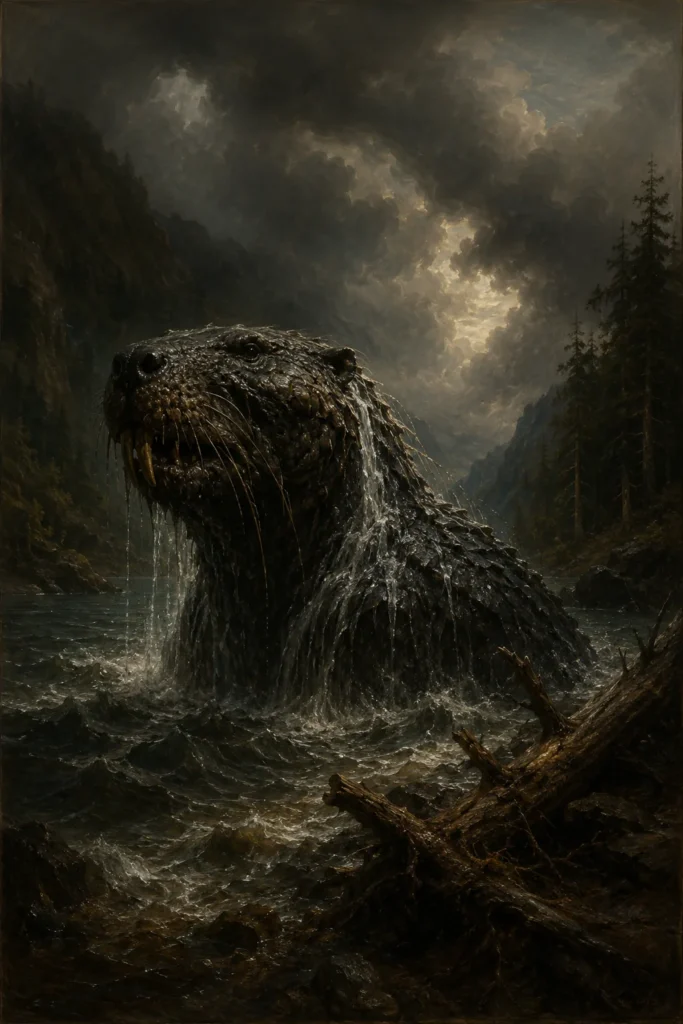
Water legend alongside the Afanc
Silence and avoidance instead of a bridle
Water horses of the Celtic world
The Ceffyl Dŵr belongs to the water horse type: its counterpart is the Scottish Kelpie, along with the more dangerous Each-uisge. Its horse form distinguishes it from the Afanc.
Frequently asked questions about the Ceffyl Dŵr
What is the Ceffyl Dŵr?
A Welsh water horse that lures tired travellers and then lets them fall or drags them into the water.
Is it always evil?
No: malevolent in North Wales, often harmless to helpful in South Wales.
Literature (selection)
Further standard works in the bibliography.
Anyone searching for the Ceffyl Dwr water horse finds a Welsh water horse: enticing to travellers, deadly in North Wales, often a warning helper in South Wales.