Mistletoe – Protective Plant Against Demons
By Ralf Ittermann · last reviewed on
Mistletoe does not grow from the earth but on the branches of other trees, without its own root contact to the ground. This special position between tree and sky made it a plant of particular significance in almost all European cultures: it remained green while its host tree stood bare in winter, seeming to break through the ordinary course of the year.
From the Druids, who according to Pliny harvested it with a golden sickle, to the rural custom of hanging mistletoe sprigs over doors and stables, a long tradition runs through which the plant is credited with a power against demons and harmful forces.
Mistletoe is regarded in folk belief as a protective plant against demons.
Quick Overview
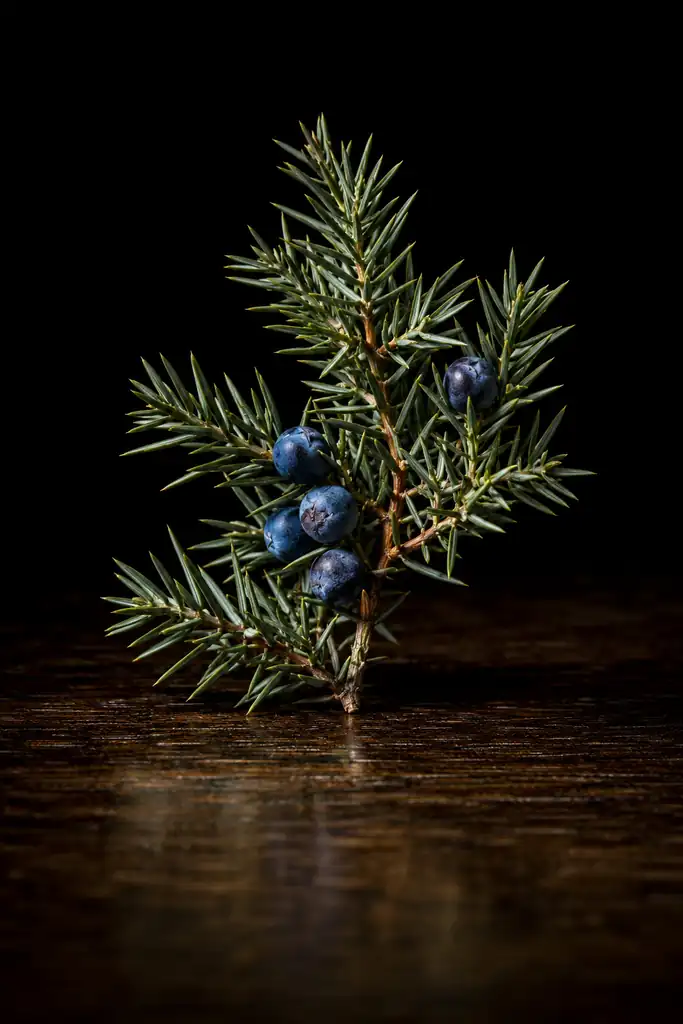
Mistletoe (Viscum album) is an evergreen hemiparasite that grows on deciduous and coniferous trees, forming spherical, yellow-green clusters with white berries. Since it neither roots in the soil nor sheds its foliage with the seasons, it appeared to people of earlier times as a plant existing between worlds.
In folk belief, this in-between status is the reason for its protective power: as a plant rooted at no fixed place, it was thought to deny demons and wandering spirits a firm point of attack.
Origin and Tradition
The best-known source on mistletoe comes from the Roman scholar Pliny the Elder. He reports that the Druids of Gaul revered mistletoe, especially when it grew on an oak, as the most sacred plant. A priest dressed in white would cut it on the sixth day of the moon with a golden sickle, while a second priest caught the branches in a white cloth so that they would not touch the ground. Contact with iron and earth was thought to diminish its power.
In German-speaking and Northern European folk belief, mistletoe became detached from the Celtic priestly ritual and turned into a rural household remedy: a sprig hung above the door lintel or in the stable was meant to protect house and livestock from lightning strikes, fire, witchcraft and demonic influence. Regionally, the name ‘Donnerbesen’ (thunder broom) is associated with mistletoe, though in other areas this name also refers to tuft-like branch deformities on trees caused by fungal infection; both phenomena were partly conflated and partly deliberately distinguished in tradition.
At the winter solstice and during the Yule festival of the Nordic countries, hanging a mistletoe sprig in the house was an established custom. This tradition survives in the present-day Christmas custom of kissing under the mistletoe, whose origin lies in the idea that under a protective sign no quarrel or enmity could be tolerated.
Operating Principle According to Tradition
In tradition, mistletoe is regarded as a plant without a fixed place: it does not root in the soil but lives off the tree that carries it, and remains green while the rest of nature rests in winter. This unnatural quality was interpreted as a sign of a special power standing outside the ordinary order.
As with other protective plants of tradition, the principle applies: whatever itself stands between worlds becomes an effective mediator against beings that likewise operate at boundaries and transitions, such as nocturnal demons and wandering spirits. The Druids’ ritual prohibition against iron and contact with the earth points in the same direction: the plant’s power was meant to be weakened by nothing earthly or metallic.
Cross-Cultural Distribution
Besides the Celtic tradition of the Druids, Norse mythology also knows mistletoe as a special plant. In the story of the god Baldr, mistletoe is the only plant that had not sworn an oath not to harm him, and it therefore becomes the sole weapon capable of wounding him. This story underscores the plant’s special status outside all ordinary bonds.
In England and much of Northern Europe, the winter custom of hanging mistletoe sprigs in the house remains alive today, although the original idea of protection has receded behind the custom of love and good fortune. In the Alpine region, by contrast, the older protective function over door and stable was retained more strongly.
What It Is Used Against
At the centre of the tradition stands protection against demons and wandering spirits, which were considered especially threatening during the dark winter months. Mistletoe was also used against lightning strikes and fire when hung on the ridge or over the stable entrance, as well as against witchcraft directed at house and livestock.
In some regions, it is additionally credited with a warding effect against the evil eye. The Protection Compass classifies mistletoe, alongside plants such as juniper and rowan, according to the types of beings against which it is attested in the sources.
Application and Limits
Traditionally, mistletoe was cut around the winter solstice or at the Yule festival and fastened as a whole sprig above the front door, the stable entrance or in the living room. Replacing the sprig annually at the same time was considered common practice to maintain its protective effect throughout the year.
It should be noted that mistletoe berries are poisonous; careless handling, for example in households with small children or animals, should accordingly be avoided. A limitation of the tradition is also that mistletoe alone was rarely considered sufficient. In rural practice, it was combined with other means such as salt, iron on the door fitting, or the recitation of protective prayers.
Literature (selection)
Related key terms: mistletoe demon warding thunder broom yule custom mistletoe sprig.
iWell Guard and Protective Traditions
In tradition, mistletoe represents a power that submits to no fixed order, neither to the soil nor to the course of the year. This very independence, a protection that is not bound to a place but can be carried along, is taken up by the concept of the iWell Guard.
What earlier generations sought to achieve with the sprig above the door, protection effective throughout the whole year, the pendant transfers to the individual person. The form has changed, but the underlying idea of drawing a boundary remains.
Personal experiences may vary. Not a medical device. No promise of healing.