iWell Guard

Huayra-tata, the Father Wind of the Altiplano

Huayra-tata is a god of the Aymara tradition of the Altiplano.

Lord over winds and whirlwinds, though barely documented.

GodAymara

Table of Contents

Huayra-tata, the Father Wind of the Andes
Huayra-tata

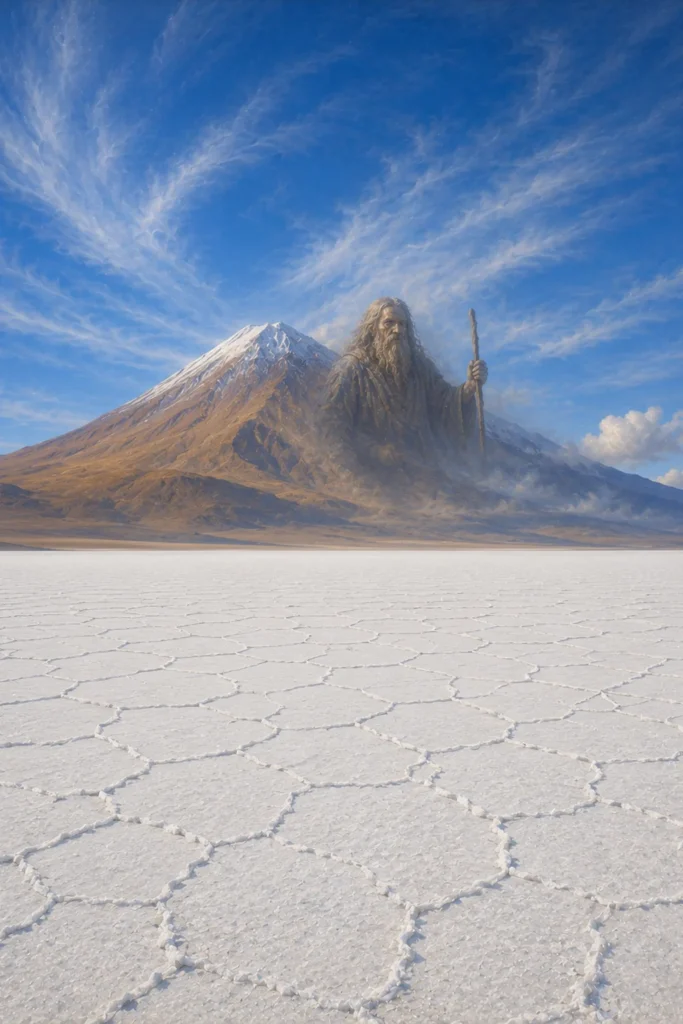
Huayra-tata, literally Father Wind, is a wind deity attributed to the Aymara of the Altiplano. He is held to be the lord over winds, gusts and whirlwinds, manifesting himself in the whirlwind.

To be honest, and this matters: as a named deity, Huayra-tata is only weakly documented. There is no colonial primary source, and his online presence is heavily distorted by car marketing. The only reliable element is the word itself: wayra, wind, and tata, father, both documented in colonial sources.

At a glance: Huayra-tata

Type: Attributed wind deity, lord over winds and whirlwinds
Origin: Andean folk belief; the word documented in colonial sources, the deity only secondarily
Texts: Bertonio’s Aymara vocabulary of 1612 for the word, otherwise secondary and tertiary sources
Period: word documented in colonial times, deity only in modern literature
Appearance: secondarily described as a two-headed figure entwined with snakes

Origin and sources

Period of the Texts

The word is documented in colonial sources, among others by Ludovico Bertonio in 1612; the deity itself appears only in secondary and tertiary texts of the modern era.

Area of Diffusion

The Altiplano and the Lake Titicaca region, among both Aymara and Quechua speakers; the linguistic assignment of the word varies between the two languages.

Sources

Very weak for the deity: no colonial primary source, no reliable religious-studies monograph; the only secure element is the word core wayra tata.

Name and variants

Quechua and Aymara: wayra or huayra means wind or air, documented in colonial sources among others by Ludovico Bertonio in 1612; tata means father or lord. Huayra-tata literally means Father Wind. The word components are genuine and documented; the linguistic assignment varies between Quechua and Aymara.

Description

Appearance

A secure description of his appearance is lacking. A single secondary source, Balaji Mundkur, describes Huayra-tata as human-shaped, with two heads and entwined with snakes; this is not independently confirmed. The connection to the whirlwind is likewise only weakly documented.

Effect

Huayra-tata is held to be the lord over winds, gusts and snowstorms, manifesting himself in the whirlwind. The widespread story that he lifts water from Lake Titicaca and lets it fall as rain upon Pachamama appears chiefly in popular and marketing texts and is unsuitable as evidence.

Profile: Huayra-tata

The most important aspects of the Father Wind at a glance.

Cultural Context

Andean folk belief of the Altiplano; the word core is secured through colonial sources, whereas the elaborated deity is a product of secondary and modern texts.

Relates To

Winds, gusts and whirlwinds of the highlands; in modern Bolivian educational materials the wind is occasionally ritually addressed as Waira Tata.

Depiction

Only secondarily transmitted: human-shaped, with two heads and entwined with snakes, according to a single, not independently confirmed source.

Sphere of Influence

Lord over winds, gusts and snowstorms, manifesting in the whirlwind; the Titicaca rain story stems from popular texts.

Practice

No independently documented cult of his own; what is actually documented are general Aymara rites such as the Challa, a libation offering, and invocations of Tata Inti and Pacha Mama.

Comparables

Other Andean whirlwind spirits and the dyad of Father Sky and Mother Earth; the pairing with Pachamama is not solidly documented.

Wayra, tata, and the missing primary source

The word components are genuine: wayra, wind or air, is at home in both Quechua and Aymara and is documented in colonial sources, among others in Ludovico Bertonio’s Aymara vocabulary of 1612; tata means father or lord. Huayra-tata thus literally means Father Wind, and its linguistic assignment varies between Quechua and Aymara.

However, for an independent deity of this name colonial primary sources are lacking; the evidence in circulation is secondary and tertiary. Huayra-tata thus stands as an example of a figure whose linguistic core is secure, but whose religious elaboration only becomes tangible in modern literature.

Outshone by a sports car: reception and classification

Today’s fame comes mainly from the Pagani Huayra sports car and an older racing car. The often-cited claim that Aymara legends told of him originates from marketing, not from an ethnographic source, and has overshadowed the thin religious-studies basis in the media; no reliable monograph on this specific deity exists.

From a religious-studies perspective, Huayra-tata is barely documented as a deity in any serious sense; only the word core Wayra Tata is confirmed. Important clarifications: the Titicaca and Pachamama story is not supported by primary sources; the iconography with two heads and snakes rests on a single secondary source; and most freely available facts stem from marketing texts.

Challa and the ritual address of the wind

A specific, documented cult practice for Huayra-tata cannot be found. What is actually documented are general Aymara rites such as the Challa, a libation offering, and the invocation of Tata Inti and Pacha Mama, in which modern Bolivian educational materials occasionally also address the wind as Waira Tata. This attests to a ritual address of the wind, but not an independent, historically grown Huayra-tata cult.

Wind fathers and whirlwinds compared

Huayra-tata stands alongside other Andean whirlwind spirits and within the dyad of Father Sky and Mother Earth. He is popularly depicted as the consort of the earth mother Pachamama, though this specific pairing is not solidly documented. As a typological distant parallel of a wind father outside the Andes, the Indian wind god Vayu may be mentioned.

Frequently asked questions about Huayra-tata

What does Huayra-tata mean?

Father Wind, from wayra, wind, and tata, father; the word is documented from the colonial period.

Is Huayra-tata a well-documented deity?

No. As a deity he is barely documented; a colonial primary source is lacking, and much of the material stems from marketing.

Is he the consort of Pachamama?

This is a popular depiction, but it is not solidly documented.

Further links

Recommended internal links:

Literature (selection)

A selection of key sources and studies:
  • Bertonio, Ludovico: Vocabulario de la lengua aymara. Juli 1612.
  • Mundkur, Balaji: The Cult of the Serpent. Albany 1983.

Further standard works in the bibliography.

Anyone searching for terms like Father Wind Andes or Aymara wind deity finds mostly marketing material; the only robust element for Huayra-tata is the colonially documented word core. This very honesty is part of a serious portrayal of the Altiplano wind.

Classification & Protection

IIILEVEL
The Protection Compass assigns this being to influence level III, Burdensome influence.

Against its influence, cross-cultural tradition names these protective means:

Compare in the Protection Compass →

Recommended protective means

iWell Guard

The simplest protective means in this collection: 41 layers of fine gold 999, platinum, silver and silicon, manufactured in Ruhla, Thuringia. It requires no activation, is bound to no person, and is effective within a radius of around 50 meters, even without being worn.

All protective means at a glance →