Alu, night demon of the incantation texts
By Ralf Ittermann · last reviewed on
The Alu is a demon of the Mesopotamian tradition.
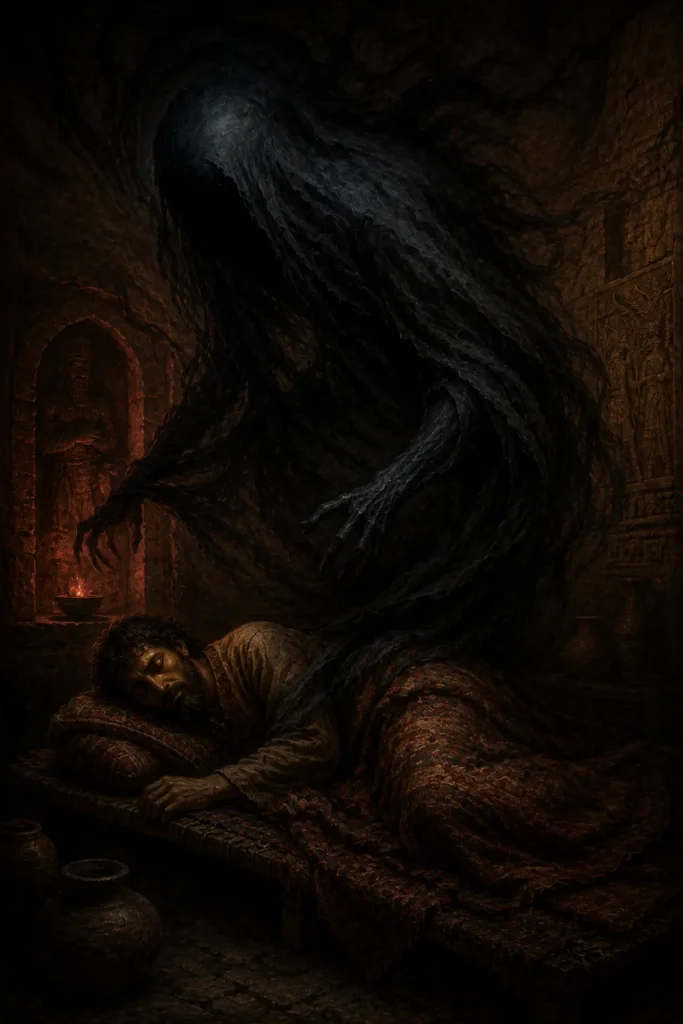
The night demon that covers the sleeper like a garment. The incantation texts of Mesopotamia describe Alu as a nocturnal threat against which dedicated rituals helped.
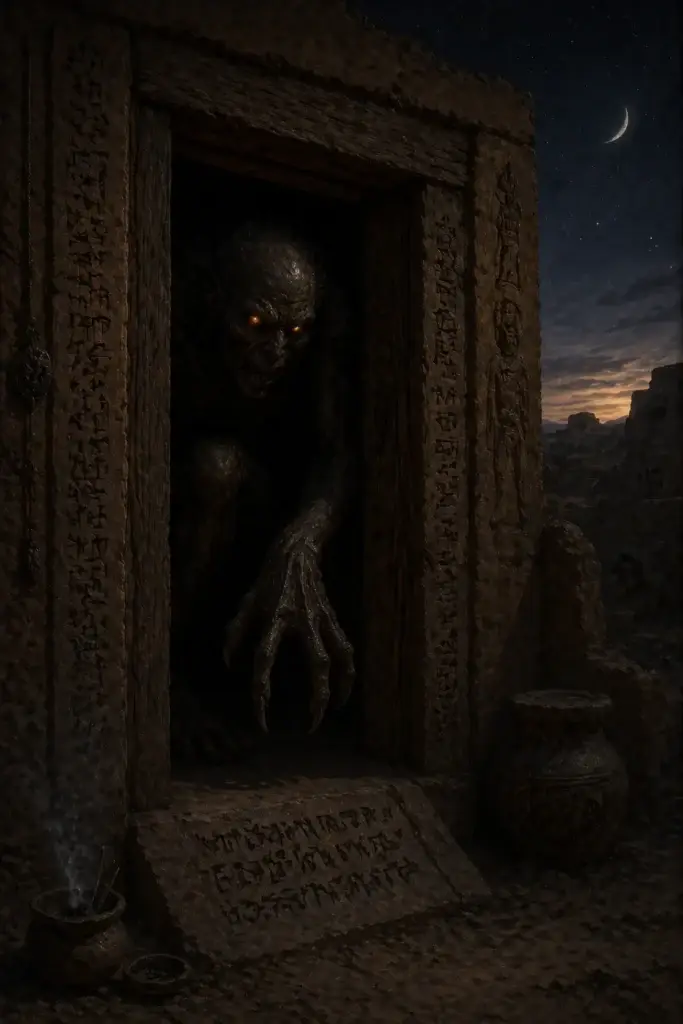
The Alu is a Mesopotamian night and disease demon, a particularly malicious representative of the Utukku class. It lurks at night, covers the sleeper like a garment, robs sleep and brings illness.
It is widely attested in the incantation literature of the 2nd and 1st millennia, above all in the series Utukku Lemnutu, the evil demons. There, the Alu belongs to the circle of the Seven, the most feared demonic figures of Babylonia and Assyria.
Type: Night and disease demon of the Utukku class
Origin: Sumero-Akkadian incantation tradition
Texts: Incantation series Utukku Lemnutu, incantation literature of the 2nd and 1st millennia
Period: 2nd to 1st millennium BCE
Appearance: shapeless or semi-formed, also depicted in a red garment in the series
Source context
Period of the Texts
Sumero-Akkadian, 2nd to 1st millennium BCE; the main evidence comes from the incantation literature of these periods.
Area of Diffusion
Babylonia and Assyria: the Alu is a firm part of the Mesopotamian belief in demons in both realms.
Sources
Well documented: the incantation series Utukku Lemnutu as well as the standard handbooks of Assyriology, from Thompson to Black and Green.
Name and variants
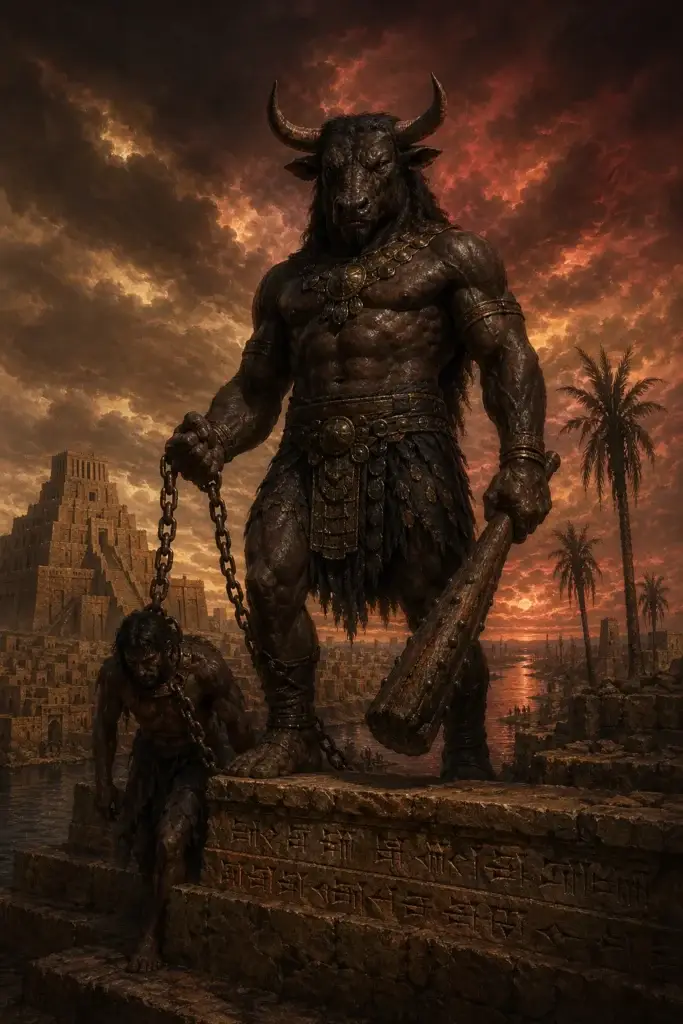
Akkadian: alu. One clarification is important: the evil Alu demon is not the same word as the protective spirit alad, which in Akkadian is called shedu and is part of the winged bull colossus. The similarity of the words is mere homophony.
Form and effect
Appearance
The Alu is often described as shapeless or semi-formed. The popular claim that it has no mouth, limbs or ears goes back to Thompson, who actually wrote: at times without mouth, limbs or ears, an occasional, not a defining trait. In the series Utukku Lemnutu it appears, among other things, in a red garment.
Effect
The Alu lurks at night and covers the sleeper like a garment. It robs sleep and is linked to illness, possession and coma; it is the specific evil representative of the Utukku class and belongs to the circle of the Seven.
Profile: Alu
The key aspects of the night demon at a glance.
Evil representative of the Utukku class within the Mesopotamian demon system, attested in the Sumero-Akkadian incantation literature.
Sleepers: the Alu comes at night, lies over the person and takes away their sleep and health.
Shapeless or semi-formed, occasionally described as having no mouth, limbs or ears; also depicted in a red garment in Utukku Lemnutu.
Sleep theft, illness, possession and coma; as a member of the circle of the Seven, one of the most feared figures of the night.
Incantations from the series Utukku Lemnutu, amulets, and the responsibility of the incantation priest, the Ashipu.
The Alu in incantation literature
The Alu is widely attested in the incantation literature of the 2nd and 1st millennia, above all in the series Utukku Lemnutu, the evil demons. It describes how the Alu covers the sleeper at night, and provides the rituals with which the incantation priest, the Ashipu, acted against it.
One confusion should be cleared up: the evil Alu demon has nothing to do with the protective spirit alad, which in Akkadian is called shedu and, as a winged bull colossus, guarded the palaces. The similarity of the words is mere homophony; in substance, the two figures stand on opposite sides of the Mesopotamian world of spirits.
Research and classification
The Alu is present chiefly in Assyriology and in overviews of Mesopotamian demons; a wide popular reception, as with Lamashtu or Pazuzu, did not occur.
From a religious-studies perspective, the Alu is a malicious night and disease demon. Three clarifications: the protective spirit alad is not the Alu demon. It is not always without mouth and limbs, that is only an occasional feature. And the equation of Alu with an epilepsy demon has been disproven; the interpretation as sleep paralysis is a modern reading, not an ancient statement.
Incantation and defence
Against the Alu, the incantations of the series Utukku Lemnutu were used, along with amulets as portable protection. The Ashipu, the incantation priest, was responsible, knowing and applying the traditional formulas. In this way the Alu stands as an example of the Mesopotamian model of demon protection: not improvised defence, but a regulated ritual expertise with its own priesthood.
The Alu among the Seven
The Alu is embedded in the Mesopotamian demon system alongside Utukku, Gallu and Rabisu, as well as the Lilu and Lilitu complex and Lamashtu. Within this structure it is the night specialist: where Lamashtu threatens mother and child and the Gallu reaches out from the underworld, the Alu seeks people in their sleep. Separate articles deal with Asag, Anzu and Ketev Meriri.
Frequently asked questions about the Alu
What is an Alu?
A Mesopotamian night and disease demon of the Utukku class that covers the sleeper like a garment, robs sleep and brings illness.
Is the Alu the same as the protective spirit alad?
No. These are different words; the similarity is mere homophony. The alad, Akkadian shedu, is a protective spirit, whereas the Alu is an evil demon.
Is it the epilepsy demon?
No, this equation has been disproven. The interpretation as sleep paralysis is also a modern reading, not a statement of the sources.
Further links
Further reading:
- Mesopotamia – all beings of the land between the rivers
- Utukku – the demon class to which the Alu belongs
- Gallu, Lamashtu – further demons of the system
- Amulet, Iron, Holy Water – traditional protective means
- Asag, Anzu, Ketev Meriri – further desert demons
Literature (selection)
Further standard works in the bibliography.
As a Mesopotamian night demon from the class of Utukku, the Alu represents the darkest hour of Babylonian everyday life: the moment when the sleeper is defenceless.