Marie Morgane, seductress of the Breton coastal caves
By Ralf Ittermann · last reviewed on
Marie Morgane is a spirit of Celtic (Breton) tradition.
She lures fishermen into the depths with song and beauty. The entry portrays her as a seductress of the Breton coastal caves, luring fishermen with song and beauty.
The Marie Morgane is the sea woman of the Breton coast: a beautiful water fairy who lures fishermen into the water with voice and beauty. Whoever follows her is dragged beneath the waves. Documented above all by Paul Sébillot, who from 1866 recorded accounts of Breton water fairies.
Type: Water fairy of the Breton coast
Origin: Breton legend cycle
Texts: Sébillot, Le Folklore de France
Period: mainly 19th century
Appearance: beautiful young woman, sometimes with a fish tail

Context of Tradition
Period of the Texts
Recorded in writing above all in the 19th century by Sébillot.
Area of Diffusion
Brittany, especially the northern coasts of Haute-Bretagne.
Sources
Well documented via Sébillot’s collection; dedicated German-language monographs are rare.
Name and variants
Breton: Marie Morgane, also Mari-Morgan, connects with mor, sea: born of the sea, Celtic Mori-gena. Related is the Irish Muirgen.
Form and allure
Appearance
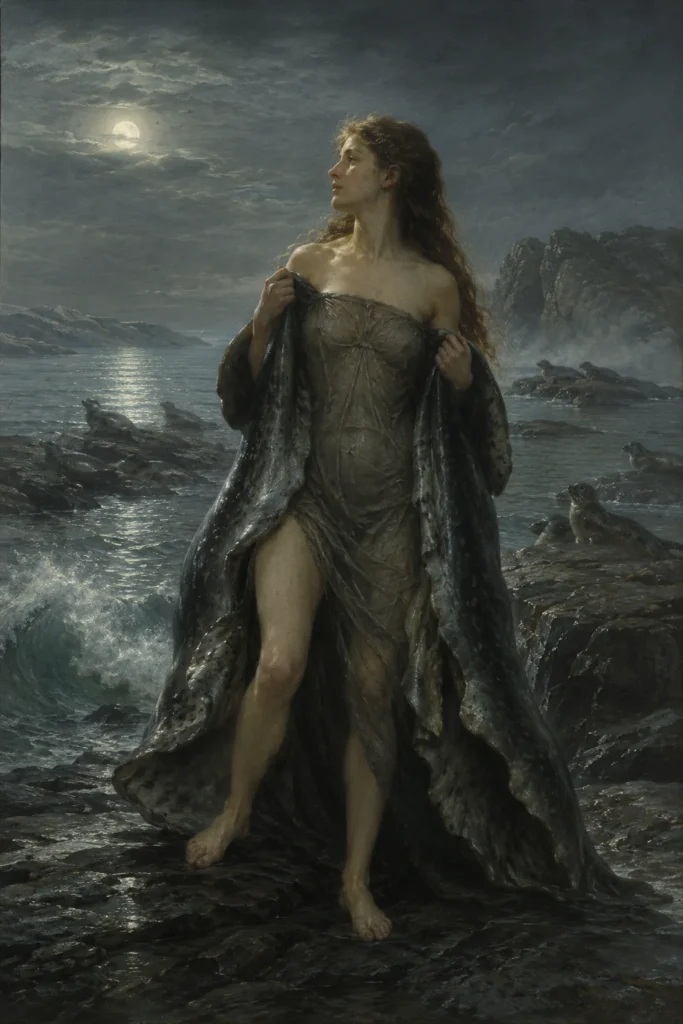
A beautiful young woman, sometimes with and sometimes without a fish tail, closer to a water fairy than to the mermaid. Comb and hair are symbols of allure.
Effect
She pursues fishermen with amorous advances; whoever follows her is drawn into the water and drowns.
Profile: Marie Morgane
The key characteristics of the Breton sea woman at a glance.
Breton legend cycle, collected by Sébillot since 1866.
Young fishermen and sailors of the Breton coast.
Beautiful young woman, sometimes with a fish tail, combing her hair.
Seduction and death by drowning at coastal caves.
Resist the allure, avoid coastal caves.
From sea birth to fairy of the coastal caves
Marie Morgane, also Mari-Morgan, connects with Breton mor, sea: born of the sea, Celtic Mori-gena. Sébillot collected accounts of water fairies of the northern coasts from 1866 onward. One branch leads to Wales, where Morgen is regarded as the ruler of Avalon.
Breton identity and a quiet warning
The Marie Morgane is a firm part of Breton identity, for instance in the legend of Vannes, and a living element of coastal storytelling. In religious-studies terms she is an ambivalent, Christian-overlaid water fairy: she explains drowning deaths and warns against seduction.
Avoidance rather than banishment
The source material on protective rituals is thin: the most effective protection is resisting the allure and avoiding the coastal caves. Holy water, amulets and consecrated bells are considered protective means.
Water fairies between Brittany and Avalon
Frequently asked questions about Marie Morgane
Does Marie Morgane have a fish tail?
Not necessarily. Sébillot often described her without a fish tail, closer to a water fairy than to the classic mermaid.
Literature (selection)
Further standard works in the bibliography.
Marie Morgane Brittany, as many search for her, remains above all a Breton sea woman: she lures fishermen away from the shore with song and beauty.