iWell Guard

Anchimayen, the lure fire in the service of the Kalku

Anchimayen is a spirit of Mapuche tradition.

A dead child as lure fire in the service of a sorcerer.

SpiritMapuche

Table of Contents

Anchimayen, spirit of Mapuche tradition
Anchimayen

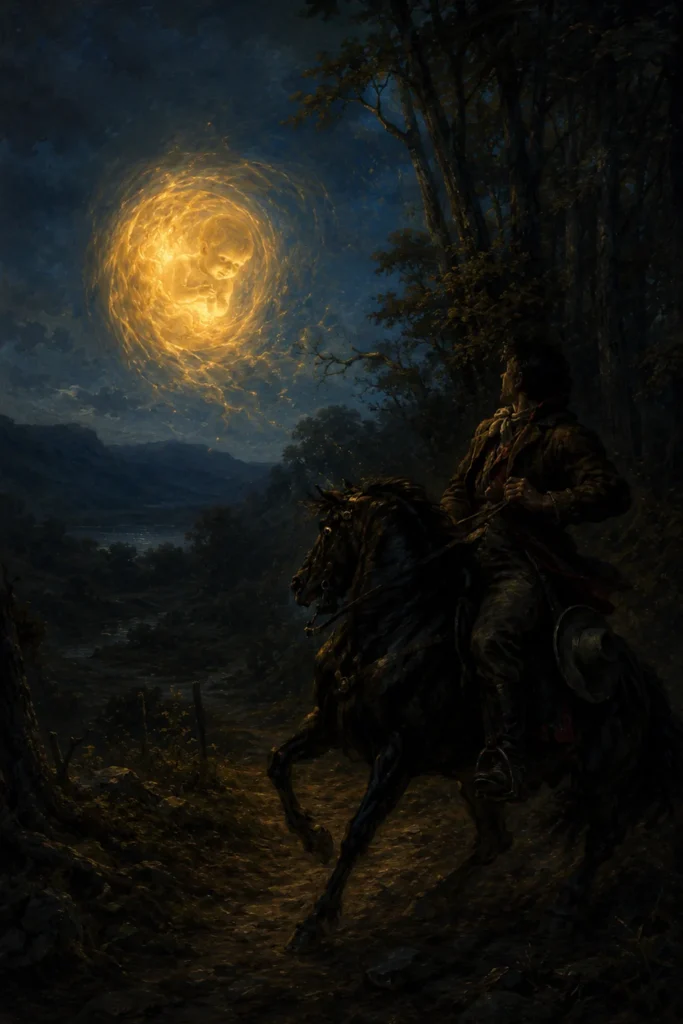
Anchimayen is a small servant spirit of the Mapuche who moves through dusk and night as a glowing child or a flying fireball. Created from the corpse of a deceased child, it serves a Kalku, an evil sorcerer, and inflicts harm on his behalf.

As a light orb it travels by night, frightening travellers and at times throwing them from their horse, similar to a will-o’-the-wisp, and leads astray children who follow the light to the edge of the forest.

At a glance: Anchimayen

Type: Servant spirit of a dead child in the service of a Kalku
Origin: Indigenous spirit world of the Mapuche of southern Chile and Argentina
Texts: Mapuche oral tradition, recorded in mythological surveys
Period: oral tradition down to the present
Appearance: glowing child or flying fireball

Context of tradition

Period of the Texts

Oral Mapuche tradition, recorded in mythological surveys and carried forward to the present, among other things in video games.

Area of Diffusion

The Mapuche regions of southern Chile and Argentina, especially settlements near forests, close to which the light is said to appear in the evening.

Sources

Thin but consistent: there is no single work devoted specifically to the Anchimayen, but the contextual literature on Mapuche religion, for instance by Latcham and Guevara, is solid.

Name and variants

Mapudungun: The name comes from Mapudungun, the language of the Mapuche; the Spanish form is Anchimallén.

Form and effect

Appearance

The glowing child and the flying fireball combine an image of innocence with a threat; the light at dusk is both lure and omen of misfortune.

Effect

As a light orb, the Anchimayen travels by night, frightening travellers and at times throwing them from their horse, similar to a will-o’-the-wisp, and leads children astray. As a tool of the Kalku, it carries out his evil will and causes illness.

Profile: Anchimayen

The key aspects of the light spirit at a glance.

Cultural Context

Element of the indigenous Mapuche spirit world, part of the wekufe complex of harmful spirit beings in the service of the Kalku.

Relates To

Children who follow the light into the forest, and nocturnal travellers whom it throws from their horse or leads astray.

Depiction

Glowing child or flying fireball, in which the shape of a child sometimes remains recognisable.

Sphere of Influence

Luring, frightening and illness on behalf of the Kalku: dangerous chiefly as a tool of another’s will.

Approach

The community’s vigilance, keeping children away from the nocturnal light, and the fight against the Kalku by the healing Machi.

Related

The Kalku, whom the Anchimayen serves, and the European Will-o’-the-wisp as a will-o’-the-wisp-like parallel.

From a child's corpse

The name comes from Mapudungun; the Spanish form is Anchimallén. According to tradition, the being is created from the corpse of a deceased child and placed at the service of a Kalku as a servant spirit.

The Anchimayen is firmly anchored in the indigenous Mapuche spirit world, the cosmos of the harmful wekufe. As a tool of the Kalku, it carries his evil will out into the night, bound to a master whom it does not serve of its own accord.

Reception alongside the Chonchon

The Anchimayen is present in modern treatments of Mapuche mythology, among other things in video games, in which the Kalku has it as a servant. Its reception is weaker than that of the related Chonchon.

From a religious-studies perspective, the Anchimayen is an element of the indigenous Mapuche spirit world: a servant spirit created from a child’s corpse in the service of the black-magic Kalku and part of the wekufe complex of harmful spirit beings. Functionally, it resembles a nocturnal lure light, yet remains firmly embedded in the Kalku and wekufe world of the Mapuche.

Vigilance rather than individual defence

In the cautionary tales, it is above all the vigilance of the community that protects against children following the light into the forest. Concrete, ritualised means of individual defence are only weakly attested for the Anchimayen; the actual protection lies rather in the fight against the Kalku behind it, carried out by the healing Machi. As a general defence on the nocturnal path, a protective candle is regarded as useful, its own light being set against the deceptive lure fire, together with a worn amulet as a protective sign and mugwort, as used by the Machi in dealing with the wekufe.

Will-o'-the-wisp and servant spirit compared

The Anchimayen is explicitly described as a will-o’-the-wisp-like being and thus corresponds to the European Will-o’-the-wisp, the nocturnal spirit light that lures travellers off their path. As a servant spirit created from a dead child under a sorcerer, it is also a direct parallel to the Malay Toyol, which likewise serves a living master, though as a thief rather than a lure-light. Within the Mapuche spirit world it stands alongside the related Chonchon and in the service of the Kalku.

Frequently asked questions about the Anchimayen

What is an Anchimayen?

A small servant spirit that appears as a glowing child or a ball of fire and serves a Kalku.

What does it arise from?

According to tradition, from the corpse of a deceased child.

Is it the same as a will-o’-the-wisp?

Functionally similar as a nocturnal lure-light, but embedded in the Kalku and wekufe world of the Mapuche.

Further links

Recommended internal links:

Literature (selection)

A selection of key sources and studies:
  • Latcham, Ricardo E.: La organización social y las creencias religiosas de los antiguos araucanos. Santiago 1924.
  • Guevara, Tomás: Las últimas familias i costumbres araucanas. Santiago 1913.

Further standard works in the bibliography.

Known as Anchimallén, the Anchimayen remains a servant of the Kalku who, appearing as a glowing child, roams Mapuche forests and leads children and travellers alike into danger with its light.

Classification & Protection

IIILEVEL
The Protection Compass assigns this being to influence level III, Burdensome influence.

Against its influence, cross-cultural tradition names these protective means:

Compare in the Protection Compass →

Recommended protective means

iWell Guard

The simplest protective means in this collection: 41 layers of fine gold 999, platinum, silver and silicon, manufactured in Ruhla, Thuringia. It requires no activation, is bound to no person, and is effective within a radius of around 50 meters, even without being worn.

All protective means at a glance →