Huayna Potosí, guardian over El Alto
By Ralf Ittermann · last reviewed on
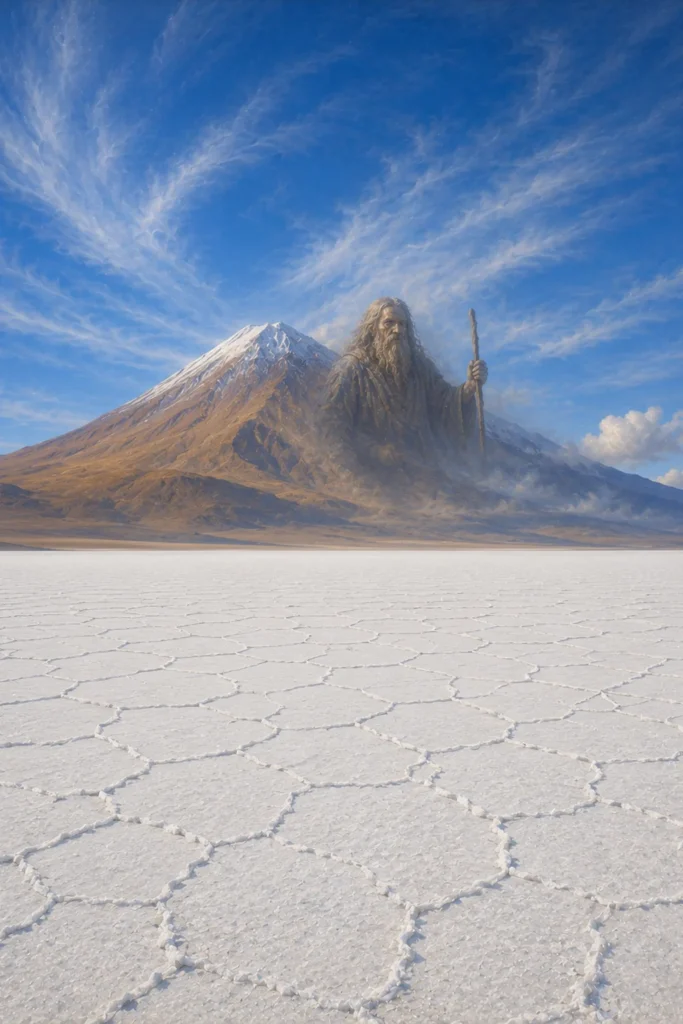
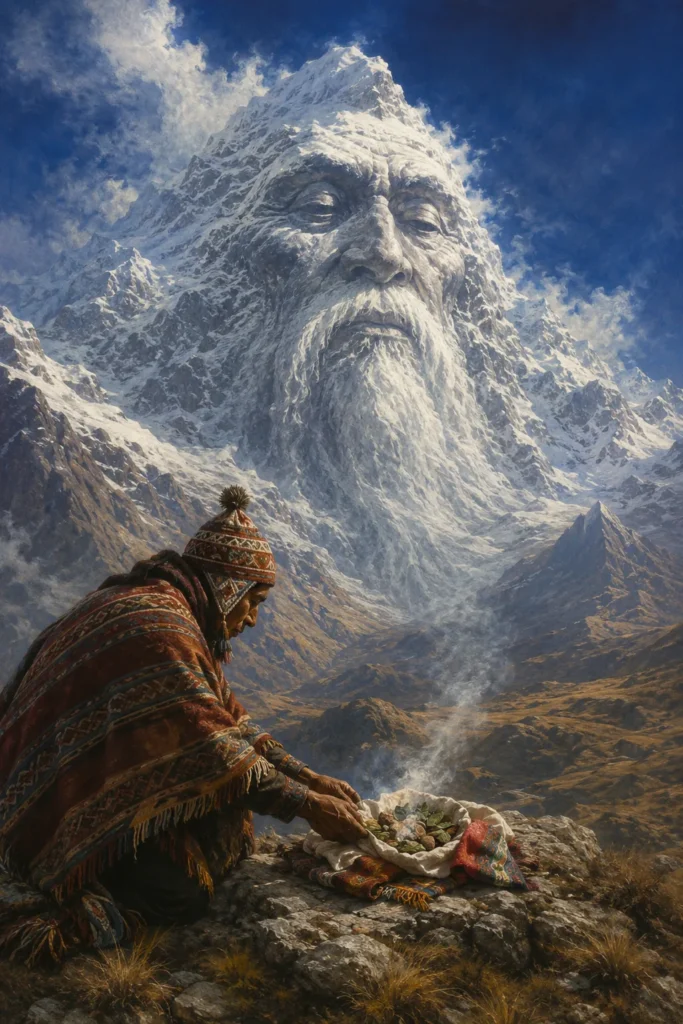
Huayna Potosí is a god of Aymara tradition.
The guardian mountain whose glacier supplies La Paz with water.
Huayna Potosí, often written without the accent as Huayna Potosi in maps and travel literature, is a mountain about 6088 metres high in the Cordillera Real, some 25 kilometres north of La Paz. Its Zongo Glacier feeds the water supply of the metropolis, and as the region’s Achachila it is regarded as a guardian mountain.
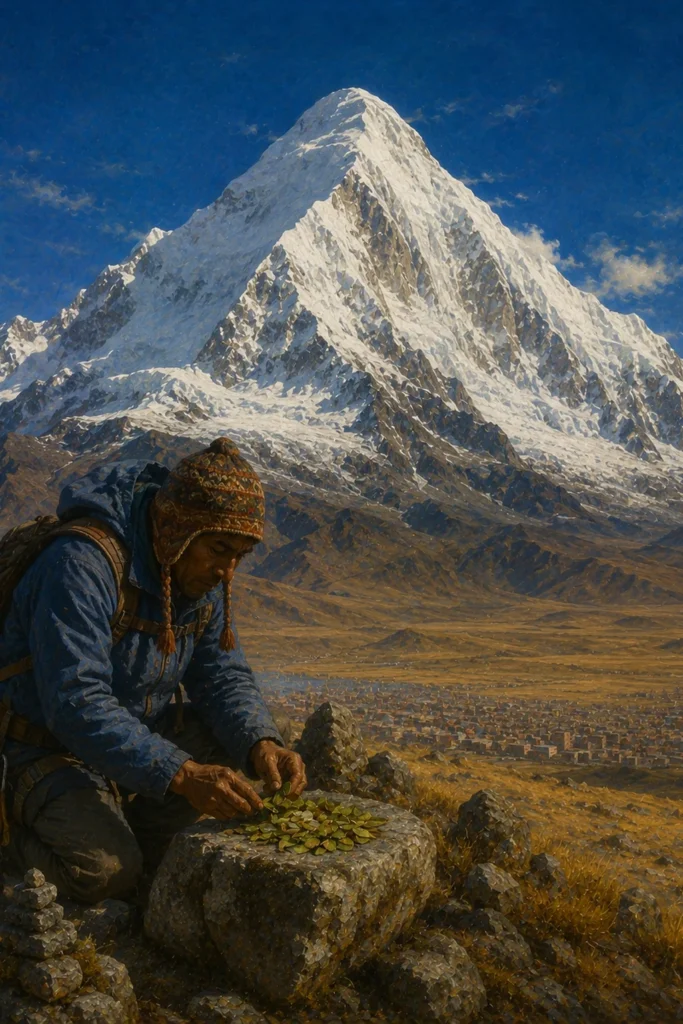
The mountain-specific cult tradition, however, is thin: what is well documented is the general Achachila cult of the Aymara, along with the coca offerings made by mountain guides before ascents. At the same time, the mountain is one of the most-climbed six-thousand-metre peaks in the world, which overlays the religious tradition with mountaineering folklore.
Type: Guardian mountain and Achachila of the Cordillera Real
Origin: Aymara region near La Paz, Bolivia
Texts: old Aymara name Caca-Aca recorded by Dienst in 1925, modern mountaineering folklore
Period: old name documented, Achachila cult continues to this day
Appearance: almost pyramidal ice peak with a west face roughly a thousand metres high
Source context
Period of the Texts
The old Aymara name Caca-Aca was documented by Rudolf Dienst in 1925; today’s tradition is strongly shaped by modern mountaineering folklore.
Area of Diffusion
The Cordillera Real near La Paz in Bolivia; the mountain’s silhouette dominates the high plateau of El Alto.
Sources
Thin on mountain-specific detail: the general Achachila cult is well documented, but a dedicated ethnography of offerings for this particular mountain is largely lacking.
Name and variants
Aymara and Quechua: wayna means young or youth, attested in both languages; according to the linguist Cerrón-Palomino, Potosí refers to the city or the Cerro Rico of Potosí, so the name means the young Potosí. There is also a documented old Aymara name, Caca-Aca, Qaqa Aka, from qaqa, grey rock.
Appearance
Appearance
Huayna Potosí has a distinctive, almost pyramidal ice peak with a west face roughly a thousand metres high. Its dominant silhouette above El Alto has made it the guardian mountain of the region.
Effect
Within the logic of the Achachila cult, it protects water, weather and prosperity; this becomes tangible in the role of the Zongo Glacier for La Paz’s water supply. For this particular mountain, however, the protective function has not been separately worked out ethnographically but is inferred from the general Achachila cult.
Profile: Huayna Potosí
The key aspects of the guardian mountain at a glance.
An Achachila of the Cordillera Real, following the Aymara pattern of ancestral mountains; its mountain-specific tradition is thinner than that of its great neighbours.
The La Paz region and the mountain guides who make coca offerings before ascents, the best-documented form of cult at this mountain.
Almost pyramidal ice peak with a west face roughly a thousand metres high and a dominant silhouette above the high plateau of El Alto.
Water, weather and prosperity, following the logic of the Achachila cult; its Zongo Glacier feeds the water supply of the metropolis.
General Aymara forms such as Challa, mesa and Despacho, as well as the llama offering Wilancha; the coca offerings of the mountain guides are documented as specific to this mountain.
The neighbouring Achachilas Illimani, Illampu and Sajama; in type it corresponds to the Quechua Apu.
Young Potosí and grey rock: the names
Wayna means young or youth, attested in both Quechua and Aymara; according to Cerrón-Palomino, Potosí refers to the city or the Cerro Rico of Potosí, so the name means the young Potosí. Alongside this stands a documented old Aymara name: Caca-Aca, Qaqa Aka, from qaqa, grey rock, recorded by Rudolf Dienst in 1925.
One confusion should be cleared up: there are two Bolivian mountains bearing this name. The famous climbing mountain measures 6088 metres; another Huayna Potosí near Turco reaches only 4969 metres.
Mountaineering folklore and classification
Huayna Potosí is one of the most-climbed six-thousand-metre peaks in the world and is often marketed as the easiest six-thousander, a claim that needs qualifying on technical grounds; the first ascent of the normal route took place in 1919. Much online material on the mountain is tourism and mountaineering prose.
From a religious-studies perspective, the mountain shows how authentic Achachila tradition is overlaid by mountaineering and tourism folklore. Four clarifications: the 6088-metre peak must not be confused with the mountain of the same name near Turco, which reaches 4969 metres. Wayna is not purely Quechua. The interpretation of Potosí as meaning to gush forth should not be taken as established fact. And the ancient-sounding invocations circulating online are often tour operator prose.
Coca offerings of the mountain guides
The general Aymara forms such as Challa, coca offerings, mesa and Despacho, as well as the llama offering Wilancha, are well documented but not exclusive to this mountain. For Huayna Potosí itself, it is above all the coca offerings made by mountain guides before ascents that are attested. A dedicated pilgrimage or Despacho cult specific to this mountain alone, however, is not solidly documented; this gap is honestly part of the picture.
The guardian mountain among its neighbours
Frequently asked questions about Huayna Potosí
How high is Huayna Potosí?
The well-known climbing mountain measures 6088 metres; another mountain of the same name near Turco reaches only 4969 metres.
What does the name mean?
Young Potosí; wayna means young, Potosí refers to the city and the Cerro Rico.
Is a dedicated cult documented?
Only the general Achachila cult and the coca offerings of mountain guides; a mountain-specific cult is not solidly documented.
Further links
Further reading:
- Achachila – the Aymara ancestral mountain-spirit type
- Illimani, Illampu – the neighbouring mountains of the Cordillera Real
- Censing and Purification, Amulet – traditional protective means
- Protection Compass – protective means at a glance
Literature (selection)
Further standard works in the bibliography.
As mountain god near La Paz and Achachila of the Cordillera Real, Huayna Potosí remains a mountain with two faces: celebrated climbing peak of the travel catalogues, and silent guardian over the water of the millions-strong city.