Protective Herbs – Herbs as Protective Means in Folk Belief
By Ralf Ittermann · last reviewed on
Hardly any area of folk belief is as rich in traditional practices as the handling of protective herbs. From mugwort at the roadside to mandrake in the chest, from a clove of garlic above the door lintel to a juniper sprig in the incense burner, the range of plants to which farmers, midwives and herb women ascribed defensive power is vast.
An old mnemonic rhyme from German-speaking regions sums up this belief in a memorable formula: ‘Valerian, marjoram and dill, the witch cannot work her will.’ Such rhymes served to pass on knowledge orally across generations and show how firmly herbs were anchored in everyday defensive practice.
Protective herbs are plants to which folk belief ascribes defensive power against harmful magic and evil forces.
Quick Overview
Folklore research understands protective herbs as plants to which legend, custom and superstition ascribed a defensive effect against witchcraft, the evil eye, spirits of disease and other harmful influences. The range extends from familiar kitchen and garden herbs to rare roots such as the mandrake.
This page brings together the traditional knowledge on a selection of protective herbs from German-speaking regions and links to dedicated detail pages on the individual plants.
Origin and Tradition
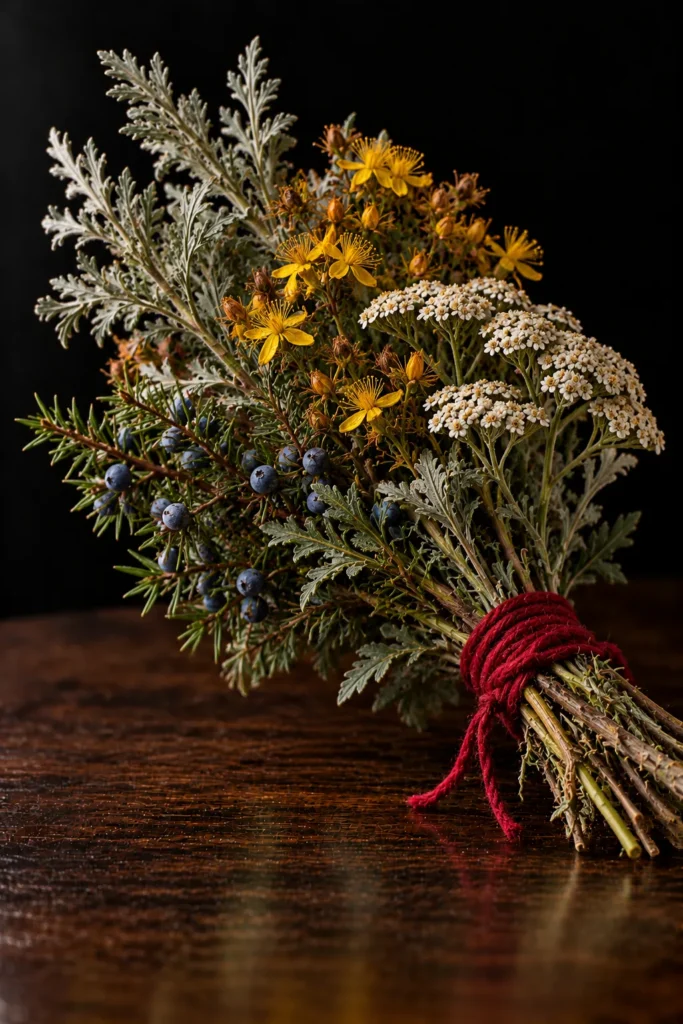
The idea that certain plants protect against misfortune reaches back into pre-Christian times and was partly integrated into church practice during the Middle Ages: the herb blessing on the Feast of the Assumption sanctified bundles of herbs in which protective plants such as mullein and St John’s wort were bound together with ears of grain.
Alongside this, a body of rural experiential knowledge remained alive, passed on independently of church teaching: through mnemonic rhymes, through practical demonstration within the family, and through the herb women and midwives of the villages, who were regarded as the carriers of this knowledge.
The Handwörterbuch des deutschen Aberglaubens records some form of protective tradition for nearly every native herb, pointing to a dense system of interpretation that grew over generations.
Operating Principle According to Tradition
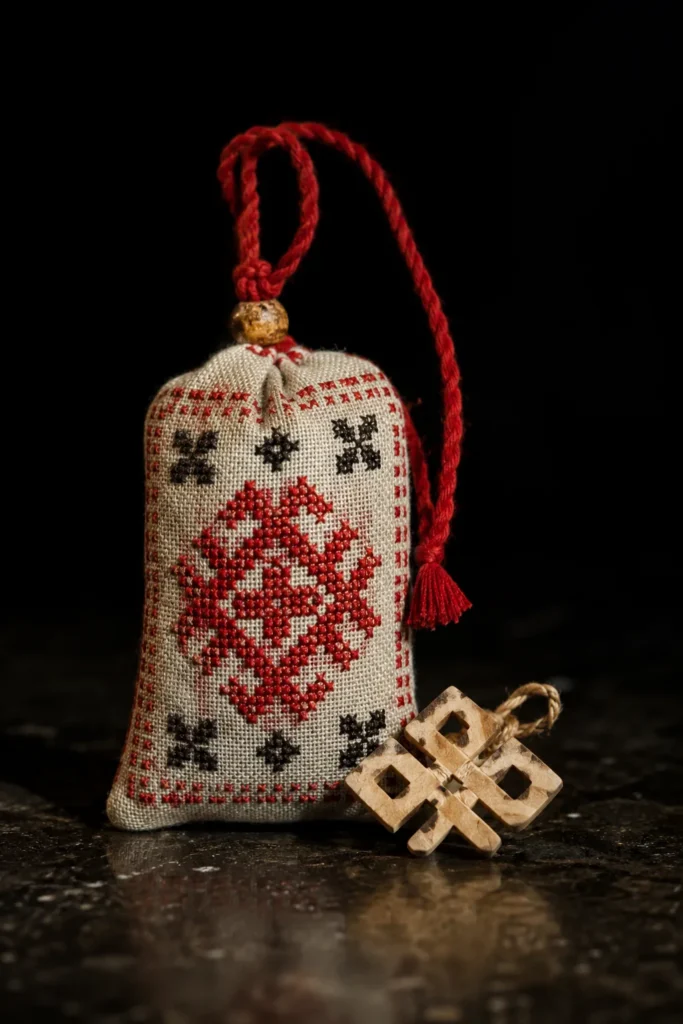
Folk belief recognises recurring forms of use for protective herbs that are similar across many plants and regions. Carried on the body, usually in a small protective pouch or bag, herbs were meant to accompany the wearer directly and shield them from harmful magic.
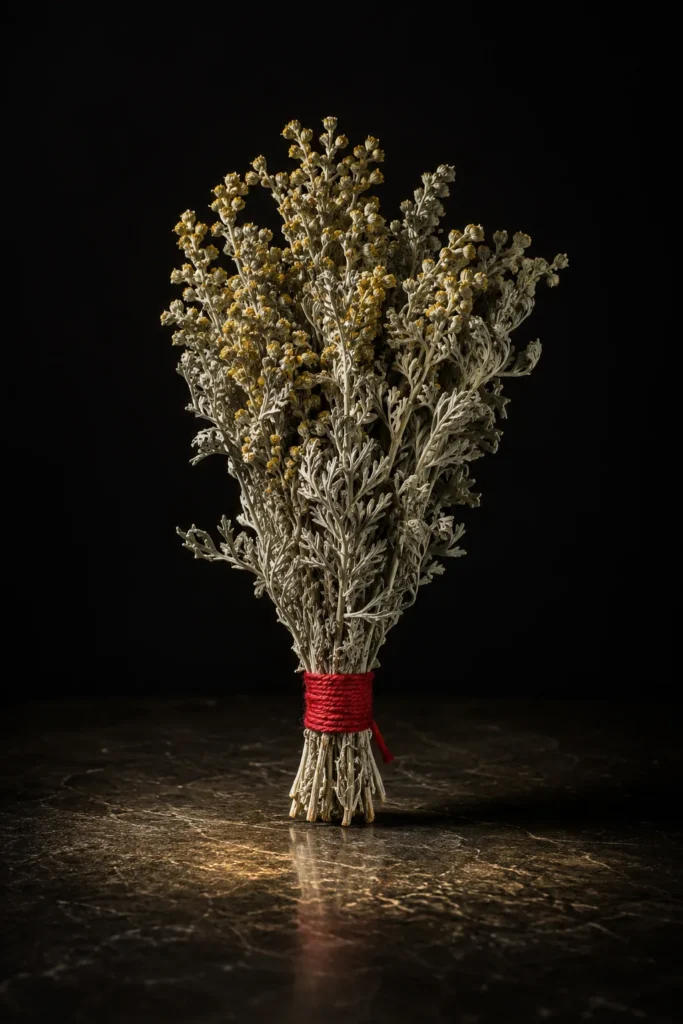
Placed at the house entrance and above door and stable, often as a bundle or wreath, they marked the threshold as a boundary that harm should not cross. Placed under the pillow or under the bed, herbs protected the defenceless moment of sleep. Burnt as censing, they finally released a smoke to which purifying and defensive power was ascribed.
These forms, pouch, threshold, bed and smoke, recur as a consistent pattern throughout the tradition surrounding almost all the herbs presented here.
Cross-Cultural Distribution
Belief in protective herbs is not limited to German-speaking regions. In the Celtic world, plants such as vervain were held sacred and gathered according to fixed rituals. In Slavic folk belief, house and stable were protected with bundles similar to those in Alpine custom, though with different plant species.
Non-European cultures also hold comparable ideas: in India, for example, relatives of the mullein were used against evil spirits and magic. These parallels suggest a widespread need to use tangible plants as mediators between one’s own vulnerability and an invisible world perceived as threatening.
What It Is Used Against
Tradition employs protective herbs against a broad range of threats. These include the evil eye, that is, the envious gaze believed to harm people, animals and harvests, as well as witchcraft and bewitchment in the narrower sense. Spirits of disease, held responsible for fever, epidemics and unexplained ailments, belong to this pattern of threat, as do weather hazards such as lightning strikes, against which individual herbs like mullein were considered particularly effective.
Malicious gossip and domestic strife, against which angelica was meant to protect, also number among the aims of this protective practice. The Protection Compass assigns the individual herbs to the threat categories for which they are documented in the sources.
Application and Limits
The following pages introduce individual protective herbs in detail, with their respective traditions, forms of use and the limits that folk belief itself formulated:
One limit of all protective herbs lies in the tradition itself: no herb was ever considered sufficient on its own. It was always combined with prayers, blessing formulas, salt and other protective means, as the Protection Compass also shows in its traditional combinations.
Literature (selection)
Related key terms: protective herbs, folk belief, herbal magic, threshold protection.
iWell Guard and Protective Traditions
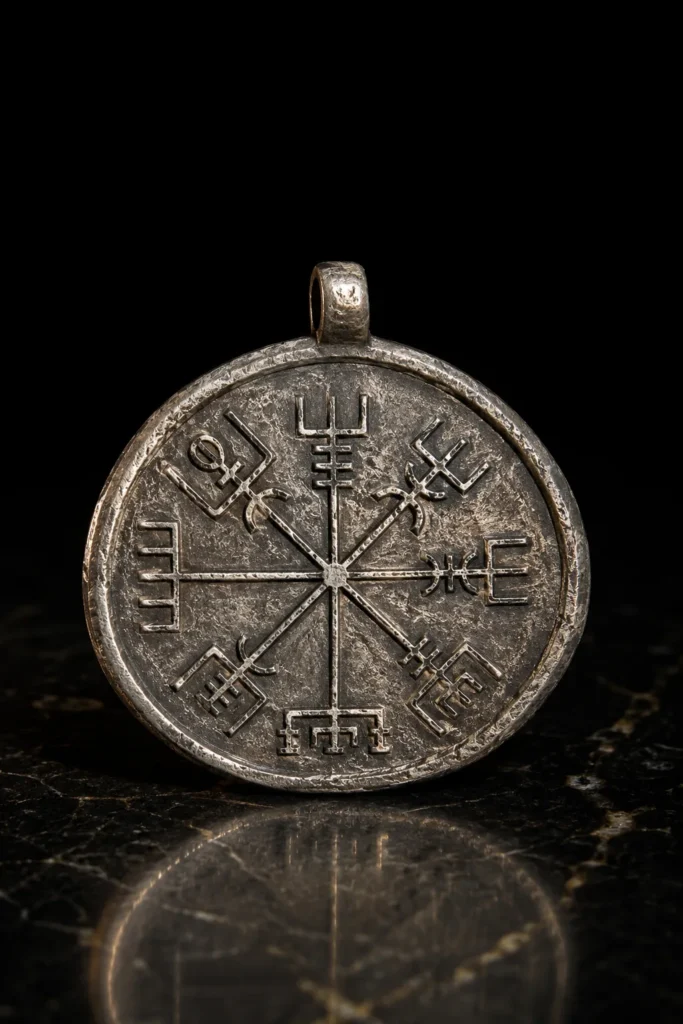
The variety of protective herbs reflects a recurring human need: to possess tangible objects that mark an invisible boundary between one’s own protected sphere and a surrounding world perceived as threatening. This same principle underlies the iWell Guard.
What earlier generations sought to achieve with herb pouches, door bundles and incense, the pendant transfers into a form that can be worn on the body permanently. The symbolic logic of drawing a boundary remains the same, only its outward form has changed.
Personal experiences may vary. Not a medical device. No promise of healing.