Protective Pouches and Breverl
By Ralf Ittermann · last reviewed on
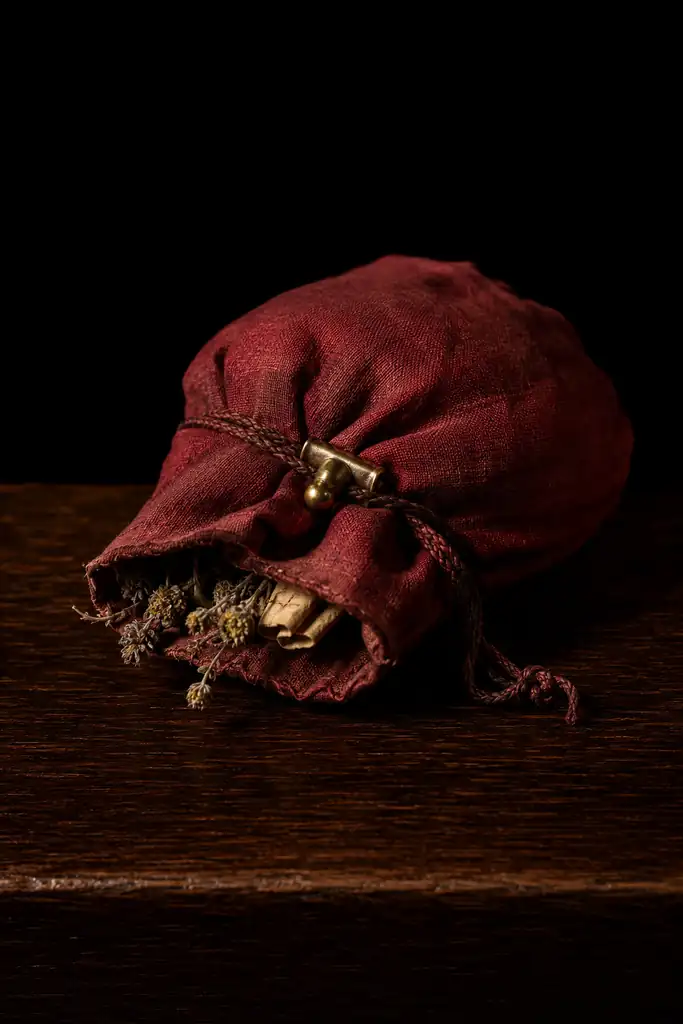
The protective pouch is a small bag that holds a combination of protective substances and is worn on the body or hung up in the home.
What makes a protective pouch effective is not any single component on its own, but the interplay: herbs with a protective tradition, signs or symbols on paper or cloth, sometimes also a prayer or a formula spoken during its making, all combined into one compact unit.
The principle spans cultures, and the European tradition has developed its own distinct, well-documented expression of it: the Breverl.
This term, derived from the Latin breve (short writing), denotes in Bavarian-Austrian folk belief a small packet of blessed paper on which a prayer, a name of God or a religious formula is written or printed.
The paper is folded, sometimes sewn into linen together with herbs or other protective substances, and then worn on the body, especially by children and the sick.
The protective pouch thus stands at the crossing of several protective techniques: it is an amulet in the sense of a worn object, yet it often contains elements reminiscent of the talisman, namely the deliberate assembly with intent. It belongs to the category Amulets and Protective Objects.
Quick Overview
The protective pouch combines several protective substances in one portable object: herbs, signs, writings or sacred objects are gathered together in a bag that unfolds its protection on the body or in the home.
In the German-speaking world the Breverl is the best-known form, in African-American folk magic the mojo bag, in the West African context the gris-gris.
In every case the combination of the components is considered essential: a pouch with the wrong or missing ingredients is regarded as weak or ineffective. Many traditions hold to the prohibition against opening the pouch.
Origin and Tradition
The idea of bundling several protective materials together and carrying them on the body is old and widespread.
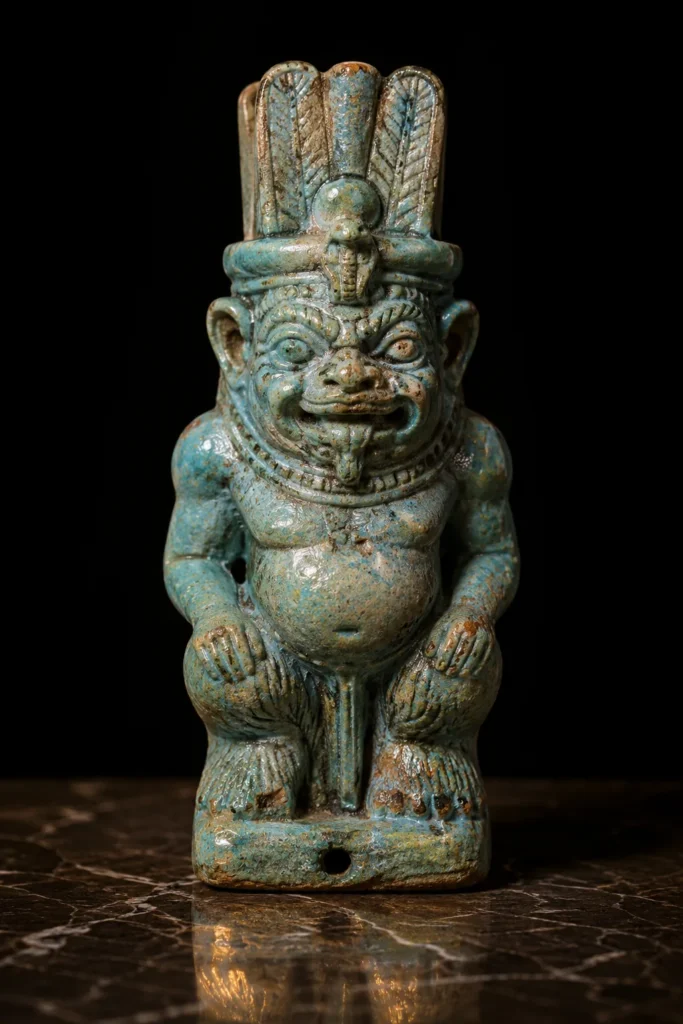
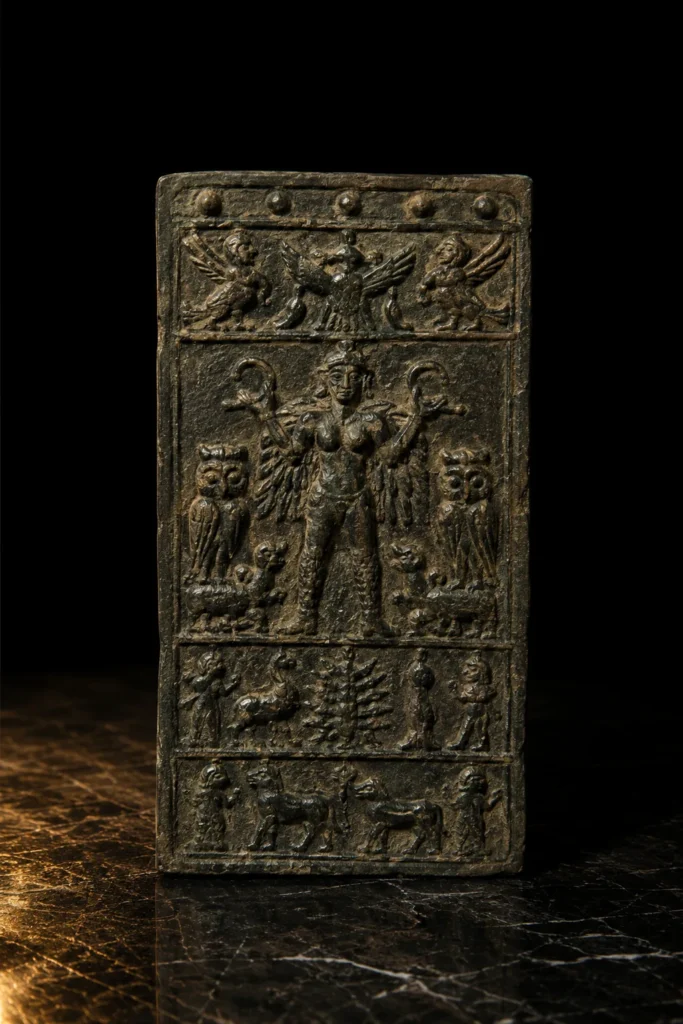
In ancient Egypt small leather pouches with papyrus amulets were worn; the Book of the Dead contains instructions for wearing certain written amulets on the body. In Mesopotamia, folded clay tablets with incantation formulas were found sewn into linen.
In the Jewish sphere the mezuzah is a related form: an inscribed parchment in a container, affixed to the doorpost. The version worn on the body, the kamea, corresponds directly to the protective-pouch principle: something inscribed inside a casing, worn on the body or at the location.
In the German-speaking world the Breverl developed above all within the popular piety of the late Middle Ages and the early modern period. The distribution of blessed slips of paper by churches and monasteries, printed or handwritten, was part of early modern devotional practice.
The farmer or farmer’s wife who would not put their child to bed without protection reached for such a slip of paper or had the parish priest issue one. The Breverl was not a church-sanctioned sacramental, but it operated in a gray area that was used by popular religiosity.
The Reformation era created an interesting tension: Lutheran clergy condemned the Breverl as superstition, while in the Catholic sphere it was tacitly tolerated or even actively distributed. In the 19th century, folklorists such as Johann Scheible and Karl Simrock collected corresponding evidence for the German-speaking region.
Operating Principle According to Tradition
The operating principle of the protective pouch rests on several layers.
The material layer: each ingredient carries its own protective quality, grounded in the tradition of the substance in question. Herbs such as St. John’s wort, mugwort or valerian are held to ward off particular influences.
Salt is regarded as cleansing and hostile to the impure. A splinter of bone or a stone of unusual shape adds a material protective quality.
The symbolic layer: the written prayer, the name of God or the sign lends the contents a spiritual dimension. The formula, especially when spoken or written by a capable person, activates the pouch beyond the purely material.
The combinatory layer: the interplay of the components is considered stronger than the sum of the individual parts. This is a basic rule of folk magic: the right combination produces an effect that none of the substances could unfold on its own.
Decisive in many traditions is the integrity of the pouch: it must not be opened, because that would dissolve the bundled effect. Opening it is equivalent to breaking an amulet.
Cross-Cultural Distribution
The protective-pouch principle is documented worldwide.
In West Africa and in the African diaspora there is the gris-gris or mojo bag: a bag of leather or cloth containing roots, herbs, minerals, small objects and inscribed papers, activated by a hoodoo practitioner or a priestess.
The parallel to the Breverl is structurally striking: both combine materials with written signs and prayer, both are worn on the body, both must not be opened.
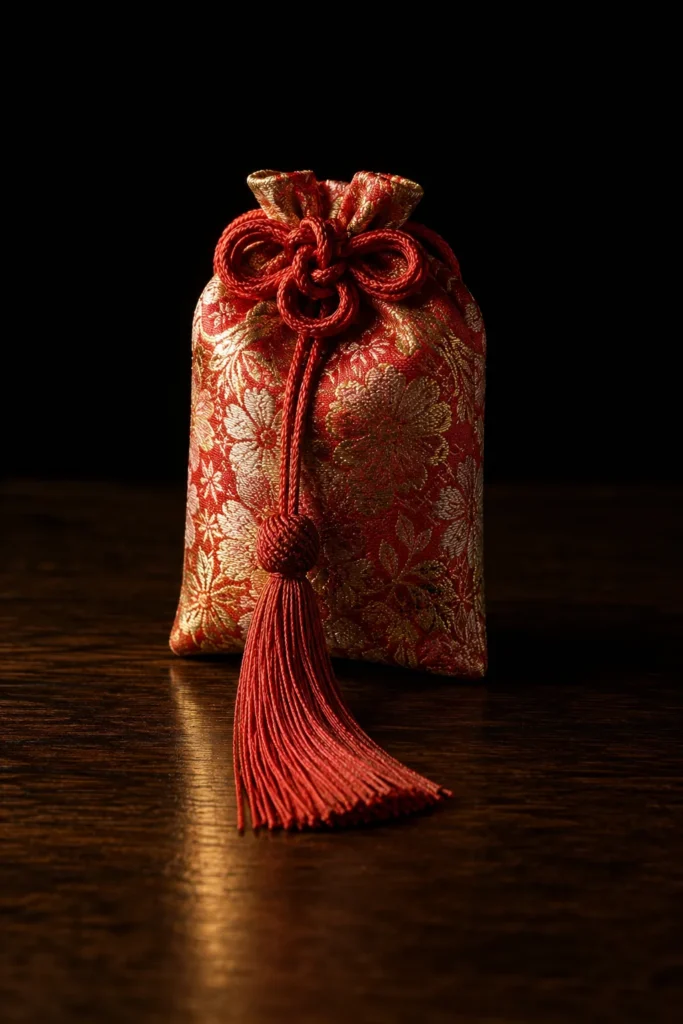
In Japan the omamori is a variant of the principle: a small woven or printed pouch from a shrine or temple, containing a blessed strip of paper. It is worn on the body for a year and then returned to the shrine.
In India there is the kavach, a blessed pouch with mantra papers or sacred materials, worn as protection.
In Latin American folk belief one encounters bolsitas de protección, small pouches with herbs, stones and sacred images. The basic idea is the same as in the Bavarian Breverl, though the religious framing differs considerably.
What It Is Used Against
In tradition the protective pouch is described as effective against a wide variety of harmful influences. This lies in its nature as a combined protective object: it covers several threats at once, provided the right components are chosen.
Most frequently attested is protection against the following categories: the evil eye, especially for children and newborns, who were held to be particularly vulnerable; harm-causing spirit beings that act at night, namely the Alp, the Drude and related beings; witchcraft and harmful magic from fellow human beings; and general illnesses that were traced back to supernatural causes.
The Breverl in the narrower sense was especially widespread against illnesses and against the evil eye in children. In the Protection Compass the specific beings are listed against which protective pouches are deployed in tradition.
Application and Limits
The protective pouch presupposes that the right components are used in the right combination. A wrong ingredient, a missing element or a faulty formula considerably weakens the effect according to the logic of tradition.
Whoever puts a generic herbal mixture into a bag without attending to the traditional standing of the respective plants acts without foundation.
Especially important is the rule: the pouch must not be opened. This applies to the Breverl as well as to the mojo bag of the African-American tradition and the omamori of Japanese folk belief. Opening it destroys the bundling that makes the protective pouch into a unit.
Like other protective objects, the pouch loses its effect when it is damaged, soaked through or contaminated. Many traditions know a renewal rhythm: after a year, after an illness or after a particular phase of life, the pouch is replaced with a new one.
The reach of the protection is limited: the pouch protects the wearer or the place where it is affixed, but not a more broadly defined area.
Literature (Selection)
Related key terms: protective pouch breverl charm bag herbal pouch protection.
iWell Guard and Protective Traditions
The protective pouch shows a basic idea that the iWell Guard takes up in a contemporary form: the condensation of several protective principles into a single portable object. The Breverl combines herb, writing and blessing; the mojo bag combines root, stone and formula.
The iWell Guard does not single out the specific contents of any one tradition, but takes up the synthesis logic: that an object worn on the body can bundle several protective qualities.
Personal experiences may vary. Not a medical device. No promise of healing.