Svarožič, the sacred fire of the Slavs
By Ralf Ittermann · last reviewed on
Svarožič is a god of the Slavic tradition.
Sacred fire of the Slavs and oracle god of Rethra. Svarožič is regarded as a Slavic fire figure, and this article describes what traditions exist concerning this name.
Svarožič, in Latin Zuarasici, in simplified transliteration Svarozhich, is a Slavic fire god whose name means son of Svarog.
He is doubly attested: East Slavic sources mention him in sermons against paganism as the venerated hearth and sacrificial fire, while West Slavic sources name him as the chief deity of the temple of Rethra among the Lutici, where a sacred horse gave oracles about military campaigns.
Type: fire god, oracle and war deity
Origin: East and West Slavs, especially Rethra among the Lutici
Texts: Old Russian sermons, Thietmar of Merseburg
Period: 11th to 13th century
Appearance: sacred fire, at Rethra depicted as a cult image

Textual history
Period of the Texts
Old Russian sermons against paganism from the 12th and 13th centuries, as well as the chronicle of Thietmar of Merseburg from around 1018.
Area of Diffusion
East and West Slavs: East Slavic as a venerated hearth and sacrificial fire, West Slavic at the temple site of Rethra among the Lutici.
Sources
Moderate: Christian chronicles and sermons, that is, external accounts. The famous Prillwitz idols are proven forgeries from the 18th century.
Name and variants
Slavic: Svarožič, in Latin Zuarasici, composed of Svarog and the suffix for son or descendant: son of Svarog. The name links the fire god with the sky and smith god Svarog.
Appearance
Appearance
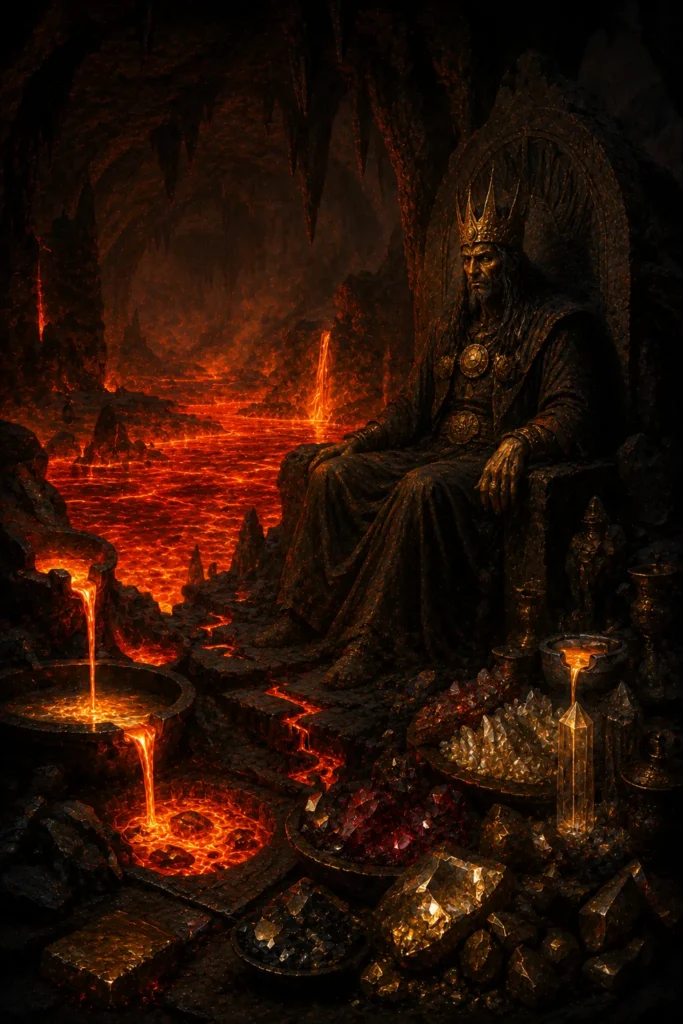
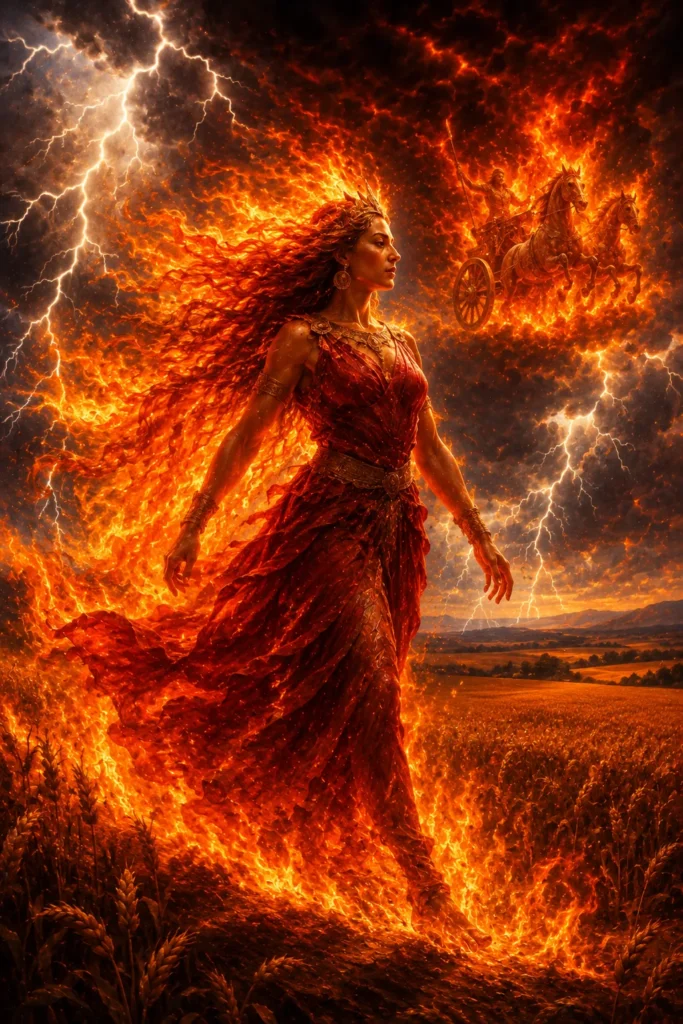
A reliable iconography from primary sources is lacking. At Rethra there are said to have been inscribed cult images, but their description is vague; the famous Prillwitz idols are proven forgeries from the 18th century. His symbolism is the sacred fire, the hearth and a possible link to the sun.
Effect
As a fire god, Svarožič is associated with the hearth, sacrificial fire and the smithy. At Rethra he appears as an oracle and war deity, whose sacred horse foretold the outcome of military campaigns.
Profile: Svarožič
The key aspects of the fire god at a glance.
Slavic fire god with two strands of evidence: the venerated fire of the East Slavs and the temple deity of the Lutici at Rethra.
Hearth and sacrificial fire of households; at Rethra additionally a warrior deity, whose campaigns were foretold by the temple’s sacred horse.
Sacred fire, at Rethra depicted as an inscribed cult image; a reliable iconography is lacking, the Prillwitz idols are forgeries.
Fire, hearth and smithy; within the Rethra cult, oracle and war, with spoils and offerings following military campaigns.
Temple cult at Rethra with horse oracle and offerings; East Slavic veneration of the hearth and sacrificial fire.
Two strands of evidence: sermons and the temple of Rethra
The name is composed of Svarog and the suffix for son or descendant. Two strands of evidence exist: in Old Russian sermons against paganism from the 12th and 13th centuries, the venerated fire is called Svarožič.
Around 1018, Thietmar of Merseburg records that a chief deity Zuarasici was venerated with a horse oracle at the temple of Riedegost, Rethra; Adam of Bremen names Radegast for the same cult site. The connection between the two strands is inferred, not explicitly attested.
Rethra romanticism and classification
Svarožič is a central building block of reconstructed Slavic pantheons and is prominent in present-day Rodnovery. In the 19th century, Rethra became a Romantic place of longing, and it was in this context that the Prillwitz forgeries arose.
From a religious-studies perspective, Svarožič is solidly attested as a theonym, both in Thietmar and in the Old Russian sermons. Less certain, however, is the constructed genealogy linking him to Svarog and Dažbog, as well as the question of his identity with Radegast. He is also not a confirmed supreme god; this role has partly been transferred to him from the Rethra cult.
Temple cult, oracle and hearth fire
Thietmar attests the temple cult at Rethra with a horse oracle and spoils and offerings following military campaigns. East Slavic sources attest the veneration of the hearth and sacrificial fire: the fire itself was the god one encountered at the hearth. Drastic ritual details from the chroniclers should be treated with caution from a source-critical standpoint, as they were written from a hostile Christian perspective.
Agni, Atar and the young fire
As fire in the role of son and sacrificial messenger, Svarožič corresponds to the Vedic Agni and the Iranian Atar, as well as the Indo-European notion of the young fire as son of the sky. Within Slavic tradition he is closely intertwined with Radegast and with the sun god Dažbog; the folk figure Kresnik is occasionally equated with him, though this remains speculative.
Frequently asked questions about Svarožič
What does the name Svarožič mean?
Son or descendant of Svarog; it links the fire god with the sky and smith god Svarog.
What was Rethra?
A temple site of the Lutici, where the deity Zuarasici was venerated with a horse oracle; spoils and offerings followed the military campaigns.
Are the Prillwitz idols genuine?
No. They are proven forgeries from the 18th century and provide no evidence of his appearance.
Further links
Further reading:
- Slavic – all beings of the Slavic belief world
- Agni – the Vedic fire god as the closest parallel
- Atar – the sacred fire of Zoroastrianism
- Protective candle, smoke cleansing, amulet – traditional protective means
- Protection Compass – protective means at a glance
Literature (selection)
Further standard works in the bibliography.
As the Slavic fire god and son of Svarog, Svarožič stands for fire in its dual form: as the quiet hearth fire of households and as the temple flame of Rethra, before which a horse decided between war and peace.