Mājas gars, the caretaker of the Latvian homestead
By Ralf Ittermann · last reviewed on
The Mājas gars is a spirit of Latvian tradition.
The master of the house, to whom the first bite of the meal is due. Quiet devotion to the Latvian homestead defines this caretaker spirit’s reputation.
The Mājas gars, in simplified spelling Majas gars, also Mājas kungs, master of the house, is the Latvian house spirit: a caretaker of the house, the household community and the fertility of the fields. It ensures blessing as long as it is provided for and honoured; neglect leads to misfortune, illness of the master of the house, fire and death.
To be fair in its classification: the evidence is thin and at times shaped by national-romantic overlay; the treasure-bringing Pūķis is the more sharply documented Latvian house spirit. Invocations among the rural population are nonetheless documented as late as 1935.
Type: Protective house spirit and caretaker of the homestead
Origin: Latvian folk belief
Texts: Latvju dainas by Barons, folk-belief corpus by Šmits
Period: Folk belief, invocations documented as late as 1935
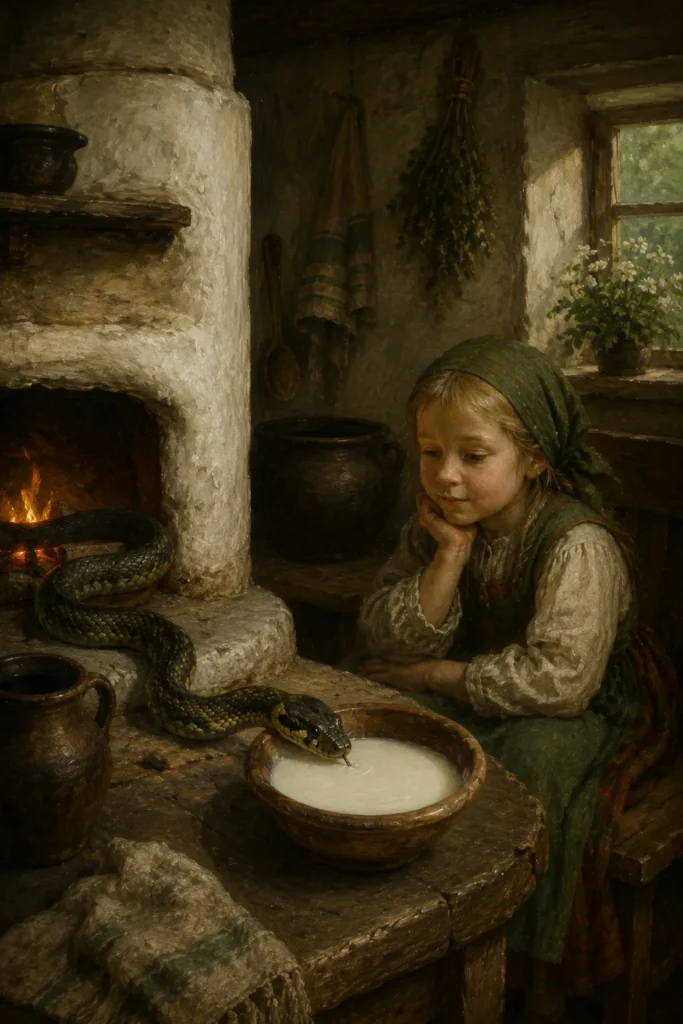
Appearance: Man or woman in white, also toad, snake or beetle
Context of tradition
Period of the Texts
Latvian folk belief, evident in the collections of Barons and Šmits; invocations among the rural population are documented as late as 1935.
Area of Diffusion
Latvia: the Mājas gars belongs to the world of belief of Latvian homesteads and their household communities.
Sources
Thin and at times shaped by national-romantic overlay: the source basis is Barons’ Latvju dainas with around 218,000 songs and the indexed mythological motifs found in Šmits.
Name and variants
Latvian: mājas means of the house, gars spirit, thus house spirit; kungs means lord, so Mājas kungs means master of the house. In the folk-belief corpus, the additional names Cēlis and Bēlis also appear; all forms are variants of the same idea.
Appearance
Appearance
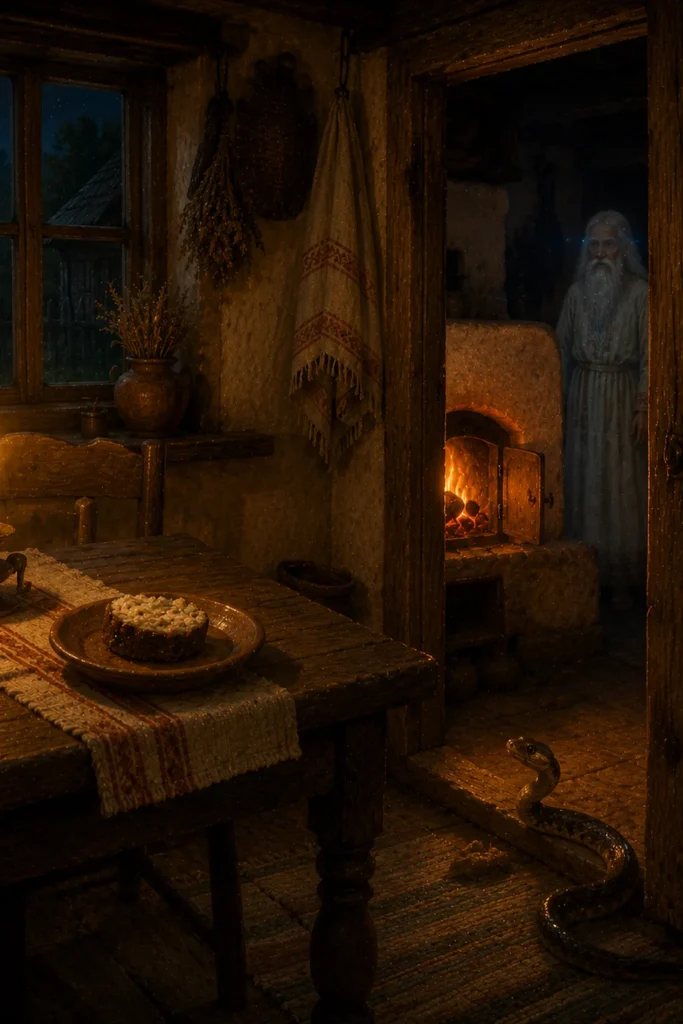
According to folk-belief motifs, the Mājas gars appears in human form as a man or woman in white, or in animal form as a toad, snake or beetle. As a lower deity, dieviņš, it lives behind the stove, under the floor or in outbuildings.
Effect
He is the Aizgādnis, the caretaker of house, household community and field fertility, and secures blessing as long as he is provided for and honoured. Neglect leads to misfortune, illness of the head of the household, fire and death.
Profile: Mājas gars
The key aspects of the Latvian house spirit at a glance.
Lower deity, dieviņš, at the household level of Latvian folk belief; the systematic image of a house god is partly a product of national romanticism.
House, household community and field: as Aizgādnis, caretaker, he watches over family, health and field fertility.
Man or woman in white, in animal form a toad, snake or beetle; his place is behind the stove, under the floor or in outbuildings.
Blessing for house and harvest when provided for; when neglected, misfortune, illness of the head of the household, fire and death.
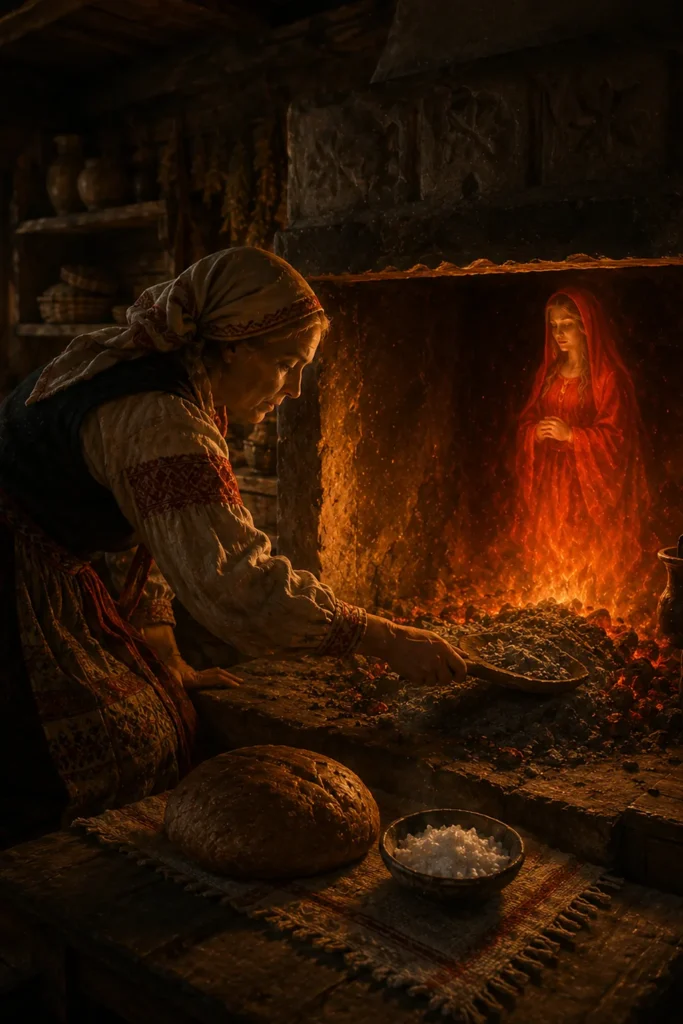
The finest bite and drink at festivals such as Christmas and Jāņi, at funerals and christenings; it was common to offer the first bite of the meal as a sacrifice.
The Slavic Domovoi, the Balto-Finnic Haltija and Haldjas, the Scandinavian Tomte; native to Latvia is the treasure-bringing Pūķis.
Between folk belief and national romanticism
Linguistically the name is transparent: mājas, of the house, and gars, spirit, together yield house spirit; the variant Mājas kungs means master of the house, and the folk-belief corpus also records the secondary names Cēlis and Bēlis. The source base rests on Krišjānis Barons’ Latvju dainas, with around 218,000 songs, and Pēteris Šmits with his indexed mythological motifs; invocations are documented among the rural population as late as 1935.
At the same time, the state of the sources demands honesty: the systematic image of a unified house god is partly a product of national romanticism. What the sources actually show is a loose bundle of folk-belief motifs surrounding a caretaker of the house, not a fixed figure with a biography.
Afterlife and classification
The Mājas gars is part of the Latvian folklore revival and the neopagan Dievturība milieu; in popular culture it is above all the Pūķis that is present.
From a religious-studies perspective, he is genuinely attested, but the source material is thin and heavily shaped by national romanticism. Four clarifications are important: he should not be presented as a cleanly defined house god with a fixed biography, but as a loose bundle of folk-belief motifs. The Pūķis is better attested. Mājas kungs, Mājas gars, Cēlis and Bēlis are variants of the same idea. And despite the title kungs, he does not belong to the upper ranks of gods, but is a lower deity at the household level.
The first bite as sacrifice
At festivals such as Christmas and midsummer, Jāņi, as well as at funerals and christenings, one had to leave the finest bite and drink for the Mājas gars; it was common to offer the first bite of the meal as a sacrifice. If the gift was withheld, punishment followed: misfortune, illness of the head of the household, fire and death. Providing for the house spirit was thus not a courtesy but a duty of the household community.
Masters of the house from Riga to Siberia
Frequently asked questions about the Mājas gars
What is the Mājas gars?
The Latvian house spirit: a caretaker of house, family and field fertility, who lives behind the stove, under the floor or in outbuildings.
What does he demand as sacrifice?
The finest bite and drink at festivals, at funerals and christenings; it was common to offer the first bite of the meal.
Is he a house god?
Not in a fixed sense. He is a loose bundle of folk-belief motifs, partly shaped by national romanticism; the Pūķis is the better-attested Latvian house spirit.
Further links
Further reading:
- Domovoi – the Slavic house spirit as the closest equivalent
- Aitvaras – the Lithuanian counterpart to the Latvian Pūķis
- Haldjas – the Estonian guardian spirit of the neighbourhood
- Salt, Amulet, Smoke cleansing – traditional protective means
- Protection Compass – protective means at a glance
Literature (selection)
Further standard works in the bibliography.
As the Latvian house spirit and master of the farmstead, the Mājas gars remains a quiet figure: thinly attested, shaped by national romanticism, and yet invoked until 1935, wherever the first bite of the meal belonged to him.