iWell Guard

Mountain Spirits, Mountain Gods and Mountain Beings Worldwide

Beings that inhabit peaks, guard mining works or are regarded as lords of a sacred mountain: from the Andean Apu to the Tyrolean Bergmönch to the mining dwarves of British mines.

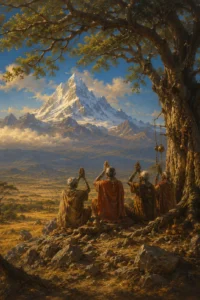
In many cultures, mountains mark the boundary between the habitable and the uninhabitable world. Accordingly, peaks were often thought to be the seat of independent, often strict guardian beings whose respect determined the success or failure of hunting, grazing and mining. Mountain gods and alpine pasture spirits are among the well documented place-spirit traditions of the Alps and the Andes.

Where the path ends, the spirit begins.

Topic OverviewCross-Cultural

Table of Contents

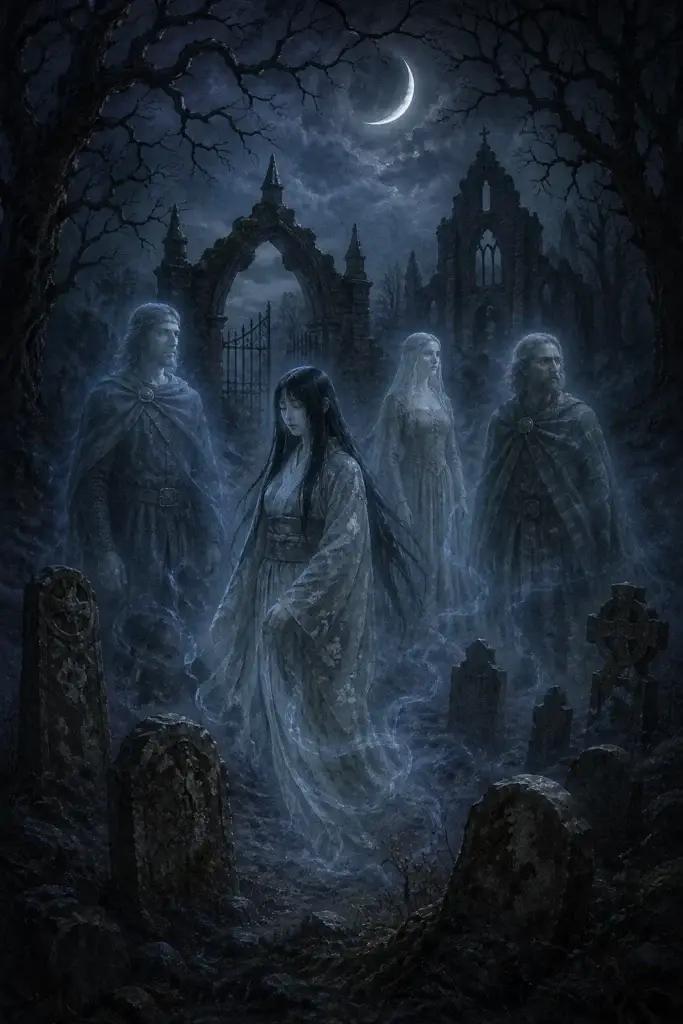
Spirits of the Dead: cross-cultural collective illustration of the spirit subcategory

Quick Overview (Definition List)

Type: Place Spirit Class: Mountain Spirits Distribution: Cross-cultural (Americas, Europe, Asia, Oceania, Africa) Main features: attachment to a specific peak, dominion over weather, guardian function over mining and pastoral farming, strictness toward disrespect Related subcategories: mountain gods, alpine pasture spirits, mining beings, wild high-altitude forms

Term and Distinction

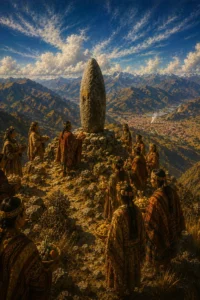
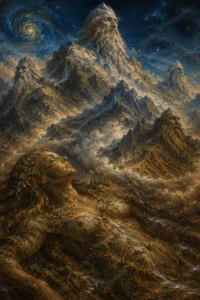
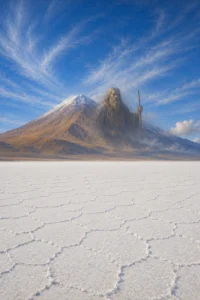
Mountain spirits differ from general nature spirits in that their identity is bound to a single, nameable place: the god is not ‘a mountain god’ but ‘the mountain itself’ or its personal guardian. The Andean Apu concept makes this connection especially clear. Every significant peak in the Andes is regarded as an independent Apu with its own name, its own character and its own cult.

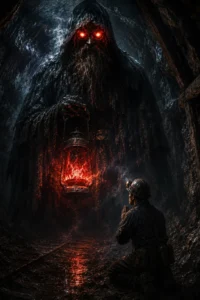
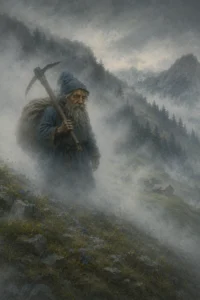
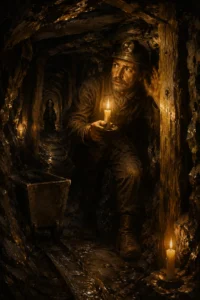
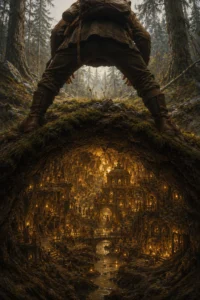
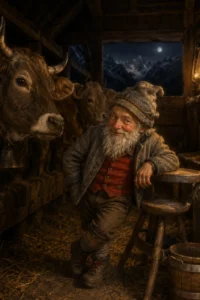
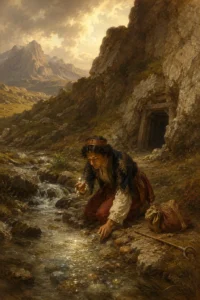
Alpine legend also knows beings that do not embody the mountain as a whole but a function within it: the Bergmönch of the Ore Mountains and the Tyrolean world of legend warns miners of danger, yet demands respect and punishes recklessness with tunnel collapses.

Classification

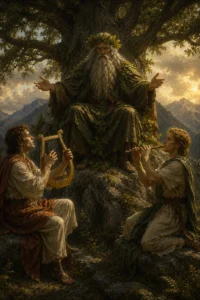
In the iWell Guard classification, mountain spirits form the subclass of place spirits bound to a peak, ridge or mountain massif, and like all being groups in this lexicon, they belong to the subclasses of the general Spirits main class.

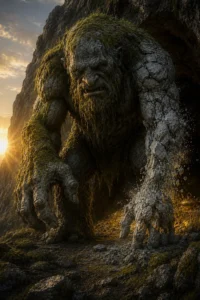
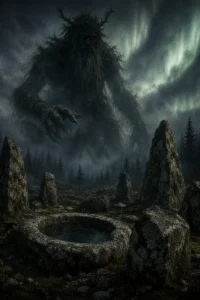
They differ from general earth spirits (no altitude attachment) and from pure weather gods (no specific place). Within the group, research distinguishes mountain gods with their own peak name (Apu type), alpine pasture spirits of alpine grazing economy, mining beings of underground work, and cryptid-like wild forms such as the Yeti.

Cultural-Historical Examples

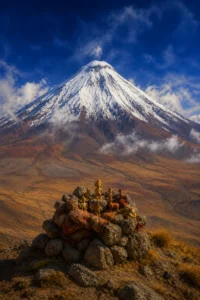
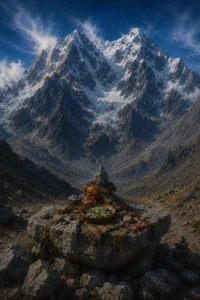
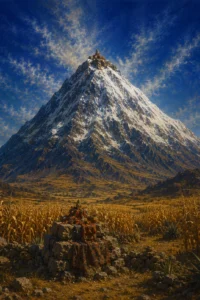
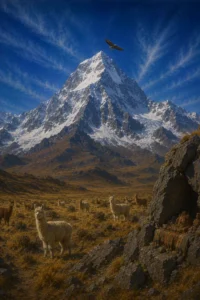
In the Andean region, every distinctive peak is regarded as its own Apu, a place deity governing the agriculture, livestock and weather of the surrounding communities.

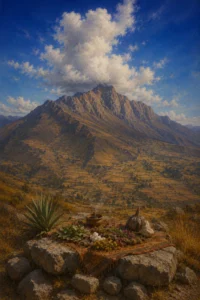
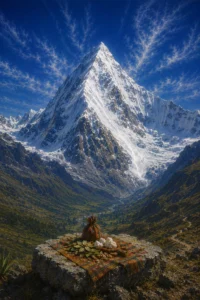
The Peruvian Apu Misti and Apu Salkantay are among the widely venerated mountains of the Cusco and Arequipa region; to this day, offerings (pagos a la tierra) are made to them before sowing and harvest. Related, but conceptually distinct, are the Aymara Achachila, ancestor spirits who also dwell in mountain peaks and thus combine place-spirit and ancestor cult.

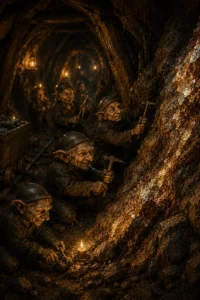
Central European mining folklore knows the Bergmönch as a hooded figure who wanders through tunnels, foretells accidents and punishes reckless miners, a figure found in slightly different versions in Saxony, Bohemia and Tyrol. British mines had the Welsh Coblynau and the Cornish Knocker, small mining beings whose knocking sounds were interpreted as a warning of collapse or as a sign of rich ore deposits.

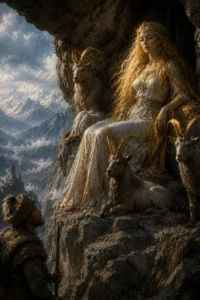
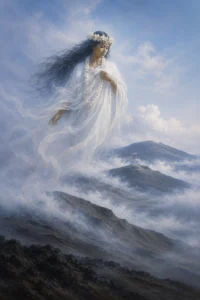
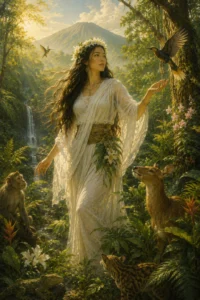
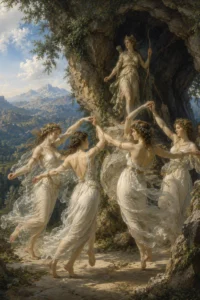
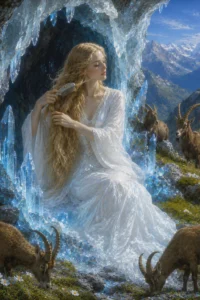
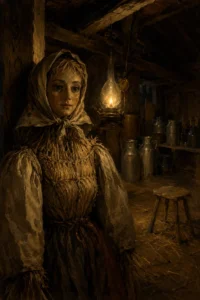
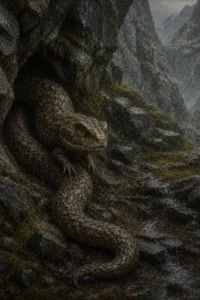
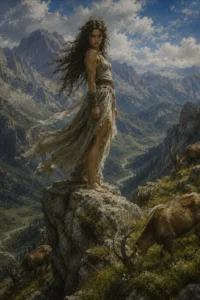
The Alps themselves have the Salige Frau, an alpine pasture spirit who grants shepherds a rich milk yield for good treatment but bewitches herds in case of disrespect. The Tatzelwurm adds a cryptid-like figure to the alpine repertoire of mountain beings, a short, snake-like creature with a cat’s head and forelegs, whose sighting reports date back to the early 20th century.

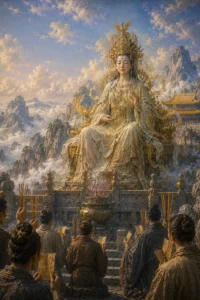
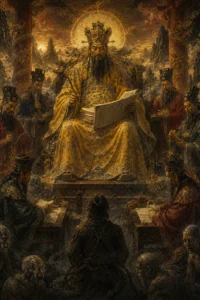
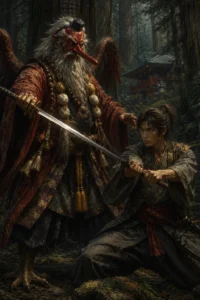
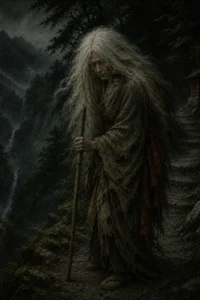
East Asian traditions assign individual administrative deities to specific mountains: according to the Daoist pantheon, the Chinese Dongyue Dadi rules over the sacred Mount Tai and, with it, over the birth and death of human beings. According to farming tradition, the Japanese Yama-no-Kami changes seasonally between mountain deity and rice-field deity, while the Yamauba, a mountain witch, hosts travelling wanderers and, in some versions, subsequently devours them.

Examples from Different Traditions

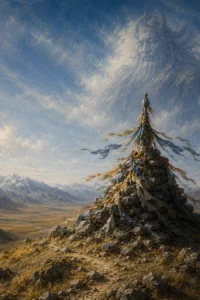
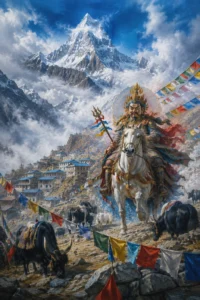
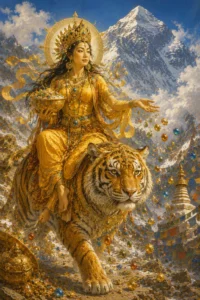
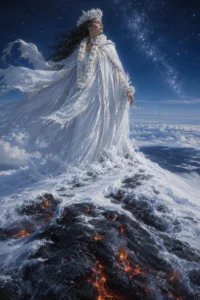
The Himalayan region has its own guardian deities for its highest peaks: the Tibetan Nyenchen Tanglha massif is regarded as the seat of a mountain god to whom a dedicated kora circumambulation is devoted, while Sherpa communities venerate Mount Everest as Khumbila and Tibetan tradition venerates it as the seat of the goddess Miyolangsangma, one of the Five Sisters of Long Life of Tibetan Buddhism.

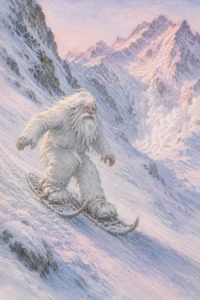
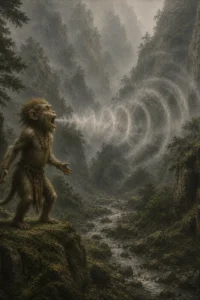
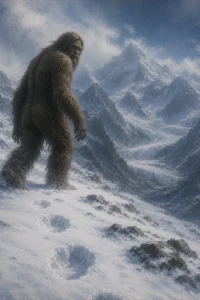
The Yeti stands at the transition between religious mountain spirit and modern cryptozoology: a guardian being of the high region in Sherpa narratives, and, in Western reception since the 1950s, above all a sought-after but never confirmed animal being.

Sources

Andean Apu veneration is densely documented ethnographically, from early colonial chroniclers (Felipe Guaman Poma de Ayala, ‘Nueva corónica y buen gobierno’, c. 1615) to present-day anthropological field studies in Cusco and Arequipa. Central European mining legend is documented above all through 19th-century collections of legends (Ludwig Bechstein, Johann Georg Theodor Grässe) as well as mining chronicles dating back to the 16th century.

East Asian mountain deities such as Dongyue Dadi are attested in Daoist canonical texts since the Han period, while the Japanese mountain-god tradition (Yama-no-Kami) has continued to the present through Shinto ritual texts and oral farming tradition. For the Yeti, no reliable scientific evidence exists, though there is a continuous oral Sherpa tradition dating back at least to the 19th century and an extensive body of Western expedition literature from the 1920s onward.

Contemporary Significance / Related Beings

Mountain spirits continue to influence alpine customs to this day: summit crosses, votive processions to alpine chapels, and the respectful tone experienced mountain guides maintain toward ‘the mountain’ structurally carry traces of the old mountain-spirit belief, even though the religious interpretation mostly recedes today.

Related groups of beings are earth and cave beings within the mountain’s interior as well as forest spirits, whose territory often borders that of mountain spirits. The distinction between an alpine pasture spirit and a pure weather spirit is fluid in figures such as the Salige Frau, since both influence weather luck and pasture yield.

Deeper Layer of Religious History

Comparative religious studies interpret mountain-spirit conceptions as an expression of a basic topographical rule: the more inaccessible and weather-exposed a place, the more independent and strict the being ascribed to it. This rule holds from the Andes across the Alps to the Himalayas with notable consistency. In some traditions, mountaineers who have died in accidents themselves become warning appearances, a motif that connects to the conceptual world of Spirits of the Dead without being identical to it.

A methodological difficulty lies in distinguishing between the mountain god (a cultically venerated place deity, usually conceived as benevolent) and the mountain spirit in the narrower sense of folk belief (rather a warning, at times hostile appearance directed at individuals). Both levels can coexist within one and the same tradition, for instance in the Bergmönch, who is at once a warner and a danger.

Research on High-Altitude and Isolation Experiences

Some mountain-being sightings at great altitude are today linked to oxygen deprivation, exhaustion and isolation effects, a phenomenon of the unseen companion that is documented in detail in expedition literature (Geiger, John, ‘The Third Man Factor’, 2009). Here, too, the physiological explanation does not replace the religious-historical tradition but supplements it with a modern perspective.

At iWell Guard, we place this modern interpretation alongside the religious-historical tradition, without playing one off against the other.

Selected bibliography on mountain spirits:

  • Reinhard, Johan: The Ice Maiden: Inca Mummies, Mountain Gods, and Sacred Sites. National Geographic, Washington D.C. 2005.
  • Bernbaum, Edwin: Sacred Mountains of the World. University of California Press, Berkeley 1997.

Note: This selection serves as orientation; detailed articles follow their own, curated list of sources.

Mountain Spirits in the iWell Guard Protection Field

Mountain spirits fall under Protection Layer 3 of the iWell Guard mantra (see Function Overview). Hostile or unsettling mountain-being influences are classified by the protective shield as a burdensome effect.

The iWell Guard position follows the historical observation that mountain spirits are generally regarded as guardians with their own set of rules, not as fundamentally hostile beings: those who respect the mountain are considered protected in most traditions. The protective concept is directed against disrespectful or aggressive interference, not against the mountain as a place itself.


Further titles are listed in the bibliography.

iWell Guard and Protective Traditions

The mountain-spirit concepts documented here are a scholarly classification of cross-cultural conceptions.

Against baleful mountain beings and for safe passage over mountain passes, travellers historically relied on visible protective signs: protective stones at crossroads, an amulet worn on the body, and, in some alpine regions, salt scattered at the thresholds of mountain huts. The Protection Compass offers a cross-cultural overview of such practices.

iWell Guard aligns itself with this tradition of portable protective objects. It is manufactured in Germany, with a documented material architecture of 41 layers in real gold, platinum and silver, and a 30-day right of return.

Not a medical device. No promise of healing. Personal perceptions may vary.

Mountain Spirits at a Glance

Achachila
Achachila
→ To the being
Almas
Almas
→ To the being
Am Fear Liath Mòr
Am Fear Liath Mòr
→ To the being
Apu Ampato
Apu Ampato
→ To the being
Apu Coropuna
Apu Coropuna
→ To the being
Apu Mama Simona
Apu Mama Simona
→ To the being
Apu Misti
Apu Misti
→ To the being
Apu Pachatusan
Apu Pachatusan
→ To the being
Apu Pichu Pichu
Apu Pichu Pichu
→ To the being
Apu Pitusiray
Apu Pitusiray
→ To the being
Apu Salkantay
Apu Salkantay
→ To the being
Apu Sara Sara
Apu Sara Sara
→ To the being
Apu Verónica
Apu Verónica
→ To the being
Apu Wamanrasu
Apu Wamanrasu
→ To the being
Apu Wanakawri
Apu Wanakawri
→ To the being
Barbegazi
Barbegazi
→ To the being
Bergmönch
Bergmönch
→ To the being
Bergsrå
Bergsrå
→ To the being
Bergtroll
Bergtroll
→ To the being
Bixia Yuanjun
Bixia Yuanjun
→ To the being
Coblynau
Coblynau
→ To the being
Dağ İyesi
Dağ İyesi
→ To the being
Dali
Dali
→ To the being
Dellermännle
Dellermännle
→ To the being
Dongyue Dadi
Dongyue Dadi
→ To the being
Fänggen
Fänggen
→ To the being
Gaʼan
Gaʼan
→ To the being
Gwyllion
Gwyllion
→ To the being
Hiisi
Hiisi
→ To the being
Huayna Potosí
Huayna Potosí
→ To the being
Illampu
Illampu
→ To the being
Illimani
Illimani
→ To the being
Kahoupokane
Kahoupokane
→ To the being
Kasermandl
Kasermandl
→ To the being
Khumbila
Khumbila
→ To the being
Knocker
Knocker
→ To the being
Lilinoe
Lilinoe
→ To the being
Maahinen
Maahinen
→ To the being
Machen Pomra
Machen Pomra
→ To the being
Mari
Mari
→ To the being
Maria Makiling
Maria Makiling
→ To the being
Miyolangsangma
Miyolangsangma
→ To the being
Ngai
Ngai
→ To the being
Nörgel
Nörgel
→ To the being
Nyenchen Tanglha
Nyenchen Tanglha
→ To the being
Ochokochi
Ochokochi
→ To the being
Oreaden
Oreaden
→ To the being
Ourea
Ourea
→ To the being
Poliʻahu
Poliʻahu
→ To the being
Sajama
Sajama
→ To the being
Salige Frau
Salige Frau
→ To the being
Sennentuntschi
Sennentuntschi
→ To the being
Sōjōbō
Sōjōbō
→ To the being
Tatzelwurm
Tatzelwurm
→ To the being
Tmolos
Tmolos
→ To the being
Tunupa
Tunupa
→ To the being
Venedigermandl
Venedigermandl
→ To the being
Waiau
Waiau
→ To the being
Yama-no-Kami
Yama-no-Kami
→ To the being
Yamabiko
Yamabiko
→ To the being
Yamauba
Yamauba
→ To the being
Yeti
Yeti
→ To the being
Zana
Zana
→ To the being