iWell Guard

Nure-onna, the woman with the deadly bundle

Nure-onna is a demon of Japanese tradition.

Serpent body, woman’s head, a bundle as a deadly lure.

DemonJapan

Table of Contents

Nure-onna, demoness of Japanese tradition
Nure-onna

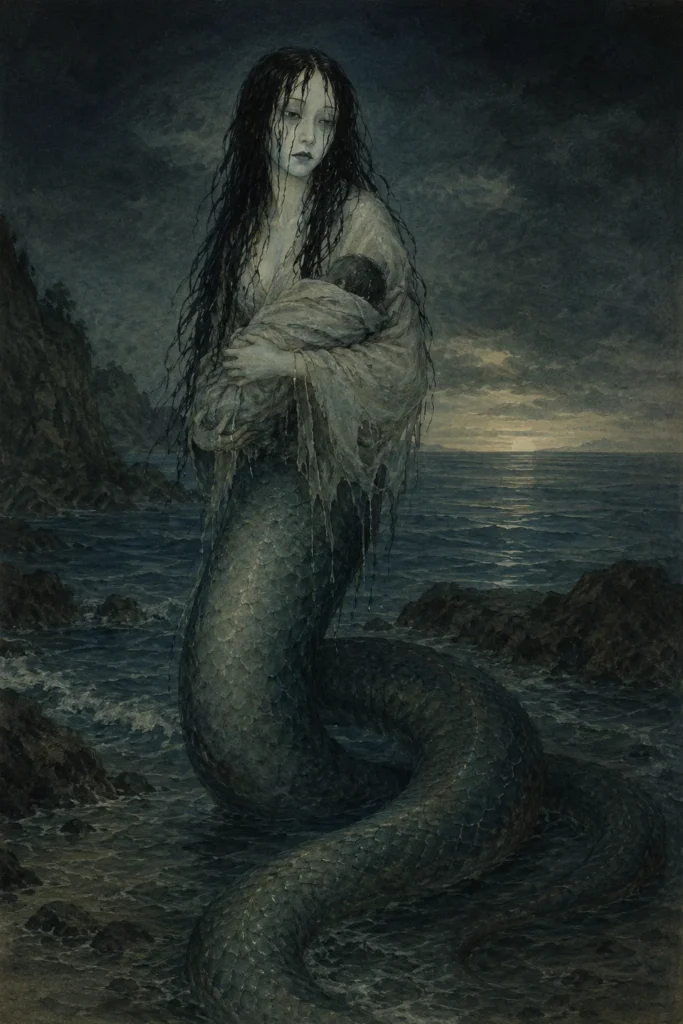
The Nure-onna is a dangerous Yōkai of the Japanese coasts: the head of a woman, the body of a serpent, its wet hair a sign of the danger of drowning. Using a bundle as bait, it lures its victims and kills them.

At a glance: Nure-onna

Type: serpent-bodied Yōkai
Origin: oral tradition
Texts: Sawaki Suushi (1737), Toriyama Sekien (1776)
Period: since the 18th century
Appearance: woman’s head on a serpent body

Textual history

Period of the Texts

Attested pictorially since the 18th century: first Sawaki Suushi in 1737, then Toriyama Sekien; the oral tradition is older.

Area of Diffusion

Coasts, rivers and lakeshores of Japan, preferring lonely shore spots at night.

Sources

Mainly pictorial: the Edo-period Yōkai compendia and Foster’s overview work.

Name and variants

Japanese: Nure means wet, onna woman: the always drenched woman, named for her closeness to water.

Form and deception

Appearance

The Nure-onna combines a seductive woman’s head with a serpent’s body; her wet hair signals the danger of drowning.

Effect

Anyone who accepts the bundle is paralysed, whereupon she attacks; she has no ambivalent traits.

Profile: Nure-onna

The key aspects at a glance.

Tradition

An Edo-period Yōkai from the picture books of Sawaki Suushi and Toriyama Sekien.

Object of Influence

Lone travellers at shore spots who accept her bundle.

Depiction

Woman’s head on a giant serpent body, wet hair.

Sphere of Influence

A paralysing lure and a deadly attack, with no benevolent counterpart whatsoever.

Avoidance

Do not accept the bundle, avoid lonely shores, especially at night.

Distinctions

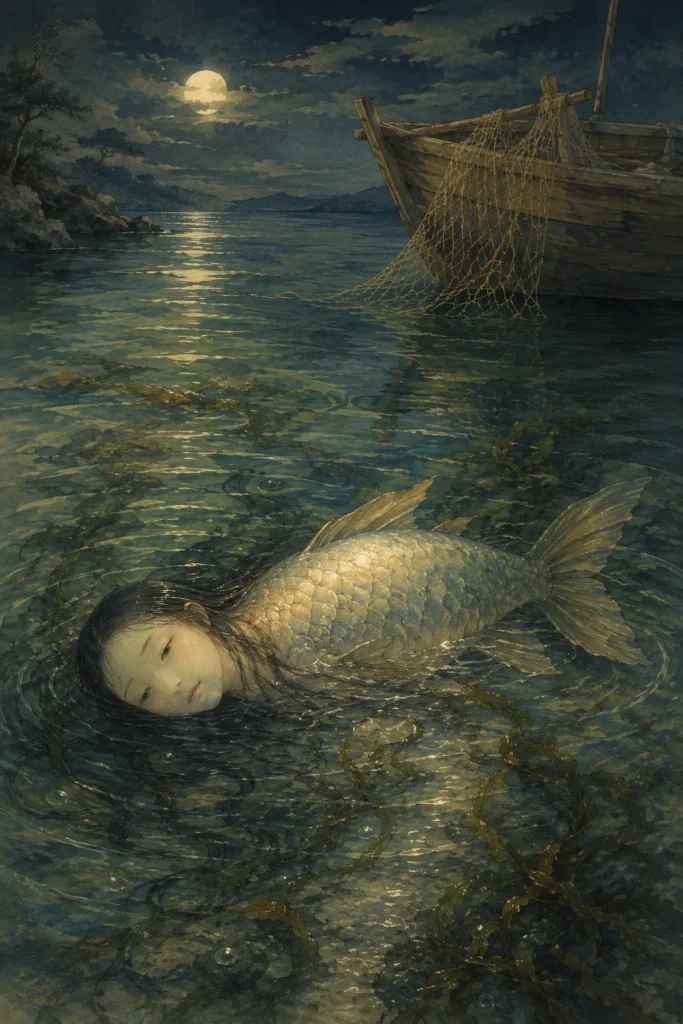
No fish tail as with the Ningyo, but a serpent body.

The wet woman of the Edo picture books

The name combines nure, wet, and onna, woman: the drenched woman. Fixed in imagery during the Edo period, in Sawaki Suushi’s Hyakkai Zukan of 1737 and in Toriyama Sekien’s work from 1776 onward. She appears as a woman in need of help, carrying a bundle that suddenly grows heavy and paralyses the victim.

Cautionary figure without a cult

The Nure-onna is a firm fixture of modern yōkai culture, from Mizuki’s GeGeGe no Kitarō to anime. An important clarification: unlike cult deities of water, she is not an object of veneration but a pure figure of dread, personifying the danger found at bodies of water.

Avoidance instead of ritual

Countermeasures are barely recorded: do not accept the bundle, avoid lonely shores at night. Recognised protective means include salt, amulet and threshold protection.

Snake woman, not mermaid

As a snake-bodied seductress, the Nure-onna is close to the Greek Lamia, and shares her motif with Melusine. The snake body sets her apart from the warning Ningyo; she stands alongside Akkorokamui.

Frequently asked questions about the Nure-onna

Is she a mermaid?

No, she has a snake body, not a fish tail, unlike Ningyo.

What does the bundle mean?

It is bait: if the victim accepts it, it becomes heavy and paralyses the carrier.

Further links

Recommended internal links:

Literature (selection)

Key source:
  • Sawaki, Suushi: Hyakkai Zukan. 1737.

Further standard works in the bibliography.

Anyone searching for the Nure Onna yōkai figure or the snake woman of Japan arrives at the same demoness: her wet snake body and deadly bundle warn against any request for help on a lonely shore.

Classification & Protection

VLEVEL
The Protection Compass assigns this being to influence level V, Profound influence.

Against its influence, cross-cultural tradition names these protective means:

Compare in the Protection Compass →

Recommended protective means

iWell Guard

The simplest protective means in this collection: 41 layers of fine gold 999, platinum, silver and silicon, manufactured in Ruhla, Thuringia. It requires no activation, is bound to no person, and is effective within a radius of around 50 meters, even without being worn.

All protective means at a glance →