Gjenganger and the deadly death-pinch
By Ralf Ittermann · last reviewed on
Gjenganger is a demon of the Nordic tradition.
The physically returning dead with the deadly pinch. He is known above all for the deadly pinching of the dead, which only later developed out of the violent figure of the sagas.
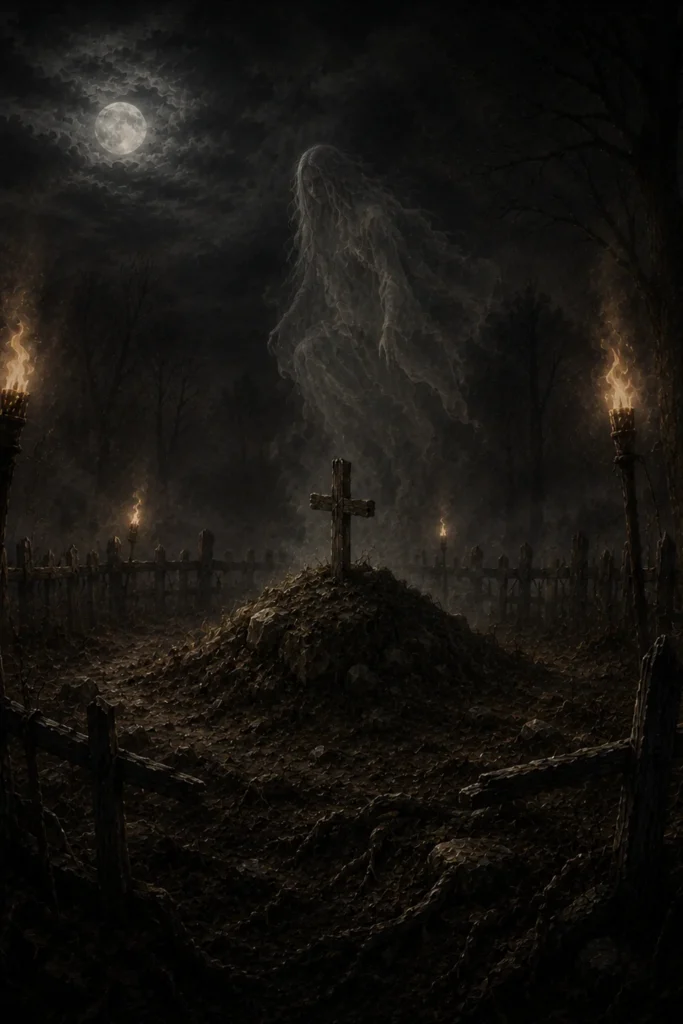
Gjenganger is the physically embodied Wiedergänger of Scandinavia: a fully corporeal dead person who returns from the grave and, unlike a mere spirit, appears among the living in flesh and limb. In the older tradition it appears openly violent, while in more recent times it is chiefly a bringer of illness.
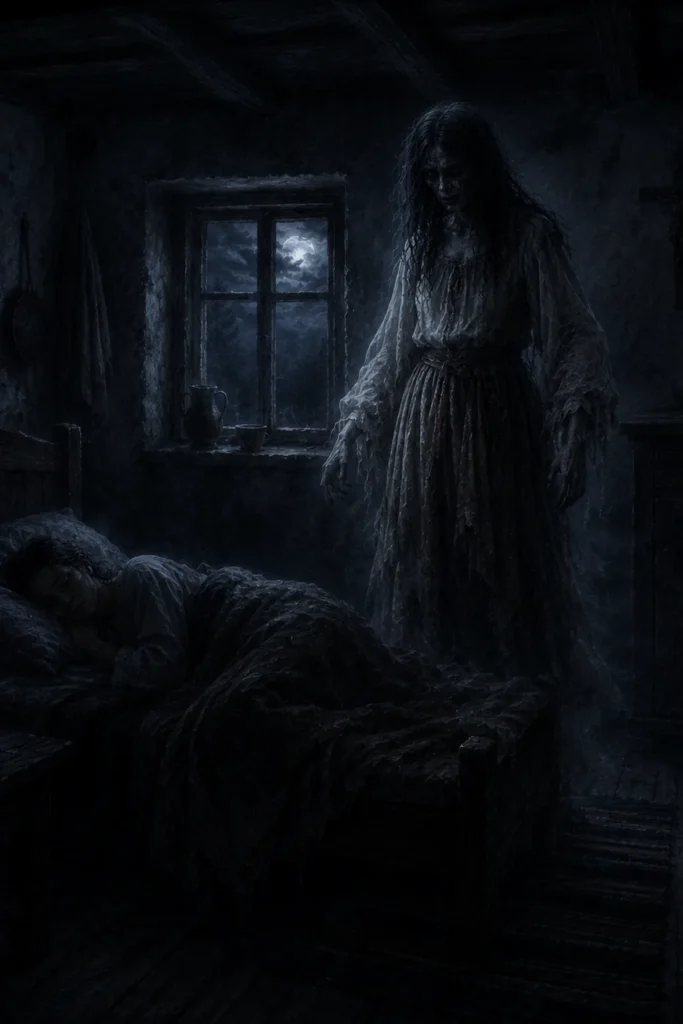
Characteristic of it is the death-pinch, Danish dødningeknip: the Gjenganger pinches sleepers at night, whereupon their skin turns blue and sunken, often with a fatal outcome. The tradition dates back to the Viking Age and is firmly anchored in the Icelandic sagas.
Type: physically embodied Wiedergänger that makes sleepers ill through the death-pinch
Origin: Scandinavia, Danish genganger, Norwegian gjenganger, Swedish gengångare
Texts: Icelandic sagas such as the Grettis saga and the Eyrbyggja saga, folk belief ever since
Period: Viking Age roots, continued as folk belief into the modern era
Appearance: fully corporeal dead person, mostly without spectral traits
Source context
Period of the Texts
From the Viking Age to modern times: the violent tradition dates back to the Viking Age and is attested in the sagas; as folk belief it continued into the modern era.
Area of Diffusion
Scandinavia. The term survives in the national languages: Danish genganger, Norwegian gjenganger, Swedish gengångare.
Sources
Good: several Icelandic sagas attest to the Gjenganger, along with comparative research on Nordic revenants.
Name and variants
Language: Gjenganger literally means one who walks again, and is linguistically related to the German Wiedergänger; the national forms genganger, gjenganger and gengångare show the same root.
Appearance
Appearance
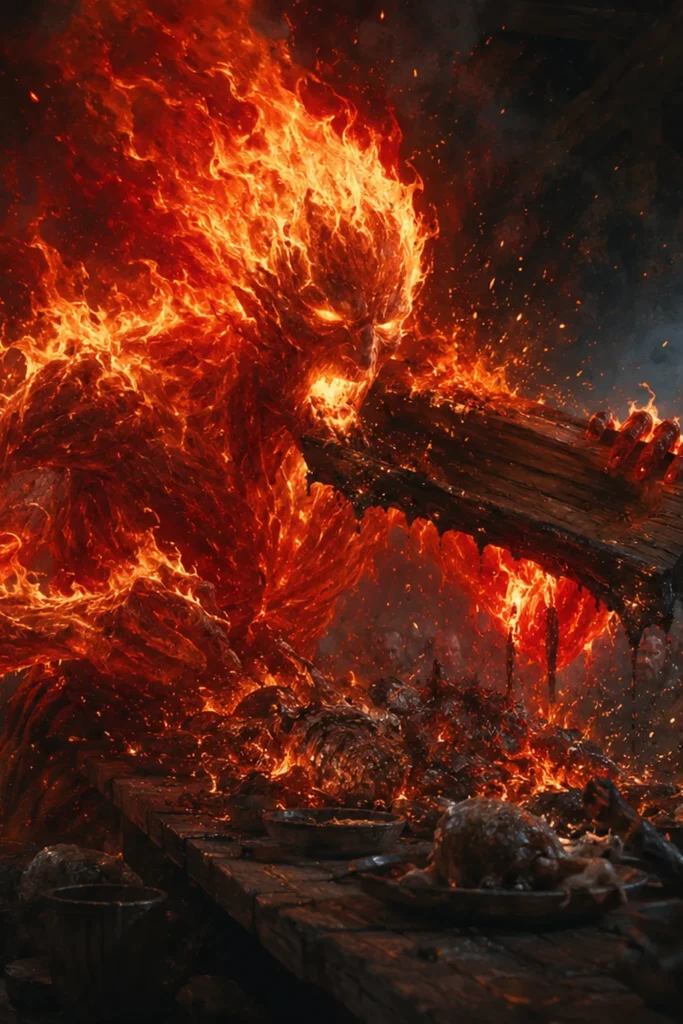
The Gjenganger is massively physical, not ethereal: a fully corporeal dead person without ghostly traits, clearly distinct from a mere spook.
Effect
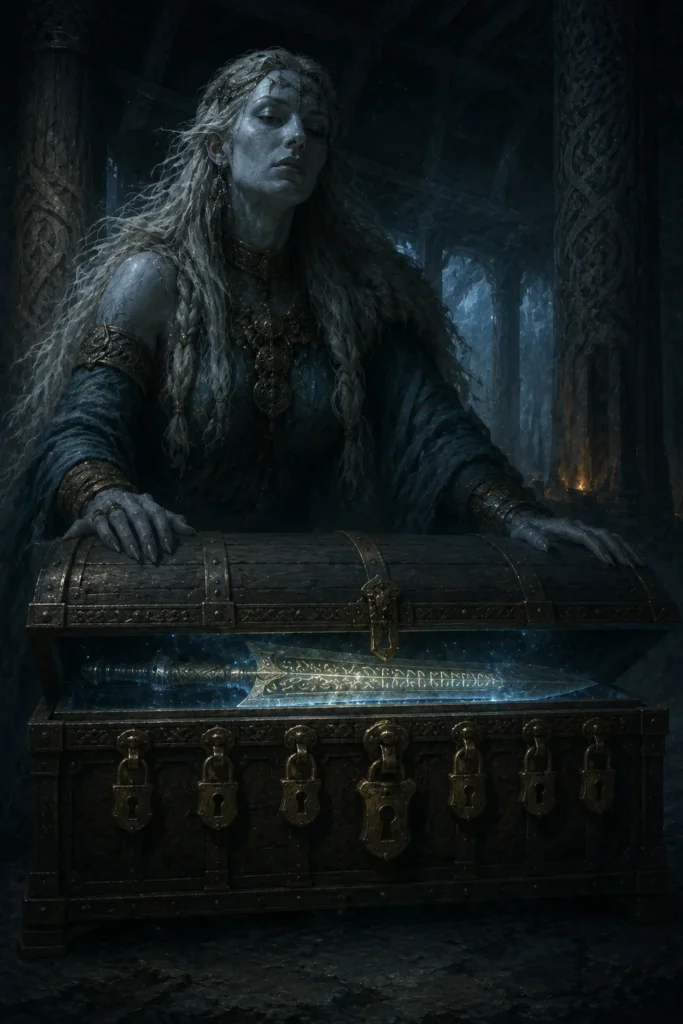
Characteristic is the death pinch, Danish dødningeknip: the Gjenganger pinches sleepers at night, causing the skin at that spot to turn blue and sink in, often with fatal results. In the older tradition it also acts openly violent, attacking not only at night and covertly.
Profile: Gjenganger
The key aspects of the Gjenganger at a glance.
Central figure of Scandinavian revenant belief, attested in the Icelandic sagas since the Viking Age.
In the older tradition its own family and friends, later mainly sleepers, whom it haunts at night.
Fully corporeal dead person without ghostly traits, who returns bodily from the grave.
Illness and death through the nightly death pinch, in older accounts also open violence against the living.
Beheading followed by burning of the corpse as the most effective means, alongside impalement, weighting down and binding.
Wiedergänger as the German linguistic counterpart, along with the site-bound Haugbúi and the Nachzehrer as further Germanic relatives.
From the Grettis saga to the death pinch
The name Gjenganger literally means one who walks again, and is linguistically related to the German Wiedergänger. The violent Gjenganger tradition reaches back to the Viking Age and is attested in several sagas, including the Grettis saga, the Eyrbyggja saga and the Saga of Erik the Red.
Suicide was regarded as a chief reason for return, since according to Christian belief suicides were fit for neither heaven nor hell, along with unfinished business, which bound the dead to the life of the living. From this older, violent figure a second trait developed over time: the death pinch, with which the Gjenganger no longer fights openly but covertly sows illness.
From saga material to a Nordic horror motif
The Gjenganger shapes the Scandinavian image of the undead and is as present in the sagas as in modern Nordic horror and popular culture, where the bodily returning dead remains a recurring motif.
From a religious-studies perspective the Gjenganger is a Christian-inflected form of revenant belief, in which the suicide returns without a resting place, since according to Christian belief he was fit for neither heaven nor hell. At the same time it serves as an explanatory model for sudden illness and death, the death pinch, and is regarded as a transitional type between the restless dead and the vampire.
Beheading and warding off the death pinch
As with Nordic undead in general, beheading, sometimes followed by burning the corpse, is considered the most effective means against the Gjenganger. From the shared Scandinavian-Germanic repertoire come impalement, weighting down and binding the corpse, so that the dead cannot leave the grave again.
In the daily life of the living, further precautions supplemented the grave measures: iron was considered effective against the undead, secured access to the house, a threshold protection, was meant to prevent nightly intrusion, and salt served as a cleansing and protective means against the powers of the revenant.
Gjenganger in Nordic and Slavic comparison
The Gjenganger is the linguistic and factual counterpart to the German Wiedergänger; Nordic relatives are the Draugr, the Haugbúi and the Afturganga. Because it brings illness through the death pinch and rises bodily from the grave, it is factually related to the East European undead Strigoi and Upiór, and is regarded as an early northern form of the vampire.
Frequently asked questions about the Gjenganger
Is the Gjenganger a spirit?
No, generally a physically returned dead person, not a purely ethereal being. It returns bodily from the grave and is thus distinct from a mere spook.
What is the death pinch?
A nightly pinch that the Gjenganger inflicts on sleepers. The skin at that spot turns blue and sinks in, which often led to illness and death.
Who becomes a Gjenganger?
Often suicides, since according to Christian belief they were fit for neither heaven nor hell, alongside people with unfinished business.
Further links
Further reading:
- Germanic – all beings of the Germanic tradition
- Haugbúi – the site-bound barrow dweller of Old Norse tradition
- Wiedergänger, Nachzehrer – related undead of the Germanic tradition
- Strigoi – Romanian undead with a comparable illness motif
- Iron, Threshold protection, Salt – traditional protective means
Literature (selection)
Further standard works in the bibliography.
As a Scandinavian revenant, the Gjenganger remains notorious above all for its death pinch: a bodily dead person whose nightly pinch leaves sleepers ill and sometimes dead.