iWell Guard

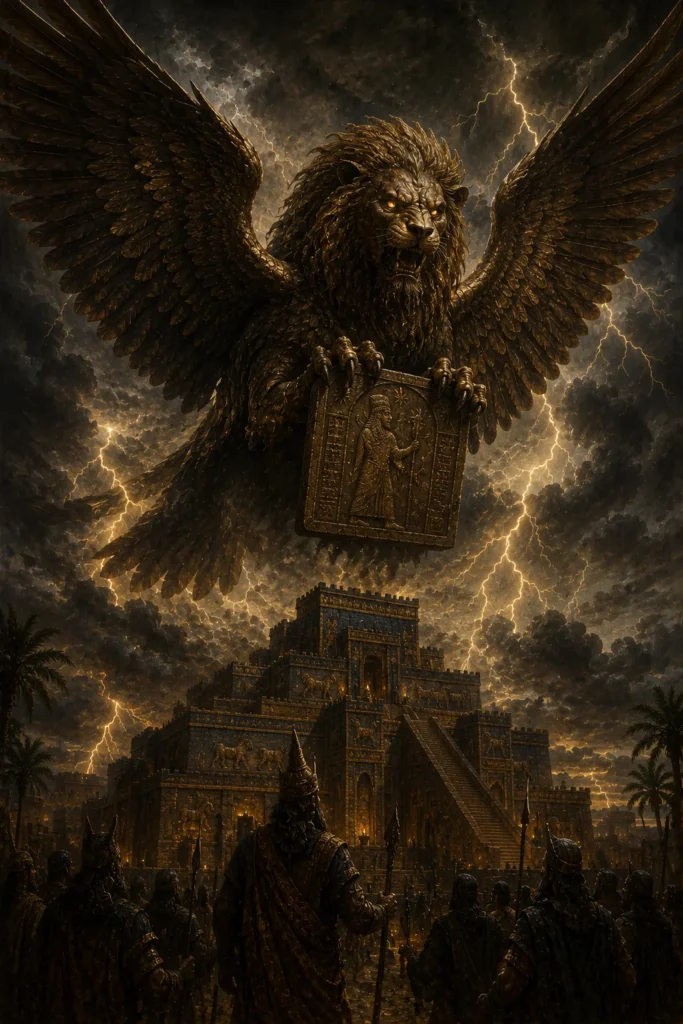
Anzu, the lion-eagle with the Tablet of Destinies

Anzu is a demon of the Mesopotamian tradition.

The lion-eagle who steals the Tablet of Destinies from the gods.

Table of Contents

Anzu, the Lion-Eagle of Mesopotamia
Anzu

Anzu, Sumerian Imdugud, is a lion-headed eagle and storm demon of Mesopotamia. He is ambivalent: as a force of chaos he steals the Tablet of Destinies, while as Imdugud he is at the same time the protective heraldic animal of the god Ningirsu.

This dual role is the core finding of research. The same being who in myth seizes divine order for himself guarded temple entrances as an image motif; the famous relief from Tell al-Ubaid shows the lion-eagle around 2500 before our era as an emblem, not as a monster.

At a glance: Anzu

Type: Lion-headed eagle and storm demon, also a protective emblem
Origin: Sumer, Babylonia, Assyria
Texts: Anzu myth in Old Babylonian and Standard Babylonian versions
Period: from the 3rd millennium BCE
Appearance: eagle with a lion’s head

Tradition and find sites

Period of the Texts

Attested from the 3rd millennium BCE; the myth exists in two main versions, an Old Babylonian one with the hero Ningirsu and a Standard Babylonian one with Ninurta.

Area of Diffusion

Sumer, Babylonia and Assyria; the pictorial evidence ranges from the temple of Ninhursag at Tell al-Ubaid to the reliefs of Nimrud.

Sources

Well documented: the Anzu myth in the editions of Annus and Foster, as well as the pictorial evidence and handbooks of Assyriology.

Name and variants

Sumerian: Imdugud, usually interpreted as a heavy storm cloud, Akkadian Anzu. The interpretation of the name as An plus Zu, heaven and knowledge, is folk etymology. George Smith still edited the text in 1876 as the sin of the god Zu; only in the 1960s and 1970s did the reading Anzu become established.

Form and symbol

Appearance

Anzu is a lion-headed eagle. The Imdugud relief from Tell al-Ubaid, around 2500 before our era, shows the lion-eagle gripping two deer; it originally came from the temple of Ninhursag. A relief from Nimrud shows Ninurta pursuing Anzu.

Effect

Anzu personifies storm and thunder. In myth he steals the Tablet of Destinies, thereby seizing dominion over the order of the world; as Imdugud he is at the same time the protective emblem of Ningirsu.

Profile: Anzu

The key aspects of the lion-eagle at a glance.

Tradition

Sumerian-Akkadian figure from the 3rd millennium onwards, recorded in the Anzu myth in two versions and in a rich pictorial tradition.

Relates To

The divine order: by stealing the Tablet of Destinies, Anzu seizes for himself the dominion that belongs to Enlil.

Depiction

Lion-headed eagle; the relief from Tell al-Ubaid shows him gripping two deer, a Nimrud relief the pursuit by Ninurta.

Function

Personification of storm and thunder; in myth the force of chaos, as Imdugud the protective heraldic animal of the god Ningirsu.

Approach

No dedicated warding ritual is attested; conversely, the Imdugud image itself served as a protective emblem at temple entrances.

Parallels

Asag in the Lugal-e and Tiamat in the Enuma Elish; the dragon slayers are Ninurta and Ningirsu, later Marduk.

The theft of the Tablet of Destinies

The myth begins with an act of trust: Enlil appoints Anzu as guardian. But while Enlil is bathing, Anzu steals the Tablet of Destinies and thereby seizes power. Ninurta sets out against him, and at first his arrows fail, because Anzu transforms them back by the power of the tablets.

Only Ea’s counsel turns the battle: Ninurta summons the south wind, which strips Anzu of his feathers, and kills him; the tablets are returned. The myth survives in two main versions, Old Babylonian with Ningirsu as hero, Standard Babylonian with Ninurta. Anyone naming the victor must therefore specify which version they mean.

From Zu to Anzu: research and classification

Anzu is widely discussed in Assyriology and through the Anzu myth. The history of research has its own missteps: George Smith edited the text in 1876 as the sin of the god Zu, and it was only in the 1960s and 1970s that the reading Anzu became established; and the Nimrud relief was long, and wrongly, taken in the 19th century for Marduk against Tiamat.

In terms of religious studies, Anzu is an ambivalent lion-eagle and storm demon. Important clarifications: he is not merely an evil demon but at the same time a protective emblem and helper, this ambivalence is the key finding. The hero is, depending on the version, Ninurta or Ningirsu. And the interpretation of An plus Zu as heaven and knowledge is folk etymology.

Not a warding ritual, but a protective image

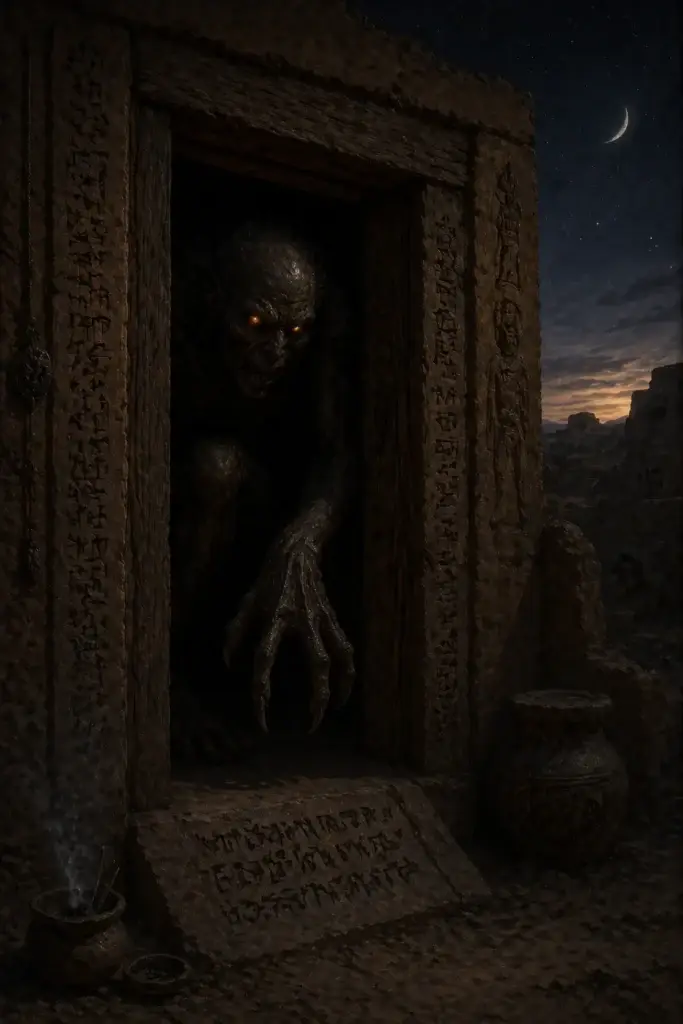
No separate warding ritual against Anzu is attested, and this is telling: the danger he embodies is banished in the myth by the hero god, not through everyday incantation. Conversely, the Imdugud image itself served as a protective emblem at temple entrances. The being before whom the gods trembled protected, in its earlier form, the houses of the gods.

Lion-eagle and dragon-slayer compared

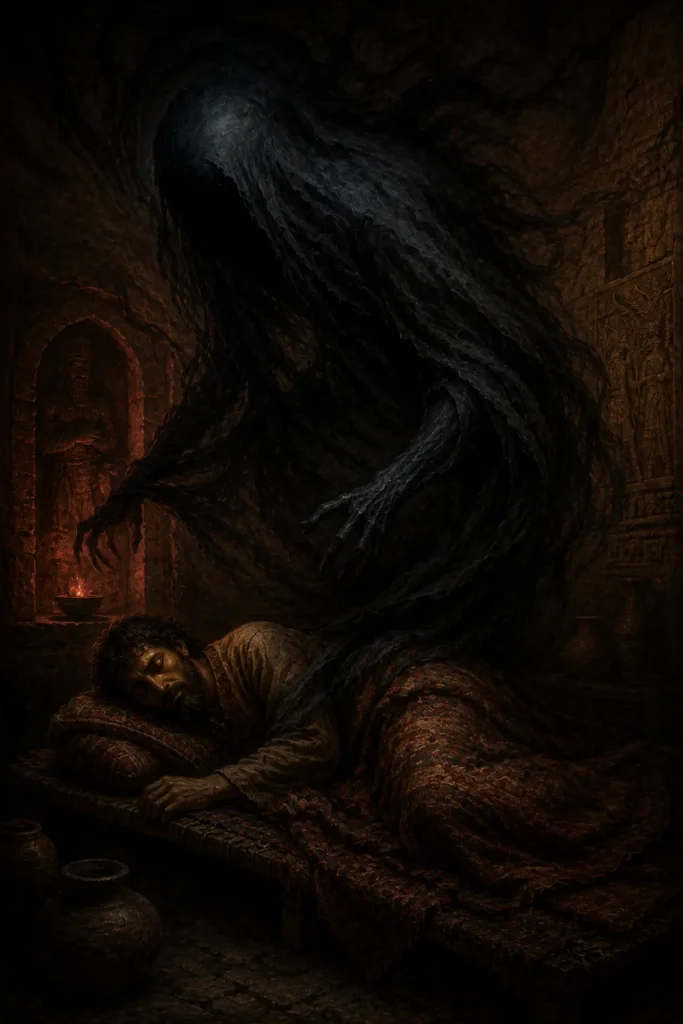
Anzu stands alongside Mesopotamia’s other great chaos monsters: Asag, the opponent of the Lugal-e, and Tiamat, the primordial sea of the Enuma Elish. Ninurta and Ningirsu are the classic dragon-slayers of these battles; their role is later taken over by Marduk. On the demonic side of the same system stands the night demon Alu.

Frequently asked questions about Anzu

What is Anzu?

A lion-headed eagle and storm demon of Mesopotamia, Sumerian Imdugud. He is at once a force of chaos and a protective emblem.

What does Anzu do in the myth?

He steals the Tablet of Destinies while Enlil is bathing, and is defeated by Ninurta after the south wind, on Ea’s advice, strips him of his feathers.

Is Anzu only evil?

No. As Imdugud he is the protective heraldic animal of the god Ningirsu, and his image served as a protective emblem at temple entrances. This ambivalence is the key finding.

Further links

Recommended internal links:

Literature (selection)

A selection of key sources and studies:
  • Black, Jeremy / Green, Anthony: Gods, Demons and Symbols of Ancient Mesopotamia. London 1992.
  • Foster, Benjamin R.: Before the Muses. An Anthology of Akkadian Literature. Bethesda 2005.
  • Annus, Amar: The Standard Babylonian Epic of Anzu. Helsinki 2001.

Further standard works in the bibliography.

As a Mesopotamian lion-eagle, Anzu is more than a storm demon: the same being that stole the Tablet of Destinies guarded the temples as Imdugud, and it is precisely this dual role that still makes his figure so revealing today.

Classification & Protection

IIILEVEL
The Protection Compass assigns this being to influence level III, Burdensome influence.

Against its influence, cross-cultural tradition names these protective means:

Compare in the Protection Compass →

Recommended protective means

iWell Guard

The simplest protective means in this collection: 41 layers of fine gold 999, platinum, silver and silicon, manufactured in Ruhla, Thuringia. It requires no activation, is bound to no person, and is effective within a radius of around 50 meters, even without being worn.

All protective means at a glance →